TeleYota
New member
Hey there long time creeper on this forum and just about to start into another Toyota refurb.
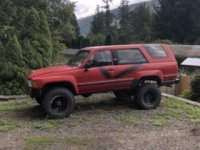
I found a 88’ 4Runner one owner 225k kms barn find a five years ago. I moved it from his barn to mine and am finally getting to it. I have never dealt with IFS, as I have always had a Solid axle in my trucks (85’ runner, multiple fj40s, 90’ crewcab hilux), and have some specific questions. I did do some research on things I wanted know using the search function.
Plan is to run stock 4.88s out of a 94’ runner, 33x10.5 mud, OME rears with BJ spacers front, softopper w/ boat rack, original warn front bull bar with 8k winch. It is all in the garage waiting to go on.
Questions:
How will I know my A-arm bushings are worn out? Cracking? Any other ways? Should I replace them with Poly? I have heard horror stories about poly squeezing.
When you guys refer to late model V6 calipers as a brake improvement. Are you talking 95’ caliper from a 4Runner?
I am sure there is more questions but let’s start there.
I found a 88’ 4Runner one owner 225k kms barn find a five years ago. I moved it from his barn to mine and am finally getting to it. I have never dealt with IFS, as I have always had a Solid axle in my trucks (85’ runner, multiple fj40s, 90’ crewcab hilux), and have some specific questions. I did do some research on things I wanted know using the search function.
Plan is to run stock 4.88s out of a 94’ runner, 33x10.5 mud, OME rears with BJ spacers front, softopper w/ boat rack, original warn front bull bar with 8k winch. It is all in the garage waiting to go on.
Questions:
How will I know my A-arm bushings are worn out? Cracking? Any other ways? Should I replace them with Poly? I have heard horror stories about poly squeezing.
When you guys refer to late model V6 calipers as a brake improvement. Are you talking 95’ caliper from a 4Runner?
I am sure there is more questions but let’s start there.