After I put everything back together I decided to do an "after" test. I deflated my tire to 15 PSI, hooked up the compressor and let it go to town.
At 2:23 into the test, there was a drastic change in the tone of the noise the compressor was making. It sounded like it slowed down significantly as well. First thought: "Crap! There goes $50!"
I figured I had screwed something up and damaged the compressor, so I just let it finish it's test and turned it off @ 3 minutes. When I disconnected it, I ended up with the EXACT same results... 15 PSI to 27 PSI in 3 minutes. A little disheartening, so I said Fk-it and just left it running another 5 minutes...
When I turned it off I was still at 27 PSI. Yup, something is wrong.
I figured the damaged piston ring may have failed completely, but when I took it back apart I was surprised to find:
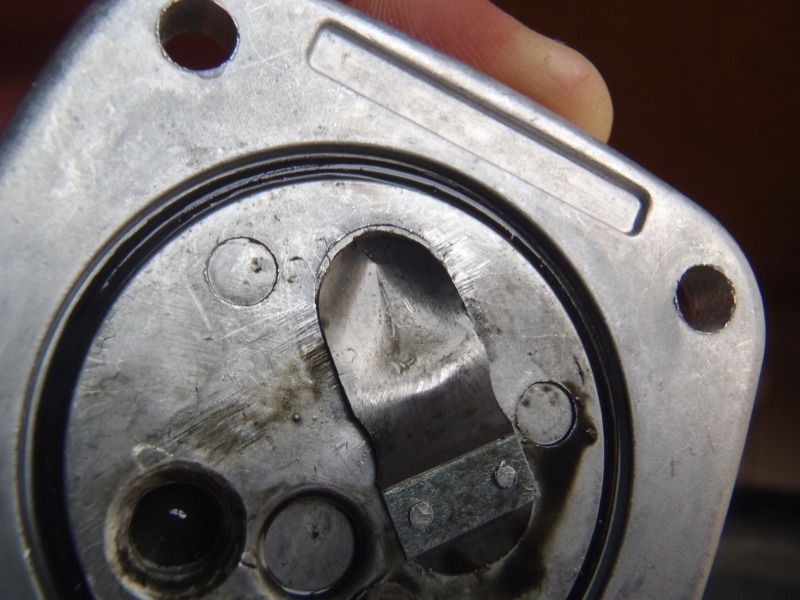
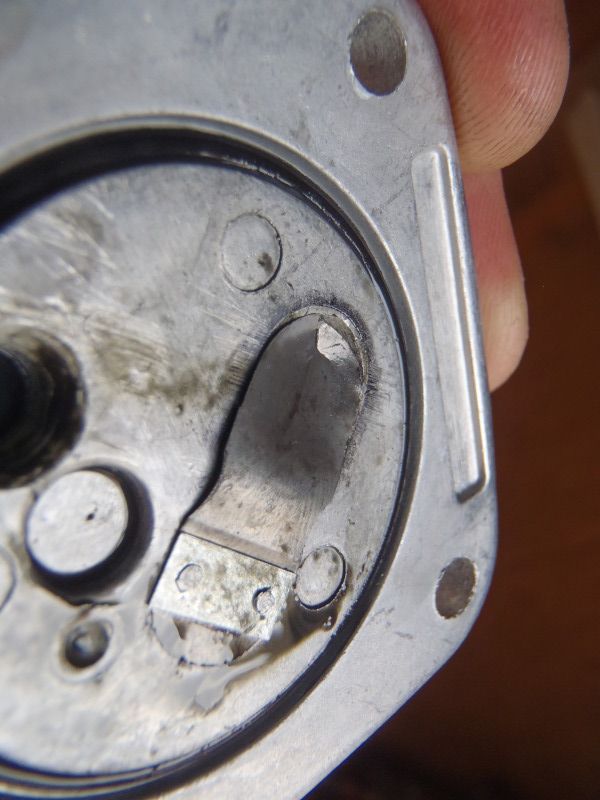
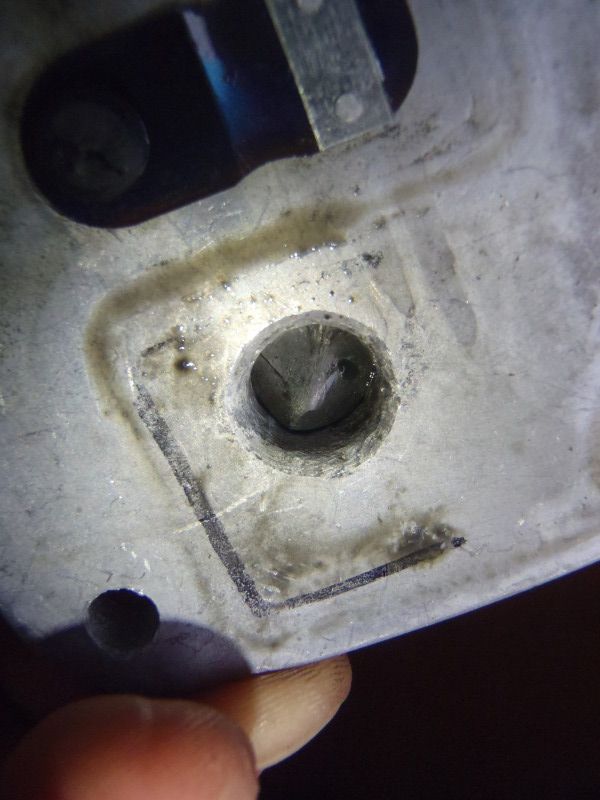
WHOA! I guess I got a little too happy with the porting and I didn't leave enough material under the edges of the intake reed valve. When the compressor started to build pressure it pushed the reed valve up into the intake port on the exhaust stroke, cracking the reed valve and jamming it inside the intake port. This blocked the compressor from drawing in more air, which is why I heard it slowing down. It essentially had a clogged intake.
Good news, and bad news...
The good news is that in 2:23 (time to failure) the compressor got the tire to the same pressure that it took 3:00 to reach before the mods.
Also, it's repairable.
Bad news, I get to grind the rivets off the intake reed valve, cut a new reed valve, drill & tap a screw hole to secure it, and try again.