So I've been meaning to follow up on the intake reed valve fix. I replaced the reed valve and ran the "3-minutes from 15 PSI" test again, using the same tire guage to check before/after pressures.
After modifiying the compressor, the test results were:
-Ambient temp: 40 degrees F
-Compressor connected to spare deep cycle battery, out of vehicle
-Tire: 285/75r16 Goodyear Duratrac, E-Load Range
-Starting tire pressure:15 PSI
-Compressor run time: 3 minutes
-Ending tire pressure: 30 PSI
So, 15 > 27 before (+12 PSI), and 15 > 30 after (+15 PSI)... That's a 3 PSI increase increase over the 3 minute period, which my simple math tells me is a 25% increase in air up speed from 15 PSI. Not too shabby for $10 and a couple hours. 
Last, I took a few pictures of the install of the new intake reed valve...
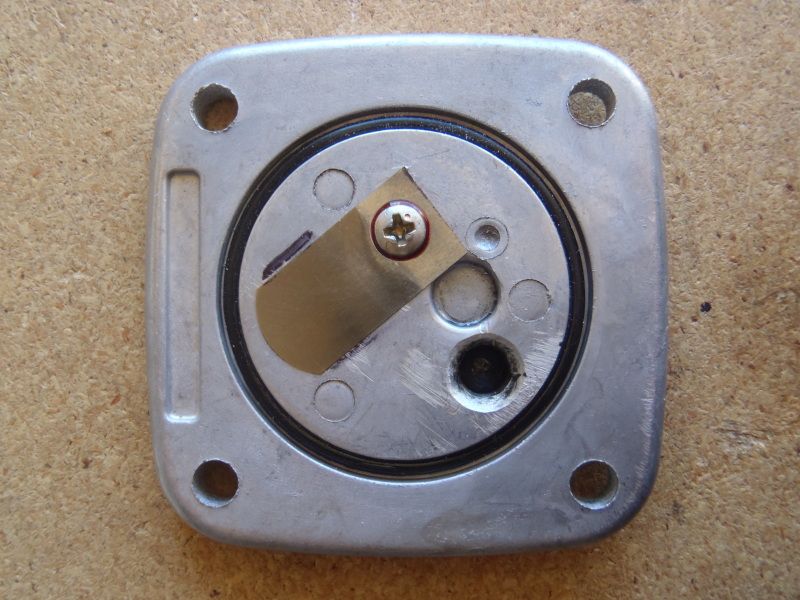
I had a set of feeler gauges that I haven't used since I rebuilt my Supra engine, so I decided to cut the end off one of them and use it for my new reed valve.
The factory installed reed valve was 0.004" thick based on my comparisons to the feeler gauges. I went with a 0.005" thick replacement reed. I wanted a little extra thickness so the reed would hold up to the pressure on the exhaust stroke, while retaining enough flexibility for the reed to easily open on the intake stroke.
I used a small machine screw to make a tap by cutting notches into the threads on opposite sides with a narrow cutoff wheel. After I drilled/tapped the hole, I cut the same screw down to a shorter length and used it to secure the new reed. I applied Red Loc-Tite to keep it in place. Also, I put a slight bend in the new reed with the inside of the bend facing down. This makes the reed like a spring and applies some pressure to help it seal quickly and completely on the exhaust stroke.
The new reed is also thicker, leaving more material sitting around the lip of the intake port, which along w/the extra thickness, should prevent the reed from getting pushed into the intake port. Note the size of the old reed (visible to the right) vs. the new reed.

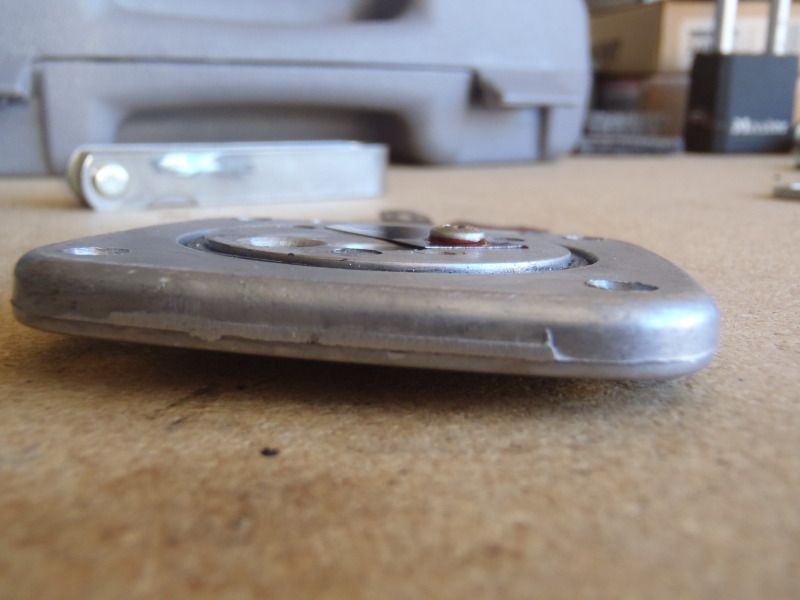
Side view of the screw head. You have to use a low profile screw here, otherwise you may have interference issues w/the piston on the exhaust stroke.
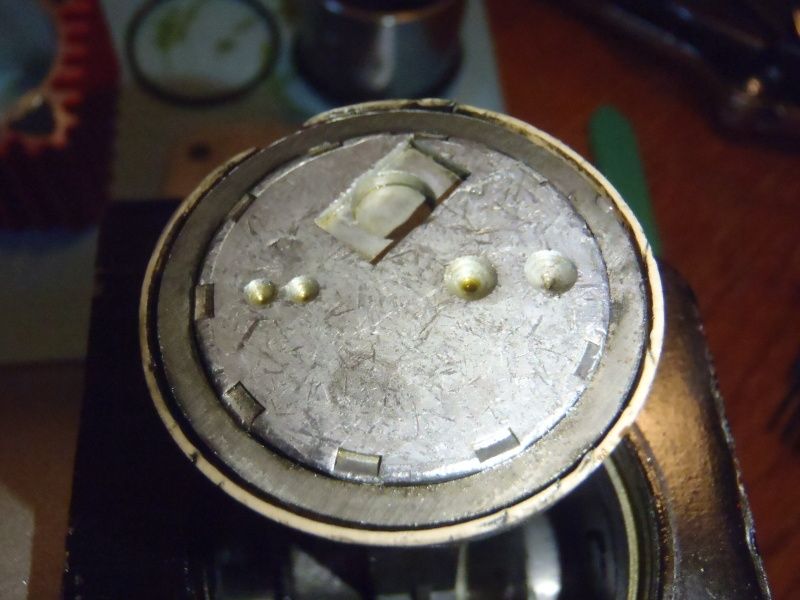
The piston on my compressor actually had a small indentation cast into it at the very spot where the new screw was installed (visible top center in pic below), as if they intended for the reed to be secured with a small machine screw in the first place.
...
.......
............
In summary, with:
- Enlarged intake & exhaust ports
- Upgraded intake reed valve
- Upgraded relay
- Upgraded power wire & circuit breaker
- New pressure guage
I was able to net a measured 25% performance increase in the pressure range where the compressor will be used most often. I also believe that I've greatly increased the durability and reliability of the compressor w/these mods.
Tonight I aired up all 4 tires consecutively from 20-37 PSI, running the compressor off a spare deep cycle battery, and it performed flawlessly. It was sufficiently speedy for my needs and I look forward to getting more use out of it on the trail.