5-speed clutch pedal sticks on floor in morning (three days in a row)

Status
Not open for further replies.

foo

Banned
How to diagnose, fix, or redesign your squeaky or malfunctioning clutch pedal return

Title was initially: 5-speed clutch pedal sticks on floor in morning (three days in a row)
New title: How to diagnose, fix, & redesign your squeaky or sticking clutch pedal return torsion springs & Q-P-Q bushings.

---- original text to follow ----
For three days in a row, I'm told the clutch pedal sticks to the floorboard when starting in the morning.
The clutch pedal seems to stick and not lift up all the way.

Once it is literally unstuck, it seems to work correctly.
At one point, the user couldn't shift into first gear in the morning.

The pedal is not catching on the carpet (or anything else).

Any idea where I should look for what the remedy is?
When the pedal is stuck to the floor, it can't get out of first gear.

AFTER-THE-FACT-EDIT (to save you time):
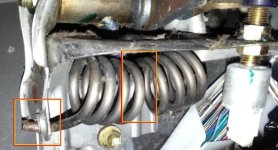
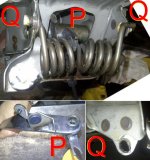
It turned out to be the pedal-return torsion-spring & Q-P-Q bushings (see detail below sufficient to identify and solve the problem if you get here by searching).

RELATED THREADS JUST ON THIS FORUM ALONE:
 

Attachments

  • torsion_spring.jpg
    torsion_spring.jpg
    55.3 KB · Views: 13,826
Last edited:
Register to hide this ad
crawl under and look at your pedal assembly. Could be worn pressure plate but could also be a worn pedal assembly. there are little white bushings that wear out and then the springs begin to eat into the pedal and cause this exact problem.
 
  • Like
Reactions: foo
Worn pressure plate....

How do I diagnose that it's definitely the pressure plate?
What test can I run?
Can I remove a cover plate to look and measure if it's a worn pressure plate?

Up until this morning, it was only intermittent (things changed this morning - see below).

crawl under and look at your pedal assembly.
It's not actually my 4runner, it's someone else's, and they took it to work (foolishly, I think) this morning after I bled the clutch assembly last night.

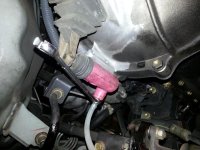
The DOT3 hydraulic fluid was full but very dark brown, but there were no visible leaks (slave cylinder is a pretty clean pink, for example).

When I first bled the slave cylinder from under the 4-runner, the young teen who was helping me by pressing on the clutch thought the black float in the master cylinder was actually the fluid level, so we ran the master cylinder dry.

That was an interesting accidental diagnostic because, right after that, the pedal just "flopped" in both directions, until we bled the pocket of air out.

So after re-bleeding, the pedal got its pressure back, but, the sticking problem is re-occurring (only worse now).

Could be worn pressure plate but could also be a worn pedal assembly. there are little white bushings that wear out and then the springs begin to eat into the pedal and cause this exact problem.
I was originally thinking it could be the slave cylinder not holding pressure, but I'm not sure why they even have a slave cylinder.

Why do they need TWO cylinders (master, and slave)?
Anyway, I'm really looking for diagnostics more than anything else.

Since neither of you mentioned the slave or master cylinder, are you saying that the symptoms are NOT those of hydraulics?

I'll google for photos of this white bushing as I can't tell from your description where it is (is this white bushing inside the cockpit, or inside the transmission clutch assembly, or in the undercar linkages in between?). I'll also google for how to test a pressure plate and what its symptoms are, but any additional experience and diagnostics would be appreciated.
 
Last edited:
I'm searching for a picture of this "white bushings".

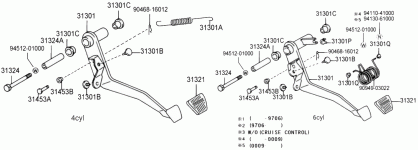
In my search, I noticed that the 6-cyl clutch pedal is apparently different than the 4-cyl clutch pedal.
http://www.toyota-4runner.org/3rd-gen-t4rs/223142-swap-v6-clutch-pedal-assy-4cyl.html

LATER EDIT: The 4-cyl & 6-cyl on the 4Runner are not different! That was bad information above. However, the diagram to the left shows what the retrofit will look like, since all attachment points exist in the 4Runner!

Link to 6cyl pedal assembly:
https://postimg.org/image/eah9p8rsx/

Link to 4cyl pedal assembly:
https://postimg.org/image/5qxvrhjgh/

They use two different types of return spring. The 6cyl assembly bushing always need to be replaced.

Can you point out this white bushing in the 4-cylinder assembly?
 

Attachments

  • bushing.gif
    bushing.gif
    77.7 KB · Views: 11,494
Last edited:
Still searching for how to diagnose when the clutch pedal sticks to the floor.

This is a clutch replacement DIY for a 97 SR5 (which is a different model):
http://www.toyota-4runner.org/3rd-gen-t4rs/215257-clutch-replacement-writeup.html

In that thread, I found this suggestion for clutch replacement DIYs from TheDurk, so, that at least gives me some pictures of the 5-speed transmission and how to remove it (although the 2WD is likely different).

Good job. The DIY's I used a few years ago are mostly dead or at least have lost their pictures. These are still alive:

5VZ Clutch Job - TTORA Forum

Toyota 4Runner Clutch Replacement on 4x4Wire.com

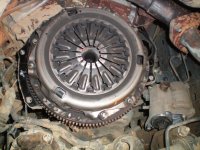
There is a picture and diagram of the "pressure plate" in that thread.
But it makes no sense to remove the transmission until I figure out what's wrong with diagnostics that prove it (or at least make sense).
 

Attachments

  • ClutchJob012.jpg
    ClutchJob012.jpg
    121.1 KB · Views: 9,188
Last edited:
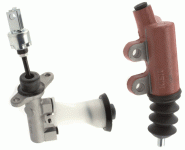
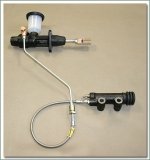
I googled for why there are *two* hydraulic cylinders, where the answer seems to be that the master cylinder's job (of course) is to convert mechanical pressure to hydraulic pressure. Seems to me that should be enough, because all you'd need is a brake-caliper-piston-like "cup" at the other end, but what they use instead of a cup is another cylinder, the slave cylinder, to convert the hydraulic pressure back to mechanical (to force the pressure-plate springs to yield).

Since the hydraulic fluid was definitely murky, maybe a rubber seal has disintegrated in the hydraulics?
Or maybe debris has scratched a piston?

I don't see any leaks, and the fluid level was high, so, I don't think things are leaking "out" but fluid could be leaking past the pistons, especially overnight.

In looking up how best to test that both the slave cylinder & master cylinder are actually working properly, I found this thread which suggests Aisin as the OEM brand for both.

http://www.toyota-4runner.org/3rd-g...ng-non-oem-clutch-master-slave-cylinders.html
 

Attachments

  • clutch_cylinder.gif
    clutch_cylinder.gif
    85.3 KB · Views: 8,670
Last edited:
I feel your pain. I have not faced this issue myself--my two Toyota 4Runners are the only hydraulic clutches I have dealt with and they have 38 trouble-free years between them.

I'd first look to see if there is any issue at the pedal you can find--bushings, springs, etc. It sounds like you have done that. I think then I would get underneath and unbolt the slave from the bell housing. It's one of the early steps in a clutch renew and is pretty easy to do. There is enough slack in the lines to move it some. There is, if I recall, one line bracket you may want to unbolt as well. If the clutch is on the floor, and there is tension between the fork lever and the slave piston, the issue is between the slave and the pedal. If the fork lever is only lightly under tension, or not at all, then the issue is inside the bell, and it's time to yank the trans. Even if the clutch is up, you can see how hard it is to move the fork lever by hand. It should be pretty much impossible without major leverage and a tool. If it moves at all, time to pull the trans....
 
Last edited:
  • Like
Reactions: foo
I would vote on master or slave cyl, I had mine both go out fairly close together between 150k and 180k.

My bushings never wore and I replaced the clutch at 150k because it was slipping.
 
If the clutch is on the floor, and there is tension between the fork lever and the slave piston, the issue is between the slave and the pedal.

Since diagnostics are what I'm asking for, I love this response since it gives me an idea HOW to test to see where the problem lies.

If the fork lever is only lightly under tension, or not at all, then the issue is inside the bell, and it's time to yank the trans.

Basically, the diagnostics you suggest make sense in that I BREAK the system in half at the slave cylinder, and then I test which half has lack of tension.

I do have new news in that I drove the 4-runner today, from a cold start, for a 10 mile test around town, and it shifted fine EXCEPT that the clutch pedal this time, instead of staying down, wouldn't come all the way back up.

I kept having to LIFT it with my foot, the last two or one inch. In the beginning of the test it was about 2 or 3 inches and in the end of the test it was only 1 inch (decreasing as I drove).

I'm not sure what diagnostic value that has, but at this point, I'm only asking for diagnostic advice, so your idea to break the system in half is apropos.

I'm leaning toward the slave cylinder at the moment, mainly because that seems to be a weak part in the chain, and because TheDurk gave me a great diagnostic tool, which is, after all, 99.5% of fixing problems successfully.

The first half of diagnostics is figuring out how the system works, where the second half is testing each component individually, as TheDurk kindly outlined above.

To that end, I found this document about symptoms of a Bad or Failing Clutch Slave Cylinder
https://www.yourmechanic.com/article/symptoms-of-a-bad-or-failing-clutch-slave-cylinder

And this one on "How a clutch slave cylinder works":
How the clutch system works
Clutch slave cylinder

This says if you have a bad clutch slave cylinder, you know it right away, so, maybe the symptoms are classic?
https://youtu.be/WoM9_30XdyQ?t=83way:
 

Attachments

  • master_and_slave.jpg
    master_and_slave.jpg
    55.1 KB · Views: 9,958
Last edited:
Durks suggestion on testing the slave cylinder is a good suggestion and should be very easy to do. The slave is very accessible, and it's just a few bolts to get it off.

I'm sure you've looked at it already, but I've heard of folks pedal not returning all the way back up being attributed to a worn pedal spring (31301 in your diagram). Should also be something easy and quick to check/replace.
 
Last edited:
I would vote on master or slave cyl, I had mine both go out fairly close together between 150k and 180k.

My bushings never wore and I replaced the clutch at 150k because it was slipping.

I'm leaning toward the slave or master cylinder also, or maybe that white bushing that I can't seem to figure out where it is.

I say that mainly because the clutch is "working", in that I drove it today for about 10 miles and it engaged and disengaged. I started on a hill in second gear and it didn't unduly slip, and I used the transmission to engine brake at about 30 or 40mph, and it braked the car.

It's actually only the pedal which is "not working" right.

In the morning, the pedal just sank to the floor and stayed there, but this afternoon, when I tested it, the pedal just wouldn't come back up all the way. I had to lift it up with my foot.

So, for "symptoms", that's all I have. The pedal goes to the floor in the morning (will test tomorrow as I traded cars with the owner), and the pedal never comes back all the way.

Since I have the 4runner in my garage, I can look closer tonight for leaks under the boots of the slave and master cylinder and I can look for that mysterious 2WD white bushing (but I don't know where to look yet).

This guy seems to have had the missing-last-inch problem also:
http://www.toyota-4runner.org/3rd-gen-t4rs/208970-clutch-pedal-issue-97-sr5-226k.html

But he had clutch slippage, and, while I wouldn't know slippage if it were slight, I would know if the slippage were a lot, I think, in that the RPM would jump while the speed would stay the same. Slippage does not appear to be happening.

It's just that the clutch is acting definitely funny.
a. It won't come up the last inch
b. Sometimes it sinks to the floor and stays there
 
I'm leaning toward the slave or master cylinder also, or maybe that white bushing that I can't seem to figure out where it is.

I say that mainly because the clutch is "working", in that I drove it today for about 10 miles and it engaged and disengaged. I started on a hill in second gear and it didn't unduly slip, and I used the transmission to engine brake at about 30 or 40mph, and it braked the car.

It's actually only the pedal which is "not working" right.

In the morning, the pedal just sank to the floor and stayed there, but this afternoon, when I tested it, the pedal just wouldn't come back up all the way. I had to lift it up with my foot.

So, for "symptoms", that's all I have. The pedal goes to the floor in the morning (will test tomorrow as I traded cars with the owner), and the pedal never comes back all the way.

Since I have the 4runner in my garage, I can look closer tonight for leaks under the boots of the slave and master cylinder and I can look for that mysterious 2WD white bushing (but I don't know where to look yet).

This guy seems to have had the missing-last-inch problem also:
http://www.toyota-4runner.org/3rd-gen-t4rs/208970-clutch-pedal-issue-97-sr5-226k.html

But he had clutch slippage, and, while I wouldn't know slippage if it were slight, I would know if the slippage were a lot, I think, in that the RPM would jump while the speed would stay the same. Slippage does not appear to be happening.

It's just that the clutch is acting definitely funny.
a. It won't come up the last inch
b. Sometimes it sinks to the floor and stays there

I had the identical symptoms, I had never dropped the tranny for any reason before this. I did not have a problem with master or slave and the clutch itself was worn but still good after I dropped the tranny but my pressure plate was toast. I drove it for two weeks lifting the pedal all the way up until I bought the Marlin Crawler clutch kit and did the re & re. If you are able to eliminate the slave and master, then you know how you to proceed.
 
I'm leaning toward the slave or master cylinder also, or maybe that white bushing that I can't seem to figure out where it is.

I say that mainly because the clutch is "working", in that I drove it today for about 10 miles and it engaged and disengaged. I started on a hill in second gear and it didn't unduly slip, and I used the transmission to engine brake at about 30 or 40mph, and it braked the car.

It's actually only the pedal which is "not working" right.

In the morning, the pedal just sank to the floor and stayed there, but this afternoon, when I tested it, the pedal just wouldn't come back up all the way. I had to lift it up with my foot.

So, for "symptoms", that's all I have. The pedal goes to the floor in the morning (will test tomorrow as I traded cars with the owner), and the pedal never comes back all the way.

Since I have the 4runner in my garage, I can look closer tonight for leaks under the boots of the slave and master cylinder and I can look for that mysterious 2WD white bushing (but I don't know where to look yet).

This guy seems to have had the missing-last-inch problem also:
http://www.toyota-4runner.org/3rd-gen-t4rs/208970-clutch-pedal-issue-97-sr5-226k.html

But he had clutch slippage, and, while I wouldn't know slippage if it were slight, I would know if the slippage were a lot, I think, in that the RPM would jump while the speed would stay the same. Slippage does not appear to be happening.

It's just that the clutch is acting definitely funny.
a. It won't come up the last inch
b. Sometimes it sinks to the floor and stays there

I don't think the pressure plate could do that intermittently. It would be a very weird fail. If the issue is in the bell-housing, I'd think throw-out bearing (as in not sliding smoothly along the output shaft as it needs to do) or the fork mounting has broken and the fork is getting hung up in its travel. You are correct, the return force, other than the wimpy pedal spring, is ALL in the powerful springs in the fingers of the pressure plate, acting in opposition on the throw-out bearing, to the fork lever, to the slave cyl. piston, and through the master and back to the pedal. The issues can be mechanical at the pedal end, mechanical at the clutch end, or hydraulic in the middle. The first thing to do, IMHO, is figure out which of the three you have and go from there. As far as the pedal end, in addition to bushing and spring issues, I remember a few posters saying they had rust issues on the firewall where the pedal was mounted and the pedal bracket was shifting and causing the hangup. So just getting someone to work the pedal while you eyeball the motion underneath at the pedal bracket, on the firewall, and at the slave, may lead to an epiphany. Good luck.

My clutch slippage detection technique is pretty good, and I learned it as a function of the fact I live on the top of a hill. The road up is straight and a mild incline for about a half mile. On my rig, in third gear, the speedo and tach needles rotate at EXACTLY the same angles as revs increase. So I put it in 3rd at about 1800 RPM and FLOOR IT as I start from the bottom of the hill. Watch the needles (and the road) as they climb. If the tach needle jumps ahead of the speedo as they rise, THAT is slippage. It will do that first before anything else you will notice.
 
Last edited:
'm sure you've looked at it already, but I've heard of folks pedal not returning all the way back up being attributed to a worn pedal spring (31301 in your diagram). Should also be something easy and quick to check/replace.

Actually, I only had a few minutes with the 4runner until now, but since I traded cars with the owner this afternoon, I have more time to explore all the great suggestions.

To that end, I looked under the dash for a good look for the first time tonight.

My first comment is that the "mechanical" part of that pedal assembly isn't as straightforward as a simple lever. There is a "double-coil" horseshoe spring, and a bushing on each end, and a bunch of other extensions and switches, but I can't tell exactly how it works yet (partly due to the fact that I'm apparently far bigger upside down than the space Toyota alotted to me down there).

Particularly, I can't see why a broken spring bushing alone would have any effect on the pedal not lifting up the last inch.

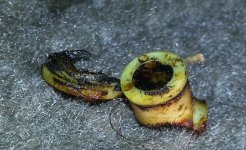
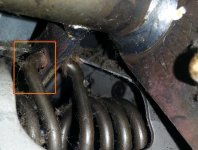
However, I did find this broken round white spring-end "bushing", about 1/4 inch ID and about 3/8" od (roughly eyeballing it), which was on the end of the thick double-coil horseshoe shaped pedal return spring.

Do you think this little tiny plastic bushing can have this much effect?
 

Attachments

  • 4_spring_bushing_broken_in_place.jpg
    4_spring_bushing_broken_in_place.jpg
    84.9 KB · Views: 12,716
  • 1_spring_bushing_broken_in_place.jpg
    1_spring_bushing_broken_in_place.jpg
    77.8 KB · Views: 21,649
  • 2_spring_bushing_borked.jpg
    2_spring_bushing_borked.jpg
    133.5 KB · Views: 10,608
Last edited:
I don't think the pressure plate could do that intermittently.
I'm gonna agree with you on that, in that it would likely slowly fail, and then finally fail. But to be intermittent? Maybe (anything is possible) but there are more likely suspects to look at first. Especially since I ran a test, not as prepared and well thought out as yours, but still I didn't detect slippage when the clutch was engaged.

I did take a long hard look at the slave cylinder, which does not appear to be leaking anywhere (and remembering that the clutch fluid was dirty and full when I first opened it up).

Since the clutch fluid was dirty, I borrowed the owner's kid, jacked up the 4Runner, and with a 10mm flare-nut wrench, we bled the clutch more fully (the morning bleed was cursory).

Later, when I took it for a 1/4 mile test ride, it *seemed* like it was shifting better, but that's probably the same effect as when I wax my car and change the oil, I feel in my buttmeter an instant extra 10HP.

Fact is, it shifted just OK. A bit hard to get into first, but the rest were fine. The pedal still didn't come all the way up, but it was all but the last inch or so. (Can that broken bushing have that much effect on pedal return position?).

I will read all the references and test it in the morning to see if the original problem if the pedal going to the floor without being able to get in or out of gear returns.
 

Attachments

  • a_bleed_slave_cylinder.jpg
    a_bleed_slave_cylinder.jpg
    68.1 KB · Views: 12,792
I went back and looked at my thread and I ended up replacing my master cylinder and slave cylinder along with the pedal stuff. here is the link
http://www.toyota-4runner.org/3rd-gen-t4rs/82171-smokey-build-13.html#post1820207

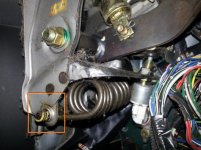
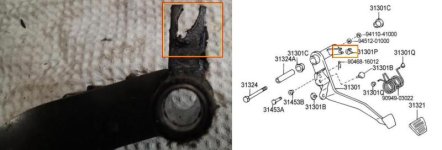
the white bushing is part number 31301P where the spring goes into the pedal.

Thank you very much for those photos and for the part number as I didn't even look at the location you showed, so I totally missed where bushing "P" is, since I was looking at bushing "Q".

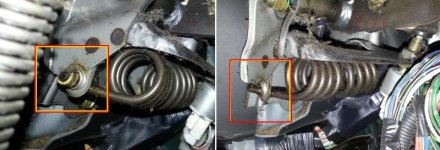
I created a panorama of your photo with the diagram.
Is the boxed-in area the location you suggest I look at closely?
 

Attachments

  • pedal_stick.jpg
    pedal_stick.jpg
    28.9 KB · Views: 4,851
That diagnosis test by TheDurk and the bracket photo from Rockdawg84 helped a lot.

Just went back down under, and there is not only no bushing in the "P" position, but the clutch-pedal metal has sharp spurs, as if it was cut by a gouge.

I presume the spring metal is harder and that the clutch pedal metal is softer, but there is no evidence of a white plastic C-shaped "P" bushing!

Given the softer brake pedal metal is galled, what do you think the ramifications are?

Is it difficult to just replace the missing "P" and "Q" white plastic bushings?
Or, is the correct replacement a new pedal (and unknown other associated parts like the spring and the "P" and "Q" bushings)?
 

Attachments

  • spur3.jpg
    spur3.jpg
    72.4 KB · Views: 18,661
Last edited:
Status
Not open for further replies.

Members online

Forum statistics

Threads
278,316
Messages
3,554,123
Members
248,016
Latest member
Advally Service

Trending content

Back
Top