
You are using an out of date browser. It may not display this or other websites correctly.
You should upgrade or use an alternative browser.
You should upgrade or use an alternative browser.
Alignment specks
- Thread starter bberry985
- Start date
Register to hide this ad

mrpurplepenguin
New member
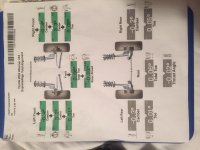
Your specs look fine!
FYI, having a lift shouldn't change your target specs, it just makes them a bit harder to hit (particularly caster).
FYI, having a lift shouldn't change your target specs, it just makes them a bit harder to hit (particularly caster).

NinjaOne
New member
If you wanted to be a prick (like me) you would make them hit closer to targets than just within the specs but yes those alignment numbers look fine.
Hahaha. My dealer claims I am "within specs" @ 1.5° castor post-lift :hello:
OP, yeah, those look great and should be expected in stock form.

blackoutt
New member
Looks exactly like I would want mine.
Blackout would look like a total douche if he asked for anything different. There is nothing worse than being a guy that makes demands for something that he knows nothing about.
You don't get what you want in life unless you ask for it, and then demand it anyway when you're told no!
But yes I am a douche in real life. A happy douche.
You don't get what you want in life unless you ask for it, and then demand it anyway when you're told no!
But yes I am a douche in real life. A happy douche.
Please humor me. What specs would you ask for?
blackoutt
New member
Please humor me. What specs would you ask for?
Apologies for the serious response with lack of humor and insults but here's my personal preference and why, hopefully it'll help someone else.
On my personal setup (which is not what the OP is asking about) with SPC UCA's which allow the camber and caster to be roughed in with a great range of adjustment and fine tweaking on the cam bolts I would target 0 camber, 3.2 caster, 0 toe. I know that I don't really care what my camber is for sports car like handling but that's not what this is about, 0 square is best for tire wear. 3.2 caster is personal preference from experience on this setup. There are lots of suggestions out there to try to target 4.0 for lifted setups but I didn't like the bumpsteer that it induced; 2.5 to 4.0 creates a wild difference in steering feel, unless you can't feel it then who cares. Finally, 0 toe also for tire wear, slight toe in if any but I prefer to not feel the toe in pushing feedback like I do every time I get in a rental car.
Here's how I challenge the general dealer/shop response that "anywhere in the green is great" although I do not dispute that those are the specs set by Toyota, anywhere in the box is not created equally!:
Get a knowledgeable tech (or two!) with enough free time to actually hit a number and not just a green light. Yes it can be time consuming so be sure to authorize to pay for additional labor over the normal time slot to get the specs you want. Set your alignment all to the little numbers on the top left of the boxes (high left side specs, low right side specs), drive the 4runner a couple days and note handling observations.
Go back and set the right side all to the little numbers on top right of the boxes (still high left side specs, now high right side specs) drive the 4runner again a couple days and note handling observations.
Go back and target to the center of all the ranges or perhaps my preferred 0,3.2,0. Drive the 4runner again a couple days and note handling observations.
Did you feel a difference? If not then great, you can save lots of time and money worrying yourself with adjustable parts and alignments, go to the HID retrofit threads instead. If you can feel a difference then you decide if it's worth it to you to purchase components with more adjustability and can also choose to ask for a "better" alignment, which is entirely possible with the right tech.
Now if you really want to get out there, load the 4Runner up with your normal load, average fuel tank level, and sit in the vehicle during the alignment. Require adjustment of SPC UCA's such that the cam adjusters are not vastly different from front to rear causing uneven pressure distribution in the bushings that could lead to premature wear or binding. Also question the most recent calibration of the alignment rack and training of the tech. Bring your own tools to verify everything is level and square. This is the stage that I would consider going too far but to each their own if you can feel the difference at that point.
Last edited:
chompster4runner
New member
Apologies for the serious response with lack of humor and insults but here's my personal preference and why, hopefully it'll help someone else.
On my personal setup (which is not what the OP is asking about) with SPC UCA's which allow the camber and caster to be roughed in with a great range of adjustment and fine tweaking on the cam bolts I would target 0 camber, 3.2 caster, 0 toe. I know that I don't really care what my camber is for sports car like handling but that's not what this is about, 0 square is best for tire wear. 3.2 caster is personal preference from experience on this setup. There are lots of suggestions out there to try to target 4.0 for lifted setups but I didn't like the bumpsteer that it induced; 2.5 to 4.0 creates a wild difference in steering feel, unless you can't feel it then who cares. Finally, 0 toe also for tire wear, slight toe in if any but I prefer to not feel the toe in pushing feedback like I do every time I get in a rental car.
Here's how I challenge the general dealer/shop response that "anywhere in the green is great" although I do not dispute that those are the specs set by Toyota, anywhere in the box is not created equally!:
Get a knowledgeable tech (or two!) with enough free time to actually hit a number and not just a green light. Yes it can be time consuming so be sure to authorize to pay for additional labor over the normal time slot to get the specs you want. Set your alignment all to the little numbers on the top left of the boxes (high left side specs, low right side specs), drive the 4runner a couple days and note handling observations.
Go back and set the right side all to the little numbers on top right of the boxes (still high left side specs, now high right side specs) drive the 4runner again a couple days and note handling observations.
Go back and target to the center of all the ranges or perhaps my preferred 0,3.2,0. Drive the 4runner again a couple days and note handling observations.
Did you feel a difference? If not then great, you can save lots of time and money worrying yourself with adjustable parts and alignments, go to the HID retrofit threads instead. If you can feel a difference then you decide if it's worth it to you to purchase components with more adjustability and can also choose to ask for a "better" alignment, which is entirely possible with the right tech.
Now if you really want to get out there, load the 4Runner up with your normal load, average fuel tank level, and sit in the vehicle during the alignment. Require adjustment of SPC UCA's such that the cam adjusters are not vastly different from front to rear causing uneven pressure distribution in the bushings that could lead to premature wear or binding. Also question the most recent calibration of the alignment rack and training of the tech. Bring your own tools to verify everything is level and square. This is the stage that I would consider going too far but to each their own if you can feel the difference at that point.
My alignment looked exactly like the op but I still had twitchy steering so I went back to the shop and asked the tech to check again. Sir, it's within spec. I politely asked how about trying to get the number close to zero instead?
Twitchy steering solved.
Most vehicles can get away being within spec. 4runners are not one of them.
Apologies for the serious response with lack of humor and insults but here's my personal preference and why, hopefully it'll help someone else.
On my personal setup (which is not what the OP is asking about) with SPC UCA's which allow the camber and caster to be roughed in with a great range of adjustment and fine tweaking on the cam bolts I would target 0 camber, 3.2 caster, 0 toe. I know that I don't really care what my camber is for sports car like handling but that's not what this is about, 0 square is best for tire wear. 3.2 caster is personal preference from experience on this setup. There are lots of suggestions out there to try to target 4.0 for lifted setups but I didn't like the bumpsteer that it induced; 2.5 to 4.0 creates a wild difference in steering feel, unless you can't feel it then who cares. Finally, 0 toe also for tire wear, slight toe in if any but I prefer to not feel the toe in pushing feedback like I do every time I get in a rental car.
Here's how I challenge the general dealer/shop response that "anywhere in the green is great" although I do not dispute that those are the specs set by Toyota, anywhere in the box is not created equally!:
Get a knowledgeable tech (or two!) with enough free time to actually hit a number and not just a green light. Yes it can be time consuming so be sure to authorize to pay for additional labor over the normal time slot to get the specs you want. Set your alignment all to the little numbers on the top left of the boxes (high left side specs, low right side specs), drive the 4runner a couple days and note handling observations.
Go back and set the right side all to the little numbers on top right of the boxes (still high left side specs, now high right side specs) drive the 4runner again a couple days and note handling observations.
Go back and target to the center of all the ranges or perhaps my preferred 0,3.2,0. Drive the 4runner again a couple days and note handling observations.
Did you feel a difference? If not then great, you can save lots of time and money worrying yourself with adjustable parts and alignments, go to the HID retrofit threads instead. If you can feel a difference then you decide if it's worth it to you to purchase components with more adjustability and can also choose to ask for a "better" alignment, which is entirely possible with the right tech.
Now if you really want to get out there, load the 4Runner up with your normal load, average fuel tank level, and sit in the vehicle during the alignment. Require adjustment of SPC UCA's such that the cam adjusters are not vastly different from front to rear causing uneven pressure distribution in the bushings that could lead to premature wear or binding. Also question the most recent calibration of the alignment rack and training of the tech. Bring your own tools to verify everything is level and square. This is the stage that I would consider going too far but to each their own if you can feel the difference at that point.
Clearly you are the douche that every tech laughs at. A know it all that really knows just enough to look like a dumbass that comes in demanding specific numbers. Let me give you a little advice. The specs are set in a static environment. When you are moving, they change. Your idea of zero camber and zero toe are stupid. You are probably the same clown who knows more than everyone then comes back crying when his tires are wore out.
Finally, 0 toe also for tire wear, slight toe in if any but I prefer to not feel the toe in pushing feedback like I do every time I get in a rental car.
That is the biggest bunch of nonsense I think I have seen. I have yet to see anyone that can feel a change in toe.
One thing we both can agree on is that you are a prick especially if you ever go into a shop with your less than expert knowledge.
mrpurplepenguin
New member
Clearly you are the douche that every tech laughs at. A know it all that really knows just enough to look like a dumbass that comes in demanding specific numbers. Let me give you a little advice. The specs are set in a static environment. When you are moving, they change. Your idea of zero camber and zero toe are stupid. You are probably the same clown who knows more than everyone then comes back crying when his tires are wore out.
That is the biggest bunch of nonsense I think I have seen. I have yet to see anyone that can feel a change in toe.
One thing we both can agree on is that you are a prick especially if you ever go into a shop with your less than expert knowledge.
Dude, no need for the hostility and names; it's just a different opinion on a computer screen.
FWIW, on a much smaller, sportier car I asked around a few alignment shops to find one that would do a custom alignment vs. just hitting the factory numbers. Cost a few extra dollars, but they hit my targets exactly - with a tech sitting in the driver's seat to get the suspension settled. Glad I did that though, the car was much more composed for AutoX and track days than it was on the factory numbers.
And a change in toe is definitely noticeable, it's just a question of how much before it's noticed.
Back on topic: I figured the OP was asking if theit alignment was 'alright' and didn't have much deeper knowledge. If that's the case - those specs look fine!
chompster4runner
New member
Touchy forum.
For the op you're good to go unless it doesn't drive straight or something.
For the op you're good to go unless it doesn't drive straight or something.

BlackWorksInc
New member
To be fair, I am not entirely happy with that camber setting myself. It's not bad per say; but I like to be more around 0 to -.2 Degrees; yes it's a static measurement and yes it will change upon compression/extension... but that's why at "rest" I'd like it to be fairly neutral (which is also what the specifications tend to call for). Caster is fine, I set mine at a Positive 4 Degrees and I am happy with it there (there was a bit of a difference at lest to me); but I had it about 3.3~3.5 before.
Toe is measurement that has some effect on tire wear, but not at these numbers; though I prefer to shoot for fairly even numbers myself. All in all I'd say that's a good alignment.
Toe is measurement that has some effect on tire wear, but not at these numbers; though I prefer to shoot for fairly even numbers myself. All in all I'd say that's a good alignment.
To be fair, I am not entirely happy with that camber setting myself. It's not bad per say; but I like to be more around 0 to -.2 Degrees; yes it's a static measurement and yes it will change upon compression/extension... but that's why at "rest" I'd like it to be fairly neutral (which is also what the specifications tend to call for). Caster is fine, I set mine at a Positive 4 Degrees and I am happy with it there (there was a bit of a difference at lest to me); but I had it about 3.3~3.5 before.
Toe is measurement that has some effect on tire wear, but not at these numbers; though I prefer to shoot for fairly even numbers myself. All in all I'd say that's a good alignment.
Toe is the measurement that has the majority of effect on tire wear. Toe on rear wheel drive vehicles is almost always positive because the push causes the front wheels to go negative. Basically in theory if you were to disconnect the steering components and you were to push your car the wheels will turn outward on both sides. Conversely the opposite happens with front wheel drive happens so those tend to be negative.
The next time your hunter rep happens by ask him to demo the "little wood car". It is a tool that in about 5 minutes you can visually understand everything there is to know about the theoretical concepts.
BlackWorksInc
New member
Toe is the measurement that has the majority of effect on tire wear. Toe on rear wheel drive vehicles is almost always positive because the push causes the front wheels to go negative. Basically in theory if you were to disconnect the steering components and you were to push your car the wheels will turn outward on both sides. Conversely the opposite happens with front wheel drive happens so those tend to be negative.
The next time your hunter rep happens by ask him to demo the "little wood car". It is a tool that in about 5 minutes you can visually understand everything there is to know about the theoretical concepts.
I meant more that I like to have even Toe Numbers and while the Toe in the OP's post isn't as even as I'd like; it's not going to cause wearing issues on the tires.
But I do appreciate the information and I wanna see this neat little wooden car!

Dude, no need for the hostility and names; it's just a different opinion on a computer screen.
FWIW, on a much smaller, sportier car I asked around a few alignment shops to find one that would do a custom alignment vs. just hitting the factory numbers. Cost a few extra dollars, but they hit my targets exactly - with a tech sitting in the driver's seat to get the suspension settled. Glad I did that though, the car was much more composed for AutoX and track days than it was on the factory numbers.
And a change in toe is definitely noticeable, it's just a question of how much before it's noticed.
Back on topic: I figured the OP was asking if theit alignment was 'alright' and didn't have much deeper knowledge. If that's the case - those specs look fine!
Not trying to be hostile. Just trying to save the rest of you from being "that guy". There is nothing worse than reading something on the internet and thinking you are an expert then going in and telling someone that does how to do their job. Are there bad techs out there? sure there are, but going in like someone like blackoutt will do nothing to uncover them and will only serve to make your experience a potentially bad one.
It is no mystery that the specs are broad and there are more optimal settings in those specs than others. The vehicle manufactures create these number for various reasons. Ride quality, performance, gas mileage, serviceability requirements, etc. In the real world we tend to focus on two points, tire wear and ride quality.
A good tech doesn't want a customer to have to come back so it is in in their best interest to set the alignment within the specs to meet that criteria because the specs are broad enough that you could be at the extremes, but still within spec and have ride quality issues. That is where you should leave it to the professionals. About the only time a tech would welcome someone coming in with their own specs are in custom applications. A guy that autocrosses his Miata, the guy that has done a solid axle swap on his lifted truck, etc. Anyone else, you are asking for trouble going in and saying that you read on the internet that your caster to be set at 3.5 instead of 3.2.
I meant more that I like to have even Toe Numbers and while the Toe in the OP's post isn't as even as I'd like; it's not going to cause wearing issues on the tires.
But I do appreciate the information and I wanna see this neat little wooden car!
It looks like this:
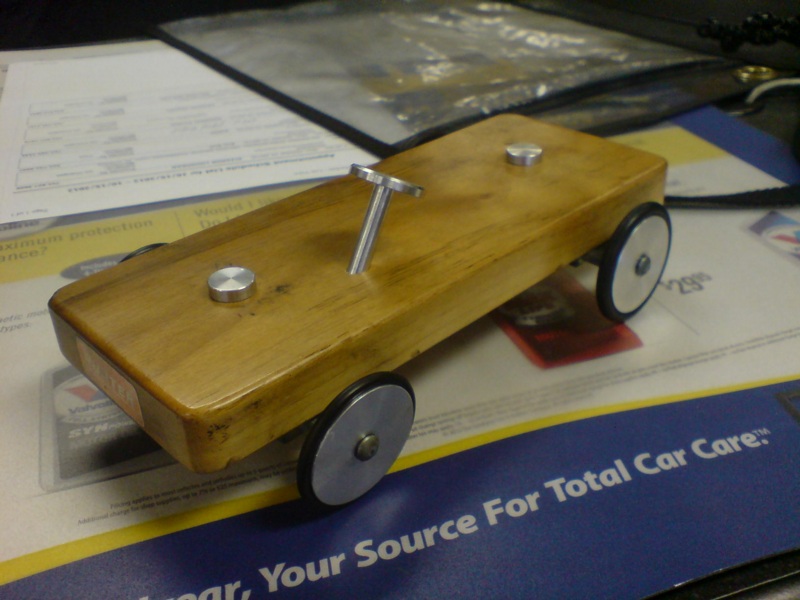
We had this thing around our shop for years and thought it was just something that was a kids toy until our rep showed us how it works. It really is a awesome tool to explain the principles of wheel alignment. The best thing is being able to show someone visually why camber is not necessarily important for tire wear compared to toe.
Toe is the measurement that has the majority of effect on tire wear. Toe on rear wheel drive vehicles is almost always positive because the push causes the front wheels to go negative. Basically in theory if you were to disconnect the steering components and you were to push your car the wheels will turn outward on both sides. Conversely the opposite happens with front wheel drive happens so those tend to be negative.
So, based on this, am I correct in concluding that toe on my full-time 4wd should be set to zero, since the fronts and rears are pushing the same amount?
Similar threads


- Replies
- 3
- Views
- 4K


