
Bilstein snapped....

NOOB4RUNNER

New member
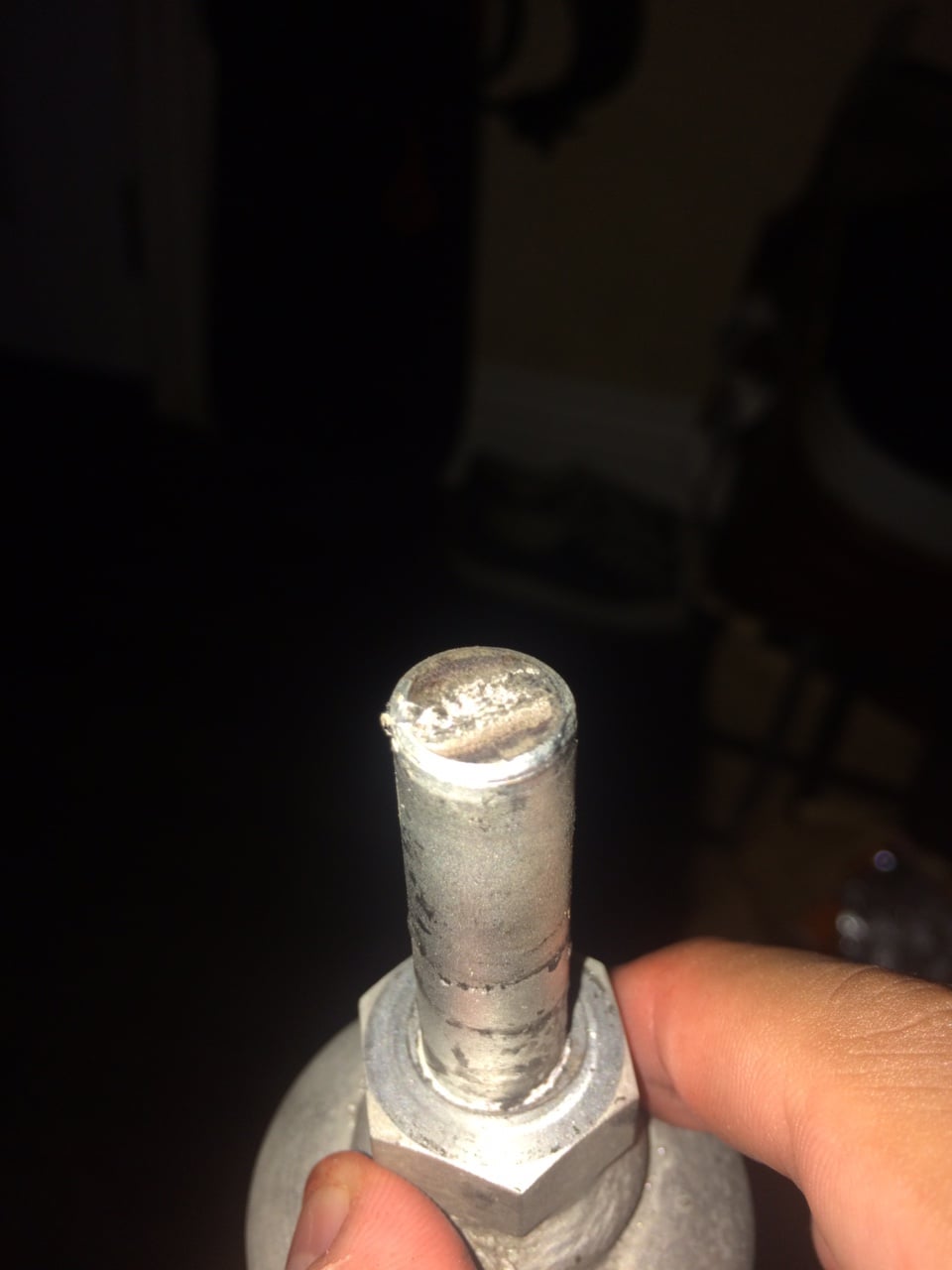
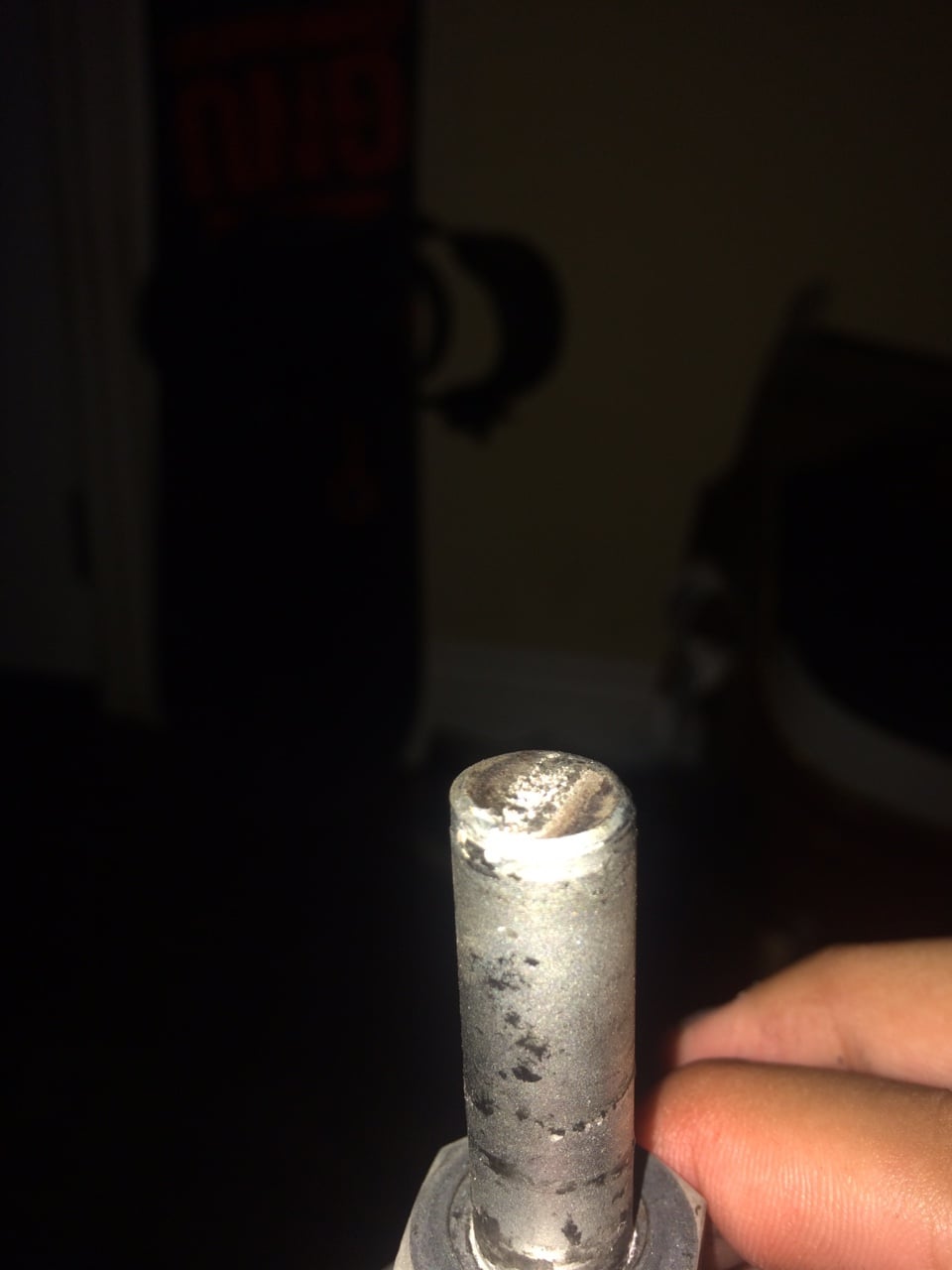
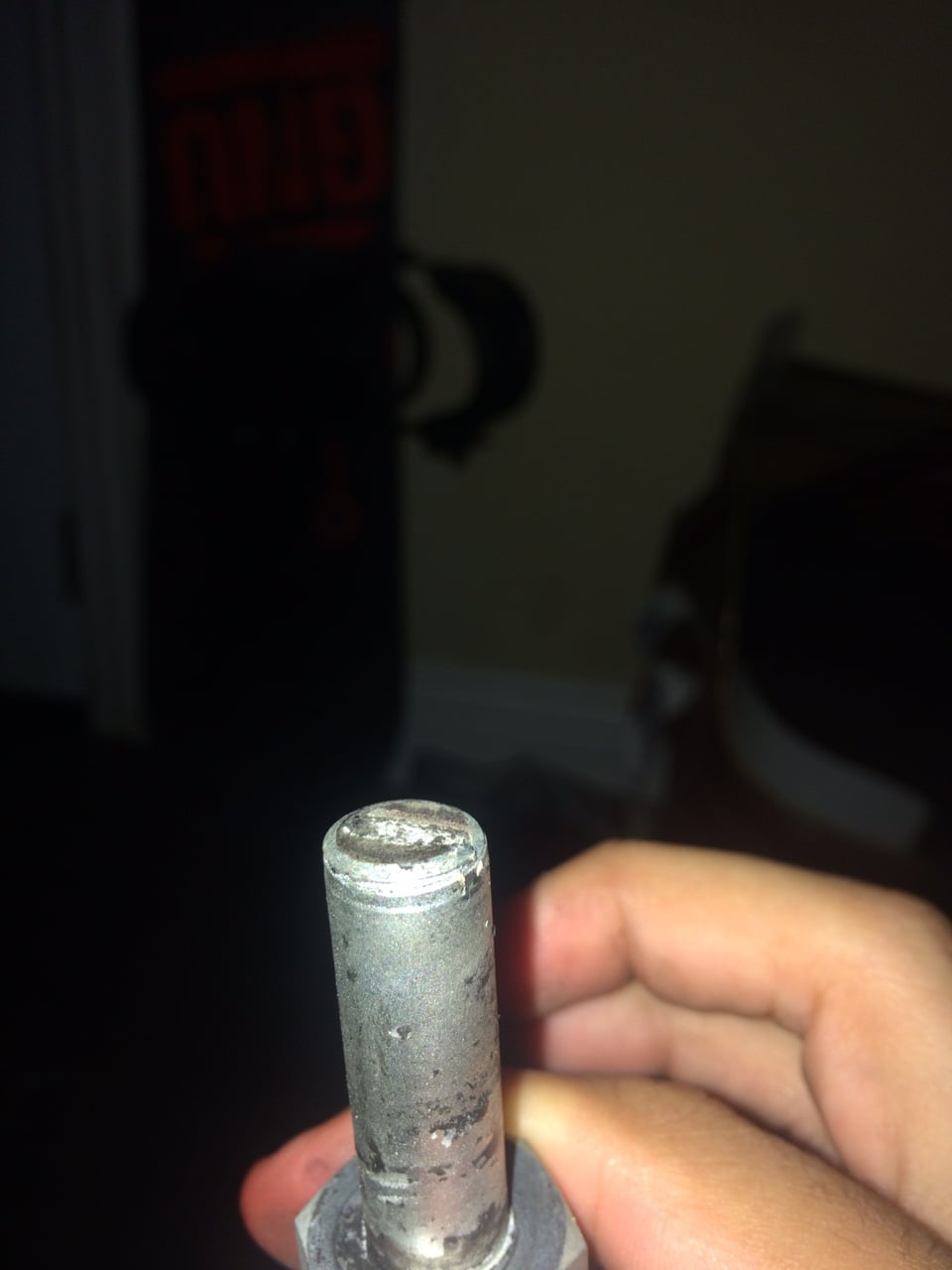
So I had these on my truck for less then a year and two days ago the rear shock threading snapped off.

To me though it almost looked like it was cut off? Or could this just be due to the them tightening it too much?
4732d0780601600b3eebdb98efcfa942.jpg
90fdc83df95d2d7633fd18cfdd166a61.jpg
daab60fca319898e32ce55fee00e8082.jpg


Sent from my iPhone using Tapatalk
 
Register to hide this ad
You don't happen to have a spacer lift back there do you?

FYI, it isn't uncommon for spacers to cause fatigue in shock absorbers over time, especially if you go offroading even mildly. Sure most people will get away with spacers and have no ill effects, but it is common enough to be documented across many different vehicle platforms.

Good luck trying to get that waranteed. Its probably better that you replace your shock, and get the correct spring to go with it, and remove any spacers on the rest of your shocks if you have any future plans on going offroading.

In another thread, i started to mention why spacers aren't the greatest, but the internet experts on that particular thread were so enamored with spacers (mainly because that is what they purchased), that it wasn't worth it for me to mention the cons of spacer lifts.
 
Last edited:
One more failed Bilstein shock. This is why I won't buy them.


I don't follow the logic about spring spacers causing the failure though. What difference would there be between an OEM coil with a 1.5" spacer over a Wheelers T13 +1.5" coil spring?
 
I didn't see the OP say what model or length.

If its a rear and its the correct length shock (+ 0-2in) and bump stop, the spacer shouldn't matter. The factory spring with a 1-2in spacer, +0-2in shock and correct bump stop shouldn't have an issue. You won't get a full range of travel, but is common with any spacer.

On the warranty ... good luck. You may have the best luck going through a local shop.
 
Last edited:
This happened to his rear shock. spacer lifts on IFS coil overs are different than a spacer on top of your solid axle rear springs...
 
Okay folks - spacer lifts are a problem in the FRONT. This is a REAR shock. The two have nothing to do with each other.

In the rear end the shock is designed to act as the limiting member of the suspension on down travel. The failure at the base of the threads indicates that it was either over-tightened causing the stem to fail (which is unlikely given that it should have thick rubber bushings on both sides of the mounting tab that would give long before it would overtension the stem), or it's a manufacturing defect with low quality material. I think those are aluminum right? I don't have any bilstein shocks on my vehicle. Or possibly it was installed wrong without the proper rubber bushings.

IMO unless something else very unusual happened like you impacted the shock in some bizarre way, this should be replaced by the manufacturer.


Edit: I reverse my opinion on over tightening. Since it's at the base of the threads it could be over-tightened against the end of the threads rather than against the bushings/mounting tab. Again this should not happen as they should be manufactured with sufficient thread that you never reach the end with the nut, but it might be possible to cause a failure by over tightening with insufficient threads. Or using a cross threaded nut on aluminum and twisting the shaft causing a failure. I still think it's a function of possibly using a low grade of aluminum for the stem. But it could be an installation error.
 
Last edited:
The mounting stem that broke is made of steel, not aluminum.

There was a weakness at the shoulder of the threads, so it snapped off there under stress. Manufacturing defect, material defect, or improper bushing installation.

Stuff fails. It happens. Replace it and move on. By all means try to get the part replaced under warranty if the $50 would be a strain.

As for the comment about never buying Bilstein shocks because they fail so often: pure absurdity. In the big picture, Bilstein products are very likely equally as reliable as any other brand -- we just hear about the failures more often here because so many people run them.
 
So I had these on my truck for less then a year and two days ago the rear shock threading snapped off.

To me though it almost looked like it was cut off? Or could this just be due to the them tightening it too much?
daab60fca319898e32ce55fee00e8082.jpg

Failure looks like bending fatigue. Looks like it began to crack along opposite sides along the bottom of the threaded section then cracks progressed inward until the reduced cross section could no longer support the stress and finally failed.
 
it's hard to tell in the pictures, and its been years since undergrad and this isn't the type of thing I do but in my unqualified opinion this looks like textbook reverse bending fatigue due to the smooth gradients on each side then the rough fractured part in the middle.

it does not appear to be from rotation which would fracture outwards in different directions and compression would cause the lines to radiate from a weak spot along an edge


i could totally be wrong though, i'm just remembering stuff from undergrad but this isn't the kind of engineering i studied
 
Last edited:
How does the mount look now? Were you able to catch it quickly enough after it snapped so that the upper shock mounting hole didn't get wallowed out?
 
it's hard to tell in the pictures, and its been years since undergrad and this isn't the type of thing I do but in my unqualified opinion this looks like textbook reverse bending fatigue due to the smooth gradients on each side then the rough fractured part in the middle.

it does not appear to be from rotation which would fracture outwards in different directions and compression would cause the lines to radiate from a weak spot along an edge


i could totally be wrong though, i'm just remembering stuff from undergrad but this isn't the kind of engineering i studied

If I squint and lean my head to the side, I could almost convince myself there would be a point of origin around 4 o'clock where the staining on the lower half is darkest. You could almost say the is a line there that runs linear that could have been a point load.
But that is just kind of guessing lol
 
As the suspension moves through its travel, the bottom mount of the shock doesn't move exactly up and down relative to the top -- it moves laterally a bit too. Accommodating this lateral motion is part of why the top of the shock is mounted with rubber bushings. It occurred to me that if the top nut was way over-tightened, the bushings would have no give, and the shock stem would have to bear most of the bending stresses imparted as the lower mount tried to move the shock laterally. Seems like a recipe for a metal fatigue failure to me, and it makes sense that the shoulder of the threads would be where it would let go.
 
fwiw, typically threaded fasteners fail at the first engaged thread. Usually at least 1/3 of the total load on the nut/bolt interface is borne by the first engaged thread. So I assume that this is where the nut was tightened to. I could be wrong though. These also appear to be cut threads which are weaker than rolled threads. However - the stem shaft is of sufficient diameter that it's very odd that it would ever fail without a major defect. This isn't something that's happening with OEM shocks that have significantly smaller stem size.

The rubber bushings should offer sufficient flex to allow for full range of motion of the shock body. There almost had to have been some weakness in the stem at that point for this to happen and then a long period of flexing back and forth before it finally failed. Or the stem is so close to the hole in the mounting tab that it couldn't move with the rubber, or something like that.
 
Last edited:
Warranty

GENERAL AFTERMARKET WARRANTY

thyssenkrupp Bilstein of America warrants its gas pressure shock absorbers against defects in workmanship and materials for as long as you, the original purchaser, own your car.

If a shock/strut malfunctions and BILSTEIN determines it to be defective, we will either replace it or repair it, depending on the term of the warranty based on the assembly's model type.

LIMITED LIFETIME WARRANTY

B4 OE Replacement / B6 / B6 Performance / B8 Performance Plus / B12 Series / B14 (PSS) / B16 (PSS9 & PSS10) / B6 4600 / B8 5100 / B8 5100 (Ride Height Adjustable) / B8 5112 / B8 6112

BILSTEIN warrants to the original retail purchaser that, for the life of each gas pressure shock, this product shall be free from defects in material and workmanship. Proof of purchase is required to process warranty. Please return product to the original place of purchase.

See:
Warranty
 
[MENTION=165491]Argyle Edison[/MENTION]
i think i clarified that i'm not an expert, but basic failure modes are part of most undergrad engineering curriculum and there are a lot of practicing and non practicing engineers on this board. IMO that looks exactly like the diagram for reverse bending fatigue, if there is a region of slow propagation at the 4:00 as someone said then it's harder to tell
 
Last edited:

Members online

Forum statistics

Threads
278,304
Messages
3,554,041
Members
248,016
Latest member
Advally Service

Trending content

Back
Top