Calling on Alaskans/Canadians and other cold weather folk

Frontier719

New member
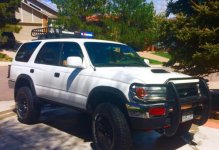
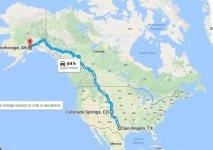
There's a good chance I'll be relocating to Anchorage from west texas this winter so I'm debating what to do with the runner. Ive had it for about two years now and have done all the major maintenance (timing belt/wp, ball joints, valve cover gaskets, drive belts, radiator, suspension lift, new tires, and heated seats) and it runs like a top with 230,000 miles.

But in the back of my mind, regardless of how reliable the car has been, having driven it across the country 5 times, something about driving it up the Alaska Highway in december/january makes me a little uneasy. My main concerns are -40 degree weather and how desolate the trip is.

My options:
1. Slap a block heater in it, suck it up buttercup, and take the runner on a road trip of a lifetime.

2. I've been considering buying a diesel pickup (Sierra/Silverado 2500HD), drop the runner off at my parents' house in colorado and make the rest of the trip in a newer pickup--I know I might be over-buying for my situation, but I've always wanted a diesel pickup too.

How to I prevent against salt corrosion, what type of oil do you run up in the arctic, and should I use straight antifreeze or still mix it with distilled water?
 

Attachments

  • Screen Shot 2016-09-18 at 8.29.13 AM.jpg
    Screen Shot 2016-09-18 at 8.29.13 AM.jpg
    45.6 KB · Views: 455
  • Screen Shot 2016-09-18 at 8.45.35 AM.jpg
    Screen Shot 2016-09-18 at 8.45.35 AM.jpg
    61.2 KB · Views: 462
Register to hide this ad
Yes to block heater, 50/50 antifreeze mix, steam clean frame and oil rustproof annually, weekly underbody washes if possible in the winter....invest in a winter tire set? Drive it & don't worry about it.

Sent from my SM-N900W8 using Tapatalk
 
Slap a block heater in it and call it a day. I run 5w30 in mine and it has always started without delay even when it has sat out in -30 for two days. I run a 60/40 mix of antifreeze and water which has a freeze point of around -45 last time I tested it. You can get a better freeze and boil point by mixing rather than running straight coolant or water. There really isn't much you can do for corrosion other than keep the layers of salt down and dont let it sit on there for too long. Some people spray their undercarriage with oil but that makes a huge mess.
 
Maybe use water-less antifreeze? Unless you have a leak or replace something, you NEVER have to flush or change it.
 
No reason not to take the Runner....it will likely start easier in the cold.

That said, buy the diesel truck (if you can afford it)....if you have a potential tow rig....your Runner can get a lot more extreme. ;)

And....pickup trucks are always handy to have.
 
I lived in Anchorage for some time. I will tell you, block heater, maybe. If your house has a garage, then you won't need it. Run just your normal stuff up there. They don't use salt in Alaska, it's gravel. So be prepared for windshield chips and cracks. It's not really that bad, but it will be a shock coming from west Texas. Make sure if you go near the saltwater you're rinsing your rig though.
 
Idaho we see -30 every year.

so diesels will have a harder time starting because they start by igniting the air.
at least you should change all All ALL the fluids to synthetic.
engine, x case, and front and rear diffs.

you may also develop a problem with your brake booster check valve. when it gets cold on start up for the first time of the day it will stick and you will only have 10% of peddle stopping power. so when this does happen just smash on the brakes as hard as you can to get the truck to stop and put it back in park. pump the brakes a few times until pedal returns to normal. You can search what needs fixed/ greased to help stop this problem. its the brake booster check valve.

Some more tips that you could do it block off the front grill with a bra/ carboard to prevent so much airflow across the radiator it keeps the engine too cold and you will never reach operating temps. i put cardboard over half my radiator and finally got the temps able to run a steady 195 which is my normal temps where is was staying in 170 full time running around in the winter. this also helps your interior heat get hotter.

also i would get or recommend a battery blanket. keeping the battery warmer always help it start better in the morning.

you know there are 2 types of "engine heaters" a true block heater that removes and engine freeze plug and a coolant line. the true block heaters are better and heat the coolant inside the block. As an example, your truck will start in those low temps with out the block heater plugged in, but a diesel will probably take 5-10 min of trying to get it to start. (also depends on how new the diesel is.

remember to start the truck and get it warming up atleast 3-5 min before you go drive. (depends on temps) i do generally when its below 0 or a touch higher.

another good idea is to buy an electric heater to get the cab warming up so its not so cold after that 3-5 min of truck warm up and you dont have to freeze in the cab until the truck get hot enough to turn the heater on (which is about 5 min)
 
You're worried about prepping the 4Runner for cold, but consider a diesel pickup as a viable solution?

The diesel will be harder to start in the cold and the cold will be harder on the engine due to the larger block mass and larger oil capacity that takes longer to warm up.

Idaho we see -30 every year.

Some more tips that you could do it block off the front grill with a bra/ carboard to prevent so much airflow across the radiator it keeps the engine too cold and you will never reach operating temps.

When it's that cold it's airflow through the engine bay that keeps it cold. The radiator isn't part of the equation until the thermostat opens and at 30 below the thermostat isn't going to be opening.
 
Last edited:
As mentioned upthread salt is not a concern. In AK they use gravel and lots of it. I made a similar trip in an 87 Jeep Wrangler with 250,000 miles on it. I went to school in Fairbanks and thought it would be a great idea to drive from New Jersey to Fairbanks in that Jeep with it's soft top. Luckily I was young and the world was mine for the taking.

I did that drive in late August and I can tell you the the drive is worth it. The ALCAN is amazing. By the time winter set in I had installed a block heater, battery heating pad, and found a hard top. I spent 2 years there without ever returning to the lower 48. That rig did it's job every time. Anchorage isn't nearly as cold as Fairbanks so take the runner and take your time on the drive. It's worth it.
 
You're worried about prepping the 4Runner for cold, but consider a diesel pickup as a viable solution?

The diesel will be harder to start in the cold and the cold will be harder on the engine due to the larger block mass and larger oil capacity that takes longer to warm up.


When it's that cold it's airflow through the engine bay that keeps it cold. The radiator isn't part of the equation until the thermostat opens and at 30 below the thermostat isn't going to be opening.
Uhhhhh the thermostat will absolutely open up once the truck gets warm??
How else will your interior heat work?
 
If you've added a seperate transmission fluid radiator to avoid the dreaded pink milkshake, you might consider changing the configuration so the fluid runs through both radiators.

Cold transmission fluid can do damage and, unless the fluid is run through the main engine radiator, it will take much much longer to warm up your transmission fluid in -40 degree weather.
 
Sounds like a great trip. Take the 4runner. There are lots of them up here, Toyotas are very popular. There's a dealership in the Yukon if you need anything.

The Alcan is NOT a desolate route, at least by Yukon standards. You will see lots of traffic, especially transport trucks. People are very good about helping if you have trouble. It might be a little quiet at night so have some warm gear in case you have to wait a while.

A quieter and more scenic route is the Stewart Cassiar Highway. Try to drive them both if you can at some point.
 
Uhhhhh the thermostat will absolutely open up once the truck gets warm??
How else will your interior heat work?

The water pump circulates coolant through the heater core whether the coolant/engine is warm or not.

At 30 below, IF the thermostat opens it's going to be for very short periods of time. There's enough cold air at that temp to keep the block cool with very little input from coolant passing through the radiator.
 
Had my runner for over 5 years in fort McMurray, lowest Temp I have experienced is -45 deg C. with an average low of -25deg C in dec- feb.

1. I don't have a block heater- truck did not come with one- and I don't plan on putting one.
2. I use full synthetic oil- 5W-30
3. Coolant system is filled with concentrate - no mixing
4. I keep half of the radiator covered with cardboard
5. No salt in my area- gravel- I spray the under body with asphaltic coating.

I have had one starting problem in 5 years and it was battery related. dome light left on, battery drained and was frozen. I was told the water in the electrolyte "dissociates" once it discharges and the water in the electrolyte freezes and expands- damaging the cells in the battery. Voltage only goes up to 11.5V and the bottom side of the battery swells. Makes sense as the 35% Hydrochloric acid at my workplace is stored outdoors in FRP tanks without insulation.

You can only start as long as your battery doesn't freeze. If you are using the standard lead acid battery and you manage to get it drained in cold weather it will be damaged. Get a good AGM battery- Eliminator or a good Optima. (Those are really worth the money)

I tried the battery warming blanket but they can heat up your battery and eventually dry out the electrolyte.

Also keep some lock de-icer handy as i have noticed my door lock solenoids can become sluggish when its really cold.

Just some info on my experiences in cold temps.
 
Just get a good battery. When I lived in Bismarck North Dakota I worked nights and parked my 2nd gen outside without plugging in the block heater. Never had any problems starting, even down to -30F. I poured a bottle of HEET into the fuel tank once a week or so to keep any moisture out so it wouldn't freeze in the fuel lines.

You will however learn to tell the temperature without a thermometer by the sounds your car makes, the stiffness of your seat, and the stiffness of your clutch if a manual.

Keep your ears covered, get a place with a garage.
 
thanks all for the advice--I guess I should sum up my response to everyone on here.

My reasoning for a new diesel - I finally have a real adult job so I can afford a decent used late model one, and I really want a big truck. Plus, I'm in the military and the 4runner isn't as practical as I thought it would be hauling my crap around the world. Also, the small gas tank only gets me a range of ~220 miles (less when its loaded with my stuff).

Glad the alcan isnt as desolate as everyone is saying it is.

As for the gravel--good, I hate salt. I grew up in colorado so I understand the perils of gravel--I just replaced my windshield when I moved to texas for the first time because I never saw the point in colorado--unfortunately a semi just kicked a rock up and smashed my new windshield last week. :fish:

Thanks for the advice. Guess i'll wait and see how things shake out. I wish tundra's werent so ugly and expensive--this would make my decision a lot easier.
 

Members online

Forum statistics

Threads
278,316
Messages
3,554,121
Members
248,016
Latest member
Advally Service

Trending content

Back
Top