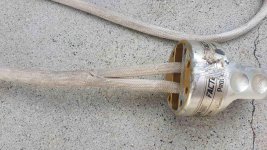
Custom High End winch ropes

ptsailing

New member
Bare with me....its a bit of a long read but I would love your thoughts at the end.

I have been toying with making a Gucci custom winch rope. The first one I built on my own was out of HTS90 that has a breaking load of 25500 lb. The concern I had was not the breaking load but the chafe resistance....which is the only factor that would make you go with a steel cable vs synthetic rope. Otherwise synthetic rope is superior, its far lighter for the same load rating, less danger if it were to fail etc.

Before I propose my idea let me explain: I have been a professional racing Grand Prix sailor for 15 years....competed for both the Australian and USA Olympic teams. Now my job is to race on Grand Prix sail boats where we use nothing but synthetic rope (steel cable sheets and guys similar to our winch cables died out back in the 80s).

A new rope manufacturer that one of my co workers started is making synthetic rope that is infinitely more chafe resistant than any other rope I have ever seen. One of the boats I race has a harness line for the crew. We are incredibly hard on the ropes and by the end of 2 days of racing, the line has usually chafed through and needs to be replaced. You always need to carry 2 or 3 spares.

My coworker has come up with a line that we are now using in this high chafe application....where I used to go through one line per weekend....I now have used the same piece of his line for 2 YEARS, racing almost every weekend and it is still going strong. I am not planning to replace it anytime soon. Its made out of the same material they make mining conveyor belts out of. What better material to make a winch cable from than one that was designed to be in the sun and drag rocks and dirt across it day in day out.

I figured this line could be made into an indestructible winch cable. The only fly in the ointment is price.

I want to build a few winch cables out of this stuff and see how much better it is. The problem is it comes on a spool of 700ft. Ill make myself a winch rope of 100ft but I cant afford to sit on 600ft of the stuff.

Id sell the remaining 600ft at cost if anyone wants one. Ill splice some ends onto the rope and make it so that it will be a finished winch rope when I send it out. Just wind it onto your winch and away you go. It will be the last winch rope you ever need.

Line Dia Breaking strength Price
3/8" 12,000 $3.70 per ft


Anyone interested? Help me out...What am I missing? Is this a bad idea?
 

Attachments

  • 20200405_153154.jpg
    20200405_153154.jpg
    133.9 KB · Views: 436
Register to hide this ad
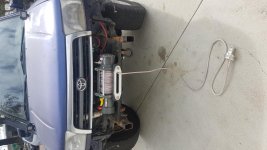
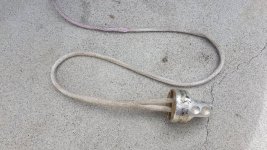
Photos of winch cable I made with a short chafe cover
 

Attachments

  • 20200405_153219.jpg
    20200405_153219.jpg
    139.1 KB · Views: 399
  • 20200405_153224.jpg
    20200405_153224.jpg
    145.3 KB · Views: 417
Last edited:
Anyone interested? Help me out...What am I missing? Is this a bad idea?

I'd like to see the actual manufacturers specs on the line. It's got a very low breaking strength for it's diameter. Is it a standard 12 strand line? Material composition?

I don't think it's a bad idea to think outside the box. Sailing and climbing(my background) both have tech that's made it into the off-road industry. Synthetic winch ropes wouldn't be a thing if sailors and climbers hadn't gotten away from nylon and into Kevlar/Dyneema in the late 80's.

Masterpull is pretty much the gold standard for synthetic winch and recovery line. To give you an idea, there shittiest load rating on a 3/8 line is 17.5K. That line is $3 a foot. There best line is rated at 29K. That line is $5 a foot.

The general rule for winch lines is 1.5x -2xhe breaking strength of the rating on the winch. So with a 9K winch your still only at 1.3x with your set-up. Will it fail? Probably not. In my case my winch is a 12K. There's no way I'd use that line.
 
Bare with me....its a bit of a long read but I would love your thoughts at the end.

I have been toying with making a Gucci custom winch rope. The first one I built on my own was out of HTS90 that has a breaking load of 25500 lb. The concern I had was not the breaking load but the chafe resistance....which is the only factor that would make you go with a steel cable vs synthetic rope. Otherwise synthetic rope is superior, its far lighter for the same load rating, less danger if it were to fail etc.

Before I propose my idea let me explain: I have been a professional racing Grand Prix sailor for 15 years....competed for both the Australian and USA Olympic teams. Now my job is to race on Grand Prix sail boats where we use nothing but synthetic rope (steel cable sheets and guys similar to our winch cables died out back in the 80s).

A new rope manufacturer that one of my co workers started is making synthetic rope that is infinitely more chafe resistant than any other rope I have ever seen. One of the boats I race has a harness line for the crew. We are incredibly hard on the ropes and by the end of 2 days of racing, the line has usually chafed through and needs to be replaced. You always need to carry 2 or 3 spares.

My coworker has come up with a line that we are now using in this high chafe application....where I used to go through one line per weekend....I now have used the same piece of his line for 2 YEARS, racing almost every weekend and it is still going strong. I am not planning to replace it anytime soon. Its made out of the same material they make mining conveyor belts out of. What better material to make a winch cable from than one that was designed to be in the sun and drag rocks and dirt across it day in day out.

I figured this line could be made into an indestructible winch cable. The only fly in the ointment is price.

I want to build a few winch cables out of this stuff and see how much better it is. The problem is it comes on a spool of 700ft. Ill make myself a winch rope of 100ft but I cant afford to sit on 600ft of the stuff.

Id sell the remaining 600ft at cost if anyone wants one. Ill splice some ends onto the rope and make it so that it will be a finished winch rope when I send it out. Just wind it onto your winch and away you go. It will be the last winch rope you ever need.

Line Dia Breaking strength Price
3/8" 12,000 $3.70 per ft


Anyone interested? Help me out...What am I missing? Is this a bad idea?
Interested, at least I think I should be. Seems like a sound idea...

Sorry, I'm ignorant on such matters. The last time I used a winch was on an FJ-40, like 30 years ago. Steel cable... Last year I purchased a Smittybilt (98510) X2O:

Amazon.com: Smittybilt (98510) X2O Waterproof Synthetic Rope Winch - 10000 lb. Load Capacity: Smittybilt Products: Automotive

I then decided to get this winch shackle to fit behind the license plate. I'll need to splice it in, which I have no idea how to do...

anVVpsD.jpg


0sB8WeC.jpg


Should this prove to be desirable, I'd be interested.
 
I'd like to see the actual manufacturers specs on the line. It's got a very low breaking strength for it's diameter. Is it a standard 12 strand line? Material composition?

I don't think it's a bad idea to think outside the box. Sailing and climbing(my background) both have tech that's made it into the off-road industry. Synthetic winch ropes wouldn't be a thing if sailors and climbers hadn't gotten away from nylon and into Kevlar/Dyneema in the late 80's.

Masterpull is pretty much the gold standard for synthetic winch and recovery line. To give you an idea, there shittiest load rating on a 3/8 line is 17.5K. That line is $3 a foot. There best line is rated at 29K. That line is $5 a foot.

The general rule for winch lines is 1.5x -2xhe breaking strength of the rating on the winch. So with a 9K winch your still only at 1.3x with your set-up. Will it fail? Probably not. In my case my winch is a 12K. There's no way I'd use that line.

Thanks for your input. Some good points.

Its actually a rope with a cover and a core. The core is 12 strand specially coated dyneema and the cover is woven from Technora fiber (that super chafe resistant conveyor belt material). G&B Ropes | Mistral Tech 78

My coworkers factory (made in the USA) also makes a line that is similar to masterpull with a 29000 lb of breaking strength and its also at $5 per ft. I can make a $500 winch rope that is 100ft long and you could lift 7 of our rigs clean off the ground with it. But you dont have the chafe outer cover on that one...I would think most would gladly give up a bit of the overkill strength for more chafe protection.

If people want more breaking strength....Say go up to a 1/2" line with the chafe protection cover that would be $5 per foot and 15250lb breaking strength. not quite at the 2:1 ratio but getting better.

However I guess my question is what are people willing to pay for a bulletproof winch rope? What would make it worth it to shell out for a rope that would last the life of the vehicle and that you could beat to hell and back on the worst trails.

If money is no object Then a 1/2" line with chafe cover, a breaking load of 18000lb would be $8.15 per foot.

What is the limit for a premium Gucci winch line that will most likely out last the owner and the vehicle?
 
Depending on specs I'd be interested especially in a SAR application. It would have some benefits and the main reason I still use steel line is I can abuse the heck out of it, drop it in the mud walk over it, drag it through rocks, trees, brush, dirt ect. But it's heavy and can be difficult to work with at times.
 
I'd like to see the actual manufacturers specs on the line. It's got a very low breaking strength for it's diameter. Is it a standard 12 strand line? Material composition?

I don't think it's a bad idea to think outside the box. Sailing and climbing(my background) both have tech that's made it into the off-road industry. Synthetic winch ropes wouldn't be a thing if sailors and climbers hadn't gotten away from nylon and into Kevlar/Dyneema in the late 80's.

Masterpull is pretty much the gold standard for synthetic winch and recovery line. To give you an idea, there shittiest load rating on a 3/8 line is 17.5K. That line is $3 a foot. There best line is rated at 29K. That line is $5 a foot.

The general rule for winch lines is 1.5x -2xhe breaking strength of the rating on the winch. So with a 9K winch your still only at 1.3x with your set-up. Will it fail? Probably not. In my case my winch is a 12K. There's no way I'd use that line.

Good stuff Matt. I recall that the winch and/or its line should be rated at 1.5x the weight of the vehicle? If so, with the average 4Runner on this 3rd gen forum is around 5k pounds, a winch rated at least 7,500 lbs would be desirable. With the proposed rope rated up to 12k pounds, I thought that would be adequate. I'll read-up more, but I trust what you stated above....
 
Thanks for your input. Some good points.

Its actually a rope with a cover and a core. The core is 12 strand specially coated dyneema and the cover is woven from Technora fiber (that super chafe resistant conveyor belt material). G&B Ropes | Mistral Tech 78

My coworkers factory (made in the USA) also makes a line that is similar to masterpull with a 29000 lb of breaking strength and its also at $5 per ft. I can make a $500 winch rope that is 100ft long and you could lift 7 of our rigs clean off the ground with it. But you dont have the chafe outer cover on that one...I would think most would gladly give up a bit of the overkill strength for more chafe protection.

If people want more breaking strength....Say go up to a 1/2" line with the chafe protection cover that would be $5 per foot and 15250lb breaking strength. not quite at the 2:1 ratio but getting better.

However I guess my question is what are people willing to pay for a bulletproof winch rope? What would make it worth it to shell out for a rope that would last the life of the vehicle and that you could beat to hell and back on the worst trails.

If money is no object Then a 1/2" line with chafe cover, a breaking load of 18000lb would be $8.15 per foot.

What is the limit for a premium Gucci winch line that will most likely out last the owner and the vehicle?

Good info, good thread. How are you getting two different breaking loads from 1/2" line in the above? I thought that strength was calculated based on just the cores, at least with climbing lines, and the sheath was just for protection. So is the core thicker in the latter, and sheath is thinner? Or is the composition of the lines different?

If sheath isn't factored into strength you'd end up with some amount higher than the rating, which is good. You also need to factor in a ~10% decrease in line strength if you're splicing it, from what I read. Looks like Technora isn't great with UV, although that's true with almost any synthetic fiber, would just have to be covered when not in use.
 
Good info, good thread. How are you getting two different breaking loads from 1/2" line in the above? I thought that strength was calculated based on just the cores, at least with climbing lines, and the sheath was just for protection. So is the core thicker in the latter, and sheath is thinner? Or is the composition of the lines different?

If sheath isn't factored into strength you'd end up with some amount higher than the rating, which is good. You also need to factor in a ~10% decrease in line strength if you're splicing it, from what I read. Looks like Technora isn't great with UV, although that's true with almost any synthetic fiber, would just have to be covered when not in use.


He’s jumping products. They offer a Tech78 (SK78 core) and a Tech99 (SK99 core). The 1/2” 78 is rated at 15250 and the 99 at 18000.

The line the OP shows is assumed to be the 3/8” Tech78 rated at 11750. But...... the OP calls it 12000 rated and in the picture is a 12000 winch. Makes for questions.

How much is the 7/16” stuff?
What the price per foot of the 3/8” Tech99?

It seems like the end price will be the same $300+ for a top shelf rope. The others last 8 years or so. How long will this one last?
 
Good stuff Matt. I recall that the winch and/or its line should be rated at 1.5x the weight of the vehicle? If so, with the average 4Runner on this 3rd gen forum is around 5k pounds, a winch rated at least 7,500 lbs would be desirable. With the proposed rope rated up to 12k pounds, I thought that would be adequate. I'll read-up more, but I trust what you stated above....


Tony, you base the line rating off the winch rating. I was going to write a long explanation about load forces but this guys already done that for me. Hope you enjoy the read. There's some very good info in it.


Stuck Assessment and Recovery Plan - OutdoorX4
 
Last edited:
Tony, you base the line rating off the winch rating. I was going to right a long explanation about load forces but this guys already done that for me. Hope you enjoy the read. There's some very good info in it.


Stuck Assessment and Recovery Plan - OutdoorX4

Wow, I just bookmarked that website. Thanks much Matt. I have this discussion open from last night that contains some of the same considerations/factors:

How much winch do you need? | Expedition Portal
 
I wouldn't take a rope that is rated for less than 20k lbs. I have several times doubled over my winch line to get 18k lbs of force and stalled.my winch out, and picked the 4runner up off the ground. The winch ratings are limited by gearing and motor size, not component strengths. The motor and gearing should always be the weak points in a winch everything else should be at least double it's rated pulling force, I said "should be" because I know there are several Chinese winches that are complete garbage. But some people also like this Chinese bow shackles too...
 
He’s jumping products. They offer a Tech78 (SK78 core) and a Tech99 (SK99 core). The 1/2” 78 is rated at 15250 and the 99 at 18000.

The line the OP shows is assumed to be the 3/8” Tech78 rated at 11750. But...... the OP calls it 12000 rated and in the picture is a 12000 winch. Makes for questions.

Yes you are correct. There are two ways to go about this. Plenty of other people make a single braid winch line (just the 12 strand core with no cover). My idea was why not get some chafe resistance built in too. The line has to be around 1/2" dia or smaller since you cant fit enough line on the winch otherwise, so there is a trade off. If you add in a protective chafe cover like the Tech 78 has you give up some of the overall strength because you have to factor in the additional width the cover will add to the overall diameter of the line. So to keep the line diameter under 1/2" the core (where most of the strength is) is reduced.
 
I wouldn't take a rope that is rated for less than 20k lbs. I have several times doubled over my winch line to get 18k lbs of force and stalled.my winch out

Regardless of how many pullies you have in they system, the tension in any one segment of rope will only ever be the winch force.

In a 2:1 or 3:1 (or any mechanical advantage system you may have rigged) you definitely multiply the winch force at the anchor points, but each segment of rope will only carry 1X the force the winch is pulling.

This is all static forces though. The reason you need a rope with a rating higher than the winch is due to any dynamic forces that may occur.
 
The line the OP shows is assumed to be the 3/8” Tech78 rated at 11750. But...... the OP calls it 12000 rated and in the picture is a 12000 winch. Makes for questions.

Yes sorry my fault...I was quoting that number from memory....mental error, I must have rounded up.

I will self flagellate 100 times with a rusty dipstick to make amends for my grievous mistake. :whip2::whip2::jk::jk:
 
Regardless of how many pullies you have in they system, the tension in any one segment of rope will only ever be the winch force.


In a 2:1 or 3:1 (or any mechanical advantage system you may have rigged) you definitely multiply the winch force at the anchor points, but each segment of rope will only carry 1X the force the winch is pulling.


This is all static forces though. The reason you need a rope with a rating higher than the winch is due to any dynamic forces that may occur.
That depends on how you rig your system if you are only running back to the winch or bumper where the winch is mounted then yes, but that's not the only way to rig a system.
 
That depends on how you rig your system if you are only running back to the winch or bumper where the winch is mounted then yes, but that's not the only way to rig a system.

Can you describe for us a rigging method that would result in more than the winch pulling force being applied to the winch line?
I’m sure it’s possible, I just can’t picture it.
 
How much is the 7/16” stuff?
What the price per foot of the 3/8” Tech99?

It seems like the end price will be the same $300+ for a top shelf rope. The others last 8 years or so. How long will this one last?

7/16" AR78 is $3.52 per foot (25,500lb load limit)

The price per foot of 3/8" Tech99 with the chafe cover is $5.30 per foot

The Tech99 and Tech78 lines will last a long damn time. We have had them as part of our running backstay system on the boat for 2 years now in full Miami sun. The boat is stored outdoors so it is not at all protected from the elements and the rope is just fine. No signs of fading or fatigue.

In the sailing environment (the lines are subject to lots of UV, moisture, and repeated loading and rapid unloading cycles as well as high heat and friction on drums) this line has shown some fantastic qualities and durability. This is exactly why I thought it would make for a good winch rope. They only just came up with this version line a few years ago so I cant attest to its longevity in an extended multi year real world test....but so far so good, the results look promising.
 
That depends on how you rig your system if you are only running back to the winch or bumper where the winch is mounted then yes, but that's not the only way to rig a system.

Can you describe for us a rigging method that would result in more than the winch pulling force being applied to the winch line? I’m sure it’s possible, I just can’t picture it.

The only caveat would be for compound or complex systems with traveling pullies. Standard simple systems will only ever have one tension unit on the rope, but yes you're correct any compound or complex system can have multiple tension units on the rope.

I suppose I shouldn't have assumed that simple pulley systems would be the only configuration (even though they are used a high percentage of the time).

Only hard core 4x4 recovery dudes, sailors, or SAR/high angle rope rescue folks would likely know how to rig anything with traveling pullies. Granted a 4:1 pig rig is pretty simple, and that has a traveling pully...
 
Last edited:
The only caveat would be for compound or complex systems with traveling pullies. Standard simple systems will only ever have one tension unit on the rope, but yes you're correct any compound or complex system can have multiple tension units on the rope.

I suppose I shouldn't have assumed that simple pulley system would be the only configuration (even thought they are used a high percentage of the time).

Only hard core 4x4 recovery dudes, sailors, or SAR/high angle rope rescue folks would likely know how to rig anything with traveling pullies. Granted a 4:1 pig rig is pretty simple, and that has a traveling pully...

Interesting setup, good to know about. But yea, I've never even heard of this in climbing, let alone seen it used in 4x4. Is it even possible (what's the 4x4 rated equivalent of a tibloc)? Or would you just use another 8 bight instead of a lock... You'd be ridiculously oversized 99.99% of the time to prep for a rare instance where it'd be necessary to use part of your line as a secondary anchor point. Make more sense to me to just carry extra standard size line/cable in case you need it to snatch block to a solid anchor than trying to rig all that up. Or just buy a bigger winch. Didn't sound like anyone was referencing something like this regardless.
 

Members online

No members online now.

Forum statistics

Threads
278,309
Messages
3,554,068
Members
248,016
Latest member
Advally Service

Trending content

Back
Top