Do you personally use 1 or 2 types of grease on your drive line?

How many types of grease do you use on your drive line?

  • I use one type of grease for all zerks

    Votes: 22 71.0%
  • I use two types of grease as suggested in the service manual

    Votes: 9 29.0%

  • Total voters
    31

TejasRunner01

New member
Hey everyone,

I know there have been multiple threads discussing what you SHOULD do, but I wanted to create a poll and pose some questions which you are free to answer below:

How long have you been using your method?

What grease do you use?

Have you switched because of problems using one method?

Why are you using your method?

Mileage?

Thanks everyone!
 
Register to hide this ad
Hey everyone,

I know there have been multiple threads discussing what you SHOULD do, but I wanted to create a poll and pose some questions which you are free to answer below:

How long have you been using your method?

What grease do you use?

Have you switched because of problems using one method?

Why are you using your method?

Mileage?

Thanks everyone!


Valvoline Synthetic because it appears to meet requirements of shaft and ujoints and Valvoline says it does.
 
Lucas thick and Tacky red stuff for u-joints
Valvoline syn moly grease. Drive shaft yoke slip joint

Whenever I use mobil1, in a short time, it separates and dries out.

Since I rarely need moly grease, I bought a small grease gun and tub of valvoline grease. Then just repack the cartridge when it gets used up.
 
Redline 80402 Synthetic Moly for slide yolks

Valvoline SynPower Synthetic for spiders

Every 5,000 miles.


Mobile 1 Synthetic separated and turned to liquid on me as well.
 
My manual only specifies 1 type of grease. Honestly its just grease. 90% of owners dont even think abut greasing these parts and they get 200k+ miles.

I use Sta-Lube moly graph on the spiders and yokes. Also on my JBA UCAs
 
Last edited:
Usually I am the one who gets up on the pulpit and leads the choir in singing "The engineers at Toyota wouldn't have put it in the manual if it wasn't important," however when it comes to the driveshaft, I just use what I have in the gun. I was given a case of high-quality wheel bearing grease which couldn't be sold because two of the tubes had dented ends.

I figure my driveshaft wasn't greased for the first 91k miles of its life. I can't imagine using the wrong lubricant is going to ruin it any worse than it must already be.
 
Usually I am the one who gets up on the pulpit and leads the choir in singing "The engineers at Toyota wouldn't have put it in the manual if it wasn't important," however when it comes to the driveshaft, I just use what I have in the gun. I was given a case of high-quality wheel bearing grease which couldn't be sold because two of the tubes had dented ends.

I figure my driveshaft wasn't greased for the first 91k miles of its life. I can't imagine using the wrong lubricant is going to ruin it any worse than it must already be.

This is where I'm at as well. I would like to know the why behind the two-types specification - what's different about the grease(s) and/or component(s) involved and what are the potential consequences of not using the specified type of grease? That knowledge could sway my opinion.

I also believe that greasing the driveshaft, much less which grease to use to do it, never enters the minds of a huge majority of 4R owners so my truck gets into the top percentile just by having something put into the zerks. ;-)
 
what's different about the grease(s) and/or component(s) involved

Someone broke this down elsewhere in the forum. I've become a huge fan of the search function over the years.

It has something to do with the MOLY additive, and one of the greases having more of a "sliding" quality and the other more of a "rotating" quality. I've just told you more than I understand. Lemme see if I can find that post....

This is the summary of what I tried to remember above:
I think technically its moly on the slip and lithium on the u-joints. I think the solid lubricant particles of molybdenum aren't optimal for the needle bearings in the u-joints. A lot of people just put a lithium grease in everything, but based on what I've read here, it doesn't seem to really matter. Any grease is going to be better than no grease imo.
Source: https://www.toyota-4runner.org/4th-...?highlight=driveshaft+grease+moly#post3506119
 
Last edited:
Someone broke this down elsewhere in the forum. I've become a huge fan of the search function over the years.

It has something to do with the MOLY additive, and one of the greases having more of a "sliding" quality and the other more of a "rotating" quality. I've just told you more than I understand. Lemme see if I can find that post....

This is the summary of what I tried to remember above:
I think technically its moly on the slip and lithium on the u-joints. I think the solid lubricant particles of molybdenum aren't optimal for the needle bearings in the u-joints. A lot of people just put a lithium grease in everything, but based on what I've read here, it doesn't seem to really matter. Any grease is going to be better than no grease imo.
Source: https://www.toyota-4runner.org/4th-...?highlight=driveshaft+grease+moly#post3506119

Yes, I've been on this forum for years and have read the threads. Looking at my post above, I regret not being more clear. I should have said, "I would like to know from a definitive source the why behind the two-types specification..." Like a Toyota document or manual, something from a grease manufacturer, etc. That's not a swipe at anyone who has provided their take on the grease question and I appreciate you tracking down the info you shared.

Obviously any grease is better than none and perhaps Toyota's spec represents the ideal vs. good enough. In the end, this is probably like the oil debate, the truck doesn't care as long as the parts don't grind and we owners are the only ones obsessing about it.
 
"I would like to know from a definitive source the why behind the two-types specification..." Like a Toyota document or manual, something from a grease manufacturer, etc.

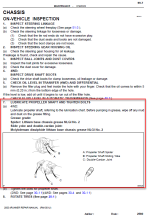
This doesn't answer your question as for the "why" part, but as a starting point for research, it does verify exactly what Toyota recommends in case someone with more brain horsepower than I wants to look into this.
 

Attachments

  • shaft.png
    shaft.png
    101.7 KB · Views: 621
This doesn't answer your question as for the "why" part, but as a starting point for research, it does verify exactly what Toyota recommends in case someone with more brain horsepower than I wants to look into this.

Thanks, that's helpful and I hope someone will chime in.

The instruction to wipe dirt off the zerks reminded me - these are a solid investment for anywhere there's a zerk - driveline, brake bleeder, greaseable bushings, etc. I use them on the 4Runner and my lawnmower.
 

Members online

Forum statistics

Threads
278,315
Messages
3,554,130
Members
248,016
Latest member
Advally Service

Trending content

Back
Top