Don't Distilled Water for Radiators?

CougarHound

New member
Everybody says to use distilled water, but some people don't think it's a good idea. I also ran across this article from Hyperlube that recommends not using distilled.....and yea the info is questionable cause they are trying to sell a product..It kind of makes sense though. What do you guys think? Any chemical engineers?

Why You Should Never Use Distilled Water in Your Cooling System |


I don't really use distilled water and my 3rd Gen has 240,000 miles. Just tap water and green prestone. My cooling system is pretty damn clean. I don't trust any of the new red/orange stuff. I know OEM blah blah blah.
 
Register to hide this ad
Well I think it kinda make sense what they wrote about “iron hungry water” but when that’s really the case how much iron it need to fed the water - minimal I guess.
I don’t think that even a Toyota engine lives long enough that it really would matter, so I keep using distilled water with quality coolant fluid in the right mixture!
 
LOL.... Toyota specifically says to use distilled water... I'd trust them over some company selling a product to 'fix' the problem with distilled water.

A few quotes from the '99 owners manual:

Add only demineralized or distilled
water
to fill the radiator. And if you
spill some of the coolant, be sure
to wash it off with water to prevent
it from damaging the parts or paint.

Checking the engine coolant level
Parts (if level is low):
* "Toyota Long Life Coolant" or equivalent
See Chapter 7−2 for details about coolant type selection.
* Demineralized or distilled water

Coolant type selection
Use of improper coolants may damage
your engine cooling system. Your coolant
must contain ethylene−glycol type coolant
for a proper corrosion protection of your
engine that contains aluminum
components. Use "Toyota Long Life
Coolant" or equivalent.
In addition to preventing freezing and
subsequent damage to the engine, this
type of coolant will also prevent corrosion.
Further supplemental inhibitors or additives
are neither needed nor recommended.
Read the coolant container for information
on freeze protection. Follow the manufacturer’s directions for how much to mix
with plain water (preferably demineralized
water or distilled water). The total capacity
of the cooling system is given in Part 8.
We recommend to use 50% solution for
your Toyota, to provide protection down to
about −35°C (−31°F). When it is extremely cold, to provide protection down to
about −50°C (−58°F), 60% solution is recommended. Do not use more than 70%
solution for better coolant performance.

All the issues with distilled water causing corosion (true) are eliminated as soon as it is mixed correctly with coolant (which includes all the necessary corrosion inhibitors).

-Charlie
 
Everybody says to use distilled water, but some people don't think it's a good idea. I also ran across this article from Hyperlube that recommends not using distilled.....and yea the info is questionable cause they are trying to sell a product..It kind of makes sense though. What do you guys think? Any chemical engineers?

Why You Should Never Use Distilled Water in Your Cooling System |


I don't really use distilled water and my 3rd Gen has 240,000 miles. Just tap water and green prestone. My cooling system is pretty damn clean. I don't trust any of the new red/orange stuff. I know OEM blah blah blah.
Years ago, Prestone and others used silicates in their antifreeze. I believe they differentiated that from non-silicate antifreeze with color - green versus red. Silicates proved to be abrasive and would ultimately cause water pump seals to fail. I was a victim a couple of times. I don’t think silicates are used today, so color may not make a difference anymore.

I’ve used only distilled for a million-plus miles, no problems, radiators stay clean.
 
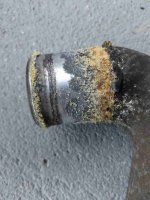
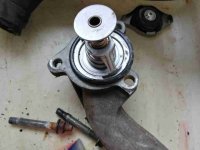
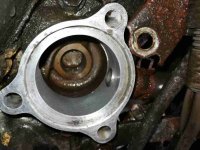
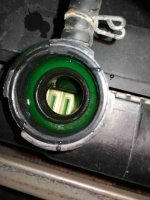
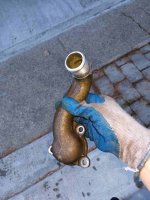
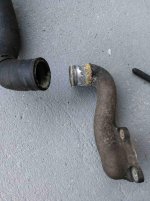
Some photos. Notice the white powdery stuff on the housing and some pitting on the flanges. Probably normal given the age of the vehicle....but I decided to switch back to green. I usually like to keep it green, but whenever I get lazy and bring it to a mechanic, they always put the red stuff in.
 

Attachments

  • IMG_20191021_164335_resize_9_compress99.jpg
    IMG_20191021_164335_resize_9_compress99.jpg
    35.9 KB · Views: 1,636
  • IMG_20191021_165152_resize_12_compress37.jpg
    IMG_20191021_165152_resize_12_compress37.jpg
    23.8 KB · Views: 1,730
  • IMG_20191021_170818_resize_35_compress24.jpg
    IMG_20191021_170818_resize_35_compress24.jpg
    40.5 KB · Views: 1,546
  • IMG_20191022_223053_resize_70_compress13.jpg
    IMG_20191022_223053_resize_70_compress13.jpg
    26.9 KB · Views: 2,183
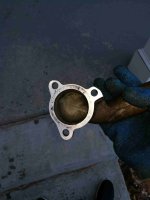
Photos of the flanges after some cleaning and resurfacing.
 

Attachments

  • IMG_20191021_172416_compress4.jpg
    IMG_20191021_172416_compress4.jpg
    104.7 KB · Views: 1,563
  • IMG_20191021_172408_compress21.jpg
    IMG_20191021_172408_compress21.jpg
    56 KB · Views: 1,578
  • IMG_20191021_164333_compress78.jpg
    IMG_20191021_164333_compress78.jpg
    138.3 KB · Views: 1,497
I live in mass .. I had to replace 3 radiators in my 1983 buick. then when I purchased my 1996 chev Impala I used the distilled water and 65% anti freeze. ya its still running . no leaks heater core keeps my toes nice and hot .... when I drain the entire coolant system 4 yrs of use it looks like the new coolant.last year I had to replace the radiator last year , because the plastic tank on driver side had a small crack.. when I removed the 24 yr old radiator the internals looked like the new radiator could not believe how clean that 24 yr old radiator was so perfect.

I also still own a 2000 GM truck no problems coolant is perfect .
2016 runner I also own , I must use Toyota coolant its only premixed.. I would like to make the mix 35% distilled water and 65% anti freeze..used this mix for decades no problems.
 
Several years ago, one of the local auto parts store...Pep Boys I think it was...was selling gallons of de-ionized water (I think by Prestone).

I think if you ask a chemical engineer, you really should use de-ionized water in your cooling system.

But since de-ionized water is so expensive ($10 per liter, I think) and hard to come by, the next best thing is distilled water...so that's what is recommended...good enough, I guess.

I've heard that tap water is fine to use except if you have hard water...like we do here in some areas of the South. You'll get hard deposits when the water evaporates.

Just a little note about hard water in my area...had shut off valve with the smallest leak...about 3/4 drops a day...eventually, after about a week, it stopped leaking. The hard water evaporated around the leak...leaving hard mineral deposits and sealing the leak. Hey, self-sealing water!
 
Last edited:
Using DI / Demin water in radiator

I am a Chemical Engineer in the power plant business however I don't know that it qualifies me to be an expert on this subject.... however I will weigh in.

Tap water can have a whole host of additional contaminants that can react with the heat to form deposits or contribute to corrosion. And not all tap waters are equal.... some are not too bad and some have a lot of minerals or other stuff in them that will be reactive. Mostly it will just shorten the life of the corrosion inhibitors in the anti-freeze.

Most ethylene glycol based anti-freezes (green) will chemically last indefinitely as a an "anti-freeze" property. The problem is that there are additives added which consist of lubricants (for the water pump bearing and seals) and corrosion inhibitors. Both the lubricants and the corrosion inhibitors do have a limited life and will eventually be used up. That is their purpose; to be sacrificially used to keep something from attacking your system. If you start with bad water quality you will use them up that much faster.

It is possible to add additional corrosion inhibitors and lubes to existing fluid but depending on manufacturer and brand you don't know exactly what you are getting.

I used to have a High School auto mechanics instructor who used to buy ethylene glycol in bulk and then would periodically add his own aftermarket corrosion inhibitors and lubricants and claimed that it was just as effective (and much cheaper)..... and he had many years of experience to back it up. Besides being a good mechanic he was very knowledgable with the science and engineering behind it as well.

The same philosophy goes with battery water as well.

In the lab we made no distinction between the purity of demineralized water and distilled other than the method they were made. Distilled was typically "theoretically" more pure but in the lab environment was much more expensive to use in bulk. So we used demon water.

Dave
 
It's 2020 and there's still people trying not to spend $1 on a gallon of distilled water for their car. That cooling system isn't looking great.
 
It's 2020 and there's still people trying not to spend $1 on a gallon of distilled water for their car. That cooling system isn't looking great.
There's the bulk of the argument in a nutshell. Toyota says use distilled - use distilled.
 
so whats the deal with people on the first page using green coolant? i thought that was a big no no in these types of cars?
I mentioned earlier that I believe the red/green was to differentiate antifreezes without silicates versus those that had them. I may be wrong, but my experiences support that, as silicates are abrasive. Anyway, I think that color may not matter anymore. Perhaps someone else knows for certain?
 
so whats the deal with people on the first page using green coolant? i thought that was a big no no in these types of cars?

You can use green in a 1999 safely. Does that mean you should?
No. Factory fill was red, and I don't think Toyota was trying to scam anyone by selling new cars with red coolant either. We have moved on to HOAT coolants that can last longer and offer better corrosion protection. Just don't mix tap water in it and say that it's fine because one website vs the rest of the internet says so.
 
I mentioned earlier that I believe the red/green was to differentiate antifreezes without silicates versus those that had them. I may be wrong, but my experiences support that, as silicates are abrasive. Anyway, I think that color may not matter anymore. Perhaps someone else knows for certain?

i did some reading this AM on different types of coolant because i am not well versed in them and one thing i quickly learned that color can be a good indicator of what you are using, you really should be paying attention to the type of coolant you are using:

Inorganic
Organic
Hybrid Organic

this was a great guide:
The Ultimate Coolant Color Guide | Toyota Parts Center Blog

You can use green in a 1999 safely. Does that mean you should?
No. Factory fill was red, and I don't think Toyota was trying to scam anyone by selling new cars with red coolant either. We have moved on to HOAT coolants that can last longer and offer better corrosion protection. Just don't mix tap water in it and say that it's fine because one website vs the rest of the internet says so.
well does anyone know what the 99 manual says? my car didnt come with one. im assuming it says to use red toyota coolant, the link i posted above says its HOAT. im sure you can 'safely' use IAT coolant if you religiously change the coolant when you need to; but if its not the right stuff, why even bother?

it seems as if all coolant these days is already pre dilluted. so im not sure why people feel the need to put tap, distilled, or de-ionized water in their cooling system when the right, pre-dilluted, coolant is already available.

either way, happy i learned something today! :)
 
well does anyone know what the 99 manual says? my car didnt come with one. im assuming it says to use red toyota coolant, the link i posted above says its HOAT. im sure you can 'safely' use IAT coolant if you religiously change the coolant when you need to; but if its not the right stuff, why even bother?

it seems as if all coolant these days is already pre dilluted. so im not sure why people feel the need to put tap, distilled, or de-ionized water in their cooling system when the right, pre-dilluted, coolant is already available.

either way, happy i learned something today! :)
From the 1999 manual:

Add only demineralized or distilled
water to fill the radiator. And if you
spill some of the coolant, be sure
to wash it off with water to prevent
it from damaging the parts or paint.

Coolant type:
"Toyota Long Life Coolant" or equivalent
With ethylene−glycol type coolant for a
proper corrosion protection of aluminum
components
Do not use alcohol type antifreeze or
plain water alone.


A 1996 manual with only specify ethelyne glycol coolant. Factory fill was green for that year. Again, green will work. That said, better coolants are cheap enough so why use that?
 
so whats the deal with people on the first page using green coolant? i thought that was a big no no in these types of cars?
I worked on vehicles for 50yrs. coolant changes from one model to the other. then adding water to 100%coolant to set it up can cause problems if your tap water has nasty chemicals/metals in it.

I stopped using tap water back in 1993 ... after I changed to distilled I had no issues on the cooling system corrosion. I purchased a new 1996 GM sedan .. 1.5 yrs later my heater core got messed up. I had to flush out the whole deal.. then added the correct coolant and distilled water .. I then had no problems . I still own it .. I had to replace radiator because a side tank had a small crack .. when I replaced radiator the new radiator internals looked new on the old .. no mess no finger dirt on my finger.

on a dodge vehicle antifreeze changed used different coolant so it is tricky.. Toyota changed the coolant on model years so put the same coolant in it,, it can cause a mess..
my 2016 I have to use a very expensive toyota coolant premixed.... some use different coolants that are compatible but tricky again ..
 

Members online

Forum statistics

Threads
278,312
Messages
3,554,089
Members
248,016
Latest member
Advally Service

Trending content

Back
Top