
You are using an out of date browser. It may not display this or other websites correctly.
You should upgrade or use an alternative browser.
You should upgrade or use an alternative browser.
Great price on OEM brakes
- Thread starter willbgood
- Start date
Register to hide this ad

StreetCreeper
New member

Jhelms
New member
Brakes are a thing on the 3rd gen for some drivers / people.....
I loaded the miles on my 98 limited and never had an issue with them or when towing here in the flat desert of Az. They never glazed or caused me any grief. The internets will have you think stock calipers will turn inside out and rotors will warp and look like a round warped tortilla chip in 10 miles or less. Not the case of you drive your 4runner with care and to not ride brakes downhill and do not plan to tow anything heavy (or drive like a mad asshat).
But... if you are going to do a front brake replacement and spend the cash.... have you considered a tundra upgrade? I went head with both of mine as I will be towing a boat soon and also tow a large flatbed loaded with camping gear often.
If you are going to spend $165 on brand new oem brakes, I would save a little coin and spend the $300-$350 it takes to do a tundra upgrade (sometimes cheaper of you find the parts used). For me, the feel is improved and the few times I stomped on them, there was more brake available than tire which was assuring.
I loaded the miles on my 98 limited and never had an issue with them or when towing here in the flat desert of Az. They never glazed or caused me any grief. The internets will have you think stock calipers will turn inside out and rotors will warp and look like a round warped tortilla chip in 10 miles or less. Not the case of you drive your 4runner with care and to not ride brakes downhill and do not plan to tow anything heavy (or drive like a mad asshat).
But... if you are going to do a front brake replacement and spend the cash.... have you considered a tundra upgrade? I went head with both of mine as I will be towing a boat soon and also tow a large flatbed loaded with camping gear often.
If you are going to spend $165 on brand new oem brakes, I would save a little coin and spend the $300-$350 it takes to do a tundra upgrade (sometimes cheaper of you find the parts used). For me, the feel is improved and the few times I stomped on them, there was more brake available than tire which was assuring.

MStudt
official vendor
also tow a large flatbed loaded with camping gear often.
You seriously need a "LARGE" flatbed trailer loaded down to go camping?

willbgood
New member
Brakes are a thing on the 3rd gen for some drivers / people.....
I loaded the miles on my 98 limited and never had an issue with them or when towing here in the flat desert of Az. They never glazed or caused me any grief. The internets will have you think stock calipers will turn inside out and rotors will warp and look like a round warped tortilla chip in 10 miles or less. Not the case of you drive your 4runner with care and to not ride brakes downhill and do not plan to tow anything heavy (or drive like a mad asshat).
But... if you are going to do a front brake replacement and spend the cash.... have you considered a tundra upgrade? I went head with both of mine as I will be towing a boat soon and also tow a large flatbed loaded with camping gear often.
If you are going to spend $165 on brand new oem brakes, I would save a little coin and spend the $300-$350 it takes to do a tundra upgrade (sometimes cheaper of you find the parts used). For me, the feel is improved and the few times I stomped on them, there was more brake available than tire which was assuring.
Mine went 154,000 with just a pad replacement, maybe two, but I can only document 1. The original OEM could be turned, but these days it cheaper to by aftermarket Bosch, with good pads. I bought from Orielly's, and I have a lifetime guarantee. I can do a full brake job in about an hour, so if I warp them I find an Orielly's and head for a Walmart parking lot.
I may tow my Harley, but a boat is not in my future. Of course, it I get in a place where I am towing heavy, I agree, its the tundra swap.
I only posted this as the price is about the same as Orielly's, and I know some folks want to and will stay OEM whenever possible, and the price is right. I was more interested in hearing what the problem with OEM is after getting 154,000 out my rotors and calipering them and knowing I could turn them and get at least 100,000 more. Hell I could just put pads and get nearly that much. Of course, I treat my equipment well and drive like my dad, who was so cheap he drove 69 Chevy into the late 90's, mostly because he drove it like an old man, even when he was young.
StreetCreeper
New member
I was wondering why they are worthless...I am using bosch, simply because they have a lifetime warrenty...
The OEM rotors simply do not have enough metal in them to adequately dissipate the heat generated by the the truck. While some may never have an issue — many people (like me) do. Essentially, the rotors heat up and warp ever-so-slightly. This causes the infamous 3rd gen death-wobble when braking.
Constantly turning/replacing rotors gets old. I replaced my rotors and pads about 10k ago. I bedded them properly and have babied them ever since. The death-wobble came back after about 7k.
While its slightly annoying right now, it is getting worse and I won't replace them until I do the Tundra upgrade. So for some of us, OEM rotors are pretty much worthless (unless they are free).
willbgood
New member
The OEM rotors simply do not have enough metal in them to adequately dissipate the heat generated by the the truck. While some may never have an issue — many people (like me) do. Essentially, the rotors heat up and warp ever-so-slightly. This causes the infamous 3rd gen death-wobble when braking.
Constantly turning/replacing rotors gets old. I replaced my rotors and pads about 10k ago. I bedded them properly and have babied them ever since. The death-wobble came back after about 7k.
While its slightly annoying right now, it is getting worse and I won't replace them until I do the Tundra upgrade. So for some of us, OEM rotors are pretty much worthless (unless they are free).
I will watch for this as well and it might sway me into the tundra swap. Brakes at 10 thousand would be annoying at thirty for the cost of my time and a parts swap, I can do this like oil changes. On the other hand, if its ten, and causing a dangerous operation, I am doing a tundra swap.
Just realized I have to refresh my memory on bedding, thanks for the heads up.
God I love this place, why would anyone hang out in Starbucks, when they can hang here with folks who are actually smart, sharing good shit, and living life instead of talking about it!
Jhelms
New member
You seriously need a "LARGE" flatbed trailer loaded down to go camping?
When you have 3 kids, a wife, dog, camping gear and offroad vehicles... then yes, I do
 And really, it is not that large. Just a 6x12' (cargo area). Compared to what many have around here (harbor freight 4x6's)... it is a beast
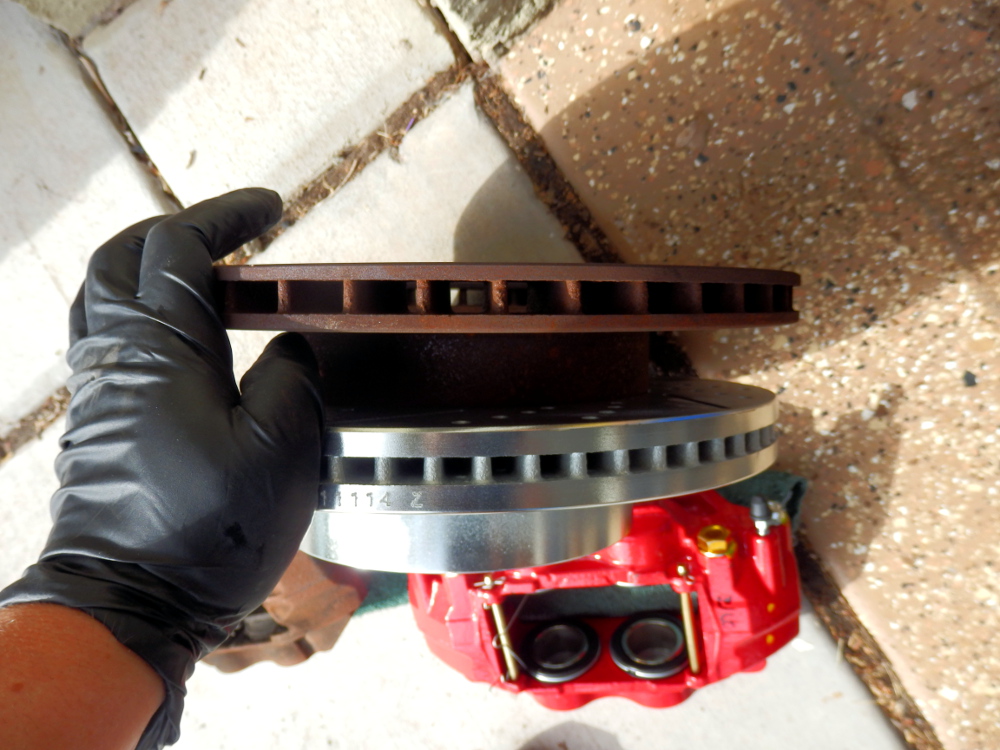
Here is a good photo to show how thin the stock rotors are (these had been turned at least twice) compared to the tundra rotors... I hear ya. I drive like an old fart too in my 4runners. Likely why I never had an issue with the stock brakes. I hope to see 400K on both of them at some point.
Last edited:

absalom
New member
Why go camping, when you can go glamping?!You seriously need a "LARGE" flatbed trailer loaded down to go camping?

SupaSupra
New member
The OEM rotors simply do not have enough metal in them to adequately dissipate the heat generated by the the truck. While some may never have an issue — many people (like me) do. Essentially, the rotors heat up and warp ever-so-slightly. This causes the infamous 3rd gen death-wobble when braking.
Constantly turning/replacing rotors gets old. I replaced my rotors and pads about 10k ago. I bedded them properly and have babied them ever since. The death-wobble came back after about 7k.
While its slightly annoying right now, it is getting worse and I won't replace them until I do the Tundra upgrade. So for some of us, OEM rotors are pretty much worthless (unless they are free).
Yup. I've got the death wobble now after some asshat cut me off and I had to slam on the brakes. Probably will hold off till I can upgrade to Tundras as well.
Jhelms
New member
Good reading for anyone that cares on glazing / judder. Everyone always states they have "warped rotors"... yeah, not so much. I have to agree with stoptech, amazing what proper pads can do. Generally a performance street pad with good low temp stopping power is ideal. Will help save rotors as well - especially thin factory rotors.
From Stoptech:
-Warped- Brake Disc and Other Myths
Taken from brakemotive:
Many people complain about brake pulsation and warped rotors. This guide is meant to help understand why you get brake judder and what you can do to prevent it.
Brake judder is primarily caused by the formation of hard nodules in the iron. Engineers call these nodules heat spots. When I measure warped rotors, I find that the radial runout as referenced to the wheel mounting surface is in spec. So the term "warped" rotor may not be an accurate description of the problem. However, my dial indicator shows elevated bumps from heat spots on the rotor surface. As the rotor passes under the pad, these spots cause brake judder, i.e. pulsating brakes. It only takes a spot .001 inches above the rotor surface to feel brake judder.
Pulsating brakes start with a localized zone of high temperature in the rotor. The most common cause is uneven friction deposition on the rotor. At colder operating temperatures (less than 400 degrees), brake pads work with abrasive friction, just like sandpaper on wood. At higher temperatures, brake pads transfer a thin layer of material to the iron rotor surface. As the rotor heats up, the primary friction force changes from abrasive friction to adherent friction, i.e. pad material is applied to the rotor and simultaneously sheared and the broken chemical bonds cause a resistant friction force. Most racing pads work using adherent friction, which explains why racing pads don't really stop well under cold conditions or normal street driving.
An example of an uneven friction deposit is pad resin glazing. If you get your rotors hot, the resin from the pad will liquify and glaze on the rotor surface. As the pads rub on the elevated glazed surface, it gets a lot hotter, and the heat is localized in just one area of the rotor. When the temperature exceeds 1150F, the cell structure of the iron changes into hard brittle spots called cementite. These heat spots don't wear down like the normal iron material surrounding it. So the spots become elevated above the rotor surface, and you start to feel brake pulsation. You can try to turn down the rotor, but the cementite nodule is often deeper than the cut, so the brake pulsation just comes back after a few weeks. Here are some ways to prevent the problem:
Use drilled rotors to keep the temperature below the point where heat spots start to form. Drilled rotors also prevent pad glazing as shown in SAE paper 2006-01-0691.
Don't clamp down on the brakes after a hot stop. If the rotor is hot and you clamp down on the brake, you will deposit friction from the pad to the rotor in just one spot. The elevated friction area will get hotter than other parts of the rotor and start the cycle that produces cementite nodules. I try to roll the car a little after a hot stop so the pad does not rest in just one place.
Break in your new pads properly to initiate a uniform friction layer on the rotors. Some people install new drilled rotors and pads and immediately cook the brakes to see if it works. Not only can this cause extreme thermal shock to propagate cracks (new rotors are susceptible to thermal shock), it also can cause "warped" rotors. It only takes a few minutes to break in the pad properly. I recommend 5 stops from 45-50 mph at moderately high pedal pressure, but don't come to a complete stop between each application. Then drive around and let the brakes cool down and do 3 stops at light to moderate pedal pressure, letting the brakes cool between each application.
Use high quality rotors that conform to SAE specs for chemistry and hardness and don't use rotors that contain secondary scrap. Secondary scrap contains rogue elements such as tungsten, vanadium, etc. that contribute to carbide formations in the rotor. Carbides weaken the rotor and can cause stress risers and eventual cracking.
From Stoptech:
-Warped- Brake Disc and Other Myths
Taken from brakemotive:
Many people complain about brake pulsation and warped rotors. This guide is meant to help understand why you get brake judder and what you can do to prevent it.
Brake judder is primarily caused by the formation of hard nodules in the iron. Engineers call these nodules heat spots. When I measure warped rotors, I find that the radial runout as referenced to the wheel mounting surface is in spec. So the term "warped" rotor may not be an accurate description of the problem. However, my dial indicator shows elevated bumps from heat spots on the rotor surface. As the rotor passes under the pad, these spots cause brake judder, i.e. pulsating brakes. It only takes a spot .001 inches above the rotor surface to feel brake judder.
Pulsating brakes start with a localized zone of high temperature in the rotor. The most common cause is uneven friction deposition on the rotor. At colder operating temperatures (less than 400 degrees), brake pads work with abrasive friction, just like sandpaper on wood. At higher temperatures, brake pads transfer a thin layer of material to the iron rotor surface. As the rotor heats up, the primary friction force changes from abrasive friction to adherent friction, i.e. pad material is applied to the rotor and simultaneously sheared and the broken chemical bonds cause a resistant friction force. Most racing pads work using adherent friction, which explains why racing pads don't really stop well under cold conditions or normal street driving.
An example of an uneven friction deposit is pad resin glazing. If you get your rotors hot, the resin from the pad will liquify and glaze on the rotor surface. As the pads rub on the elevated glazed surface, it gets a lot hotter, and the heat is localized in just one area of the rotor. When the temperature exceeds 1150F, the cell structure of the iron changes into hard brittle spots called cementite. These heat spots don't wear down like the normal iron material surrounding it. So the spots become elevated above the rotor surface, and you start to feel brake pulsation. You can try to turn down the rotor, but the cementite nodule is often deeper than the cut, so the brake pulsation just comes back after a few weeks. Here are some ways to prevent the problem:
Use drilled rotors to keep the temperature below the point where heat spots start to form. Drilled rotors also prevent pad glazing as shown in SAE paper 2006-01-0691.
Don't clamp down on the brakes after a hot stop. If the rotor is hot and you clamp down on the brake, you will deposit friction from the pad to the rotor in just one spot. The elevated friction area will get hotter than other parts of the rotor and start the cycle that produces cementite nodules. I try to roll the car a little after a hot stop so the pad does not rest in just one place.
Break in your new pads properly to initiate a uniform friction layer on the rotors. Some people install new drilled rotors and pads and immediately cook the brakes to see if it works. Not only can this cause extreme thermal shock to propagate cracks (new rotors are susceptible to thermal shock), it also can cause "warped" rotors. It only takes a few minutes to break in the pad properly. I recommend 5 stops from 45-50 mph at moderately high pedal pressure, but don't come to a complete stop between each application. Then drive around and let the brakes cool down and do 3 stops at light to moderate pedal pressure, letting the brakes cool between each application.
Use high quality rotors that conform to SAE specs for chemistry and hardness and don't use rotors that contain secondary scrap. Secondary scrap contains rogue elements such as tungsten, vanadium, etc. that contribute to carbide formations in the rotor. Carbides weaken the rotor and can cause stress risers and eventual cracking.
MStudt
official vendor
When you have 3 kids, a wife, dog, camping gear and offroad vehicles... then yes, I do
OK, that's not so bad. When you said large I was thinking a lot bigger then that.
Why go camping, when you can go glamping?!
Glamping isn't for everyone. We like to keep it simple, and pack as little as possible. Our camping gear for two is less then 10lbs. Then again we're a bit different when it comes to gear. Packing less allows us to hike further.
Last edited:

JeepKiller
New member
Why go camping, when you can go glamping?!
I probably laughed a little too long about this :rofl:
Whenever my current rotors fail (only about 5k on them) I'll be doing the TBU with all the weight I have it takes a lot of force and distance to stop and it sucks

Blue Seat Lyfe
New member
what if the tundra brakes are too large for my stock 15" alloys?
JeepKiller
New member
Then you can justify upgrading your wheels too :lol:
they will be.what if the tundra brakes are too large for my stock 15" alloys?
in one of the main threads about doing the tundra brakes is a list of what wheels will and will not fit. But they have to be at least 16's and not all the 16's will work
I haven't done the tundra brakes yet . I have only owned my rig about 6 months now and just before I got it , it had new rotors and pads put on, but I switched the pads to EBC green stuff, a bit better braking then what was put on, but a lot dustier
 However, the tundra brakes is in the plans for next spring or when these develop the wobble. I don't pull a trailer....yet...but do lots of mountain driving
Last edited:

GHARP57
New member
meh it is an okay price they are just under 40% cost on the parts. the shims and grease kit are included in the az series brake pads
Blue Seat Lyfe
New member
they will be.
in one of the main threads about doing the tundra brakes is a list of what wheels will and will not fit. But they have to be at least 16's and not all the 16's will work
I haven't done the tundra brakes yet . I have only owned my rig about 6 months now and just before I got it , it had new rotors and pads put on, but I switched the pads to EBC green stuff, a bit better braking then what was put on, but a lot dustier
Oh I know they dont fit.
I dont see the point of spending $1000+ on new tundra brakes + wheels + tires on a vehicle worth $5000
Similar threads
- Replies
- 3
- Views
- 1K

- Replies
- 11
- Views
- 5K


