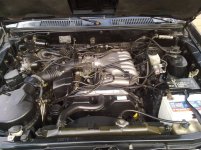
Is the super low MPG in 4runner is due to the small air filter?

nissanh

Senior Member
Here is something I like to explore.

My friend in Australia has 01 prado with 5vzfe and 5 speed manual. He always states the MPG is about 20-22 (after converting it to US gallons and miles).

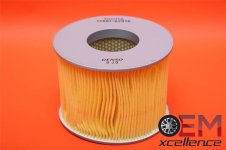
He then sends me a picture of the airfilter he has in the truck: Picture-1

It is MUCH bigger with a huge surface area to pass air into the engine.
The one we have in the US spec is so small I find the surface area is almost equal to the 1.6 L 4 cylinder corolla air filter.

I get 12-13 MPG in the city and 16.5 on highway at 65 MPH (cruise control)

Any thoughts?
Images from:https://www.landcruiserclub.net/community/threads/prado-90-v6-repair-and-revitalize.129316/
http://www.ebay.com/itm/Toyota-Hilu...ash=item1ea678725b:g:DQcAAOxy7nNTQwN6&vxp=mtr
 

Attachments

  • s-l1600.jpg
    s-l1600.jpg
    67.5 KB · Views: 753
  • 12182010142.jpg
    12182010142.jpg
    134.7 KB · Views: 954
Register to hide this ad
I'm in Canada. 20-22 MPG is what I get in the summer time with my 3.4L 5 speed 4Runner on 245/75R16 tires. During the winter my MPG drops to about 18-19 MPG due to the winterized gas they put in the pumps and possibly from my upsized 235/85R16 winter tire setup. Both tire setups are pretty "beefy" E-rated heavy duty tires. I would expect slightly better mileage on a more stock setup. I also have a 3" lift and roof basket.

Your numbers seem kind of low, is your truck modified? Maybe it needs a tune up?
 
I had to click on this title....then...Really???? x2 Throw a huge filter on yours....and let us know if it changes. You might be onto something, and someone has to test it out.
 
Last edited:
Here is something I like to explore.

My friend in Australia has 01 prado with 5vzfe and 5 speed manual. He always states the MPG is about 20-22 (after converting it to US gallons and miles).

He then sends me a picture of the airfilter he has in the truck: Picture-1

It is MUCH bigger with a huge surface area to pass air into the engine.
The one we have in the US spec is so small I find the surface area is almost equal to the 1.6 L 4 cylinder corolla air filter.

I get 12-13 MPG in the city and 16.5 on highway at 65 MPH (cruise control)

Any thoughts?
Images from:https://www.landcruiserclub.net/community/threads/prado-90-v6-repair-and-revitalize.129316/
Toyota Hilux Land Cruiser Prado Air Filter Genuine OEM Factory 17801-62010

Wouldn't the ECU just compensate for the additional air by adjusting the air/fuel ratio and rendering any potential gains — moot?
 
This doesn't really pertain to anything but figured since we are talking about milage I would throw this out there. I tracked 55k miles with this app during the last couple of years before I recently switched to a better app on the first of the year.

Ignore that "best mpg" one...I obviously screwed up something to get that 59mpg... most of my driving is stop & go city driving and my average fuel milage reflects that — but if doing straight freeway miles I can hit 20-21 mpg :cool:

​
 
Another thread about mpg. Still getting 21mpg average out of mine. I didn't believe my math so I use an obd2 and dash command with proper parameters keyed in like tires etc...


And now key in wacky nonsense of mpg increases.... I heard if you fart in the gas tank immediately after a fill up it will increase your mileage.


Sent from my iPad using Tapatalk
 
Here is something I like to explore.

My friend in Australia has 01 prado with 5vzfe and 5 speed manual. He always states the MPG is about 20-22 (after converting it to US gallons and miles).

He then sends me a picture of the airfilter he has in the truck: Picture-1

It is MUCH bigger with a huge surface area to pass air into the engine.
The one we have in the US spec is so small I find the surface area is almost equal to the 1.6 L 4 cylinder corolla air filter.

I get 12-13 MPG in the city and 16.5 on highway at 65 MPH (cruise control)

Any thoughts?

I average over 19 US-mpg, hand calculated EVERY fuel up, even in Alberta winters. (see fuelly link). I was running 265 75 16 "E" rated Grabber AT2's, and recently switched to 265 70 17 Trail edition wheels with OEM Bridgestone rubber.

Perhaps emission and engine tuning has something to do with it? ...Maybe the Prado has a lighter GVRW or gearing is taller etc..?

Apples to oranges IMO. Throw a 3.4L in a 2000lb Miata and watch it get 35mpg
 
Last edited:
Wouldn't the ECU just compensate for the additional air by adjusting the air/fuel ratio and rendering any potential gains — moot?


"Additional air" doesn't have much to do with fuel economy in a naturally aspirated engine. Engine tuning will adjust the A/F ratio within its given parameters. What a larger air filter will do, in theory, is allow for less intake restriction due to a larger surface area. Lower intake vacuum will increase F/E as the engine doesn't need to "suck" as hard. Less energy is lost during the pistons intake stroke.
 
This doesn't really pertain to anything but figured since we are talking about milage I would throw this out there. I tracked 55k miles with this app during the last couple of years before I recently switched to a better app on the first of the year.

Ignore that "best mpg" one...I obviously screwed up something to get that 59mpg... most of my driving is stop & go city driving and my average fuel milage reflects that — but if doing straight freeway miles I can hit 20-21 mpg :cool:

Yeah, mine looks pretty similar. I just switched jobs so now it's mostly stop & go, my mileage dipped from a consistent 17-18 to 16 :( I can get 20+ on road trips with lots of weight and gear. 22+ on Oregon gas. Gosh my engine loves 93 octane.

Anyway, to the OP: The larger filter won't do much, if anything. You can try running a K&N cold air intake and you'll have a "large" filter. Not any change to be had. What affects it more is what is put in the gas. You'll notice people mention winter or summer blends, but also different states & countries put more or less additives in the fuel which does affect MPG's. I happen to know that in CA we have some of the most additives, and the worst fuel economies because of it. But supposedly emissions are improved that way. Any time I am NOT in CA my MPG's go up.

Could really just be that simple: Australia has higher emissions, but more fuel-efficient gas.
 
"Additional air" doesn't have much to do with fuel economy in a naturally aspirated engine. Engine tuning will adjust the A/F ratio within its given parameters. What a larger air filter will do, in theory, is allow for less intake restriction due to a larger surface area. Lower intake vacuum will increase F/E as the engine doesn't need to "suck" as hard. Less energy is lost during the pistons intake stroke.
True, but this only applies at WOT. At partial throttle, the throttle body is still the controlling factor in airflow. As you described, with a less restrive intake it might take slightly less throttle opening to achieve a given power output for everday acceleration, but the ECU will be adjusting for this airflow with the MAF and A/F sensors.

The ONLY way that these features would increase everyday mileage is if the ECU is 1) progranmed to run slightly rich at partial throttle openings (say, 13:1 A:F ratio), and then 2) does not correctly compensate for the increased flow under closed-loop operation and thus inadvertantly allows the engine to run leaner than designed (closer to stoichiometric 14.7:1 ratio).

I do not know the answers to either of those assumptions, though, so it is still certainly possible. Here in a few months after I establish a baseline, I might do the deckplate and ISR mods and see if I can tell the difference.
 
I get 12-13 MPG in the city and 16.5 on highway at 65 MPH (cruise control)
Also, I think your vehicle is broken, or you drive very, very aggressively!

Oh, and reduced gas mileage in the winter time is primarily from longer warm-up times (engines run very rich and inefficiently when cold, for both mechanial and emissions reasons). However, it is NOT because of "winter gas." The energy density of "winter" blends is only about 2% less than "summer" blends, due to the additional non-gasoline products that can be blended into or left in the fuel to reduce costs. Thus, mileage would also be reduced by 2% if the fuel blend was the only factor, whereas most folks see 10-15% reductions on average (dependent on how far one drives per trip).


What is the Difference between Summer- and Winter-Blend Gasoline? | AAA NewsRoom

Summer-Blend vs Winter-Blend Gasoline: What?s the Difference?
 
I average right at 20 unless I'm towing. Then it drops way off. I have a 5-speed transmission, pretty much stock everything. Regular cheap SUV tires. But I averaged 20 with Bridgestone Duellers and BFG Long Trails also. I write down my date, mileage, and fuel on every single fill up. Habit my dad put me in when I started driving... 17 years later its still stuck.
 
One thing I didn't see mentioned is that the US has different restrictions on emissions. So sure, the truck in Australia might get a higher mpg, but what are it's emissions?

And does it TRULY stack up:
In other words. The same engine here and there, same HP and same Torque? acceleration differences?

Then you get restrictions in the system such as baffles/mufflers/CatConverters.

I'm just guessing in the dark, but the vehicles are different enough from one country to the next do to gov't regulations.

We might not get the same milage (or we might) but do we run cleaner?
 
Yeah, mine looks pretty similar. I just switched jobs so now it's mostly stop & go, my mileage dipped from a consistent 17-18 to 16 :( I can get 20+ on road trips with lots of weight and gear. 22+ on Oregon gas. Gosh my engine loves 93 octane.

Anyway, to the OP: The larger filter won't do much, if anything. You can try running a K&N cold air intake and you'll have a "large" filter. Not any change to be had. What affects it more is what is put in the gas. You'll notice people mention winter or summer blends, but also different states & countries put more or less additives in the fuel which does affect MPG's. I happen to know that in CA we have some of the most additives, and the worst fuel economies because of it. But supposedly emissions are improved that way. Any time I am NOT in CA my MPG's go up.

Could really just be that simple: Australia has higher emissions, but more fuel-efficient gas.

sorry OFF TOPIC here....... But dude WHERE IS YOUR BUILD THREAD!!!! i must know
 

Members online

Forum statistics

Threads
278,317
Messages
3,554,125
Members
248,016
Latest member
Advally Service

Trending content

Back
Top