Put 34's on, when does re-gearing make sense?

Hey folks, let me start by saying, I totally "get" gearing for bicycles, and if there's a simple way to make the two line up in my head, I'm all ears.

That said, I'm an automotive moron. So all these numbers are about as meaningful to me as a computer is to a caveman.

I put Mickey Thompson 34's on my 4x4, '96 SR5, automatic. Love them.

But in conversations with others, the subject of gearing has come up. I think I've noted a certain sluggishness that wasn't there before, (as well as a 4mph uptick on my speedometer).

Is this tire swap sufficiently in the realms of warranting looking into re-gearing? I'm not bothered per se, it drives just fine, but if a couple hundred bucks would make it peppier, and perhaps better in other ways, I'm interested. If so, what is a "normal" re-gearing ratio to consider? Looking to get back to OEM, i have no higher performance aspirations.

If this sort of thing is $1500? I'm 100% okay as I am.... :bounce:

Thoughts, conversation, all input welcome!
 
Register to hide this ad
It will cost a lot more than a couple hundred bucks unless you do the work yourself and get a used set of gears from a donor truck. New gears and paying a shop to properly build the front and rear for you will likely set you aside $1500 at least.

I've debated the same thing or just adding a S/C (maybe both some day).
 
That's a really big and heavy tire for these, I would regear to regain some drive ability and make it easier to get up to speed. You might also want to add an external ATF cooler in series with the radiator cooler. You're going to need 4.88s or 5.29s to make a dent, so you are easily looking at $1500.
 
Last edited:
Regearing will help a bit with power, but the extra rotating weight of large tires will take away some power no matter what. I had two Toyotas (LC FJ60, 4WD truck) regeared in the 2004-2006 time period and it cost $1200 per axle at that time. Probably $1500 per axle now.
 
Last edited:
Makes sense when noticing what you're noticing and want back what you lost. :)

2020 regeared to 4.56 for 85# tire and wheel 285's consistent 18 hwy. mpg 13-15 city.
Soon to put on same tire you have in 285's don't expect any change.
34" tire 4.88's probably get you back to stock 5.29's better.
Just checked Yukon $1200 for 4.88 rear gears and install kit. Front about same.
 
I haven't looked into the cost but I'd recommend as soon as you're in a position to. I've been riding stock gears on 35s since 2015. I was in denial for a couple years but don't recommend it. It's embarrassing to think that my 01 stock 3rd gen on 32s is fast relative to my 02 3rd gen on 35s. 10% of the delay was due to deciding on gear ratio, limited slip, lockers, etc. The other 90% was due to not having the guts to do the work.
 
Hey folks, let me start by saying, I totally "get" gearing for bicycles, and if there's a simple way to make the two line up in my head, I'm all ears.

Not the best example but if you mountain bike, imagine having only one sprocket (large or small) instead of a full cassette. You probably could still ride all your usual trails but you likely wouldn't be as efficient and would put more wear on your bike or body by asking it to do more than what it was built for or conditioned to do.
 
I have an older MTB drivetrain (1X10/42 rear cassette with non Boost hub spacing so I'm stuck with an 11 speed rear end. Having a 34t front sprocket can be a real drag on long climbs, so I'll put a 28t up front when I have riding with lots of climbing involved (enduro races mainly) and I have a better climbing gear in granny. That probably useless analogy, aside, my rig came with 4.30 gears and it's not too much of a drag with 33s but I would not go bigger without a re-gear, so I just won't go bigger - no reason for me.. I notice it off the line but then I'm not racing for pinks over here.

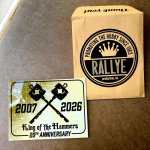
Edit - I don't see how you could realistically re-gear for 1500 unless you have unlimited time to learn and tools. Don't forget you need matching front pinion/ring gear too. Maybe you could find a used front diff somewhere. If you're doing all that, might as well look into a locker, too. What about dropping a tire size and putting on a supercharger instead?. That's at least 3-5k - we can't win. dunno if anyone still fuxx with KOH but I got this plaque in the mail today.....
 

Attachments

  • koh.jpg
    koh.jpg
    136.9 KB · Views: 163
Last edited:
I'm on 32's (well, 31.6" - 265/70/17) and re-geared to 4.88s... As long as you don't plan on driving over about 75mph, it is better in every way. Sure, I now cruise at 2500rpm on the freeway, but even before the supercharger it didn't have to downshift on the freeway nearly as much, etc. It it just better all around. It isn't cheap though... (I went through ECGS and got LSDs front and rear along with the new gears)

-Charlie
 
Thanks all!

Okay, so right off the bat, no clue I had to do front gearing too, I am NOT a truck mechanic, just a bike mechanic....

So ball park, $1500/2K, got it. I'll save my pennies. And a supercharge sounds cool, but it's not in the cards. I'd rather do a manual tranny conversion and dump the automatic, first. Just because, not related to this conversation.

So if I go to 4.88, why is 75mph a problem? I get it, no free lunch, but I don't understand how it impacts top end. She spends most of her time on the road, so highway like speeds are part of regular use.

Sorry, I should have been more specific with bike gearing mention. My brain gets what an 11/50 with a 30T up front does, and how it varies from say, 11/34 with a triple.

The numbers are meaningless to me, 4.88, "what"? Rotations? Gear teeth, diameter, I literally don't know how the numbers relate. Not a big deal, but visualizing in my head is really helpful.

I've watched enough Matts Offroad to feel dangerous, having seen them pull the diff cover, drain it, unbolt a few things and pull that heavy as plug of stuff out, "shit, that looks easy". I'm sure there's stuff involved that's not shown, and I'd be pissed off in an hour, with a truck that needs a flat bed ride to the shop, sigh.

T4R2014, I hear you, not going back though. Just blew a massive chunk on these last summer, and then more to get everything to fit without interference. And, I love what they've done for it, other than the minor lagging I sense.

So, the current set up is cause damage, excessive wear? Or just sluggishness?

Lastly, did I misinterpret a comment, or would re-gearing also bring my MPG's back up a bit, from the 12 I get now?

Super appreciate all the thoughts and comments, sounds like a project for next summer.
 
Higher gears means you'll need more RPMs in overdrive to go the same speed as before. So cruising at 75MPH is ~2100RPM with stock gears and your tires and now its ~2500RPM.

If you want to go 80-85, you'll be pushing ~2800-3000+ RPMS which for a lot of people on a long stretch of highway is higher than they'd like for fuel economy, temps, cabin noise, etc..

On the flip side, you'll have better acceleration and torque which is good for getting those bigger, heavier tires moving, and for towing.
 
Just went through this with my son a couple of weeks ago. We pulled the front axle and rear differential and our cost was 2000. He has a 5 speed and elected to go for 5:29, which he likes, but I think 488 would have been better.

Good luck

MikeM
 
Start by looking at one of the many, many gear/tire size ratio charts, like the one on this page here.
Then read a thread that really digs into it. I seem to remember there being some here on t4r over the years, but they are all over. I'll add a link if I come across one. There is also a site that helps confirm your factory gearing by the code on your VIN sticker.

Edit - that chart says I'd have the low end of Balanced Power / Better Gas mileage with 36" tires and 4.27 gears (at 65mph?) Wild.
 
Last edited:
Sorry, I should have been more specific with bike gearing mention. My brain gets what an 11/50 with a 30T up front does, and how it varies from say, 11/34 with a triple.

The numbers are meaningless to me, 4.88, "what"? Rotations? Gear teeth, diameter, I literally don't know how the numbers relate. Not a big deal, but visualizing in my head is really helpful.
4.88:1 ratio of the driveshaft (input power) rotations to the output rotation (axle speed). It is the output teeth divided by the input teeth. Factory 4.10's are 41 on the ring gear and 10 teeth on the pinion. 4.30's are 43 teeth/10 teeth, 4.88 are 39/8, etc.

Hopefully this is obvious, but you want the front and rear ratios to match (assuming matched tires...). If not, your front and rear axles will try to turn at different rates in 4WD, which is bad all around.

You can see the parts themselves are not crazy expensive:
RING AND PINIONS (though you will need an install kit along with the ring/pinion)

BUT - the big expense is really in the knowledge of how to setup gears - thus the built unit price and the need for a core charge with a place like ECGS:
ASSEMBLED 3RDS & CLAMSHELLS - 96-02 4 Runner

Install of the rear 3rd member is pretty easy (as gear changing goes). The front is a bit more involved to get room to pull the diff out (lifting engine, etc.). Timmy the Toolman has videos on both...

-Charlie
 
So if I go to 4.88, why is 75mph a problem? I get it, no free lunch, but I don't understand how it impacts top end. She spends most of her time on the road, so highway like speeds are part of regular use.
To work on the bike analogy... Think a 1x drivetrain on a bike and changing the front sprocket as changing the final drive in a vehicle.

The A340 has 4 speeds with the following ratios: 2.804, 1.531, 1.000, 0.705 which in terms of range for a rear cassette would be like a 10-40, or maybe a 12-48 (if those existed). Now imagine you changed the front sprocket from 36 tooth to 30 tooth (36*4.1/4.88 - works in reverse since it is on the 'input' side of the gear ratio). What would that do to your ability to climb and accelerate? What would it do to your top speed and comfortable cruising speed?

Oh, and think of low range on the transfer case as a second front sprocket - with a 2.57:1 ratio to the 'big' ring, its like adding a front sprocket that is x/2.57 teeth up there - so, 14 tooth, in the case of the theoretical 36 tooth front ring. Crazy, eh?

Tire size has the same basic effect too. Your stock tires have a 30.6" diameter. 34"/30.6" = 11% larger rolling diameter. That means you need to increase gear ratio by 11% to get back to the stock gear ratio 'feel' - that was chosen by Toyota for max comfort and fuel efficiency (that's 4.56). Going up by "one" ratio to 4.88 will get some pep for the heavier tires and performance overall.

The speedo is only affected by tire size, not gear ratio (speedo driven from ABS wheel speed sensor data). Keep that in mind when you are calculating your road speed, fuel economy, etc.

-Charlie
 
I contacted a couple shops in my area about a regear and they both gave me a similar estimate of about $3,500-$4,000. Definitely not cheap! I've got a '22 TRD ORP 3in lift, 35 Nitto Grapplers, skid plates, low pro front bumper w/integrate light bar and winch, rock sliders, a large rooftop tent and awning, roof rack w/light bar plus it get loaded up with stuff for offroad camping and long road trips. One shop said it was absolutely necessary but the other shop I talked too said it wasn't necessary unless I wanted a little more power/smoother acceleration, but, if I did put anything more on the Runner like an upgraded rear bumper with a tire carrier or started hauling a trailer he definitely recommended regearing to avoid putting additional strain on the tranny. So let that be of note, hope you're enjoying the new tires on your ride!
 

Members online

No members online now.

Forum statistics

Threads
278,312
Messages
3,554,083
Members
248,016
Latest member
Advally Service

Trending content

Back
Top