Rear Shock Piece - Question

Mytoy4

New member
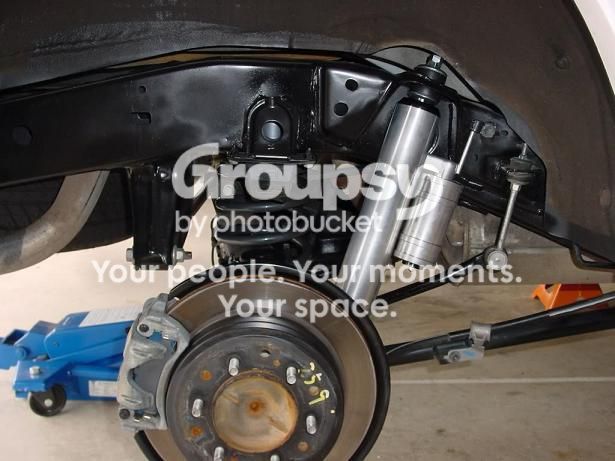
Dumb question. I've seen a few pictures of this canister piece attached to the right side of this rear shock, but not sure what it is, or what it's used for.
Can someone kindly advise me.

(This photo was used from the forum without permission. I will remove it if requested).
Rearshock.jpg~original
 
Register to hide this ad
The reservoir ?

It holds more oil, so you'll experience less fade. It also allows more oil into the shock to dissipate heat.
 
Do some people buy them just cause they look cool? Just wondering cause as soon as borgzman mentioned what it was, I could actually google it to read more. Funny thing is, is I came across some bike forums that do mods where they actually attach beer or energy drink cans to their shocks to give this appearance (I'm assuming to look cool?). Just learning it, I don't fully understand it. Seemed odd though.
 
lol I have heard of this "red bull can mod", an I can understand why people would want to mimic remote resi's (bc they are so awesome of course).
 
I am very serious. If you see some of the baja buggies or trucks they have huge resi's on them.
 
I thought one other benefit of Resi-Shocks was that for long travel applications they could compress more/extend more without failing because extra fluid is stored externally.
 
Remote reserviors came about due to a few reasons. First off understanding how a shock works is imporatant to understanding how or why the reserviors exsist. Think of a shock as your hand moving in a pool. Close your hand and move it slowly and you have some resistance as the water has to flow around your hand. This work we call damping in a shock. Now try to push your hand faster and you will feel more damping. Do this again with you fingers spread apart and you will feel that it requires less force as the water has a shorter path to go around it. Take that analogy to a shock, you have a shaft that moves up and down and connected to the shaft is a valve with a variable hole in it. Nearly all the technolgy in a modern shock is about how to control the size of that hole which is what varies the damping rate. Some people use flexing thing metal plates other use a ball and spring while most use a combination of technics to control the hole size and therefore the damping characteristics. So who cares right, well two thing happens when you restict flow, first is you generate heat (cuz your doing work) and second if speeds are fast enough you can creat a void behind the valve which can cause damping fluxuations during repeated movements. To control these fluxuation you add pressure, the higher the pressure the less likely these voids are to happen (this is call cavitation in the damping world) and the more constant the damping will be. So most of the orginal shocks are just oil damped and with no extra pressure, then come the pressurize shocks with internal reserviors that are sealed and charged during assembly (these are the kyb gas adjust and Bilstein style shocks). Now there is the high end stuff like what Fox makes with remote resi's. Yes they are there to add more oil but they also add more volume to the resi which help resit fade and most importantly makes it easy to service. The high end stuff is all rebuildable and very tunable.

Probably more info than anyone wanted to know but my hobby is tuning dirt bike suspension (for the last 10 years) so it is a subject that I have a passion for..

 
Remote reserviors came about due to a few reasons. First off understanding how a shock works is imporatant to understanding how or why the reserviors exsist. Think of a shock as your hand moving in a pool. Close your hand and move it slowly and you have some resistance as the water has to flow around your hand. This work we call damping in a shock. Now try to push your hand faster and you will feel more damping. Do this again with you fingers spread apart and you will feel that it requires less force as the water has a shorter path to go around it. Take that analogy to a shock, you have a shaft that moves up and down and connected to the shaft is a valve with a variable hole in it. Nearly all the technolgy in a modern shock is about how to control the size of that hole which is what varies the damping rate. Some people use flexing thing metal plates other use a ball and spring while most use a combination of technics to control the hole size and therefore the damping characteristics. So who cares right, well two thing happens when you restict flow, first is you generate heat (cuz your doing work) and second if speeds are fast enough you can creat a void behind the valve which can cause damping fluxuations during repeated movements. To control these fluxuation you add pressure, the higher the pressure the less likely these voids are to happen (this is call cavitation in the damping world) and the more constant the damping will be. So most of the orginal shocks are just oil damped and with no extra pressure, then come the pressurize shocks with internal reserviors that are sealed and charged during assembly (these are the kyb gas adjust and Bilstein style shocks). Now there is the high end stuff like what Fox makes with remote resi's. Yes they are there to add more oil but they also add more volume to the resi which help resit fade and most importantly makes it easy to service. The high end stuff is all rebuildable and very tunable.

Probably more info than anyone wanted to know but my hobby is tuning dirt bike suspension (for the last 10 years) so it is a subject that I have a passion for..

No, its nice to always have someone explain how systems work, the more you know and all that jazz.

I vaugely remembered someone talking to me about how teh remote resi's helped with damping under heavy load because they had more oil, but its been so long I didn't want to butcher the explaination. TY for the information, one more question though, are remote resi's gas charged also or purely hydraulic?
 
Actually, this is exactly what I was looking for, 450exc! Not that I'm looking at getting them since I just put shocks on. It's just that I had seen them and always wondered what they were for. Perfect explanation and thank you for for taking the time and providing the details!
 
No, its nice to always have someone explain how systems work, the more you know and all that jazz.

I vaugely remembered someone talking to me about how teh remote resi's helped with damping under heavy load because they had more oil, but its been so long I didn't want to butcher the explaination. TY for the information, one more question though, are remote resi's gas charged also or purely hydraulic?

The resi is typically half oil and half nitrogen. There is a seperator piston between the oil and gas that applies the gas pressure to the oil. They build the shock, add oil, purge all the air (usually via a vaccuum pump purge to remove as much air that may be suspensed in the fluid) and then charge the shock via the ressy. Pressures vary (OME uses a lower pressure than most) but typically presure range from 150-250 psi depending on the manufacturer.
 

Members online

Forum statistics

Threads
278,309
Messages
3,554,068
Members
248,016
Latest member
Advally Service

Trending content

Back
Top