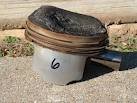
Strong knocking at low-RPM

j3flight

New member
Hello all. New here... Hoping for a little assistance on this one. I have a 2006 4Runner V6 2WD AT. The truck runs great overall. Power is good, starts and runs clean, just this one problem.

When the truck has been at operating temp for a while... Climbing a hill using light throttle, at low rpm, I hear some very worrying tapping/knocking from the engine compartment.

For example, my neighborhood is very hilly. Cruising around at 20-25, the truck is usually at 1000-1500 RPM when the road starts uphill. The knocking gradually gets worse as I climb and will continue all the way to the top. As the hill flattens, the noise goes away without RPM or throttle change. Fairly reproducible.

My ear says it's spark knock. But, in past experience, that symptom sounds more like "marbles" and is somewhat irregular and comes and goes. This is not that. The knocking is very regular - meaning it sounds like a single cylinder knocking on every fire. (At 1200-1500 RPM, my unverified guess is roughly 10-12 knocks per second. If my math is correct, that's just 1 cylinder.)

More information...
- When going uphill, if I push the accelerator a bit more, a downshift makes the problem cease.
- I can also hear the same knocking (but not as pronounced) when I'm using light throttle around town and the truck up-shifts. Basically, hills aren't the only cause - any load at 1500 RPM or under can cause it. But hills are the worst.

Things I know...
- I do not have any engine codes. I thought maybe this was a knock sensor issue - but the ECU isn't complaining.
- I just replaced the spark plugs with Denso OEMs. The previous plugs looked fine on all 6. No help.
- I just had the transmission fluid drained/refilled with Toyota world-standard fluid. Not necessary, I hear, but I wasn't the first owner and it's done some decent towing. So, I bit the bullet. No help.
- Used some basic fuel-injector cleaner. No help.
- It does seem to be tied to heat and does come and go. Some days I try to trigger it and it sounds great. Other days, it sounds awful.
- I use 87 gas. My next tank will be 89 as a test, but I'm hoping that's not the "solution".

Any ideas appreciated!
Thanks.
 
Register to hide this ad
try this first

you seem to be running a lower octane... try putting a 1/4 tank of premium and see if the knocking just goes away. like you said its not a fix just a trial.

I think i heard some where on this forum (sounds like marbles) turned out to be cracked headers?? don't quote me though.

I would also recheck the spark plugs and make sure the gapping isn't off on one of them... also what elevation? and have you cleaned your air filter? (dumb i know but hey...gotta ask:wink2:)
 
Why do you say I'm running a "lower" octane? Isn't 87 the standard rating for "normal" grade gas? So, 87, 89, 91 for low, mid, premium - right? Either way, I'll definitely be raising the octane next fill up as a test.

Yes, air filter is clean. It's a K&N actually.
I'm in Alabama, so consider me not much above sea-level.

Also, in the garage today, I attempted to reproduce the issue and may have added some clues. In park, I believe I can recreate the noise but at a much lower volume. If I just touch the throttle and hold the tach at about 1100, I get a tapping/scraping noise . It does not sound like spark knock there though, so maybe I'm off track. Regardless, I may have ruled out torque converter/flexplate/transmission.

Thanks.
 
Yes.

87 is safe in your truck. If your pinging, it isn't the fuel. It is something else. Knock Sensor, ECU, something. It isn't gas and hasn't really been gas in 99% of cars for 20 years since the inception of electronic timing control and EFI.
 
If you use premium fuel and the knock stops, most likely you have carbon build up in the cylinder. It will need to be cleaned (a simple additive will not work). Knock is VERY bad, get it fixed ASAP!

Koz
 
I have been running my own experiment using my OBDII torque system to really see how the 4runner handles 87 and 89. As far as I can tell, no differently.

A engineer friend of mine made a good point. While ethanol as slightly less "power" in it, it has far better pre-detonation properties. He made the point that many uber fancy race cars use pure ethanol.

I haven't tried 87 vs. 89 NON-Ethanol. I can get it, just a bit of an errand. But that will be my next research group.

As far as I can tell, running 87 and 89 with your typical 10% ethanol, makes 0 difference in the engine in terms of knocking and how it handles the timing. Meaning.. I am convinced that if your truck is showing ANY sign of knocking or performance issue, it isn't the grade of fuel and is something wrong with your car.

Anyone else with a obd II system, start looking yourself.

I am not concerned about MPG. It has too many variables to be of an import. And it is usually simply cheaper to buy 87, so any % you might lose, you make up on the fuel costs.
But I don't want to have that debate. I am actually interested to see how the engine reacts to the different grades. I can't, empirically, see ANY difference.
I also can't see an real MPG difference. Again, since driving style is the LARGEST determinate. I may be getting slightly better MPG with 89, but I can't see it.
 
Someone else had a problem similar to this recently and it was a stuck brake caliper.

I'm gonna need you to elaborate on that one please...

If you use premium fuel and the knock stops, most likely you have carbon build up in the cylinder. It will need to be cleaned (a simple additive will not work).

Is this somewhat common? Where exactly does it build up? On the piston head? My previous plugs were perfectly clean, so that's a good sign (I guess).

============================

So, for a moment, forget that I said it might be traditional spark knock. What else is likely to make a "knocking-like" sound at low-rpm when loaded?

How about...
  1. A valve issue? (I don't think the valve itself is making this noise, it's too heavy. But maybe a poor valve timing?)
  2. An exhaust leak (at the header)?

Or worse...
  • Wrist pin?
  • Something else lower in the crank case?

How do I rule each of those out?

And thanks, by the way...
 
I have been running my own experiment using my OBDII torque system to really see how the 4runner handles 87 and 89. As far as I can tell, no differently.

But I don't want to have that debate. I am actually interested to see how the engine reacts to the different grades. I can't, empirically, see ANY difference.

I also can't see an real MPG difference. Again, since driving style is the LARGEST determinate. I may be getting slightly better MPG with 89, but I can't see it.

You will not see any difference in performance or mileage unless the system senses knock and adjusts the timing accordingly. More octane does not do anything other then to raise the resistance to allow knock. The best octane to use in any engine is the lowest octane without allowing knock. Any more is a total waste of money. The most important thing you can do, as far as what fuel you use is, to use a fuel that keeps your engine free of carbon build up. TOP TIER fuel.

Top Tier Gasoline

Koz
 
I'm gonna need you to elaborate on that one please...


Is this somewhat common? Where exactly does it build up? On the piston head? My previous plugs were perfectly clean, so that's a good sign (I guess).

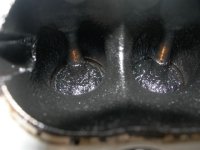
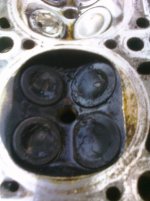
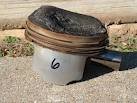
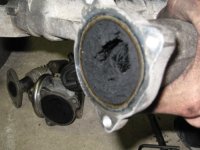
Carbon builds up on the valve stems and intake ports in the heads, builds up in the combusion chamber (head surface, back of valves and piston tops). This build up take up space in the combusion chamber and actually raises the compresion ratio (therefor needing higher octain fuel). The build up also disrupts the air/fuel flow of the intake and exhaust.

There is a serious problem with most/all direct injection engines (except some Lexus systems), take a look:

First pic - caked intake valves
Second - head (combustion chamber)
Third - exhaust manifold.

Do yourself a favor and use Top Tier fuel and stay away from direct injection!

Koz
 

Attachments

  • carbon caked-intake-valves.jpg
    carbon caked-intake-valves.jpg
    34.8 KB · Views: 2,385
  • carbon head.jpg
    carbon head.jpg
    54.9 KB · Views: 2,384
  • carbon piston.jpg
    carbon piston.jpg
    4 KB · Views: 2,285
  • carbon exhaust.jpg
    carbon exhaust.jpg
    64.3 KB · Views: 3,134
The pics I posted are from direct injected engines and are the extreme (to show how bad it can get). You will not see this in a 4runner engine (unless something is drastically wrong). When carbon builds up it raises the compression ratio and causes the ignition to adjust the timing to prevent knocking. The ignition can only compensate so much and the engine will start to knock. This is where using higher octane fuel and seeing/hearing the knock less can indicate carbon build up. Symptoms include knocking, poor mileage and performance (including poor idling). A compression test should indicate a problem.

As far as fixing it; it all depends on how bad it is. You could simply use an intake cleaning additive (the Seafoam method has shown to be affective) or it could take major surgery and very elaborate methods. Some are so bad (Audi RS) that owners have it fixed and then sell the vehicle.

Again, the fuel itself is very critical in helping to keep the build up at a minimum. It may take 40/50K miles before the symptoms show up.

Koz
 
Last edited:
My IS350 has two separate fuel delivery systems (direct and port). Reason being; the direct (fuel is injected directly into the cylinder) provides power/mileage and the port system injects fuel (specially formulated to keep the engine clean) through the intake components which helps wash/clean carbon. The IS250 only uses direct injection and has carbon problems.

Koz
 
Ok, very good info Koz, thanks for the pics and explanation.

I don't suspect that to be the problem here - I guess. Not that it's impossible, but I think other issues are more likely. I'll do some more research on it though. I've never used seafoam, which seems to be popular around here - might give it a shot.

So, one more stab (again, forget I said it was spark knock)...

I was able to get another person to work the throttle while i had my head under the hood. When the truck is at 1000-1300 rpm, I notice a pronounced tapping on the driver's side upper part of the engine. Specifically, it sounds like it's coming from behind the spark plug coils. I can't pin down which cylinder, but it is absolutely driver's side. The tapping I hear is exactly the same rate as the much louder version I hear climbing hills at the same RPM. And, to be clear, this is not fuel-injector noise. Obviously, my first thought is valves...

1. Is it safe to assume tapping in that area means my truck is in need of a valve job? (I don't mind paying for it if it's needed, I just don't want to waste money.)
2. Can a poorly adjusted valve cause louder, nastier noises in a cylinder under load?

Thanks once again.
 
There was another thread here where somebody fixed a mysterious "tapping" sound by replacing a fuel pressure damper. The "tapping" basically amounted to a case of "water hammer" within the fuel system created by the constant on/off cycling of the injectors. I do believe that the part which was replaced was located in the upper drivers side area on the engine. Coincidence?

My Runner has a tapping noise too when it's running and I've always just chalked it up to the fuel system. I'm used to GM motors with fuel systems that sound like industrial sewing machines.

Just some food for thought.
 

Members online

No members online now.

Forum statistics

Threads
278,312
Messages
3,554,083
Members
248,016
Latest member
Advally Service

Trending content

Back
Top