
You are using an out of date browser. It may not display this or other websites correctly.
You should upgrade or use an alternative browser.
You should upgrade or use an alternative browser.
Suggestions on wheels
- Thread starter rra640
- Start date
Register to hide this ad
wheels
You are going to have to be more specific.
Bling? Off road wheels? Black wheels? 22's?
You can start at Discount tire company. You can choose your wheel and see them on your Runner. Try tire rack also. Do a search for wheels on google and your options are the limit of your credit card.
What kind of 17" wheels do you have? Do you have the sport wheels with the 6-spoke or the 17" limited type wheels?
You are going to have to be more specific.
Bling? Off road wheels? Black wheels? 22's?
You can start at Discount tire company. You can choose your wheel and see them on your Runner. Try tire rack also. Do a search for wheels on google and your options are the limit of your credit card.
What kind of 17" wheels do you have? Do you have the sport wheels with the 6-spoke or the 17" limited type wheels?

Good Times
New member
Most common 16x8 wheel specs are 4.5 Backspacing with 0 offset. I'm pretty sure most all of American Racing wheels are to that specification (well atleast the AR-23's that I have along with a few others that I researched).
Since you have the SR5 grade, you should have no problems getting the 16x8's (just make sure it's 4.5BS, 0 offset.)
Depending on where you live, if you have a Discount Tire store (as Kenn states) they should be able to tell you which tires/wheel combo works and will not work. Also I highly recommend that you pick up their tire hazard warranty. This is 100% beneficial if you plan to offroad as their tire hazard warranty includes all hazards (yup offroading too!!!!).
As long as you have a 3" lift, you should be fine w/ the 285/75/16 (AT - some rubbing). If you get MT's, you will experience heavy rubbing.
If you're still not sure what wheels to get, check out tirerack.com and look up some cool wheels you like and then locate the manufacturer online and see what the specifications are and you should be able to get a good idea on what you think will work and will not work. Worst case, just post up the wheel w/ the wheel spec and we'll check it out and give ya the thumbs up or down.
Good luck
Since you have the SR5 grade, you should have no problems getting the 16x8's (just make sure it's 4.5BS, 0 offset.)
Depending on where you live, if you have a Discount Tire store (as Kenn states) they should be able to tell you which tires/wheel combo works and will not work. Also I highly recommend that you pick up their tire hazard warranty. This is 100% beneficial if you plan to offroad as their tire hazard warranty includes all hazards (yup offroading too!!!!).
As long as you have a 3" lift, you should be fine w/ the 285/75/16 (AT - some rubbing). If you get MT's, you will experience heavy rubbing.
If you're still not sure what wheels to get, check out tirerack.com and look up some cool wheels you like and then locate the manufacturer online and see what the specifications are and you should be able to get a good idea on what you think will work and will not work. Worst case, just post up the wheel w/ the wheel spec and we'll check it out and give ya the thumbs up or down.
Good luck
I have the standard SR5 wheel, which I kind of like.
Ok, you have convinced me to go with the 16x8 and be done.
I've been to Discount and Tirerack.com and my confusion is that there are dozens of brands and styles. I want something that looks similar to stock and that is good for offroad. I'm not in to the bling bling... more function.
I know AR is good, but they are a little pricy and probably more than I need. Maybe some can post pictures of what they have gotten. I have the tan color if that makes a difference.
Ok, you have convinced me to go with the 16x8 and be done.
I've been to Discount and Tirerack.com and my confusion is that there are dozens of brands and styles. I want something that looks similar to stock and that is good for offroad. I'm not in to the bling bling... more function.
I know AR is good, but they are a little pricy and probably more than I need. Maybe some can post pictures of what they have gotten. I have the tan color if that makes a difference.
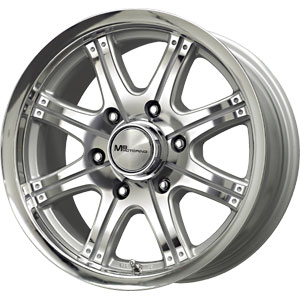

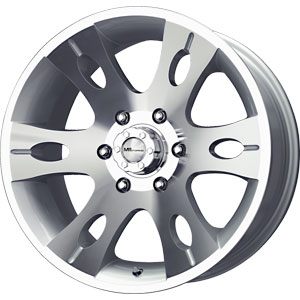
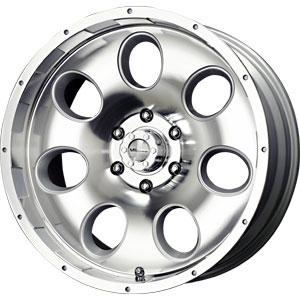


Mr. Lambdebois
New member
I like the last one as well.... How much are those?
Any sugestions on a cheap black 16x8 steel wheel? I remember I found some steel 15x8s for my explorer for under 50 bucks a wheel.
I'm very interested in what 16x8 are around as well. I'd like to have a set of dedicated off road tires that I can just bolt on already ballanced and ready to go and still have my street set so put back on for road trips.
:bigok:
I wonder what other vehicles use a 16x8 wheel that have the same backspacing and bolt pattern?
Any sugestions on a cheap black 16x8 steel wheel? I remember I found some steel 15x8s for my explorer for under 50 bucks a wheel.
I'm very interested in what 16x8 are around as well. I'd like to have a set of dedicated off road tires that I can just bolt on already ballanced and ready to go and still have my street set so put back on for road trips.
:bigok:
I wonder what other vehicles use a 16x8 wheel that have the same backspacing and bolt pattern?
Last edited:
Mr. Lambdebois
New member
is the bolt pattern 6- 5 1/2?


mtnracer
New member
Ivan Stewart
For my money I'm going to buy the TRD Ivan Stewart Wheels from Toyota. They are 16x8 and look sweet. Here is a link:
http://www.newtoyotaparts.com/product/?id=1469
For my money I'm going to buy the TRD Ivan Stewart Wheels from Toyota. They are 16x8 and look sweet. Here is a link:
http://www.newtoyotaparts.com/product/?id=1469

trijicon
New member
rra640 said:Now those I like! At first I thought it was $789 each, but it looks like that is for a set of 4. That price is not too bad. Do those have the 4.5
Mr. Lambdebois
New member
someone already put them on their 4th gen.
http://www.toyota-4runner.org/showthread.php?threadid=8750&highlight=ivan
http://www.toyota-4runner.org/showthread.php?threadid=8750&highlight=ivan
hossmaster
New member
random 4Runner I found

I like these and have these on my Tacoma, except I need to polish mine now.

I like these and have these on my Tacoma, except I need to polish mine now.
mtnracer
New member
Good Times said:Most common 16x8 wheel specs are 4.5 Backspacing with 0 offset. I'm pretty sure most all of American Racing wheels are to that specification (well atleast the AR-23's that I have along with a few others that I researched).
Since you have the SR5 grade, you should have no problems getting the 16x8's (just make sure it's 4.5BS, 0 offset.)
Depending on where you live, if you have a Discount Tire store (as Kenn states) they should be able to tell you which tires/wheel combo works and will not work. Also I highly recommend that you pick up their tire hazard warranty. This is 100% beneficial if you plan to offroad as their tire hazard warranty includes all hazards (yup offroading too!!!!).
As long as you have a 3" lift, you should be fine w/ the 285/75/16 (AT - some rubbing). If you get MT's, you will experience heavy rubbing.
If you're still not sure what wheels to get, check out tirerack.com and look up some cool wheels you like and then locate the manufacturer online and see what the specifications are and you should be able to get a good idea on what you think will work and will not work. Worst case, just post up the wheel w/ the wheel spec and we'll check it out and give ya the thumbs up or down.
Good luck
Correct me if I am wrong as I am new at this wheel stuff: How can you have an 8 inch wide rim with 4.5 inch backspacing and 0 offset? If the wheel is 8" and backspace is 4.5", wouldn't offset be 0.5"? Not sure if this would be positive or negative backspace though.
Check out this site for details on this:
http://www.rsracing.com/tech-wheel.html#backspace
Good Times, I know your rig is totally custom and you are running 315s. Do you know if the 285s will rub on the front suspension knuckle? My 265s are already really close to the knuckle. Will the backspacing on the wheel help with that?
Does anyone know what the stock Toyota backspacing and offset are on standard toyota 16" or 17" wheels?
Good Times
New member
The back spacing measurement is critical in the fitment of the wheel (and tire) to the vehicle. Since the suspension, brake, steering and drive systems are typically located behind the wheel, the back spacing is used to define a volume behind the wheel where these items can exist.
* A related term is known as offset, which relates the hub mounting surface to the centerline of the rim. A 0 offset indicates the hub mounting surface is at the exact centerline of the rim. In this case, the back spacing would then be equal to 1/2 the rim width (plus the thickness of the bead lip on the rim - see below).
* Offset is measured such that positive offsets mean the inner lip of the rim is closer to the vehicle and negative offsets move the rim away from the vehicle, (see image 2 above).
o Offset is usually measured in millimeters (mm) and often has the designation "ET" prepended to the offset, so a 19mm offset may be listed as ET19.
* Note that offset and backspacing are related but measured at slightly different points.
o For example, I have a set of 15x8 alloy rims, with a -19mm (3/4") offset and the backspacing measures 3.75". So using the centerline at 4", subtracting 3/4" from that gives 3.25" for the rim mounting surface, which is measured off the inside face of the inside bead. So where doe the extra 1/2" come from (3.75" - 3.25")? Its from the thickness of the lip of the rim, in fact a tape measure shows the distance from the inside face of the bead to the outside of the rim lip to be 1/2".
* Backspacing and offset are two different measurements of essentially the same thing, however they are opposite in sign
o So more backspacing means the wheel sits in closer to the axle and that less of the wheel's width will appear outside of the wheel moutning flange, giving a narrower track.
o More offset means the wheel mounting flange is closer to the inside of the wheel some consequently more of the wheel's width is to the outside, giving a wider track.
Hope that clears up the wheel stuff. For more info check out this link (http://www.4crawler.com/Diesel/Tires.shtml#WHEELS) Great stuff on that site.
Rubbing.. All depends on wheel specification and tire type (A/T vs M/T). With A/T's the rubbing will be more limited with proper wheel specification vs M/T's. Upon full compression expect rubbing regardless whenever you upgrade tires to a significant size increase. Rubbing at the upper control arms can be overcome by upgrading the uca's or changing wheel specification.
16x7 comes w/ 4 7/8" BS I believe. Not sure exactly but it's something like that from what I can recall (please double check tough as I could be wrong). The 17x7.5's I have no clue since I don't own a set.
285's are possible but just trim accordingly. It's not the end of the world and you don't need to tear your 4runner apart. Most of it will rub along the inner fender (plastic pieces) and the end of the front bumper trim. You'll want to cut a good section of it. Most of the rubbing occurs duing full compression at full lock (turns).
Good luck
* A related term is known as offset, which relates the hub mounting surface to the centerline of the rim. A 0 offset indicates the hub mounting surface is at the exact centerline of the rim. In this case, the back spacing would then be equal to 1/2 the rim width (plus the thickness of the bead lip on the rim - see below).
* Offset is measured such that positive offsets mean the inner lip of the rim is closer to the vehicle and negative offsets move the rim away from the vehicle, (see image 2 above).
o Offset is usually measured in millimeters (mm) and often has the designation "ET" prepended to the offset, so a 19mm offset may be listed as ET19.
* Note that offset and backspacing are related but measured at slightly different points.
o For example, I have a set of 15x8 alloy rims, with a -19mm (3/4") offset and the backspacing measures 3.75". So using the centerline at 4", subtracting 3/4" from that gives 3.25" for the rim mounting surface, which is measured off the inside face of the inside bead. So where doe the extra 1/2" come from (3.75" - 3.25")? Its from the thickness of the lip of the rim, in fact a tape measure shows the distance from the inside face of the bead to the outside of the rim lip to be 1/2".
* Backspacing and offset are two different measurements of essentially the same thing, however they are opposite in sign
o So more backspacing means the wheel sits in closer to the axle and that less of the wheel's width will appear outside of the wheel moutning flange, giving a narrower track.
o More offset means the wheel mounting flange is closer to the inside of the wheel some consequently more of the wheel's width is to the outside, giving a wider track.
Hope that clears up the wheel stuff. For more info check out this link (http://www.4crawler.com/Diesel/Tires.shtml#WHEELS) Great stuff on that site.
Rubbing.. All depends on wheel specification and tire type (A/T vs M/T). With A/T's the rubbing will be more limited with proper wheel specification vs M/T's. Upon full compression expect rubbing regardless whenever you upgrade tires to a significant size increase. Rubbing at the upper control arms can be overcome by upgrading the uca's or changing wheel specification.
16x7 comes w/ 4 7/8" BS I believe. Not sure exactly but it's something like that from what I can recall (please double check tough as I could be wrong). The 17x7.5's I have no clue since I don't own a set.
285's are possible but just trim accordingly. It's not the end of the world and you don't need to tear your 4runner apart. Most of it will rub along the inner fender (plastic pieces) and the end of the front bumper trim. You'll want to cut a good section of it. Most of the rubbing occurs duing full compression at full lock (turns).
Good luck
mtnrac er said:Correct me if I am wrong as I am new at this wheel stuff: How can you have an 8 inch wide rim with 4.5 inch backspacing and 0 offset? If the wheel is 8" and backspace is 4.5", wouldn't offset be 0.5"? Not sure if this would be positive or negative backspace though.
Check out this site for details on this:
http://www.rsracing.com/tech-wheel.html#backspace
Good Times, I know your rig is totally custom and you are running 315s. Do you know if the 285s will rub on the front suspension knuckle? My 265s are already really close to the knuckle. Will the backspacing on the wheel help with that?
Does anyone know what the stock Toyota backspacing and offset are on standard toyota 16" or 17" wheels?
hossmaster
New member
Re: maker
If your referring to the above post, they are MB Motoring brand wheels and model name is Rocker (70242). They can be bought at discount tire and are reletively cheap. Those on the Tacoma are 16x8 and 4" of backspacing or -6mm offset.
here take a look
http://www.explorer4x4.com/wheels_offset_backspace.htm
frankx said:Who makes that wheel? What is the model name? I really like these wheels.
If your referring to the above post, they are MB Motoring brand wheels and model name is Rocker (70242). They can be bought at discount tire and are reletively cheap. Those on the Tacoma are 16x8 and 4" of backspacing or -6mm offset.
here take a look
http://www.explorer4x4.com/wheels_offset_backspace.htm

