What makes a safe vehicle?

Volvo xc 70. Such a nice car to drive. comfy, quick, solid, quiet, AWD. Sits a bit higher than a regular car. Responsive handling and braking will increase her safety more than mass. The mass of a large SUV hinders the handling. Being able to avoid a collision by driving around it, stopping quickly, or accelerating away is safest scenario. The Volvo has the structural and airbag stuff to protect them if needed.
They really do refine passenger protection. The attention to detail is amazing. As an example, the doors are designed to NOT crush little fingers when slammed shut. My nephew was spared the pain and damage because the door seals are rubber gasket on rubber gasket.

Good points. But not always true when you have someone crawling up your ass in rush hour traffic. If there's no space to maneuver, the advantage is lost.
 
Good points. But not always true when you have someone crawling up your ass in rush hour traffic. If there's no space to maneuver, the advantage is lost.


But being in a volvo, the advantage is once again gained ;) I'm sure a volvo would take a hit to the rear better than any car.
 
Xc60

I'd like to also recommend test driving a Volvo XC 60. Drove a rental for a week last November and really liked it. Nice size. Taller than the wagon, so you sit up higher. Comfortable and roomy interior. Good engine and trans. Smaller and more nimble than the XC90. It didn't feel like a watered down compromise vehicle. It felt like it had the best traits of the 70 and the 90.
There is some front wheel drive torque steer under acceleration which I found odd at first, but I adapted quickly and now quite like the way the 70 and 60 handle. No need for the turbo at sea level. Normally aspirated is plenty quick. They feel solid. They are well insulated from exterior noise.
 
Last edited:
Like was said above, the SUV's higher CG and increased weight mean they aren't the safest of vehicles to drive.

Maybe something like a BMW 5 series wagon, or an Audi A6 Avant would be a good choice? They have outstanding safety ratings, have plenty of cargo room for a family of 4, and they are fun to drive. Yeah they are wagons (to some this is a turnoff), but they just make sense.

Too bad we don't get the Audi RS6 Avant in the states. Twin turbo V10 and 550 plus hp anyone?

Excellent post. Everyone always assumes that bigger=safer, which is not always the case. As someone who instructs at track events & has taught car control classes, the safest car is one which avoids the collision altogether.

We just sold my wife's A6 Avant (4Runner has towing capabilities), and I feel that I might have made a compromise in safety. I hope not, but in driving this vehicle, I get the feeling. An A6 or 5 series Wagon is going to perform brilliantly in a crash, but more importantly, their ability to avoid a collision is way out of the 4Runner's league.

In all seriousness: Get a good German sedan or wagon (or the Volvo that the others recommended). But much more importantly, make your wife take a REAL car control class... Not the nonsense like Taggarts, but a serious class that will help save her life.

Way too many people take it too lightly that driving is the most dangerous activity in a day. I work in heavy industry, and the drive to work is more dangerous. People ask me about driving on race tracks & then seem surprised when I tell them that the drive TO the track is more dangerous than being on the track.
 
Last edited:
Good points. But not always true when you have someone crawling up your ass in rush hour traffic. If there's no space to maneuver, the advantage is lost.

This is a little bit of a defeatist attitude. There's almost always something you can do. Now, if you're referring to bumper-to-bumper rush hour, then your options might be more limited, but on the upside, the speeds will be very low. With low speeds or small speed differentials, any Civic will be perfectly safe.

What kills people (assuming properly belted with properly maintained vehicle) is speed differentials. Even the jerk tailgating your wife while sending texts @ 65mph is only going to hit her with a speed differential of a couple of mph which is not that dangerous. Of course, if she's in a high-center of gravity SUV, this could be fatal if it invokes a spin & roll-over.

You really should be more concerned with the crashes with higher approach speeds, these are also the kind of crashes where an alert driver would have more time to react. In these crashes it is not always true that more mass = more safe. Crash design has come a long way in the past 20 years. A lowly 2014 Civic or Corolla crash tests better than the mid-size German cars from the late 80s/early 90s, which says quite a lot.
 
A lowly 2014 Civic or Corolla crash tests better than the mid-size German cars from the late 80s/early 90s, which says quite a lot.

What it says is that the government tests (at least in some ways) are crap.

A civic May test better for a front end collision than a 5000 lb 90s Benz sedan or Volvo ... I really don't know for sure BUT I strongly believe if your wife was to be rear ended or side swiped by a Suburban that she would be far better off in the 5000 lb 90s Benz just because of the pure physics of the cars involved.

What the government tests do (in order to make small cars appear safe) is test the vehicle (eg a civic) driving into a cement block but they don't test a cement block equal to a suburban driving into a civic. As I mentioned before these are two very different things and the government tests don't really reflect that because if they did then these small cars would all have bad ratings.

OP, have you checked out consumer reports? Might be a good idea to buy a subscription so you can see their results.
 
What it says is that the government tests (at least in some ways) are crap.

A civic May test better for a front end collision than a 5000 lb 90s Benz sedan or Volvo ... I really don't know for sure BUT I strongly believe if your wife was to be rear ended or side swiped by a Suburban that she would be far better off in the 5000 lb 90s Benz just because of the pure physics of the cars involved.

What the government tests do (in order to make small cars appear safe) is test the vehicle (eg a civic) driving into a cement block but they don't test a cement block equal to a suburban driving into a civic. As I mentioned before these are two very different things and the government tests don't really reflect that because if they did then these small cars would all have bad ratings.

OP, have you checked out consumer reports? Might be a good idea to buy a subscription so you can see their results.

Nobody (well the 99.9% of that are ignorant of physics) understands the difference of hitting or being hit. If you have two vehicles with the same safety features (airbags, crumple zones, etc) but have different masses the heaviest will always win.

Look, most people still think that a head on collision with two exact vehicles at 55 mph will result in a collision with the force of 110 mph lol. Wrong. Physics. It's what's for dinner.
 
Seems like a lot of good recommendations and explanations for the OP to consider. Hope you and your family end up with a vehicle that you feel safe in but also enjoy owning.

I'd have throw my vote in with whatever vehicle with the most mass in a collision wins crowd.... but who can really afford an International CXT as a daily driver???

I came from a F250 on 35's to my 4Runner and while I know I have less mass protecting me, I still think the T4R is a very safe vehicle. What I gave up in mass, I gained in both handling and visibility.

Best of luck in your new car search!

- Jeff
 
That is a great video and we have come a long way. I'd love to see a 2013 F250 vs a Civic.

Or a new Civic being T-boned by an new F250 then the reverse.
 
I'm just going to throw this out there, as I'm aware it's not the safest 'car' necessarily.
Just make sure that all children and pets are restrained property as well. I'm sure your children are, but many pet owners travel with their pets freely and this can be deadly to your family on impact.
 
The safest vehicle is the one with an alert and decisive and predictable driver behind the wheel.

With respect, teach your wife to have a little confidence in her ability as a driver, or take public transport. It sounds like she's probably timid and overdefensive, and that makes her unpredictable, and that's not safe for anybody.

this all the way.
 
What it says is that the government tests (at least in some ways) are crap.

A civic May test better for a front end collision than a 5000 lb 90s Benz sedan or Volvo ... I really don't know for sure BUT I strongly believe if your wife was to be rear ended or side swiped by a Suburban that she would be far better off in the 5000 lb 90s Benz just because of the pure physics of the cars involved.

What the government tests do (in order to make small cars appear safe) is test the vehicle (eg a civic) driving into a cement block but they don't test a cement block equal to a suburban driving into a civic. As I mentioned before these are two very different things and the government tests don't really reflect that because if they did then these small cars would all have bad ratings.

First, I think that you entirely missed the point of my post.

Next 5000 is a monster of a car, even today. It's really only the realm of SUVs. The big Benz in 1990 was pushing 4000lbs, and I referred to a midsized car. I was thinking of a 3 series or 190E, and at about 2800 lbs, they are about the size of a modern Civic or Corolla. For giggles a 1990 5 series is about the size & weight of a new Accord.

Now, I love my old BMWs, but a 90 3 series or 5 series won't match up in safety to newer econoboxes. Crumple zone design and improved safety cages, along with better airbags (including many more per car) are making cars much safer. I have an 88 3 series & an 06, and there are light years in between.

Side swipes & rear ends aren't the kind of accidents you should be worried about. As I mentioned, you're worried about high speed differentials, like head-on shots & t-bone collisions. The others damage cars, but generally don't result in injuries. Side airbags, crash bars and other side reinforcements have drastically reduced the number of deaths in t-bones. Offset crash testing changed the ways cars were designed.

Many of the crash testing methods were developed within the industry. The IIHS pioneered a lot of methods used by governments today. The popular offset frontal crash represents one of the most deadly types of crash, and one of the most common: a car running off:mullet: the road into a stationary object with a glancing blow.

Crash safety is about destroying the car to dissipate energy to save the occupants, and modern cars are so much better than in the past. Traffic deaths are at an all time low, and based on my experience, it's not because people are such good drivers. Cars are getting better at helping to avoid crashes and performing much better in the event of one.

I still pick a well-engineered mid-sized, luxury sedan, wagon or crossover over most anything.

 
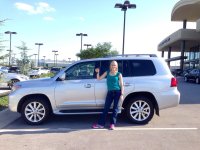
Well, we made our choice. Found a very nice 2010 with only 18k miles

image.jpg
 

Attachments

  • image.jpg
    image.jpg
    135.5 KB · Views: 69

Members online

No members online now.

Forum statistics

Threads
278,312
Messages
3,554,089
Members
248,016
Latest member
Advally Service

Trending content

Back
Top