4th Gen needs advice!

cali2008

New member
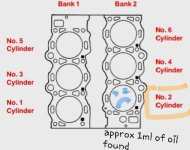
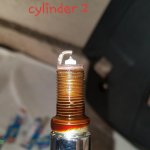
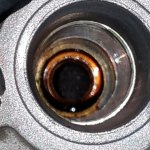
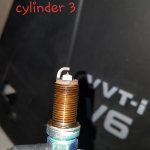
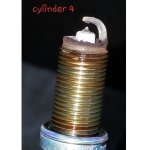
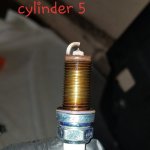
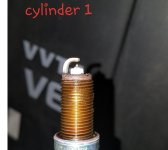
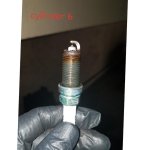
Here are my findings during todays spark plug change.
What can you report from these findings and or suggest? [MENTION=66389]BlackWorksInc[/MENTION]
And everyone else too!


It ran smooth with the old ngk plugs - gap at pull was .040, did notice one at .041...forgot cylinder. ( but I noticed it had hesitation during hard acceleration, just seemed weak.
After putting the Denso plugs in ( gapped them at .043 per manual) it runs very smooth, quiet idle, hard acceleration is excellent, very responsive and runs great now.
 

Attachments

  • IMG_09122019_015223_(950_x_750_pixel).jpg
    IMG_09122019_015223_(950_x_750_pixel).jpg
    103 KB · Views: 458
  • IMG_09122019_022838_(950_x_950_pixel).jpg
    IMG_09122019_022838_(950_x_950_pixel).jpg
    62.3 KB · Views: 444
  • IMG_09122019_023215_(950_x_950_pixel).jpg
    IMG_09122019_023215_(950_x_950_pixel).jpg
    113.7 KB · Views: 441
  • IMG_09122019_023321_(950_x_950_pixel).jpg
    IMG_09122019_023321_(950_x_950_pixel).jpg
    58.5 KB · Views: 440
  • IMG_09122019_023615_(950_x_950_pixel).jpg
    IMG_09122019_023615_(950_x_950_pixel).jpg
    74 KB · Views: 430
  • IMG_09122019_023816_(950_x_950_pixel).jpg
    IMG_09122019_023816_(950_x_950_pixel).jpg
    63.2 KB · Views: 431
  • IMG_09122019_022756_(950_x_850_pixel).jpg
    IMG_09122019_022756_(950_x_850_pixel).jpg
    55.4 KB · Views: 434
  • IMG_09122019_024249_(950_x_950_pixel).jpg
    IMG_09122019_024249_(950_x_950_pixel).jpg
    61.1 KB · Views: 434
Register to hide this ad
Remove valve cover bolts and inspect/ replace gasket?

This.

There are round gaskets for each plug tube that seal between the head and the valve cover. If you're going to tear off the valve covers, might as well change those gaskets too, usually come in sets. Don't forget the crush washers for the cover bolts
 
This.

There are round gaskets for each plug tube that seal between the head and the valve cover. If you're going to tear off the valve covers, might as well change those gaskets too, usually come in sets. Don't forget the crush washers for the cover bolts

Yeah I agree on changing all the gaskets. I didn't know there were crush washers for the valve cover bolts, first time hearing about that on this subject. I think I may have even noticed some black sealant under the valve cover bolts on mine if I remember correctly. I'll have to take a look.
 
Here are my findings during todays spark plug change.
What can you report from these findings and or suggest? [MENTION=66389]BlackWorksInc[/MENTION]
And everyone else too!


It ran smooth with the old ngk plugs - gap at pull was .040, did notice one at .041...forgot cylinder. ( but I noticed it had hesitation during hard acceleration, just seemed weak.
After putting the Denso plugs in ( gapped them at .043 per manual) it runs very smooth, quiet idle, hard acceleration is excellent, very responsive and runs great now.

Updated:
At this time I'm not even close to being ready or prepared mentally to take on valve cover gasket replacement.

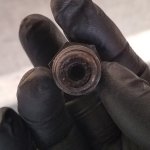
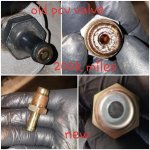
Due to the small amount of oil found I decided to check the PCV valve and see it's condition. I figured replacing it with a brand new one would help with relieving a bit of pressure on the gaskets giving me some more time before having to remove the covers and replace the gaskets. There was a big difference in the old pcv and the new one so I went ahead and replaced it. Guess I'll check the plugs in another 7000k or sooner if I sense any issues. 7k. :laugh: make fun of the new guy...I get it!

:popcorn:
 

Attachments

  • IMG_11122019_033848_(750_x_750_pixel).jpg
    IMG_11122019_033848_(750_x_750_pixel).jpg
    103.1 KB · Views: 310
  • IMG_11122019_033831_(750_x_750_pixel).jpg
    IMG_11122019_033831_(750_x_750_pixel).jpg
    90.8 KB · Views: 309
Last edited:
Updated:
... Guess I'll check the plugs in another 7000k or sooner if I sense any issues.

:popcorn:
7,000,000 miles might be a little stretched out for a regular maintenance interval, but we all know what you mean :lmao:
 
Last edited:
Yeah I agree on changing all the gaskets. I didn't know there were crush washers for the valve cover bolts, first time hearing about that on this subject. I think I may have even noticed some black sealant under the valve cover bolts on mine if I remember correctly. I'll have to take a look.
That's them. They are washers with a rubber coating, the squish down when you tighten them. Also, it's an aluminum valve cover so don't crank them down super tight. Go with the recommended torque spec
 
Lol....see...told ya I wasn't ready to touch those covers yet! :lol::drum:

Lol, it's really not that hard once you get the intake removed. Just a lot of plugs and little wires to watch out for. You'd want to make sure everything is clean before taking them off. Then you get to see all the muck in your intake ports and the condition of your timing chain and valves. Pretty satisfying job when it's all done and back together
 
Lol, it's really not that hard once you get the intake removed. Just a lot of plugs and little wires to watch out for. You'd want to make sure everything is clean before taking them off. Then you get to see all the muck in your intake ports and the condition of your timing chain and valves. Pretty satisfying job when it's all done and back together.


I can imagine how satisfying it is when all finished, I can also imagine how paranoid I'd be wondering what I may have done wrong, missed something, tightened a bolt too much, tightened the covers on with my cat in there, etc.
I over think things and I'm still wondering if I tightened my pcv valve too much or my plugs etc. Everyone I hear says be careful it's aluminum! I mean dang it may be aluminum but it's not that weak...is it? Lol. It feels like the dang engine is made out of cardboard the way everyone speaks about being careful...just be careful...it's really driving me crazy in these forums for sure!
Maybe Ill stop tinkering for a bit and try cleaning my engine without causing a disaster. :ybrick:
 
I can imagine how satisfying it is when all finished, I can also imagine how paranoid I'd be wondering what I may have done wrong, missed something, tightened a bolt too much, tightened the covers on with my cat in there, etc.
I over think things and I'm still wondering if I tightened my pcv valve too much or my plugs etc. Everyone I hear says be careful it's aluminum! I mean dang it may be aluminum but it's not that weak...is it? Lol. It feels like the dang engine is made out of cardboard the way everyone speaks about being careful...just be careful...it's really driving me crazy in these forums for sure!
Maybe Ill stop tinkering for a bit and try cleaning my engine without causing a disaster. :ybrick:

With aluminum is easy to strip the thread is why everyone cautions about over tightening the bolts, so it's important to use a torque wrench to tighten them correctly, with the smaller bolts in aluminum it's sorta important.

That all being said since you're not going to do the gasket soon it appears I would at least check the valve cover bolts for the correct tightness, if they're are not tightened correctly and they are loose it could be another reason why you're getting the leaks, most major auto part stores loan out tools for free, if you don't have a torque wrench to check them with, they do require a refundable deposit until you bring back the tool/s back, you will need a "inch lb." torque wrench not a "foot lb." torque wrench for the valve cover bolts.
 
Last edited:
With aluminum is easy to strip the thread is why everyone cautions about over tightening the bolts, so it's important to use a torque wrench to tighten them correctly, with the smaller bolts in aluminum it's sorta important.

That all being said since you're not going to do the gasket soon it appears I would at least check the valve cover bolts for the correct tightness, if they're are not tightened correctly and they are loose it could be another reason why you're getting the leaks, most major auto part stores loan out tools for free, if you don't have a torque wrench to check them with, they do require a refundable deposit until you bring back the tool/s back, you will need a "inch lb." torque wrench not a "foot lb." torque wrench for the valve cover bolts.

Good idea, I think I'll make that my next step. I'll check about that the loan tools. Thanks!
 
Good idea, I think I'll make that my next step. I'll check about that the loan tools. Thanks!


I took a nice look around the covers and it's clean as a whistle. No leaks anywhere outside.
I also loosened up the pcv valve a bit since I was worried I put it in too much. It's still tight and I'll periodically check it.
 
I agree, it's your valve cover gasket not sealing enough on cylinder 2. since you are replacing the gasket anyway, just do both sides. don't overthink about it, just be a little more organized. you need to have a table big enough to put stuff in order so when assembling it back, you just follow the order in reverse. label it if you need to.

definitely use a torque wrench as much as you can.
 
Just to put your mind at ease somewhat, aluminum as a metal for making engines is really not bad so long as it's designed for the stresses and tolerances it will experience throughout it's service life. The 1GR is fairly hearty in this respect, lots of engines now reporting 400k miles and up. The issue is where the metal is thin, like threading for example. Aluminum threads can be a little soft, so it's recommended that you only tighten to the recommended torque spec so you don't strip the threads out. This is true even outside of engines. I've had aluminum oil coolers on different pieces of equipment where the flange seals are bolted on and the aluminum threads fail because someone was a gorilla and cranked it down waiting for it to get tight and pop goes the threads. Sure, you can usually tap and install steel coil replacements in most cases, but you need to have enough metal surrounding the hole to be secure enough for that, not to mention other wonderful things that can occur when you get into that. Better to go with ounce of prevention (torque wrench) than pound of cure (costly repairs). Just my $.02
 
Just to put your mind at ease somewhat, aluminum as a metal for making engines is really not bad so long as it's designed for the stresses and tolerances it will experience throughout it's service life. The 1GR is fairly hearty in this respect, lots of engines now reporting 400k miles and up. The issue is where the metal is thin, like threading for example. Aluminum threads can be a little soft, so it's recommended that you only tighten to the recommended torque spec so you don't strip the threads out. This is true even outside of engines. I've had aluminum oil coolers on different pieces of equipment where the flange seals are bolted on and the aluminum threads fail because someone was a gorilla and cranked it down waiting for it to get tight and pop goes the threads. Sure, you can usually tap and install steel coil replacements in most cases, but you need to have enough metal surrounding the hole to be secure enough for that, not to mention other wonderful things that can occur when you get into that. Better to go with ounce of prevention (torque wrench) than pound of cure (costly repairs). Just my $.02

Thanks for your input!
One thing about torque wrenches is how can you trust them being calibrated correctly? What's a good all around trusted torque wrench and is it recommended to have a couple for particular jobs?
 
Thanks for your input!
One thing about torque wrenches is how can you trust them being calibrated correctly? What's a good all around trusted torque wrench and is it recommended to have a couple for particular jobs?
Very good question. My answer may come as a shock to some, but I used to service air compressors at a company in southern California that specializes in calibration of sensitive equipment and tools like meters, calibrating weights, scopes, gauges and yes, torque wrenches. Given my line of work, I also found this to be important information, so I asked one of the senior calibration technicans this very same thing. His response: in his years of experience, the torque wrenches he has seen that hold their settings the best came from Harbor Freight tools (!?!?!? Wtf???). I was shocked. Then he proved it. A snap-on, a Mac, and an HFT were all tested against a calibrated setup with a 100 lb/ft nut and bolt. The HFT was dead on, the other two were off by at least a couple pounds and needed to be adjusted. His point was simple: they were all used as primary tools from their respective shops, and all saw about the same amount of use over a 2 year period. The important thing with any wrench is make sure it is stored in it's case, try not to drop it if you can help it, and make sure you reset it to 0 lb before you put it away. Leaving it stored without resetting it puts strain on the internals which will cause it to go out of calibration. I had him test my wrench, also HFT, and it clicked when it was supposed to.
Now, there is no way to guarantee that each of the three tested wrenches was cared for in the same way, but the Mac came out of the box locked on to 85 ft/lb. The other two came out of the box at 0. The Mac was the furthest out. The snap-on was only off by a couple pounds. So I figure mileage may vary here. Just find one that reaches your desired specs and care for it as a specialty tool, because that's what it is. Keep it clean and don't store it locked on to a particular setting aside from zero, and you should be fine.

You should have one that's dedicated to foot pounds and one dedicated to inch pounds since the smaller stuff is more likely to be torqued in inch pounds and an inch pound wrench is going to be smaller as well for this type of application. One foot pound is 12 inch pounds, so the tolerances are tighter on an inch pound wrench.
 
Last edited:
Very good question. My answer may come as a shock to some, but I used to service air compressors at a company in southern California that specializes in calibration of sensitive equipment and tools like meters, calibrating weights, scopes, gauges and yes, torque wrenches. Given my line of work, I also found this to be important information, so I asked one of the senior calibration technicans this very same thing. His response: in his years of experience, the torque wrenches he has seen that hold their settings the best came from Harbor Freight tools (!?!?!? Wtf???). I was shocked. Then he proved it. A snap-on, a Mac, and an HFT were all tested against a calibrated setup with a 100 lb/ft nut and bolt. The HFT was dead on, the other two were off by at least a couple pounds and needed to be adjusted. His point was simple: they were all used as primary tools from their respective shops, and all saw about the same amount of use over a 2 year period. The important thing with any wrench is make sure it is stored in it's case, try not to drop it if you can help it, and make sure you reset it to 0 lb before you put it away. Leaving it stored without resetting it puts strain on the internals which will cause it to go out of calibration. I had him test my wrench, also HFT, and it clicked when it was supposed to.
Now, there is no way to guarantee that each of the three tested wrenches was cared for in the same way, but the Mac came out of the box locked on to 85 ft/lb. The other two came out of the box at 0. The Mac was the furthest out. The snap-on was only off by a couple pounds. So I figure mileage may vary here. Just find one that reaches your desired specs and care for it as a specialty tool, because that's what it is. Keep it clean and don't store it locked on to a particular setting aside from zero, and you should be fine.

You should have one that's dedicated to foot pounds and one dedicated to inch pounds since the smaller stuff is more likely to be torqued in inch pounds and an inch pound wrench is going to be smaller as well for this type of application. One foot pound is 12 inch pounds, so the tolerances are tighter on an inch pound wrench.


I would never have guessed HFT would be the place to get a tool such as that! Awesome really!

Not sure if your familiar with Chris Fix on Youtube, but I recently saw a vid of his on torque wrenches and he recommended one priced about $50 from Amazon. I thought about getting it, but then thought it's probably better to not have one shipped as it would probably be thrown and tossed around much more through delivery then getting one at say HFT. I think I'll go with your suggestion. Is there a way to test the accuracy without paying for one to be calibrated after purchase?
Thanks again for your time!
 
I would never have guessed HFT would be the place to get a tool such as that! Awesome really!

Not sure if your familiar with Chris Fix on Youtube, but I recently saw a vid of his on torque wrenches and he recommended one priced about $50 from Amazon. I thought about getting it, but then thought it's probably better to not have one shipped as it would probably be thrown and tossed around much more through delivery then getting one at say HFT. I think I'll go with your suggestion. Is there a way to test the accuracy without paying for one to be calibrated after purchase?
Thanks again for your time!

Pittsburgh
3/8 in. Drive Click Type Torque 3/8 in. torque wrench provides a range from 5-80 ft. lbs.$20
Can't beat that! :thumb:
 
Very good question. My answer may come as a shock to some, but I used to service air compressors at a company in southern California that specializes in calibration of sensitive equipment and tools like meters, calibrating weights, scopes, gauges and yes, torque wrenches. Given my line of work, I also found this to be important information, so I asked one of the senior calibration technicans this very same thing. His response: in his years of experience, the torque wrenches he has seen that hold their settings the best came from Harbor Freight tools (!?!?!? Wtf???). I was shocked. Then he proved it. A snap-on, a Mac, and an HFT were all tested against a calibrated setup with a 100 lb/ft nut and bolt. The HFT was dead on, the other two were off by at least a couple pounds and needed to be adjusted. His point was simple: they were all used as primary tools from their respective shops, and all saw about the same amount of use over a 2 year period. The important thing with any wrench is make sure it is stored in it's case, try not to drop it if you can help it, and make sure you reset it to 0 lb before you put it away. Leaving it stored without resetting it puts strain on the internals which will cause it to go out of calibration. I had him test my wrench, also HFT, and it clicked when it was supposed to.
Now, there is no way to guarantee that each of the three tested wrenches was cared for in the same way, but the Mac came out of the box locked on to 85 ft/lb. The other two came out of the box at 0. The Mac was the furthest out. The snap-on was only off by a couple pounds. So I figure mileage may vary here. Just find one that reaches your desired specs and care for it as a specialty tool, because that's what it is. Keep it clean and don't store it locked on to a particular setting aside from zero, and you should be fine.

You should have one that's dedicated to foot pounds and one dedicated to inch pounds since the smaller stuff is more likely to be torqued in inch pounds and an inch pound wrench is going to be smaller as well for this type of application. One foot pound is 12 inch pounds, so the tolerances are tighter on an inch pound wrench.

You stated that the BFT torque was the only one that was in calibration, which I find interesting as well, my question would be that HFT actually doesn't make any of the tools they sell, they have 3 different brands of torque wrenches listed on their website... Pittsburgh, Icon, and Quinn...which of these brands is the brand you're referring too as a "HFT" torque wrench?
 

Members online

Forum statistics

Threads
278,308
Messages
3,554,059
Members
248,016
Latest member
Advally Service

Trending content

Back
Top