85 22re with intermittent starting/stalling issue

blackchild

New member
I've had this truck for a little over 2 years now. This problem started in the Fall of the first year, and has now resurfaced after being dormant all spring and summer.

The truck tries to start, but will stall. Sometimes it won't start at all, sometimes it'll start and stall after several seconds, and sometimes it'll stall after running fine for up to 15 minutes. And sometimes I'll have no trouble at all.

When it does stall, the check engine light throws a code "11".

I thought I had narrowed it down to the mass air flow sensor because I figured out that I could unplug the sensor, start the truck, and quickly plug it back in and that would work about 75% of the time.

I bought a used airflow unit off another guy, an OEM one. I just swapped it out and the problem remains exactly as it was before.

The biggest problem is how inconsistent this issue is, but I think it is somehow related to the weather and the amount of moisture in the air and the temperature.

Also, I'm in Colorado, so I'm at about 6,000 ft of elevation.

I'm at a loss. Please someone tell me they've dealt with this before.
 
Register to hide this ad
Have you seen this? Toyota Tech - Diagnostic Trouble Codes

I'd start by testing out your TPS.

Yeah, I was looking at that in the early spring when I was tearing my hair out after a long winter of dealing with this. I replaced the TPS and it didn't make a difference.

I really think it's got something to do with air flow management since unplugging the MAS will fix the issue much of the time. But I don't think it's the sensor now since replacing it hasn't changed anything.
 
Have you tried jumpering the fuel pump?

You said you put a "new" mass air flow sensor, a relatively new TPS, but are you sure you are constantly getting fuel?

There is a weird little box on the left side of my 89 22re pickup. in there are terminals. Putting a jumper from one specific one to another will ensure that the fuel pump always runs when the ignition is on. It bypasses the fuel shut off command from the mass air flow sensor? I think. You can use a paperclip to make the jumper, or a short piece of copper wire. I don't want to tell you it is from "e1 to f1 or fn or f2" because I DON'T REMEMBER. That info is in the FSM or one of the helpful gurus here can tell you.

Fair warning, running this bypass will keep the fuel pumping even in the event of a rollover accident, or an accident where the engine shuts off, but the ignition switch is still "on." So understand that it is fire prevention safety measure...

On other vehicles, I have put an inline fuel pressure gauge to make sure there is pressure at the rail (different car type), and to see if the fuel pressure regulator is holding pressure when the engine is turned off. The antique system in other cars I have owned allows me to take a pair of needle nosed pliers and "crimp" off the fuel return to test and insure the FPR is working properly. I don't know if this applies to your issue. I think jumpering the fuel relay/bypass is a way to test what ailes you.

I hope this helps.

C
 
You said you put a "new" mass air flow sensor, a relatively new TPS, but are you sure you are constantly getting fuel?

There is a weird little box on the left side of my 89 22re pickup. in there are terminals. Putting a jumper from one specific one to another will ensure that the fuel pump always runs when the ignition is on. It bypasses the fuel shut off command from the mass air flow sensor? I think. You can use a paperclip to make the jumper, or a short piece of copper wire. I don't want to tell you it is from "e1 to f1 or fn or f2" because I DON'T REMEMBER. That info is in the FSM or one of the helpful gurus here can tell you.

Fair warning, running this bypass will keep the fuel pumping even in the event of a rollover accident, or an accident where the engine shuts off, but the ignition switch is still "on." So understand that it is fire prevention safety measure...

On other vehicles, I have put an inline fuel pressure gauge to make sure there is pressure at the rail (different car type), and to see if the fuel pressure regulator is holding pressure when the engine is turned off. The antique system in other cars I have owned allows me to take a pair of needle nosed pliers and "crimp" off the fuel return to test and insure the FPR is working properly. I don't know if this applies to your issue. I think jumpering the fuel relay/bypass is a way to test what ailes you.

I hope this helps.

C

Thank you, I will look into that. One of the other pieces of this puzzle is that when it starts, and I give it gas, I get zero response whether I feather the pedal or mash it. So it very well could be this issue. I didn't realize that the MAS has a fuel shutoff command in it.

Instead of jumping it though, I'd rather actually fix it. What should I be looking at in that case?
 
Thank you, I will look into that. One of the other pieces of this puzzle is that when it starts, and I give it gas, I get zero response whether I feather the pedal or mash it. So it very well could be this issue. I didn't realize that the MAS has a fuel shutoff command in it.

Instead of jumping it though, I'd rather actually fix it. What should I be looking at in that case?

So there's a safety interlock called the Circuit Open Relay that kills power to the fuel pump if it doesn't see a signal it likes from the AFM in the air box. You can test to see if that's causing your trouble by jumping the test connector - if you jump those terminals and your issue goes away, then you know you've got an issue with your AFM or Circuit Open Relay and you can look at troubleshooting those parts in particular. The procedure to jump that port is also on the 4Crawler page.

Are you sure it's throwing code 11? Or is it throwing code 2? Code 2 is a defective AFM...
 
So there's a safety interlock called the Circuit Open Relay that kills power to the fuel pump if it doesn't see a signal it likes from the AFM in the air box. You can test to see if that's causing your trouble by jumping the test connector - if you jump those terminals and your issue goes away, then you know you've got an issue with your AFM or Circuit Open Relay and you can look at troubleshooting those parts in particular. The procedure to jump that port is also on the 4Crawler page.

Are you sure it's throwing code 11? Or is it throwing code 2? Code 2 is a defective AFM...

Well when I checked it before, it was definitely an 11. Wouldn't hurt to check it again.

Thanks for the tips, I will start there.
 
What are the jumper pin outs?

Thanks for picking up where I couldn't help.

Just to add results to this thread could you please tell him the pin outs to jumper? That way if someone else is searching they can learn also.

Not to hi-jack this thread, but soeaking of codes I found a cabke that converts ODB1 16 pin to 22 pin readout, so a standard code reader can read them... could this work on an 89 and maybe my 94 4Runner?
 
Thanks for picking up where I couldn't help.

Just to add results to this thread could you please tell him the pin outs to jumper? That way if someone else is searching they can learn also.

Not to hi-jack this thread, but soeaking of codes I found a cabke that converts ODB1 16 pin to 22 pin readout, so a standard code reader can read them... could this work on an 89 and maybe my 94 4Runner?

to jump the fuel pump, connect Fp with B+.
 
Thanks for picking up where I couldn't help.

Just to add results to this thread could you please tell him the pin outs to jumper? That way if someone else is searching they can learn also.

Not to hi-jack this thread, but speaking of codes I found a cable that converts ODB1 16 pin to 22 pin readout, so a standard code reader can read them... could this work on an 89 and maybe my 94 4Runner?

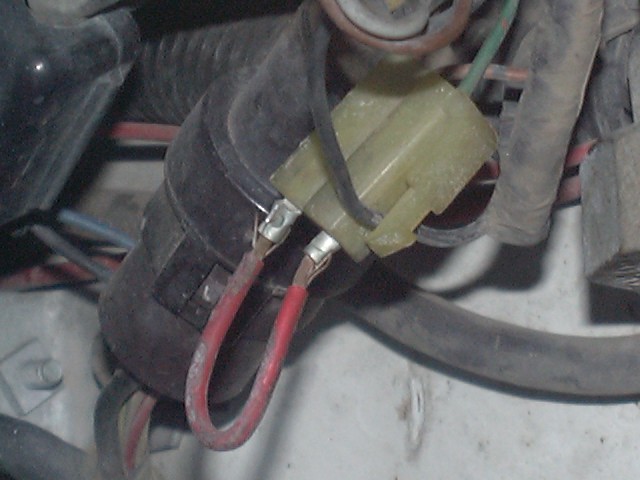
The pinouts are Fp to B+ to force the fuel pump to be always on when the ignition is on.

As far as reading the codes with a cable adaptor to an OBDII reader, no it won't work. The OBDI system on the older 4runners knows nothing about OBDII protocol, and the OBDII reader hasn't a clue as to how the OBDI "protocol" is set up. OBDII is an automotive standard, whereas OBDI was different for every make of vehicle.

You have to short the proper terminals in the diag connector (TE1 to E1) and count the flashes of the CEL when you turn the key on. I'm pretty sure Toyota made a proprietary scanner that worked with that OBDI system for dealer use, but you probably couldn't afford one even if you could find one these days.
 
Ok I found the instructions for jumping the relay on the 4crawler page. I jumped it and could hear that the pump was running while the key was turned on. Still no start though. Same symptoms.

I talked to a mechanic friend of mine and he suggested that if the pump is running, it could be a fuel filter issue, or a cold start injector issue, since this problem occurs in cold weather.

I'm leaning more towards that injector because if it was the fuel filter I would imagine that I would have experienced this problem in all kinds of weather, not just cold weather.

Buuuuuuut, once in a great while I will have this issue in warm weather too. I think it may have happened twice from May to October. So possibly I'm dealing with a combination of issues?

I understand that the fuel filter is a ***** to change, so it would be nice if it was the cold start injector.

What do you guys think?
 
Last edited:
Thanks for picking up where I couldn't help.

Just to add results to this thread could you please tell him the pin outs to jumper? That way if someone else is searching they can learn also.

Not to hi-jack this thread, but soeaking of codes I found a cabke that converts ODB1 16 pin to 22 pin readout, so a standard code reader can read them... could this work on an 89 and maybe my 94 4Runner?

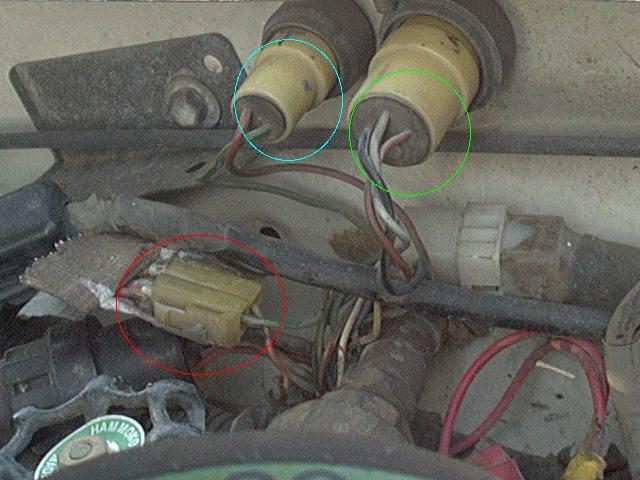
Also, this is the older style, so it doesn't have options, there are only 2 connections to jump

FuelPump1.jpg


FuelPump2.jpg
 
The fuel filter is on the passenger side of the engine block, squeezed between the intake plenum and starter. It's a little frustrating to get to. I moved mine to the passenger side fender, the hoses will reach.
 
you can test whether the cold start injector (csi) is working by removing the two bolts that attach it to the upper plenum and gently pull it out so that you can see the end of the injector.

with a friend to help, use the friend to turn the key to start (in neutral, clutch depressed), and you observe the end of the csi. if it sprays fuel while the starter is engaged, it works. if no fuel sprays out of it, or it just dribbles out, it could be the problem, either clogged, or the csi timer switch isn't working.

wally
 
you can test whether the cold start injector (csi) is working by removing the two bolts that attach it to the upper plenum and gently pull it out so that you can see the end of the injector.

with a friend to help, use the friend to turn the key to start (in neutral, clutch depressed), and you observe the end of the csi. if it sprays fuel while the starter is engaged, it works. if no fuel sprays out of it, or it just dribbles out, it could be the problem, either clogged, or the csi timer switch isn't working.

wally

Thanks, I guess this is the next step.

I changed the fuel filter and it didn't improve the situation at all. I did however find out that the fuel pump is supplying plenty of pressure.

So I have ruled out the open circuit relay, the fuel pump, fuel filter, air flow sensor, and TPS.
 
Fuel pressure regulator?

I mentioned in one of my earlier replies, that I did not know if our engines have an accessible fuel pressure regulator. I have only owned my 4Runner for a week or so. The starting and dying, seems like a symptom of a failing FPR. In dozens of other older vehicles I have owned this would cause the symptom that you seem to be suffering.


I suggested you put an inline fuel pressure gauge in. First though you can just crimp with fuel hose pliers, or needle nosed pliers, the RETURN line to the gas tank as it comes off the engine. This can cause the disc in the FPR to pop back into action. Also by crimping the return hose down somewhat severely you force the EFI system to get full pressure to the fuel rail. Try this when it is stumbling or failing to start. You might get lucky.
 
I pulled the cold start injector and cleaned it and tested it, it's working.

Still won't start.

I may try pinching that fuel line as suggested. I'll have to figure out if it applies in this case.

If the injector is working, that would indicate that the sensor is working as well, correct? I didn't pull it and test it, I thought I would just cut to the chase and check if the injector was working.
 
Could this possibly be a bad ECU? I know ECU is the last thing to check on every code. Would a bad ECU go in and out with colder weather?
 

Members online

Forum statistics

Threads
278,309
Messages
3,554,071
Members
248,016
Latest member
Advally Service

Trending content

Back
Top