A/T oil temperature light: what temperature?

I have a 2002 4runner. At what temperature will the a/t trans temp light come on. Does it state this temperature somewhere in the FSM somewhere. Has anyone verified it with an actual analog gauge or anything like that? In the FSM I have it states to check the temp sensor resistance at 68 degrees and 230 degrees Fahrenheit, does that mean the light comes on at 230 degrees?

I was in deep sand the other weekend on the beach and my light came on and I immediately shut the truck down. I realize now I should have let it idle but I did not know any better at the time. I literally shut it off about 10 seconds after the light came on. I started the truck back up a short while later and drove away like nothing happened, light was off and never came back on. I lowered the PSI in tires some more and the truck was driving a lot easier through the sand, trans was not working so hard. I checked the fluid and it is still a bright red color and smells just like tranny fluid. It is Valvoline Max-Life trans fluid...probably less than 2000 miles on the fluid as well. I changed it not too long ago, the 4Runner is not my main vehicle. I was going to change the fluid but it looks brand new, and I also read that Maxlife can withstand high temperatures (280 degrees) with no issue. Was looking for some more detailed info for when that gauge lights up.
 
Register to hide this ad
I don't know the answer, but on an extended off road trip (climbing a few thousand feet), I got my UltraGauge trans temp up to 249 and the dash light did not trigger. I can see the bulb works at start up. I gave it a 30 min rest and never saw those heights again, but will be adding a dedicated trans cooler in series as soon as I get a chance.
 
Stating the obvious but did you make sure it's right at the correct level? I don't think it should be triggering the a/t temp light on unless it was very rough to roll in the sand.
 
Stating the obvious but did you make sure it's right at the correct level? I don't think it should be triggering the a/t temp light on unless it was very rough to roll in the sand.

Good idea. I will check the level again but I am pretty sure it was spot on when I exchanged the fluid.

The thing with beach sand (at least in my area) is that it is like driving through sugar and it takes some effort. You basically follow the existing ruts and it is a couple inches deep most of the time. The tires are pushing up against the side of the existing ruts, the truck is moving slow, only in gear 2 most of the time, and the torque converter never locks up. You have to give it just enough throttle to stay moving at a pace. If you give it too much throttle the tires just fight the sand and you don't go any faster, this is what I was doing. It was my first time out this year and I wasn't paying attention to the driving method, also I didn't air down enough.

I didn't really think it was that big of a deal if the light came on for a second. But then I searched on the forum and there was a lot of doom and gloom!
 
IIRC, it's somewhere in the 270-290 range. Basically right before it starts blowing out of the vent tube.
I think I saw that on another forum so take it with a grain of salt.
Personally I've never seen the light come on but I've never had it over 220 or so.
 
... At what temperature will the a/t trans temp light come on. ...

It is a very high number, like others said upper 200s, closer to 300, way too high, hence they call it an 'idiot' light.

Did you pull trans dipstick to have a look at the color? If on just a tiny bit probably won't make much difference but everything affects everything, in a trans anyway.

Might even do a quick drain/fill.

If you have 4x4, I'd use it in 4Lo next time on the sand or going really slow. You can start in 2nd gear and avoid the hard 1-2 shift in 4Lo on 01-02s, another feature!

Luck.
 
It is a very high number, like others said upper 200s, closer to 300, way too high, hence they call it an 'idiot' light.

Did you pull trans dipstick to have a look at the color? If on just a tiny bit probably won't make much difference but everything affects everything, in a trans anyway.

Might even do a quick drain/fill.

If you have 4x4, I'd use it in 4Lo next time on the sand or going really slow. You can start in 2nd gear and avoid the hard 1-2 shift in 4Lo on 01-02s, another feature!

Luck.

I did check the fluid. The trans fluid is red in color and looks like it just came out of the bottle. Smells as good as transmission fluid could.

Thanks for the tip with the 2nd gear. I know practically nothing about auto transmissions. I am 43 years old and this is the first 4x4 (or vehicle for that matter) with an automatic transmission I have ever owned. I always had manuals, after this I feel like I don't know how to use the auto properly. I know that sounds silly but it's true. I actually don't mind the auto in the woods, it is nice to not be on the clutch all the time. But the heat thing is a buzzkill.

If I put the trans in 2 and the transfer case in Lo like you said does the torque converter ever lock up?
 
My records show that the A/T temp light comes on at 302 F and goes out when it falls back to 248 F. I can't find where I got that info though.

In any case, the resistance tests in the FSM for 68F and 230F is to test the sensor. It assumes if the values are correct at those two points the sensor is good.

It's not practical to test the sensor over 230F in a shop.
 
If I put the trans in 2 and the transfer case in Lo like you said does the torque converter ever lock up?
No, but in 4LO, you don't really need to lock the torque converter. Low in the transfer case really lowers the load on the engine/torque converter/transmission (by 2.7x).

Depending on speed, you might find that in 4LO that you'll run in 3rd (OD off) with the torque converter locked in sand.

-Charlie
 
My records show that the A/T temp light comes on at 302 F and goes out when it falls back to 248 F. I can't find where I got that info though.

In any case, the resistance tests in the FSM for 68F and 230F is to test the sensor. It assumes if the values are correct at those two points the sensor is good.

It's not practical to test the sensor over 230F in a shop.

Good answer. Thanks!

No, but in 4LO, you don't really need to lock the torque converter. Low in the transfer case really lowers the load on the engine/torque converter/transmission (by 2.7x).

Depending on speed, you might find that in 4LO that you'll run in 3rd (OD off) with the torque converter locked in sand.

-Charlie

Super good advice. Thanks!
 
lots of good advice above.
I too was not that fammiliar with automatics in a 4wd till I got my 2000 ( now have a 2001) While I never did trigger my trans light....what really got my attention...and thus changed my driving habits ...was when i got my OBD2 reader and torque pro for my phone. YOu can watch the temps in real time. That phone app as well as advice here and I think timmy has a video on trans temps and driving off road helped improve my off road habits alot.

side note.....after moving to alaska i also saw how cold my tranny was running...which is bad too...so I then went back and hooked my external cooler back in series to help warm up my tranny fluid.....and also put on a tranny heater so then my rig had a block heater as well as a tranny pan heater.
 
.. But the heat thing is a buzzkill.

If I put the trans in 2 and the transfer case in Lo like you said does the torque converter ever lock up?

Right on the buzzkill, 4Lo will keep trans cooler in low speed driving.

Starting on 2 in 4Lo will allow vehicle to go about 20 before it shifts to 3rd but I never drive that fast off-road when I need 4Lo, so I'm always in 2.

Try taking off from 0 in 4Lo in first gear, when you hit about 10 you'll see what I mean about the hard 1-2 shift and probably won't like it. I only use 4Lo in sand or crawling slowly uphills in rocky terrain the rest of the time she's in 4Hi with center diff locked (really helps on deep mud and snow/ice).
 
Hi NJ4Runner,

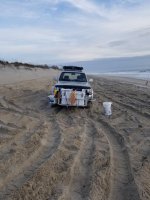
I have been driving the beaches of Cape Hatteras Sea Shore for the past 20 years. It has some notorious soft sand, especially entering and exiting the access ramps.
I have owned my stock 2000 4Runner since 2001. I air down to 17 lbs and have never been stuck. Driving and navigating soft sand is all about tire pressure, staying in the ruts, and avoiding the wet red sand.
I also monitor my tranny temps with a ultraguage. I use 4hi and never see temps exceeding 185-190.

SeaCreechur
 

Attachments

  • 20201022_080026 (1).jpg
    20201022_080026 (1).jpg
    135.5 KB · Views: 2,167
  • IMG_20201023_125307_482.jpg
    IMG_20201023_125307_482.jpg
    129.6 KB · Views: 2,147
  • 20180607_140550 (1).jpg
    20180607_140550 (1).jpg
    134 KB · Views: 2,173
  • IMG_20210424_134649_299.jpg
    IMG_20210424_134649_299.jpg
    68 KB · Views: 2,092
Right on the buzzkill, 4Lo will keep trans cooler in low speed driving.

Starting on 2 in 4Lo will allow vehicle to go about 20 before it shifts to 3rd but I never drive that fast off-road when I need 4Lo, so I'm always in 2.

Try taking off from 0 in 4Lo in first gear, when you hit about 10 you'll see what I mean about the hard 1-2 shift and probably won't like it. I only use 4Lo in sand or crawling slowly uphills in rocky terrain the rest of the time she's in 4Hi with center diff locked (really helps on deep mud and snow/ice).

Hi NJ4Runner,

I have been driving the beaches of Cape Hatteras Sea Shore for the past 20 years. It has some notorious soft sand, especially entering and exiting the access ramps.
I have owned my stock 2000 4Runner since 2001. I air down to 17 lbs and have never been stuck. Driving and navigating soft sand is all about tire pressure, staying in the ruts, and avoiding the wet red sand.
I also monitor my tranny temps with a ultraguage. I use 4hi and never see temps exceeding 185-190.

SeaCreechur

That's awesome.

After some digging I think I know what some of my problem is. I have Mickey Thompson MTZ P3 Mud Terrain tires. They are 265/75 R16 load range E. These are small load range E tires. When I air down to 18 PSI the tires are not even squatting, it is not enough and the tires are digging in too much. They are fighting me in the sand at that PSI and my natural reaction was to add throttle which is the wrong move. I think I have to drop down to more like 15 PSI, or lower to even begin to float on top of the sand. I used to have 31x10.5 load range C tires and they behaved very differently at 18 PSI.

The next question is how the hell have you been driving that 4Runner on an east coast beach for 20 years and it is not a pile of rust and rubber! The beach is straight up vehicle killer. I knew I would be taking mine on the beach and when I bought the truck I pretty much knew that it is a sacrifice. We have guys up here that simply lease jeeps, drive them on the beach for 4 years, and turn them in with substantial rust. do you wash it after every beach run? Are you on the beach often?
 
Like other guys mentioned, around 300 degrees. The moral of the story is everyone should really monitor their auto trans temps. Ignorance is not bliss when it comes to this. When the light comes on, it's too late, your fluid is cooked and you probably took some like off your trans.

Since we're on this subject, I've got three informative videos to share.

The first one is knowing that turning off Overdrive in certain driving conditions can lower your temps significantly.

<iframe width="560" height="315" src="https://www.youtube.com/embed/BEZfDOkGVno" title="YouTube video player" frameborder="0" allow="accelerometer; autoplay; clipboard-write; encrypted-media; gyroscope; picture-in-picture" allowfullscreen></iframe>


The second one discusses the benefits of using 4Lo like guys have already mentioned. It can make a HUGE difference when you're wheeling.

<iframe width="560" height="315" src="https://www.youtube.com/embed/wqxeZvljYGc" title="YouTube video player" frameborder="0" allow="accelerometer; autoplay; clipboard-write; encrypted-media; gyroscope; picture-in-picture" allowfullscreen></iframe>


The third and final video is for those that have 3rd Gen years 1996 - 1998 and can't pull trans temp info via the OBD II port. You need to install an aftermarket gauge to monitor your trans temp.

<iframe width="560" height="315" src="https://www.youtube.com/embed/fT_2szdKXRM" title="YouTube video player" frameborder="0" allow="accelerometer; autoplay; clipboard-write; encrypted-media; gyroscope; picture-in-picture" allowfullscreen></iframe>
 
Hi NJ4Runner,

I have been driving the beaches of Cape Hatteras Sea Shore for the past 20 years. It has some notorious soft sand, especially entering and exiting the access ramps.
I have owned my stock 2000 4Runner since 2001. I air down to 17 lbs and have never been stuck. Driving and navigating soft sand is all about tire pressure, staying in the ruts, and avoiding the wet red sand.
I also monitor my tranny temps with a ultraguage. I use 4hi and never see temps exceeding 185-190.

SeaCreechur

interesting you have a rack mounted to "front" of 4runner....had not seen that b4
 
Like other guys mentioned, around 300 degrees. The moral of the story is everyone should really monitor their auto trans temps. Ignorance is not bliss when it comes to this. When the light comes on, it's too late, your fluid is cooked and you probably took some like off your trans.

Since we're on this subject, I've got three informative videos to share.

Thanks! I totally used your video when I changed the filter and fluid in the trans late last year, the video was super helpful. I will again reference it when I change out the fluid this weekend. I already forgot which hose (pass or driver side) the transmission fluid will pump out of.

I also used your video when changing my power steering rack out....again fantastic.

I think Max-Life is actually on sale right now at Wally World. Bonus!

interesting you have a rack mounted to "front" of 4runner....had not seen that b4

Very common for salt water fishing off the beach. People also have them off the back that attach to the trailer hitch. This way none of the sandy/salt water infested equipment has to be inside of the vehicle.
 
Last edited:
the first 2 videos referenced by MTBTM are the ones I found useful to this subject of tranny temps. ( as well as most of the videos that he and sean put out on othe r projects).....

is it just my computer....as when MTBTM shows a screen shot of his videos...it blocks about half or more of what he has typed.
example I can only read a few words of.....cant pull temps off an OBD2 and im sure its referencing the early years....but the rest of what he has typed is behind the screen shot.
 
interesting you have a rack mounted to "front" of 4runner....had not seen that b4

Most of the die-hard surf fisherman, like myself, all have their racks mounted up front. The main reason...on rear mounted racks your surf fishing reels are exposed to the sand that can be kicked up by your rear tires when driving on the beach. The second reason is that on a rainy or very windy day, you can pull right down to the surf line, throw out a rod or 2 and place them in the rack...then get back in your vehicle and watch them through the windshield.

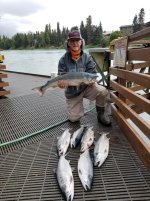
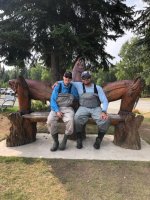
I see that you are in Alaska. I visited with my wife in 2018 and took our son back in 2019, for completing his MBA. I fished the Kenai River for sockeye salmon on both trips.
Michael
 

Attachments

  • 9028.jpg
    9028.jpg
    77 KB · Views: 385
  • 20190725_134143.jpg
    20190725_134143.jpg
    133.4 KB · Views: 432
  • 20190726_140122.jpg
    20190726_140122.jpg
    120.3 KB · Views: 415
  • 9220.jpg
    9220.jpg
    141.4 KB · Views: 358

Members online

Forum statistics

Threads
278,312
Messages
3,554,087
Members
248,016
Latest member
Advally Service

Trending content

Back
Top