Adding Horns to 2005 4Runner Sport Edition

Ryker

New member
I recently bought a 2005 Sport Edition (http://www.toyota-4runner.org/4th-gen-t4rs/163912-future-owner-4th-gen-have-questions-2.html) and at Harbor Freight I found two horns on sale for ten dollars. I can return them if I don't like them, but at 10 bucks I'm not out much even if I don't. I want to add them to my current horns, which I couldn't find a thread on. My search only turned up replacing the horn threads.

It's just two 12 Volt Electric Horns, Harbor Freight cheapo brand, but the logo on them says Rede. All they came with were a Relay and Mounting Brackets.

How do I go about adding horns to the stock setup?

The reason I'm wanting to add horns is basically to make it louder. I have a stock horn setup as far as I know (Two black horns in front of the radiator) and it's not bad at all, but where I live, it's almost constant honking to avoid being hit on the main roads in town.


I was originally going to use a 4 Horn 1970's Cadillac setup, but the junkyard's caddys didn't have the horns left on them.

If pictures are needed I can upload some.

What else do I need and how to I add these to go off every time I hit the horn (not with a separate switch)?
 
Register to hide this ad
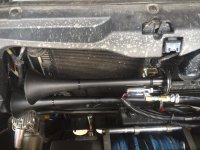
You could always get air horns 153dbl
 

Attachments

  • image.jpg
    image.jpg
    136 KB · Views: 1,853
You could always get air horns 153dbl

I'm wanting to avoid a compressor and tank for now. But trust me, I've thought about getting a horn blasters train horn.


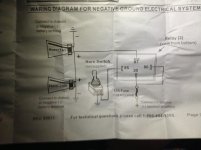
Here's a picture of the wiring diagram included. How would I wire it to my existing horn switch, and I don't know anything about adding a fuse either.
 

Attachments

  • image.jpg
    image.jpg
    134.2 KB · Views: 2,045
I'm wanting to avoid a compressor and tank for now. But trust me, I've thought about getting a horn blasters train horn.


Here's a picture of the wiring diagram included. How would I wire it to my existing horn switch, and I don't know anything about adding a fuse either.

Based on your diagram, make a jumper off the signal wire for the OEM horn relay and hook the jumper to the '85' pin of your new relay. Hook up the rest of the diagram as it shows. That way when you press the steering wheel horn, the signal will fire the OEM horns while also tripping the relay for your new horns, which will make those also fire.

If you don't have much experience with 12v systems - check out this link:12V basics

Always a good idea to understand how and why you're hooking up wires before you do it.
 
Last edited:
[MENTION=46025]HokieRunner[/MENTION] How do I find that wire? I've read on here that the OEM horns only have 1 wire connecting to them, but most aftermarket horns have two. Is that correct? If so, will wiring them to the signal wire work?

And if it will, will the new horns also sound with my alarm?
 
[MENTION=46025]HokieRunner[/MENTION] How do I find that wire? I've read on here that the OEM horns only have 1 wire connecting to them, but most aftermarket horns have two. Is that correct? If so, will wiring them to the signal wire work?

And if it will, will the new horns also sound with my alarm?

You'll have to look at a wiring diagram and under the hood where the fuses/relays are. I've never really looked at the oem horns. They work and that's all I know :) go out and look at them and you'll be able to see how many wires run to them. I'd assume they would have 2 wires though.

You may be able to jumper to the 85 pin straight off the OEM power wire too. That would be easy and yes, it should get triggered by your alarm.
 
You may be able to jumper to the 85 pin straight off the OEM power wire too. That would be easy and yes, it should get triggered by your alarm.

I don't know what this means :ybrick:

Also, does this site have links to the wiring diagrams anywhere?
 
I don't see why you couldn't just run a wire to your positive battery terminal and whenever you ground the other one the horn should go off. It's the most basic way to do it but it will work. If you want to test it before wiring it in. When you wire it in just ground it and splice the positive into the existing horn wiring.

I swapped out my stock ones for the Hella Supertones and I like them. They are definitely louder than stock but the sound isn't all that deep.

Edit: I don't think you will need a relay if you use your existing horn wiring. My horns came with a relay but I didn't use it and they work fine.
 
Does somebody have a link to the stock horn wiring?
Or a picture of where to attach the positive?


As far as I can tell, the stock horns only have one wire coming from each.
 
Last edited:
I looked at it some more, and I still can't really figure it out.

Here's the stock horn:


Each has one wire coming from it:


Farther up, there is another wire coming from the two horn's wires, but it splits into two separate wires. Not pictured is the main wire from the horns, which goes up towards the firewall I believe:


So I may be missing something obvious, but I still have no idea how to add in my horns.
 
The diagram isn't correct for this application. We can help, but you need to understand what's going on with the stock horn first.

The stock horns are pretty weak, right? That means they're not drawing much current. That means that size of the wire can be smaller. Think of it like a water pipe - bigger pipe, more water. Since the wire is small, it can run from the fuse box to the steering wheel to the horn under the hood. That's how the positive wire connects.

Your car's electrical system uses the car itself as a ground. The negative battery terminal is attached to the body with a thick cable. Accessories throughout the car can then connect directly to bare metal to ground. That's how the stock horn works. The nut and stud that connect the horn to the radiator support acts as the ground for the horn.

Therefore, there's only going to be one wire running to the horn. The wire running from the fuse box to the horn switch in the steering wheel is always energized when the car is on. So when you activate that switch by pushing on the wheel, you complete the circuit and the horn honks.

Using bigger horns makes things a little more complicated. Remember the water pipe above? We need to move a lot more water (energy) to run the big horns. More than we can safely run through the steering wheel. So that means that we'll need to go directly to the battery for power.

Every electrical accessory in the car runs through the fuse box. The point of a fuse is to safely melt a small, contained piece of metal before you'd melt a wire and light something on fire. Since we're going right to the battery, we need to add an inline fuse holder like this. Now we can run that wire over to the new, big horns. We can use another wire to connect the negative terminals to a bolt on a suitable spot of bright metal to ground it.

Now we have to somehow connect the horn button to these wires. That's when the relay comes in. The relay is basically a switch activated by a switch. The relay can be activated by a small amount of current, but can switch a much larger amount of current on and off. We'll use the stock horn connection we mentioned above to now trigger the relay instead. That power wire we ran from the battery attaches to the relay, as do the horns. We also need a ground. It comes together like this:

hellawiring.jpg


This is how you integrate a set of larger aftermarket horns with the stock horn switch.
 
The diagram isn't correct for this application. We can help, but you need to understand what's going on with the stock horn first.

The stock horns are pretty weak, right? That means they're not drawing much current. That means that size of the wire can be smaller. Think of it like a water pipe - bigger pipe, more water. Since the wire is small, it can run from the fuse box to the steering wheel to the horn under the hood. That's how the positive wire connects.

Your car's electrical system uses the car itself as a ground. The negative battery terminal is attached to the body with a thick cable. Accessories throughout the car can then connect directly to bare metal to ground. That's how the stock horn works. The nut and stud that connect the horn to the radiator support acts as the ground for the horn.

Therefore, there's only going to be one wire running to the horn. The wire running from the fuse box to the horn switch in the steering wheel is always energized when the car is on. So when you activate that switch by pushing on the wheel, you complete the circuit and the horn honks.

Using bigger horns makes things a little more complicated. Remember the water pipe above? We need to move a lot more water (energy) to run the big horns. More than we can safely run through the steering wheel. So that means that we'll need to go directly to the battery for power.

Every electrical accessory in the car runs through the fuse box. The point of a fuse is to safely melt a small, contained piece of metal before you'd melt a wire and light something on fire. Since we're going right to the battery, we need to add an inline fuse holder like this. Now we can run that wire over to the new, big horns. We can use another wire to connect the negative terminals to a bolt on a suitable spot of bright metal to ground it.

Now we have to somehow connect the horn button to these wires. That's when the relay comes in. The relay is basically a switch activated by a switch. The relay can be activated by a small amount of current, but can switch a much larger amount of current on and off. We'll use the stock horn connection we mentioned above to now trigger the relay instead. That power wire we ran from the battery attaches to the relay, as do the horns. We also need a ground. It comes together like this:

hellawiring.jpg~original


This is how you integrate a set of larger aftermarket horns with the stock horn switch.


Okay, this helped me a lot. Just to be sure, is this correct?
Warning: One of the worst wiring diagrams ever, courtesy of me and my iPad Mini.

Pink line is positive wire, green line is negative wire. All will be done with 14 Gauge Electrical Wire, installation instructions recommend 16 or 14.


I connect my new horns to the body, played by 9mm ammo, and then connect both new horns to Relay 87. I connect my battery (played by electrical tape) to the inline fuse and fuse holder, which is then connected directly to both Relay 30 and Relay 86.

I then connect Relay 85 to the positive wire on one of my stock horns, played by blobby gray line, which will get a charge when the steering wheel is pressed, causing the relay to connect 30 and 86 to 87, resulting in an ear piercing horn that will make the seemingly unlicensed driver who just cut me off sh*t himself (somewhat censored, haven't yet read the forum rules regarding profanity).

If correct, then I will connect the inline fuse right here in the red circle:


I forgot to draw in the fuse in that picture, but it's somewhere in the pink line.

The end product will be two more functional horns, mounted here:


Is all of this right?


tl;dr: Im not an electrician.
 
These drawings are pure gold, back on topic though thanks for the diagrams i also thought about upgrading my factory horns.
 
Close. You've got the relay set up like the paper instructions you posted, which is designed for a setup where the switch grounds the circuit to complete it. Here's how it should look when using it with the stock horn:

85 - Ground
86 - Stock horn wire in
87 - New horn wire out
30 - Fused 12v from battery
 
The connection that above me is correct, don't forget to add a 20amp fuse on the positive lead to the relay from battery.
This is how I have my hella supertones
 
:doh: ....OEM switched ground. Well I guess I'm the idiot haha. Been spending too much time on my aftermarket wiring.

Great explanation [MENTION=105092]shOhio[/MENTION]
[MENTION=5149]riceandpho[/MENTION] - I see room for another row of 4 horns underneath those. How do you like the supertones?
 

Members online

No members online now.

Forum statistics

Threads
278,312
Messages
3,554,083
Members
248,016
Latest member
Advally Service

Trending content

Back
Top