All things Overlanding thread

The trailer has been sold. Really good dude out of OK picked it up.

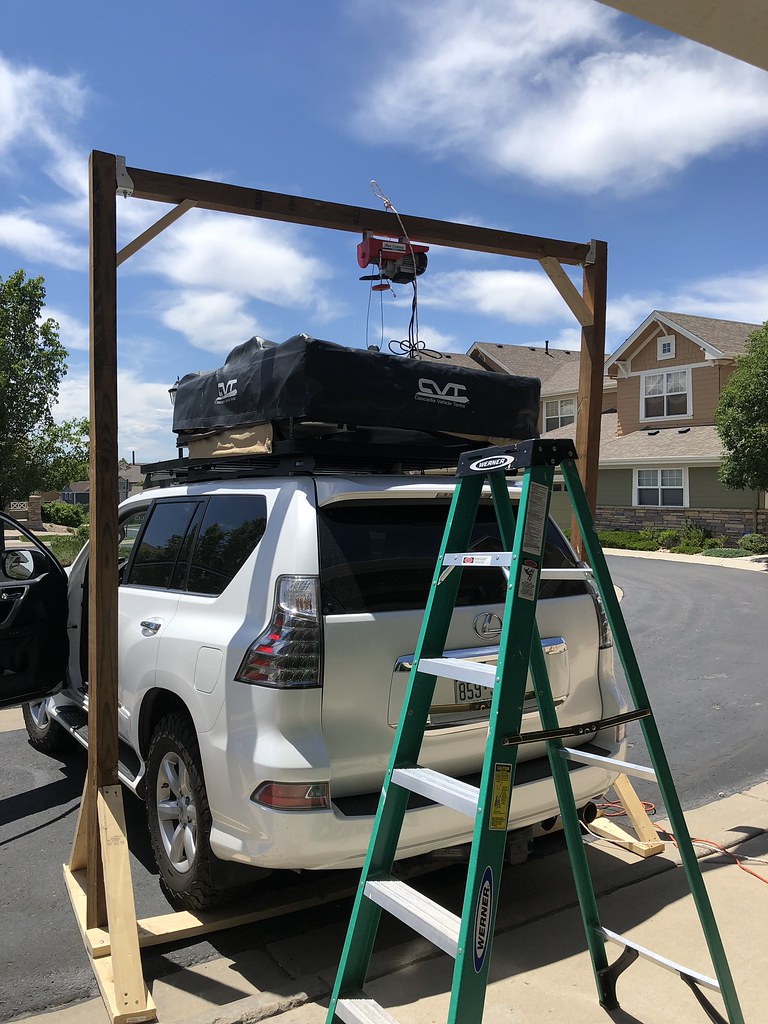
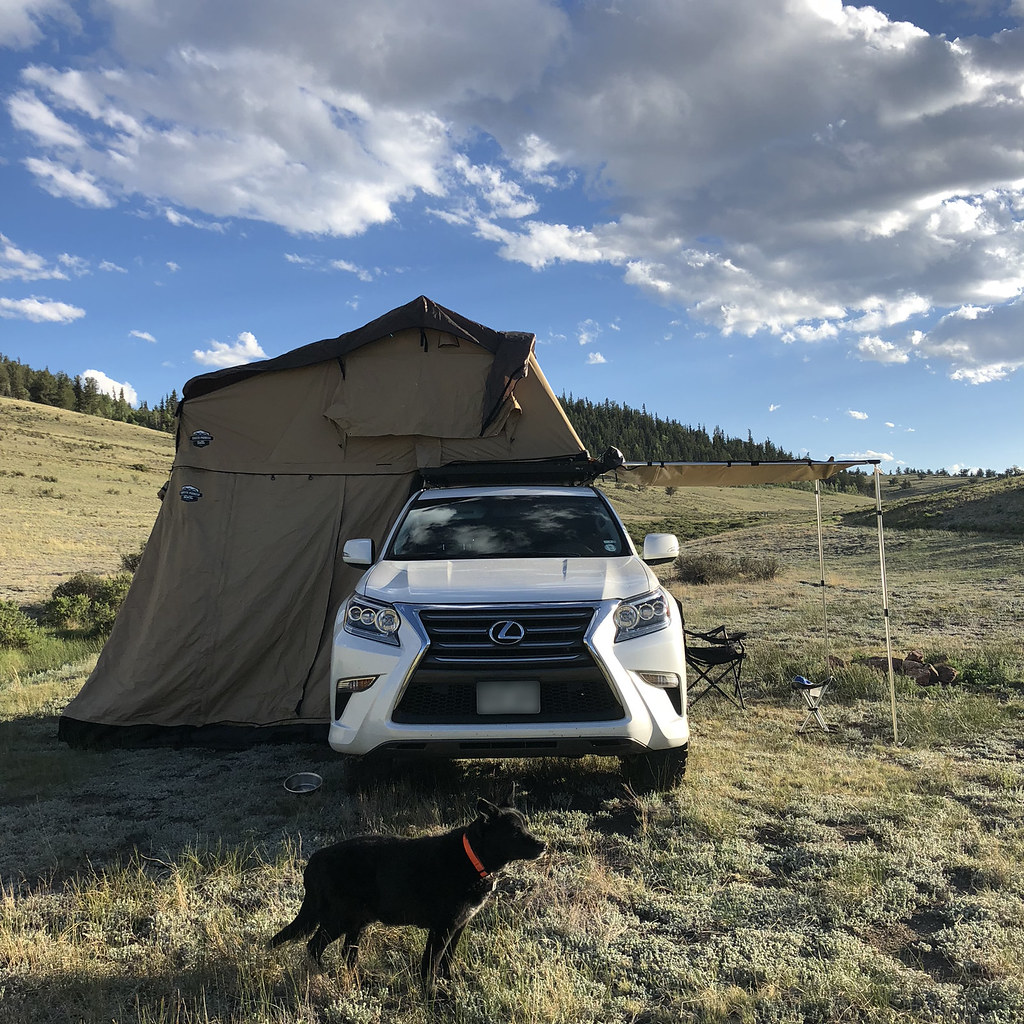
Decided to completely simplify the direction and went with a fully custom roof top tent. Yours truly designed and fab'd up what you see. I am presently building 2 others. This one is 001 (prototype). These others are coming together really nicely.

I was aiming for an aerodynamic, lightweight and low profile solution. Keeping in mind - it is a good size (54"x91"), I achieved the low profile part @ 5.2" tall and the aero factor. The weight came in at 117lbs. Not terrible for a hard shell tent.

As far as mounting goes, I am adapting a Rhino Rack backbone. Which looks like it will work out great.

Stay tuned on this one. I should be mounting it up on the 4Runner soon.


The trailer has been sold. Really good dude out of OK picked it up.

Decided to completely simplify the direction and went with a fully custom roof top tent. Yours truly designed and fab'd up what you see. I am presently building 2 others. This one is 001 (prototype). These others are coming together really nicely.

I was aiming for an aerodynamic, lightweight and low profile solution. Keeping in mind - it is a good size (54"x91"), I achieved the low profile part @ 5.2" tall and the aero factor. The weight came in at 117lbs. Not terrible for a hard shell tent.

As far as mounting goes, I am adapting a Rhino Rack backbone. Which looks like it will work out great.

Stay tuned on this one. I should be mounting it up on the 4Runner soon.


Do you have mounted pics?
 
I don't know if this would be considered overloading, but here is my report on my 2018 Nevada & Mojave trip:

2018 Nevada-Mojave Trip


Sites I visited on this trip include:

Nikolaus-Eureka Mine, CA
Belleville Mine and Mill, NV
Ophir Cabins, NV
Ophir, NV
Croesus Mine, NV
Eureka Tunnel, NV
Lane City, NV
Lucky Star Mine, NV
Ida May Mine, NV
Black Prince Mine, NV
Golden Eagle Mine, NV
Caselton Heights, NV
"Williams Hill" Mine, NV
"Lincoln" Mine, NV
Mendha Mine, NV
Indian Cove, NV
Cimarron Mine, NV
San Antonio Mine, NV
Potomac, NV
Lambertucci Roma Ranch, NV

In addition to photos, I also have videos tours for many of these sites.

Enjoy!
 
I don't know if this would be considered overloading, but here is my report on my 2018 Nevada & Mojave trip:

2018 Nevada-Mojave Trip


Sites I visited on this trip include:

Nikolaus-Eureka Mine, CA
Belleville Mine and Mill, NV
Ophir Cabins, NV
Ophir, NV
Croesus Mine, NV
Eureka Tunnel, NV
Lane City, NV
Lucky Star Mine, NV
Ida May Mine, NV
Black Prince Mine, NV
Golden Eagle Mine, NV
Caselton Heights, NV
"Williams Hill" Mine, NV
"Lincoln" Mine, NV
Mendha Mine, NV
Indian Cove, NV
Cimarron Mine, NV
San Antonio Mine, NV
Potomac, NV
Lambertucci Roma Ranch, NV

In addition to photos, I also have videos tours for many of these sites.

Enjoy!
I really liked your post. You said to enjoy it - and I did. The photos and the narration were great. It made me feel both like I was along for the ride and that I want to do a trip like this myself sometime. Well done.
 
I like the idea of this thread. I think someone should make a whole section for camping, overlanding, and outdoor activities in general.
 
I really liked your post. You said to enjoy it - and I did. The photos and the narration were great. It made me feel both like I was along for the ride and that I want to do a trip like this myself sometime. Well done.

Thanks!

And I just noticed that autocorrect changed "overlanding" to "overloading". Doh!
 
The Inergy K2 is a portable solar generator, consisting of a 90Ah 12V Lithium ion (NMC) battery, an MPPT solar charge controller, and a 1500W pure sine wave inverter, along with 110V AC, 12V DC USB and other sockets for powering appliances and devices. It also comes with a standard charger for charging from 110V shore power. There is an optional Car Charger for charging the K2's battery from the vehicle cigarette lighter charger, but it requires a circuit with a 20A fuse; I think the 4Runner cigarette lighter sockets are not rated this high. The Inergy K2 seems to be a beefier version of the newly released Dometic PLB40. It is compact (8" x 7" x 14") and weighs 25 lbs. Currently on pre-sale with promotion codes enabling purchase for $1300; it is a new product and will begin shipping on May 1. I am not affiliated with Inergy, just wanted to let people know for those who may find it useful for powering refrigerators, LED lights, etc.
Impressive piece of kit but seems to way over priced! Just my opinion!
 
Airing down does a few things that are good and some that are bad. I would air down with long travel just the same as I would without. Long travel doesn't really help the small bump compliance or traction that low pressure does. The good things are first traction. It is nearly universally true that lower pressure results in higher friction with the ground or more traction. There are exceptions - but I've never found a scenario where higher pressure resulted in better traction.

Second would be durability - it's a lot harder to pop a half full balloon than a full one. You get the idea there.

And the third is the ability to deform over small rocks and obstacles so you get a lot nicer small bump compliance and comfort. If you imagine something like a rumble strip on a highway - with full tire pressure your suspension will have to absorb and manage every bump. If your tire is soft enough to simply conform to the bumps as it passes - the suspension essentially never moves and all of the small bumps are essentially just eliminated by the tire. The tire's not really acting like a shock absorber in this case - really just eliminating the shock by deforming.

The soft tire can also act as a shock absorber on the bigger stuff that it doesn't deform around. This is more like the washboard situation. It's the first line of suspension before the actual suspension. The larger the tire the more effective it can be.

The other primary benefit is flotation. On soft surfaces the lower pressure will help you float on top. This is especially true in snow and sand.

The down sides to low pressure are the loss of stability. Especially when you start going faster the tire may have more traction, but it's not as rigidly connecting the wheel to the tread. So it'll feel a lot less controlled.

Lower pressure means more sidewall flex during every rotation. This causes heat buildup and can ruin tires really fast if they overheat. The friction also means more resistance and requires more power to turn and lowers mpg.

Lower pressure can put you at risk of a pinch flat where the sidewall is pushed in so far the the tire sidewall is pinched between the rock and the wheel and causes a flat tire. It can also cause the tire to come off the wheel. A larger sidewall and larger tire can really help in this regard. Honda tried to run the Ridgeline in the Baja 1000 a bunch of times. At least once when they DNF'd they said that the reason was that they ran out of tires. You're only allowed a certian amount. And the Ridgeline has large wheels - 17 or 18" and only a 32" max tire size that can fit. The result was that they ruined all the tires they had by about half way through the race. And they couldn't make it through the sand/silt at higher tire pressures.

So there's not a perfect answer that works in every situation. Every tire is going to act a little different. And all the different types of terrains and speeds also play into the pressure choice.


Heavier sidewall tires like E rated tires build heat in the sidewalls faster, so they tend to have higher pressures for comparable load ratings. They also are more prone to overheat going faster at low pressures. The benefit is a stronger sidewalls. They simply have more metal and rubber in the sidewall so they are more durable to rock punctures. E rated tires are heavier and have more rolling resistance. If I were driving across Africa as my primary function - I'd be running E rated tires without question. It's not technical terrain and durability is the #1 priority. They are more durable and will handle more miles of rocks than P rated or C rated tires.

However, you give up comfort and mileage with them. For what we typically do in north america - I think P rated tires are usually just fine. My preference overall is a C rated LT tire, but there are very few options in C rating that are smaller than 35" tall. There few P rated tires larger than 265. So in the 33-34" range where most of us are looking, most tires are E rating only. That's unfortunate. It's a result of the "rule of the intolerant minority" - every vehicle that fits a 285/70/17 can run a E rated tire, therefore if I want to build a tire that fits everything I'll build it in E rating. Even though 50% of the buyers would be better off with a C rated tire - the market will have almost all E rated tires so they can also fit the other 50%.

There's a point of speed and durability where a heavier casing becomes worthwhile and the extra weight and rigidity becomes less of an issue. But we're rarely doing that in a 4Runner. In desert racing the typical tires are very heavy sidewalls because comfort gives way to durability. And they have very big tires that run at more like 10psi so they still are pretty soft. A typical trophy truck is running around a 40" tire. Similarly on my own trail rig I switched to bias ply tires. They're really tough side walls because radial sidewalls were just getting ruined too often. But the tradeoff is that they're really terrible for highway use. They're nice and soft at 5psi though! That's where I'd usually run them in the snow. More like 7psi for rocks. Otherwise they're a terrible tire for anything faster than about 30mph.

So... long rambling response, but my general thought is that most overland use is 90% pavement and 10% dirt. And of the dirt most of it is hard packed at moderate speeds. Most AT or moderate MT tires work great. I personally would rather have a more comfortable highway ride for the 1500 mile round trip to the Rubicon and pull a winch two more times. That's my balance in the tradeoff. When I was 15 years younger I'd be driving my FJ40 on bias ply super swampers for 1500 miles of torture. Narrower tires are probably going to be more comfortable on the road where most of the time is spent and will do just fine in the dirt. Larger and wider tires start to be better with more weight or more technical offroad terrain. I think 20psi for a 265 or 285 tire size once you leave the pavement is a great spot to start and leave the tire pressure there unless you're finding you need lower for rock crawling or sand/snow type terrain.

My. 02

One of the better posts on this forum.

As a "P-metric guy" I would only add that there is a predicament involved.

One does not want to air down P-metric except in deep soft stuff. They have plenty of flex at street pressures and are comfy enough. When aired down they can lose their sidewalls really fast.

On the other hand, they can get a tread puncture because of being run at 33 psi. But it has only happened once to me in about 5,000 P-metric off-pavement miles.
 
One of the better posts on this forum.

As a "P-metric guy" I would only add that there is a predicament involved.

One does not want to air down P-metric except in deep soft stuff. They have plenty of flex at street pressures and are comfy enough. When aired down they can lose their sidewalls really fast.

On the other hand, they can get a tread puncture because of being run at 33 psi. But it has only happened once to me in about 5,000 P-metric off-pavement miles.

I agree. New to this forum but good post and insightful...(been trolling on and off and decided to sign up)
 
New to forum.. “overlanding” or setting my 97 up for camping is the whole reason I bought my runner..


Sent from my iPhone using Tapatalk
 
....

So... long rambling response, but my general thought is that most overland use is 90% pavement and 10% dirt. And of the dirt most of it is hard packed at moderate speeds. Most AT or moderate MT tires work great. I personally would rather have a more comfortable highway ride for the 1500 mile round trip to the Rubicon and pull a winch two more times. That's my balance in the tradeoff. When I was 15 years younger I'd be driving my FJ40 on bias ply super swampers for 1500 miles of torture. Narrower tires are probably going to be more comfortable on the road where most of the time is spent and will do just fine in the dirt. Larger and wider tires start to be better with more weight or more technical offroad terrain. I think 20psi for a 265 or 285 tire size once you leave the pavement is a great spot to start and leave the tire pressure there unless you're finding you need lower for rock crawling or sand/snow type terrain.

My. 02

Well said, thanks
 
here

29181838958_1899223ec0_b.jpg


42151694525_1e755f1816_b.jpg

Looks like some serious glamping
 
I don't know if this would be considered overloading, but here is my report on my 2018 Nevada & Mojave trail.

After reading through this I don't think anyone agrees on an overland definition.
If you were off road and camping I'd say that counts. To many people want to assign names and groups and categories, wish we could all concentrate on just enjoying what we have and getting out there while helping out as a community of people that enjoy using the vehicles in any amount of dirt, mud or sand while camping and enjoying the outdoors.
Don't be constrained or worried about a title, calling it something doesn't make it more or less fun.
 
I did coin a term for people who have all the fancy flashy gear and it's so darn clean it likely never gets used: Broverlanding. (I'm guilty of this to some extent).

If I were to assign a definition it would include a longer extent of time for "over landing". (Like more than 3 days and/or 2 different destinations in a single trip). But you're right. The title isn't really important. Just go out and have fun! Even if having fun for you is just BUILDING something and keeping it shiny.
 
I don't know why there's such a stigma associated with glamping. Anyone who's ever traveled with a non-outdoorsy woman will appreciate having modern amenities like AC and a toilet/shower just to keep her interested/happy.

We ARE in the 21st Century after all, and we should not be ashamed of advances in trail comfort. Roughing it doesn't make you any more or less a man than the rest of us, so the smart money is on convenience over hardship if you ask me.
 
"Overlanding is self-reliant overland travel to remote destinations where the journey is the principal goal. Typically, but not exclusively, it is accomplished with mechanized off-road capable transport (from bicycles to trucks) where the principal form of lodging is camping, often lasting for extended lengths of time (months to years) and spanning international boundaries."

-camping
-months to years
-international

Overlanding is more than a hobby, it's a project that you might take on once in a lifetime.

Overlanding - Wikipedia
 
I don't know why there's such a stigma associated with glamping. Anyone who's ever traveled with a non-outdoorsy woman will appreciate having modern amenities like AC and a toilet/shower just to keep her interested/happy.

We ARE in the 21st Century after all, and we should not be ashamed of advances in trail comfort. Roughing it doesn't make you any more or less a man than the rest of us, so the smart money is on convenience over hardship if you ask me.

What I've been seeing is the less titles, groups and categories the better. It seems like once you identify a group then that group has some argument with another group that's been identified as something else but really we should all be a family in our adventures. I've learned tricks from rock crawlers and sand guys. Have I tried either? No, do the tricks help me out in mud and logging roads? Sometimes.
Conversely you can say f#@$ every else's opinions and do what makes you smile.
Maybe a little mix of the both wouldn't be a horrible thing?
 

Members online

Forum statistics

Threads
278,307
Messages
3,554,056
Members
248,016
Latest member
Advally Service

Trending content

Back
Top