Bad misfire on cold starts

hawkmanjr

New member
Hello everyone,

I've done quite a bit of thread-searching and haven't found any easily-linked answers to the issue my 4Runner has been having.

My '99 4Runner (3.4V6 w/auto trans at 193k miles) has been having some engine trouble over the past couple months (I've had issues I believe are related that go back nearly two years, but I won't get into that unless the full backstory is deemed useful). During cold starts, the engine will rev up, rpms will drop down to 500 or so, the engine will rev back up, and so on for about 15 seconds until eventually the engine either stalls or the rpms are constant ~1k (see video). After this happens, the vehicle needs to warm up for about a minute before I am able to put it in drive or reverse without it stalling. Infrequently the vehicle will stall after it has hit normal operating temperature--this only happens under deceleration at low speeds (<10mph) or at a complete stop.

*Video link* https://drive.google.com/file/d/1qu787jGmKGjzInYQKGIIWh2_CZMY_vN7/view?usp=sharing

Note that from 0:11 - 0:16 I held down the gas pedal a bit to keep the engine from stalling again. The rest of the time I was off the pedal.

If the vehicle stalls, it starts up fairly quickly. I can only reliably replicate the issue under cold start conditions where the vehicle hasn't been started in 8+ hours. Once the engine is warm, it seems to run okay, no obvious chronic misfire from my observation.

Additional details: No CEL codes are being thrown. The vehicle is getting poor mpgs (11-13) under 70% city/30% highway driving--the mileage used to be around 16 or 17 consistently. The truck is mostly stock with 265/75 Duratracs in Load Range E--this is the only factor that I can imagine having any significant influence on gas mileage as compared to a 100% stock 3rd gen. I have a Scangauge II, and the shown A/F ratio is 8-9 the first few minutes of driving, and slowly creeps up to ~11 after 30 minutes of driving. I've only seen it touch ~14 a handful of times on longer drives. This is a touch concerning as I know the optimum A/F mixture is 14.7. Can anyone comment on their observed A/F ratio on a 4Runner running well?

I've replaced the following parts in an attempt to solve this issue:

  • IAC valve and gasket
  • Replaced TB gasket with TRD TB gasket
  • Have cleaned the TB multiple times
  • 2 new MAFs (currently have a Denso MAF installed, the previous new MAF that was installed is a dud, when I install it I immediately get a P0100 CEL)
  • Denso front O2 sensor
  • PCV valve
  • Fuel filter
  • All intake/valve cover gaskets
  • Spark plugs
  • TPS sensor

My guesses on what could be wrong:

1. Intake or exhaust leak. All intake hoses look good and feel pliable. I paid a shop to diagnose the problem, and they told me they tested for intake vacuum leaks and found none. I would want to check myself to be 1000% sure this is not a possible issue.
2. Clogged/dirty/malfunctioning injector.
3. Fuel delivery? I've replaced the fuel filter and I don't believe these symptoms are characteristic of a failing fuel pump. Bad fuel pressure regulator?
4. Faulty coil pack
5. Bad A/F sensor
6. Other??

I have a bluetooth OBD2 scan tool and the Torque app, so I'd be happy to collect any data that might be useful. I appreciate any input on helping me solve this perplexing issue :-)
 
Register to hide this ad
Hello everyone,

I've done quite a bit of thread-searching and haven't found any easily-linked answers to the issue my 4Runner has been having.

My '99 4Runner (3.4V6 w/auto trans at 193k miles) has been having some engine trouble over the past couple months

check the stft, ltft, also ambient temp at the time of test. the stft should fluctuate between negative and positive same amount for e.g ( -2 and +2). the ltft should he zero or near zero in a normally operating engine if the numbers are high negative like over -12 then the engine is running rich which could also cause it to stall. rich condition causes, vacuum leak, unmetered air ( you had that tested) if you disconnect a vacuum hose the ltft should go from negative to positive) fuel pressure regulator, injectors etc. I was also thinking timing could be off ( timing belt jumped a tooth because of stretch or not enough tension)but that would cause power issues during driving or stalling at redlights etc. also is there a deck plate mod or isr mod on the truck.
 
Hello everyone,

I've done quite a bit of thread-searching and haven't found any easily-linked answers to the issue my 4Runner has been having.

My '99 4Runner (3.4V6 w/auto trans at 193k miles) has been having some engine trouble over the past couple months

check the stft, ltft, also ambient temp at the time of test. the stft should fluctuate between negative and positive same amount for e.g ( -2 and +2). the ltft should he zero or near zero in a normally operating engine if the numbers are high negative like over -12 then the engine is running rich which could also cause it to stall. rich condition causes, vacuum leak, unmetered air ( you had that tested) if you disconnect a vacuum hose the ltft should go from negative to positive) fuel pressure regulator, injectors etc. I was also thinking timing could be off ( timing belt jumped a tooth because of stretch or not enough tension)but that would cause power issues during driving or stalling at redlights etc. also is there a deck plate mod or isr mod on the truck.
Good ideas, I will post back with the appropriate data! No intake mods (ISR or deckplate mod) have been performed.

Sent from my Moto G (5) Plus using Tapatalk
 
[MENTION=50279]spartacus[/MENTION]

I graphed the Long Term and Short Term Fuel Trim Bank 1 data this afternoon on my way home from work. The STFT data points tended to stay between the range of 0 and 20, though occasionally it hit negative values as low as -20. The LTFT data points were mostly in the -8 to -20 range, and occasionally bounced into the low positive numbers (3-5).

Here is a link to my old spark plugs that had around 22k miles on them.
https://photos.app.goo.gl/dMEFER1HUR4KY1Bt6
 
If your running a -20 LTFT you are over fueling from a bad injector or three or one of your sensors is not giving the ECU correct data to select the proper fuel map.

FYI. Everytime the STFT maxes out in either the positive or negative direction it will add or subtract a 1 to the LTFT and re-zero itself. Think of it this way LTFT.STFT


Sent from my iPhone using Tapatalk
 
[MENTION=50279]spartacus[/MENTION]

I graphed the Long Term and Short Term Fuel Trim Bank 1 data this afternoon on my way home from work. The STFT data points tended to stay between the range of 0 and 20, though occasionally it hit negative values as low as -20. The LTFT data points were mostly in the -8 to -20 range, and occasionally bounced into the low positive numbers (3-5).

Here is a link to my old spark plugs that had around 22k miles on them.

It's running rich, you have new maf , no vacuum leaks, new o2 sensors( did you replace both bank 1 A/f sensor and the other 02 sensor).* check for fuel leaks past the fuel pressure regulator also could be an injector not closing or leaking which explains misfire when the truck sits for a while. Diagnosing which injector is not easy specially if it's not throwing a code.
 
wanted to add there is a vacuum line hooked up to the fpr if you pull it and see fuel then the fpr is likely bad.
 
Another thought. Graph the Engine Coolant Temp sensor using Torque Pro. I had a random high idle condition that would send the ECU into open loop. On a cold start, it would idle rough for about 15 seconds, then drop down to 600 rpm. If I shut off the motor when idling high in neutral/ park (1700 rpm), I had a hard time starting it back up, almost like the engine was flooded. All that along with terrible gas mileage.

Long story short, I graphed the sensor and fuel trims (attached). Lo and behold, I saw the ECT sensor go from 90*C to -10*C, while the ECU started dumping fuel. All signs pointed to a faulty sensor, with no codes.

I replaced the ECT sensor yesterday, and drove to work and back today with no issues. Worth checking, and replacing the $50 sensor.

Good luck!

Joey
64b1bede164ef64ef89141156a013f59.jpg
de510c86cbec7142cc12efbe6f73380d.jpg
d5d48fd91c20b2640ba20fddc82ccd84.jpg
8c489aab0c7f2aca4bb625103be8d9d4.jpg


Sent from my SM-G955U using Tapatalk
 
Beside graphing the ECT one thing I do on occasion is turn on the ignition without starting and see that the IAT and ECT sensors are close to ambient after sitting overnight and that they are both close to each other.

+100 on pulling the vacuum line off the fuel pressure regulator. If that is bad you might smell gas in your oil.


Sent from my iPhone using Tapatalk
 
Do you ever get a raw gas smell in the morning when cold?

I had a similar issue and it ended up being a couple leaky injector o-rings. When cold they leaked, but after warming up either heat or the leaky gas caused them to swell up and seal and it would run fine for a while.

Let it get cold and they'd leak again causing a hard cold start, rough idle, and occasional stalling until warm.

Just a thought.
 
Your issues is not the fuel injectors. It's a sensor. Injectors don't fail when cold.

Here's what to replace and in what order:

  • Clean your MAF sensor - if dirty, it doesn't accurately read the air coming in and will get the fuel mixture wrong
  • Replace your front Oxygen sensor - If fouled, it thinks there's oxygen in the exhaust and dumps fuel thinking it's running lean. DENSO only, $45 on Amazon.
  • Replace MAF - Junkyard units are fine, can be found on 4Runners and Camry's. If you have the newer kind, they sell for cheap on Amazon. DENSO only.
  • ECT sensor - Someone smart posted above about how the ECT sensor has a say in fuel delivery. On the 3.0L engines, these little buggers caused all sorts of issues but never threw a code.

Your AFR's should be 12-13 at startup, and 14.7 when driving after 2 minutes of warming. I think the heater circuit on your front O2 sensor may also be malfunctioning.
 
Your issues is not the fuel injectors. It's a sensor. Injectors don't fail when cold.

Here's what to replace and in what order:

  • Clean your MAF sensor - if dirty, it doesn't accurately read the air coming in and will get the fuel mixture wrong
  • Replace your front Oxygen sensor - If fouled, it thinks there's oxygen in the exhaust and dumps fuel thinking it's running lean. DENSO only, $45 on Amazon.
  • Replace MAF - Junkyard units are fine, can be found on 4Runners and Camry's. If you have the newer kind, they sell for cheap on Amazon. DENSO only.
  • ECT sensor - Someone smart posted above about how the ECT sensor has a say in fuel delivery. On the 3.0L engines, these little buggers caused all sorts of issues but never threw a code.

Your AFR's should be 12-13 at startup, and 14.7 when driving after 2 minutes of warming. I think the heater circuit on your front O2 sensor may also be malfunctioning.

Now that's a smart post! Doesn't mean you have to discount other suggestions. :peace:
 
Last edited:
Your issues is not the fuel injectors. It's a sensor. Injectors don't fail when cold.

Here's what to replace and in what order:

  • Clean your MAF sensor - if dirty, it doesn't accurately read the air coming in and will get the fuel mixture wrong
  • Replace your front Oxygen sensor - If fouled, it thinks there's oxygen in the exhaust and dumps fuel thinking it's running lean. DENSO only, $45 on Amazon.
  • Replace MAF - Junkyard units are fine, can be found on 4Runners and Camry's. If you have the newer kind, they sell for cheap on Amazon. DENSO only.
  • ECT sensor - Someone smart posted above about how the ECT sensor has a say in fuel delivery. On the 3.0L engines, these little buggers caused all sorts of issues but never threw a code.

Your AFR's should be 12-13 at startup, and 14.7 when driving after 2 minutes of warming. I think the heater circuit on your front O2 sensor may also be malfunctioning.

if you read his intial post he has already changed the maf and a bunch of other parts. rich conditions ltft -20 could definitely be caused by a leaking injector. among other things.
 
Now that's a smart post! Ignore stupid suggestions outside these steps. :peace:

Caling advice from other people stupid not very smart. people in this forum are trying to help others. if you have any useful advice to contribute let's see it but don't go judging others who are helping.
 
Caling advice from other people stupid not very smart. people in this forum are trying to help others. if you have any useful advice to contribute let's see it but don't go judging others who are helping.

Sorry, sarcasm doesn't translate well to text. If you look at my post, you can see it was a reaction to the dude discounting my question / suggestion of injector o-rings and then adding a jab as to smart people.

I'll edit.
 
Last edited:
Gentlemen, thank you for the great input! I will do the following tomorrow morning:

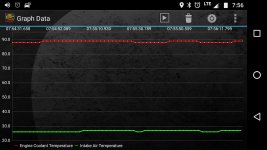
+ Graph Engine Coolant Temperature and Intake Air Temperature with the key in the ON position to ensure both sensors are reading similarly per [MENTION=99144]19963.4lsr5[/MENTION] 's suggestion.

+ Graph Engine Coolant Temperature with the engine running per [MENTION=138813]ragingbull2k2[/MENTION] 's suggestion -- If I see wild variations I know the sensor is likely malfunctioning and needs to be replaced. Your screenshots (especially of the appropriate part numbers) are most appreciated!

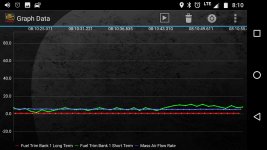
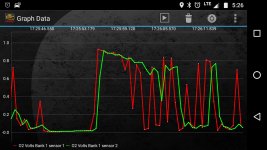
+ Graph Mass Air Flow Rate and O2 Voltage Bank 1 sensors 1 and 2 to ensure all sensor output is within spec.

[MENTION=99144]19963.4lsr5[/MENTION] - I've pulled off the vacuum line going to the fuel pressure regulator once and it didn't smell like gasoline. I'll give it another smell after I get to work/back home tomorrow.

[MENTION=65027]Cmayer[/MENTION] - When I start the vehicle in the morning, it does smell like gasoline, but not overwhelmingly so. Thanks for sharing about your situation with the leaky injector o-ring, that is not something I would have thought to consider!

[MENTION=115347]gamefreakgc[/MENTION] - Thanks for the suggestions and proper A/F data, if it looks like the ECT is good, I think I'll proceed to finding another MAF. The heater circuit is another thing I have not thought about--good to know!

Next Steps

1. Perform above data collection and report back.
2. If the all sensors appear to be working correctly, I'll plan on troubleshooting the fuel pressure regulator (to see if it is faulty/leaking) and will do a full intake and exhaust vacuum leak test with a smoke machine. If there are no vacuum leaks, I believe the next logical step is to either have my injectors rebuilt or buy new ones.

Thanks again for everyone's input so far! I'll be sure to post tomorrow evening of my findings.
 
Last edited:
The heater circuit in the preCat sensor is not too much of an issue because the exhaust heat will warm up the sensor. It will code for a bad heater circuit. It's part of the readiness monitor checks that have a higher priority than the check engine light.

With a MAF fuel system it even accounts for a clogged cat because it's measuring air flow. Unlike a fuel system that uses a MAP sensor. Where the entire fuel system is based on engine load via manifold vacuum.

O2 sensors do go bad without coding and it is what controls the LTFT trims. Nothing else does. The ECU looks at input data from the sensors and picks a fuel map for current conditions. The O2 sensor checks it (closed loop) and makes any necessary adjustments.

Running -10 to 10 LTFT is in the normal range to me. All though my 4Runner always runs a 0 on the LTFT every time I spot check it. My 04 Grand Cherokee ran a 3 on the LTFT and my Saturn SL1 runs a -3 to -8 LTFT. (I've done things to improve gas milage on my satty so that's expected)


Sent from my iPhone using Tapatalk
 
Hey guys,

I collected some data and included some screenshots of Torque Pro with the readings. The vehicle didn't stumble as much as it usually did on cold-starting it this morning. However, I did notice some acceleration hesitation on my way home from work (engine up to normal operating temps)--this has probably been occurring for awhile and I am just now feeling it.

Interpretations:

Welp, it seems to me that the ECT sensor is operating normally. With the key in the ON position, the ECT and IAT were identical. Likewise, when I started driving the ECT climbed steadily until at operating temperature. It also appears the MAF and O2 sensors are operating properly (from what I gather...).

So far, here is my list of things that might be the root cause:

1. Intake or exhaust leak
2. Fuel injectors are faulty or leaking
3. Leaky/faulty fuel pressure regulator (sorry, forgot to smell that vacuum line again)
4. Faulty sensor (MAF/front or rear O2/??)

Suggestions on where to go from here? Currently, my plan is to do a thorough smoke test of the intake and exhaust systems to see if any leaks exist. I'll buy a fog machine online and do a little fabrication to make it more suitable for my purposes. If I find no leaks, I'll move on to replacing the MAF and both O2 sensors. If that doesn't work I'll install new injectors.

Thanks!!
 

Attachments

  • Screenshot_20181003-075624.jpg
    Screenshot_20181003-075624.jpg
    125.4 KB · Views: 579
  • Screenshot_20181003-081057.jpg
    Screenshot_20181003-081057.jpg
    125.5 KB · Views: 582
  • Screenshot_20181003-172619.jpg
    Screenshot_20181003-172619.jpg
    130.2 KB · Views: 561

Members online

No members online now.

Forum statistics

Threads
278,312
Messages
3,554,083
Members
248,016
Latest member
Advally Service

Trending content

Back
Top