In a typical clutch job you replace five items:
disk
pressure plate (aka clutch cover)
pilot bearing
throwout bearing
rear main seal
and you have the flywheel resurfaced at an automotive machine shop.
(Some would have you replace the flywheel bolts - a necessity if they're torque-to-yield bolts - and the clutch cover bolts as well. Can't hurt, though the cover bolts are generally rather lightly torqued, but they're cheap.)
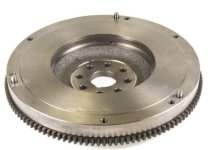
Some flywheels have a step that
must be maintained when the flywheel is resurfaced. The 5VZ-FE has such a flywheel, pictured below. The step is 0.020 inches in height.
If you're confused about flywheel resurfacing, here's a video.
How Do WE Resurface YOUR Engine's Flywheel? @Jim's Automotive Machine Shop, Inc. - YouTube
Some older flywheels had no step, nor did they have alignment pins. Much cheaper to resurface.
BTW, being in Africa you have ready access to items - you'll need two of them - that in my experience greatly facilitate a clutch replacement, particularly with a gearbox/transfer case unit that's long and heavy. I'm referring to the small 125cc motorcycles that dot the African landscape.
Those motorcycles have as their front axles effectively a bolt that's about a foot long with about one inch of thread. The thread and the 11" shoulder are the same diameter, no step up. Now for the reveal: the diameter is 12mm, and the thread pitch is 1.25mm. This is the same as the bolts that bind the gearbox to the engine block.
Two of these axles make an excellent "rail system" to guide the gearbox unit back to the block.
From South Africa comes an Afrikaans expression,
'n boer maak 'n plan, literally,
a farmer makes a plan. Call it ingenious field engineering. (Plenty of videos, often humorous, if you search with the Afrikaans expression.)
It's a useful expression, and a useful mindset. Plenty of folks on this forum know exactly what it means.