Did I just get lucky?

RobS10

Member
We have had a 1999 SR5 for 18 years and now own a 2022 4Runner ORP. We just gave our rarely driven '99 to our son who left the parking lights on and ran the battery down. I drove to it and pulled out my trusty heavy gauge jumpers I've used for 20 years and jumped it no problem, but read some pretty horrible things could have happened to our new rig and could have easily fried the computer system. Did I just get lucky because the old 4Runner battery wasn't that dead and started right away?
 
Last edited:
Register to hide this ad
Get a 50$ lithium jumper, you're playing with fire.

Thought they were more like $200 for a decent one? We do have a lead acid jumper box, but it's kinda bulky to leave in the car all the time, not to mention remember to charge it up. Our '22 is still newish and don't anticipate needing a jump, but always like to be able to help others out. May not be worth to carry cables for someone else now :-(.
 
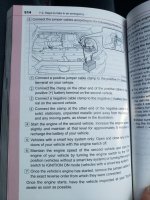
I have jumped many vehicles with my 2020. No issues. Also the owners manual even gives instructions on how to jump the 4r should the battery be dead. While it does not give instructions on how to use the 4r to jump others, it does not state that you should not or give any warnings to do so. Given that the manual addresses jumpstarting..with no warnings against using the 4r as the "starter"...its probably safe to do so.
 

Attachments

  • 20230824_102709.jpg
    20230824_102709.jpg
    140.6 KB · Views: 897
You're just sending voltage to the other battery, don't see how that would cause issues, especially on something as tried and true as a 4Runner
 
I have jumped many vehicles with my 2020. No issues. Also the owners manual even gives instructions on how to jump the 4r should the battery be dead. While it does not give instructions on how to use the 4r to jump others, it does not state that you should not or give any warnings to do so. Given that the manual addresses jumpstarting..with no warnings against using the 4r as the "starter"...its probably safe to do so.

LOL! I should have gotten out our manual, good to know! I did watch a few videos and read a few websites that said the "starter", i.e. running vehicle, should not be running, but no explanation as to why...to much draw on the 4Runner's alternator by the other vehicle's dead battery?
Step 5 was interesting..."Open and close any of the doors of your vehicle with the engine switch off".
 
Thought they were more like $200 for a decent one? We do have a lead acid jumper box, but it's kinda bulky to leave in the car all the time, not to mention remember to charge it up. Our '22 is still newish and don't anticipate needing a jump, but always like to be able to help others out. May not be worth to carry cables for someone else now :-(.

Check out Amazon, you can get a decent one for around $50 to $100 and ditch your old lead acid battery jump box (I had one of those also and hated it).

I've used our Lithium jumper at least 3 or 4 times now as Arizona kills batteries. Never had an issue and always started car right up on first try. They're small enough to keep stashed in your trunk easily also.
 
Check out Amazon, you can get a decent one for around $50 to $100 and ditch your old lead acid battery jump box (I had one of those also and hated it).

I've used our Lithium jumper at least 3 or 4 times now as Arizona kills batteries. Never had an issue and always started car right up on first try. They're small enough to keep stashed in your trunk easily also.
Form factor is perfect. How do they work on a fairly dead battery though, and how often do they need to be topped off?
 
I think the big thing as mentioned is you dont want to go negative terminal to negative terminal. The battery thats dead shouldnt use the negative terminal and just use a nearby ground
 
Thought they were more like $200 for a decent one? We do have a lead acid jumper box, but it's kinda bulky to leave in the car all the time, not to mention remember to charge it up. Our '22 is still newish and don't anticipate needing a jump, but always like to be able to help others out. May not be worth to carry cables for someone else now :-(.

Got this a couple months back. $73. One of the highest consumer rated and one of the highest amp rating:
https://www.amazon.com/dp/B0BXP151N6?psc=1&ref=ppx_yo2ov_dt_b_product_details
 
Form factor is perfect. How do they work on a fairly dead battery though, and how often do they need to be topped off?

I've experienced very little battery life loss with them sitting in my car sometimes for months between checking and/or using them. It's honestly amazed me that I think I've seen it hold charge (at least based on its indicators) for over a year.

In theory as long as you select one with sufficient cranking amps for your application, you should have no issues using it. I've jumped our 4Runner's 4.0L with it no issue (saved my ass on a road trip in South Dakota and let me just be able to drive over to an autoparts store and get a battery) and otherwise used it on a bunch of European cars with 2.0T engines.

Takes up less space than a full set of jumper cables also. Finding someone to jump you at a remote trail head in Arizona or Utah isn't easy either :).
 
Form factor is perfect. How do they work on a fairly dead battery though, and how often do they need to be topped off?

When you connect a jump pack, you leave it connected for a few minutes before you try starting the car with the dead battery. That way, the jump pack gets some charge to the dead battery and the dead battery can then supply some of the starting current needed.

Most jump packs have status lights you can check from time to time. It will tell you when you need to recharge. How often you need to recharge them depends on how much you use them and how long it has been since the last charge. I try to remember to charge mine every four or five months.
 
When you connect a jump pack, you leave it connected for a few minutes before you try starting the car with the dead battery. That way, the jump pack gets some charge to the dead battery and the dead battery can then supply some of the starting current needed.

Most jump packs have status lights you can check from time to time. It will tell you when you need to recharge. How often you need to recharge them depends on how much you use them and how long it has been since the last charge. I try to remember to charge mine every four or five months.
Thanks for the good info! Maybe set a Google Calendar reminder.
 
I've experienced very little battery life loss with them sitting in my car sometimes for months between checking and/or using them. It's honestly amazed me that I think I've seen it hold charge (at least based on its indicators) for over a year.

One thing to be aware of is very cold weather. I left my jump pack in my 4Runner last winter and apparently it froze. The battery swelled up and split the case.Even though the status lights showed it was still charged, I was really afraid to use it for Lithium batteries can catch fire! So I took it to a Lithium battery recycler and bought a new one.
 
One thing to be aware of is very cold weather. I left my jump pack in my 4Runner last winter and apparently it froze. The battery swelled up and split the case.Even though the status lights showed it was still charged, I was really afraid to use it for Lithium batteries can catch fire! So I took it to a Lithium battery recycler and bought a new one.

this is the problem I had with a lithium jump pack too. my last 4runner battery was 5+ years old and I knew it likely wouldn't make it through another winter.

when it died in the middle of winter my lithium pack wouldn't work. I still have my jumper cables but also picked up (on sale) an autowit supercap2 to give it a try in the future
 
One thing to be aware of is very cold weather. I left my jump pack in my 4Runner last winter and apparently it froze. The battery swelled up and split the case.Even though the status lights showed it was still charged, I was really afraid to use it for Lithium batteries can catch fire! So I took it to a Lithium battery recycler and bought a new one.

Fortunately it rarely gets below 30 degrees here, but also will need to keep this in mind when traveling for ski trips. It's pretty rare we see much below zero though so I imagine that limited exposure probably can't mess things up too much.

Getting a new one once the battery was compromised was definitely the right choice. Wouldn't want a car fire over a jumper combusting.
 
here's another one...guess these things are cheaper than I thought...
Amazon.com

I have the Noco GB40 and it's great. Got it on Prime Day or one of the sales for like $65. I don't think I've needed it on a car yet, but it's come in handy with my lawn mowers and ATVs countless times. Every few months I take it out and plug it in the wall just incase it lost any charge. It's an essential item to have IMO and takes up close to zero space.
 
I recently bought 2 of the NOCO GB40 Boost Plus units. They say to hook it up and then wait 20 or 30 seconds before attempting to start the vehicle.

They also say to top them off every 4 to 6 months, although they should hold a 70% charge after 12 months.

NOCO is well known for the their Genius line of boat battery chargers, although I did buy a Minn Kota 3-bank charger for my boat.
 

Members online

Forum statistics

Threads
278,310
Messages
3,554,080
Members
248,016
Latest member
Advally Service

Trending content

Back
Top