How long does it take to develope symptoms of burnt valve?

Of course these being Toyotas, they will run just fine with burnt valves. Just a loss of power. I ran my last engine for years with 60 PSI of compression due to bad exhaust valves, kept on truckin'.


I parted out an engine with 313K on the clock with two absolute destroyed exhaust valves (cylinder 6) and it still ran fine until another issue killed it.
I have a 250k engine that was noisy and had head gasket issues. I was wondering if I should just scrap it or rebuild it. Leaning towards just scraping it. It's why I put the 165k mile engine in...:)

Yes. They do actually run quite well with burnt valves. It's the engineering and part quality that makes the difference.

Granted, I know this old engine got hot several times. Hence suspecting warped heads.

Sent from my SM-A505U using Tapatalk
 
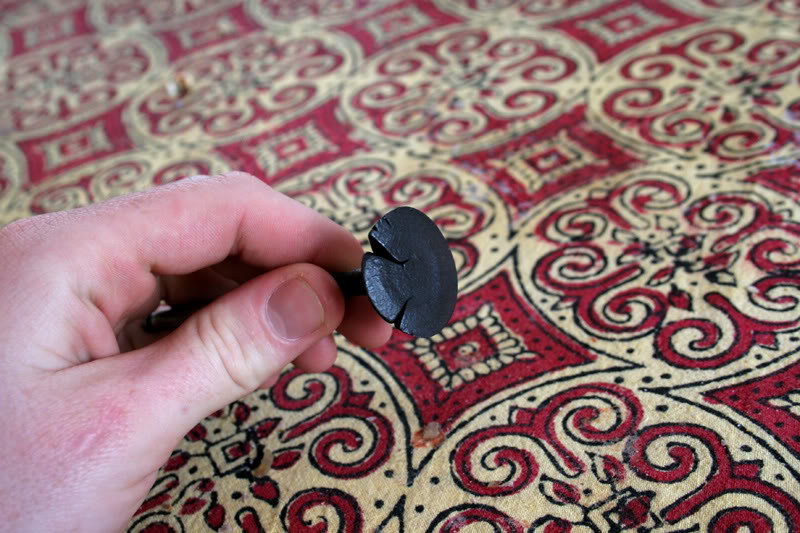
A note on burned exhaust valves - I usually see them closer to 300K miles. Toyota valves are stout but they don't last forever and will start to develop 1/4 inch hairline cracks which eventually become "chips". A compression check will tell you if you've got a burnt valve as we rarely, and I mean RARELY have compression leaking past the piston rings. It's the closest thing you can get to a guarantee it's the valves.

do you observe a cause for the burnt valves, or it's just ''normal'' condition deterioration?
 
do you observe a cause for the burnt valves, or it's just ''normal'' condition deterioration?

It's just normal wear and tear. After 300K miles, you are measuring the number of strokes for that cylinder in the 100,000,000's, possibly even in the billions depending on driving style. Nothing lasts forever.
 
do you observe a cause for the burnt valves, or it's just ''normal'' condition deterioration?

I didn't see it mentioned, so just to clarify. The valve adjustment is really more of an issue on the 3rz. it is a well known issue that they need monitoring and adjusting once the engine gets past 100,000 or so. [MENTION=148218]JZiggy[/MENTION] has done his pretty frequently. I've checked mine 3 times, adjusted once.

I think those valve shim buckets are available in different diameters and have to be matched to the hole they are going in. You might have to measure the original and find the correct new one to match.
 
The shim buckets (or valve lifters if your Toyota) have to be within a spec (1.2205-1.2211 in) to allow a certain oil clearance between the lifter and the head of the engine. But there aren't different sizes of shim bucket.

If the lifter diameter isn't within the range you replace it with a new one. If the lifter is inside the range but there is still too much oil clearance, you replace the head. I guess Toyota assumes that if the precisely machined parts aren't working with your engine, your engine is the problem.

If you do take the cams out, treat the lifters like spark plugs. You can probably get away with moving them around on a healthy engine, but you want to know that each lifter was always in the same place if it ends up being out of spec. So do keep them in order.

Toyota recommended checking the valve clearances every 60k miles. I think that is about right, if you buy the vehicle with significantly over that I HIGHLY suggest getting the valve clearance check right away. At 186k my valves were all far outside the acceptable range, and I can assume that my 4runner had this done once before from all the extra paint marks.

There are several threads up on burnt valve on the 3rz-fe. Burnt valve is not normal wear and tear, it should never happen if you adjust them.

194581d1502131792-what-happens-when-you-never-adjust-valves-img_6336.jpg
 
Last edited:
What happens when you run out of shim sizes?

A lot of my valves are going to be using no.4 shims, and that leaves only 3 sizes before I need thinner shims than they have.

Also I know you round down a shim size, but would it be a good idea to use a no.4 shim when the new shim equation is .0002 away from the next shim size up? (No.5 shim is .1063, the equation results in .1061)
 
What happens when you run out of shim sizes?

A lot of my valves are going to be using no.4 shims, and that leaves only 3 sizes before I need thinner shims than they have.

Also I know you round down a shim size, but would it be a good idea to use a no.4 shim when the new shim equation is .0002 away from the next shim size up? (No.5 shim is .1063, the equation results in .1061)

Just a tip, it's much easier to measure the shims and thickness in millimeters. Each shim is in thicknesses of 0.05mm. So 2.85, 2.90, 2.95, etc. It's also printed on the shim itself for easy identification when new.

The thinnest shim available is 2.50mm, thickest is 3.30mm. CAMSHAFT & VALVE. 1998 Toyota 4Runner | McGeorge Toyota, Richmond VA. For exhaust valves, it's better to have a larger gap than smaller as they tend to close over time. Intake valves tend to open more so go a bit tighter.
 
Not a burnt valve perse. But I acquired my rig from the inlaws in 2015 and it had a "ticking valve" as well as a random "idle issue". 2021 I finally diagnosed as a bolt that was dropped into the intake causing the noise and intermittent stutter I had dealt with for years. So a burnt intake valve...could be intermittent and hard to diagnose. It takes vigilance and knowledge of your rig to really start to piece together.
 

Members online

Forum statistics

Threads
278,316
Messages
3,554,120
Members
248,016
Latest member
Advally Service

Trending content

Back
Top