

BlackWorksInc
New member
First off I want to clarify why I am posting it in the General Section versus the 4th or 5th Gen sections; it's mainly because this applies not just to one specific generation of 4Runner, but rather the entire J120/J150 platform family. Unless the Mods have a way to make "shortcuts" in the forum to link to one thread (i.e. you'd see the thread title in 4th & 5th Gen sub-forums, Tacoma, GX, and FJ but it would all link to one original forum vs. a half dozen unconnected ones; I don't believe I've ever seen that functionality in a forum unfortunately). So due to that fact I'd rather put it in General where it makes more sense, if Mods want to duplicate it and post it in the various sub-forums I'll let them do that.
~
So what is "J120" and "J150?" These are the platform codes for frame design that underpins many of our favorite Toyota off-road toys. The platform originates with the Land Cruiser Prado 120 & 150 sold over seas and is basis for all the following vehicle's frames:
-2002~2009 Toyota Land Cruiser Prado (J120 or sometimes called "Prado 120")
-2003~2009 Toyota 4Runner (4th gen, J120)
-2007~2009 Toyota FJ Cruiser (J120)
-2005~2009 Toyota Tacoma (J120)
-2003~2009 Lexus GX470 (J120)
-2010~Current Toyota Land Cruiser Prado (J150, or sometimes called "Prado 150")
-2010~Current Toyota 4Runner (J150)
-2010~2014 Toyota FJ Cruiser (J150)
-2010~Current Lexus GX460 (J150)
-2010~2015 Toyota Tacoma (J150)
*2016~Current Toyota Tacoma (J150, I have not seen any official documentation stating platform, but it appears to be a J150 frame with one or two minor changes)
Now you'll notice there's some overlap on a couple models that fall within that model's generation. The reason for this is because Toyota switched to the J150 Frame in 2010 for their line-up with no fanfare beside a cosmetic exterior refresh on some models (FJ & Tacoma being the obvious ones). The reason all you see is a mild refresh on these vehicles is because in terms of actual dimensions of the frames between the J120 & J150, they are dead on identical to each other. I've looked over the Collision Repair manuals for both J120 & J150 vehicles and there's almost no real visual difference (though the 4th gen frame drawings are slightly more simplified than the 5th Gen's so one or two non-critical brackets for like a plastic cover or what-not might be different). Supposedly the J150 Platform is "stronger" than the J120 with some inner channel reinforcements, but until I either see documentation stating where that's been implemented and/or cut aways of both frames, I'm just going to just assume those changes are extremely minor (almost all the new car features for the J150 platform vehicles talk about strengthening the body of the vehicle, not the frame itself; in fact very little to nothing is mentioned about the frames when looking at J150 vehicles "New Car Features.") This is why you can pretty much bolt on anything that fits on a 4th Gen 4Runner to a 5th Gen 4Runner's frame (hell you could literally swap the cabs on the frame and they'll bolt up perfectly fine), not to mention why suspension mods for J120 & J150 vehicles are almost entirely interchangeable between each other (think Tacoma or FJ coils, Upper Control Arms, trailing links, ect.) Now that you have a better idea of the frame that under pins your vehicle, lets move on to the purpose of this thread.
Now if you look around on the forum you'll notice a common mod that pops up for many of us who want to run larger than 33" tires on a J120/J150 vehicle, that mod is often referred to as a "BMC" or "Body Mount Chop." A common "flaw" of the J120/J150 platform is that there is a body mount that sits just behind the front wheels and is inline with the firewall (this section of the J120/J150 frame is pretty much identical on all J120/J150 vehicles); this body mount impinges on the wheel well slightly. It's not typically an issue with tires up to 33", but after that size under compression or turns the tire can rub against the body mount quite a bit; the most common solution is to simply cut the mount away and allow for more clearance. Now you must be asking yourself "why the hell would someone design it that way, can't they just move the mount back 2 inches and save us all this trouble? What a stupid design!" Well, this "flaw" is actually an extremely important safety feature inherent in the design of the vehicle and something many people over look when performing their BMC mod.
The second body mount is inline with the firewall because it is specifically designed to deflect the wheels and suspension components in the event of a type of collision called a "Small Overlap Frontal Offset". This type of crash is actually a lot more common in the real world as most people will swerve or try to avoid what they are going to crash into vs. hitting something at right angles like crash testing typically assumes. This particular testing has become more prominent and more important over the years because many "4 or 5" star vehicles did poorly in this particular crash. Here's a few pictures of the test as well as a video of a 5th gen 4Runner being tested to give you an idea off how this works in real life and what the purpose of the body mount is (pay close attention to the A-Pillar and Driver's Tire as it is deflected and how the 4Runner seems to bounce off the corner around where the body mount is located):


So now you should realize that the BMC is basically removing a very important safety feature of the vehicle, so why the hell does anyone do it!? Well the answer is simple, we need to fit bigger tires and honestly we only need a little bit of space. The body mount actually sticks into the wheel well about 1" at the bottom outer edge, this is what causes the hang-up/rubbing under compression. Most people just cut the entire outer portion of the mount off, but really all you need is to notch it slightly.
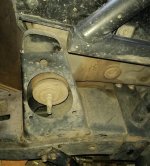
My '04 4Runner Body Mount (It looks the same on pretty much every J120/J150 vehicle):
Pictures of a tire rubbing on the Body Mount and of a Body Mount already cut to allow clearance (notice how it lines up exactly with the edge of the wheel well now):


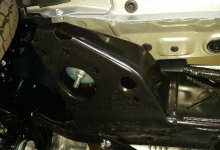
After cutting the mount's integrity is compromised as you can tell because the supporting box structure has been cut away. This section of the frame is made of two different strengths of steel as shown in the following diagram of a J150 frame of a 5th gen 4Runner (due to the similarities and this type of diagram being a newer addition to Toyota's manuals I can't say if the J120 is exactly the same in all areas, but I am very positive that this is the rough layout of steel in the J120 frame as Toyota made a much bigger deal of improving the steel and design in the cab of J150 vehicles vs. the frame). Something else to point out is that many people will dismiss this as being relatively unimportant in the grand scheme of things, again I'd like to refer you to the video & pictures posted above as well as the frame diagram below, Toyota specifically reinforced this area compared to the rest of the frame because of this aspect. I also included a picture of a 3rd Gen Tacoma (2016 on our lot), as I mentioned before, looking at the frame it looks nearly identical to the J150 frame that underpins the 2nd Gen Tacoma; with one glaringly obvious difference. As you can see in the following picture, the second body mount has been reinforced and widened by about an additional 5~6inches of material, I imagine this was done because the previous mounts were shearing/bending backwards in offset impacts more than they should have been. But the point is that Toyota would not have wasted the time, energy, and materials to increase the strength of that one section if it was not a critical component.

(The types of steel used in that mount section are AISI 1018 Mild/Low Carbon Steel (roughly 440MPa) & 1074 Hot Rolled Carbon Steel (roughly 780MPa; this post fleshes out the numbers a bit more: http://www.toyota-4runner.org/5th-g...e-body-mount-chop-2012-sr5-3.html#post1999103)
So what does all this mean for us? It means that when we perform a Body Mount chop on our vehicles we need to be very aware of what it is exactly we are doing and how it will affect the vehicle in all aspects (as we should be doing with all mods to begin with.) This means that while doing a BMC like the following pictures does give us the desired tire clearance, it does so at potentially higher risk of bodily harm in an offset collision.


Now I want to make this clear, I am not trying to shame anyone at all with these pictures; it's about pointing out the different ways this mod is done and how we should all be thinking about all the aspects a mod can affect our vehicle. These are perfectly good and beautiful looking Body Mount Chops and they absolutely do exactly what they are meant to do; but in my personal opinion based on the evidence I mentioned above, these are cut down way more than they need to be and could pose an increased safety risk for the vehicle. So how should a Body Mount Chop be performed? Well, that's actually a very good question and the entire purpose of this thread; I have seen some ideas on body mount chops that retain a significant portion of the original mount and theoretically should retain the protective nature of body mount design itself, I also have a few ideas rattling around in my head on how to reinforce the mount while cutting away enough to get clearance. But I am by no means the authority or the man to set the standard, that's why I made this thread; to engage the community and garner ideas and alternative methods to create a "Better Body Mount Chop" to create a more unified and safer mod that we can share with everyone and feel safe doing.
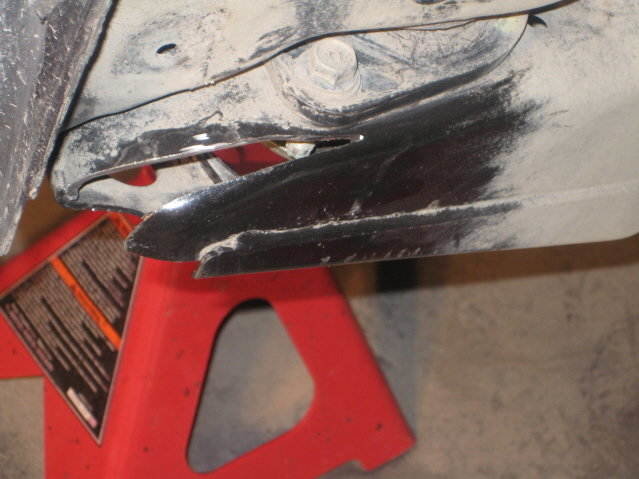
I'll leave you with this idea I came across on a Tundra forum I thought was very creative and interesting:

~
So what is "J120" and "J150?" These are the platform codes for frame design that underpins many of our favorite Toyota off-road toys. The platform originates with the Land Cruiser Prado 120 & 150 sold over seas and is basis for all the following vehicle's frames:
-2002~2009 Toyota Land Cruiser Prado (J120 or sometimes called "Prado 120")
-2003~2009 Toyota 4Runner (4th gen, J120)
-2007~2009 Toyota FJ Cruiser (J120)
-2005~2009 Toyota Tacoma (J120)
-2003~2009 Lexus GX470 (J120)
-2010~Current Toyota Land Cruiser Prado (J150, or sometimes called "Prado 150")
-2010~Current Toyota 4Runner (J150)
-2010~2014 Toyota FJ Cruiser (J150)
-2010~Current Lexus GX460 (J150)
-2010~2015 Toyota Tacoma (J150)
*2016~Current Toyota Tacoma (J150, I have not seen any official documentation stating platform, but it appears to be a J150 frame with one or two minor changes)
Now you'll notice there's some overlap on a couple models that fall within that model's generation. The reason for this is because Toyota switched to the J150 Frame in 2010 for their line-up with no fanfare beside a cosmetic exterior refresh on some models (FJ & Tacoma being the obvious ones). The reason all you see is a mild refresh on these vehicles is because in terms of actual dimensions of the frames between the J120 & J150, they are dead on identical to each other. I've looked over the Collision Repair manuals for both J120 & J150 vehicles and there's almost no real visual difference (though the 4th gen frame drawings are slightly more simplified than the 5th Gen's so one or two non-critical brackets for like a plastic cover or what-not might be different). Supposedly the J150 Platform is "stronger" than the J120 with some inner channel reinforcements, but until I either see documentation stating where that's been implemented and/or cut aways of both frames, I'm just going to just assume those changes are extremely minor (almost all the new car features for the J150 platform vehicles talk about strengthening the body of the vehicle, not the frame itself; in fact very little to nothing is mentioned about the frames when looking at J150 vehicles "New Car Features.") This is why you can pretty much bolt on anything that fits on a 4th Gen 4Runner to a 5th Gen 4Runner's frame (hell you could literally swap the cabs on the frame and they'll bolt up perfectly fine), not to mention why suspension mods for J120 & J150 vehicles are almost entirely interchangeable between each other (think Tacoma or FJ coils, Upper Control Arms, trailing links, ect.) Now that you have a better idea of the frame that under pins your vehicle, lets move on to the purpose of this thread.
Now if you look around on the forum you'll notice a common mod that pops up for many of us who want to run larger than 33" tires on a J120/J150 vehicle, that mod is often referred to as a "BMC" or "Body Mount Chop." A common "flaw" of the J120/J150 platform is that there is a body mount that sits just behind the front wheels and is inline with the firewall (this section of the J120/J150 frame is pretty much identical on all J120/J150 vehicles); this body mount impinges on the wheel well slightly. It's not typically an issue with tires up to 33", but after that size under compression or turns the tire can rub against the body mount quite a bit; the most common solution is to simply cut the mount away and allow for more clearance. Now you must be asking yourself "why the hell would someone design it that way, can't they just move the mount back 2 inches and save us all this trouble? What a stupid design!" Well, this "flaw" is actually an extremely important safety feature inherent in the design of the vehicle and something many people over look when performing their BMC mod.
The second body mount is inline with the firewall because it is specifically designed to deflect the wheels and suspension components in the event of a type of collision called a "Small Overlap Frontal Offset". This type of crash is actually a lot more common in the real world as most people will swerve or try to avoid what they are going to crash into vs. hitting something at right angles like crash testing typically assumes. This particular testing has become more prominent and more important over the years because many "4 or 5" star vehicles did poorly in this particular crash. Here's a few pictures of the test as well as a video of a 5th gen 4Runner being tested to give you an idea off how this works in real life and what the purpose of the body mount is (pay close attention to the A-Pillar and Driver's Tire as it is deflected and how the 4Runner seems to bounce off the corner around where the body mount is located):
So now you should realize that the BMC is basically removing a very important safety feature of the vehicle, so why the hell does anyone do it!? Well the answer is simple, we need to fit bigger tires and honestly we only need a little bit of space. The body mount actually sticks into the wheel well about 1" at the bottom outer edge, this is what causes the hang-up/rubbing under compression. Most people just cut the entire outer portion of the mount off, but really all you need is to notch it slightly.
My '04 4Runner Body Mount (It looks the same on pretty much every J120/J150 vehicle):
Pictures of a tire rubbing on the Body Mount and of a Body Mount already cut to allow clearance (notice how it lines up exactly with the edge of the wheel well now):
After cutting the mount's integrity is compromised as you can tell because the supporting box structure has been cut away. This section of the frame is made of two different strengths of steel as shown in the following diagram of a J150 frame of a 5th gen 4Runner (due to the similarities and this type of diagram being a newer addition to Toyota's manuals I can't say if the J120 is exactly the same in all areas, but I am very positive that this is the rough layout of steel in the J120 frame as Toyota made a much bigger deal of improving the steel and design in the cab of J150 vehicles vs. the frame). Something else to point out is that many people will dismiss this as being relatively unimportant in the grand scheme of things, again I'd like to refer you to the video & pictures posted above as well as the frame diagram below, Toyota specifically reinforced this area compared to the rest of the frame because of this aspect. I also included a picture of a 3rd Gen Tacoma (2016 on our lot), as I mentioned before, looking at the frame it looks nearly identical to the J150 frame that underpins the 2nd Gen Tacoma; with one glaringly obvious difference. As you can see in the following picture, the second body mount has been reinforced and widened by about an additional 5~6inches of material, I imagine this was done because the previous mounts were shearing/bending backwards in offset impacts more than they should have been. But the point is that Toyota would not have wasted the time, energy, and materials to increase the strength of that one section if it was not a critical component.
(The types of steel used in that mount section are AISI 1018 Mild/Low Carbon Steel (roughly 440MPa) & 1074 Hot Rolled Carbon Steel (roughly 780MPa; this post fleshes out the numbers a bit more: http://www.toyota-4runner.org/5th-g...e-body-mount-chop-2012-sr5-3.html#post1999103)
So what does all this mean for us? It means that when we perform a Body Mount chop on our vehicles we need to be very aware of what it is exactly we are doing and how it will affect the vehicle in all aspects (as we should be doing with all mods to begin with.) This means that while doing a BMC like the following pictures does give us the desired tire clearance, it does so at potentially higher risk of bodily harm in an offset collision.

Now I want to make this clear, I am not trying to shame anyone at all with these pictures; it's about pointing out the different ways this mod is done and how we should all be thinking about all the aspects a mod can affect our vehicle. These are perfectly good and beautiful looking Body Mount Chops and they absolutely do exactly what they are meant to do; but in my personal opinion based on the evidence I mentioned above, these are cut down way more than they need to be and could pose an increased safety risk for the vehicle. So how should a Body Mount Chop be performed? Well, that's actually a very good question and the entire purpose of this thread; I have seen some ideas on body mount chops that retain a significant portion of the original mount and theoretically should retain the protective nature of body mount design itself, I also have a few ideas rattling around in my head on how to reinforce the mount while cutting away enough to get clearance. But I am by no means the authority or the man to set the standard, that's why I made this thread; to engage the community and garner ideas and alternative methods to create a "Better Body Mount Chop" to create a more unified and safer mod that we can share with everyone and feel safe doing.
I'll leave you with this idea I came across on a Tundra forum I thought was very creative and interesting:
Attachments


Last edited:


