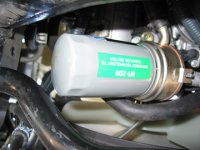
Just making sure (oil) - and I searched ;)

JMitch

New member
I live in Florida and I am about to hit the 1500 mile mark on my 03' 4Runner. I am planning on changing the oil when I hit the mark, but I just wanted to get other people's opinions before I pour the new stuff in.

What would you guys recommend using? (AMSOIL) 10w40 or (AMSOIL) 20w50? It doesn't get cold (not below 60) down here so I was thinking 20w50 for the extra protection of the engine components. But then again, it's going to start getting cooler down here since winter is coming up. Although, it is highly unlikely going to drop below 60 (maybe during the night it will) but will the engine have any problems starting up etc, with 20w50 oil inside with that type of temperature range down here?

Thank you for any feedback.
 
Register to hide this ad
Why not use the 5w-30 recommended by Toyota. I'm in San Diego and use 5w-30 Mobil 1 and the Mobil1 m1-102 filter for my v8.
 
Yeah, that's what I decided to do actually :P ----- I just thought that thicker oil meant more protection. But hell, 5w30 can't be bad if that's what Toyota recommends. If I ever did change to a thicker oil then it would be 10w40.
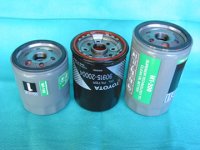
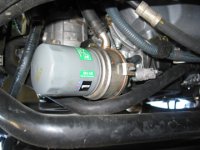
 
I am using Mobil 1 10W-30. The dealer here says they use 10W-30 in everything. I am using the Mobil 1 M1-209 oil filter instead of the M1-102. It's a bit longer. I assume there is more filter area. I will disect it and compare with the factory and M1-102 after the next oil change.
 

Attachments

  • oilfiltercomparison.jpg
    oilfiltercomparison.jpg
    110.8 KB · Views: 1,344
I know manufactures now frown upon heavy oil. Honda now recommends 5W20 in some of their engines. Now a lot of that is for increase fuel economy, but newer engines run better on lighter oil and putting in 20W50 seems a little of a over kill, especially with synthetic motor oil. I have gone with 10W30 in my older cars and maybe it is OK to push a older car to 10W40, but I would stop there.

If it were me I would go with 10W30 synthetic and be sure not to go over 7,500 miles, the recommended change from Toyota. I have read someone using Amsoil in a Lexus RX 300 and it had a problem, sludge. Since the owner went over the 7,500 oil change Toyota (Lexus) won't fix it and the Amsoil warranty was worthless, Amsoil said it was Toyota's problem.
 
Ken, thanks for the tip on the 209 filter.

This weekend I'm installing an OilGuard bypass filter. Used them in industrial applications and for under $200 I wanted to add the protection to my engine.

And to those using a 10w-30 instead of a 5w-30, you might be missing some startup protection for no gain iin protection when warm.

We have run standby generators on 5w-30, 10w-30 and 20w-50. These engines get run and stopped about 100 times a week, with running times that vary between 5 minutes and 1 hour.

Oil samples up to 4,000 hours show the 5w-30 to be much better than the 10w-30 for engine wear indicators.

Can't answer about 20w-50 becuase those three engines never made it that far. They all dumped before 2,500 hours. They suffered camshaft and lifter wear along with excessive ring and cylinder wall wear. We also had crankcase vent problems and had to change the oil at 100 hour intervals when the 5w-30 (23 engines) was lasting close to 500 hours, based on oil sampling.

Using the wrong oil and changing it more frequently is just not the answer.

The 10w-30 engines (12) were making it to 350/400 hours between changes, based on oil sampling.

So all that talk about 'lighter' oils being only for CAFE ratings might be a little over blown.

We have three engines (that replaced the 20w-50 engines) that are over 700 hours on oil sample driven oil changes, that are using 0w-30 oil.

These indicators are for engines that are started cold, brough up to 3,600 RPM in 60 seconds and full load applied and they are run from between 5 minutes and not more than 1 hour, with an average of 100 cycles per week.

By the way, the oil is Mobil 1. Regular oil in 5w-30 and 10w-30 never made 100 hours between changes and with these more frequent oil changes we never got 2500 hours from an engine. The overhauls to put an engine back in service were a lot more expensive, requiring more replacement parts. That put to rest the idea of saving money on the price of oil and changing it more frequently. It just does not work.

You will hear a lot about oil that is not based on real world testing but this is a close as I can come. I'm using 5w-30 Mobil 1 with the Mobil 1 filter (the 209) and changing at 5k miles to keep my warranty in place.

In cold weather I would use 0w-30, but in San Diego there is no weather so the 5w-30 is good for the whole year.
 
Larry said:

So all that talk about 'lighter' oils being only for CAFE ratings might be a little over blown.

I'm using 5w-30 Mobil 1 with the Mobil 1 filter (the 209) and changing at 5k miles to keep my warranty in place.


Boy, that was good info, especially about using lighter weight oil. I use Castrol GTX 5W30 in the winter and Castol GTX 10W30 in my old Acura and Honda, both 170,000 miles plus. When I got the 4Runner I used Mobil 1 5W30 when I went on a long camping trip to Newfoundland and I was so impressed with the oil, after 5,000 it just light golden brown and draining it, it came out much faster, I decided to keep using Mobil 1 and increasing the change of oil from 3,000 miles to 5,000 miles. I figure I am using the recommended 5W30 plus the oil is less likely to break down than conventional 10W30. But I am still using a Toyota filter. Were is the best place to buy a Mobil 1 filter, I may give them a try?
 
Last edited:
Interesting...... I guess I will stick to 5w30 all the way ;). I am no expert in oil so I was just throwing some things out to see what kind of responses I would get. All very helpful, thanks.
 
There are other good synthetic oils out there, but be sure your choice is API certified.

All Mobil 1 is, some Amsoil is not and I'm not sure about Redline. All three are good oils, but Mobil 1 is the cheapest and most available.

Filters can be a problem, too. Sometimes you just don't know about the quality, so my only two choices would be Toyota and Mobil 1. I am using the Mobil 1 filter that is made by Champion and appears to be a good filter.

I am adding the OilGuard and will be taking frequent samples for analysis.

The choice of the OilGuard is driven by real world experience and not someones advertising or second hand stories. I have hopes for realistic performance and in a couple of years we'll see.
 
My reasoning for using 10W-30 Mobil 1 synthetic over the factory recomended 5W-30, I assume petrolium based oil, is that the cold weather pour point is so much better. You can confirm this by putting a couple of small containers of oil in you freezer and later pouring it out.

Anyhow just for reference I went 115k miles on a Toyota Cressida with 20W-50 petrolium oil, 112k miles on a Ford F150 pick-up with 10W-40 petrolium oil, and 152k miles on a Suburban with 10W-40 Redline synthetic. The Chevy recomended 10W-30 for the Suburban. Not a single problem with these vehicles that could be attributed to using the wrong motor oil. So does it matter? You'll get tired of it and probably trade it in long before you have engine problems related to engine oil.
 
##My reasoning for using 10W-30 Mobil 1 synthetic over the factory recomended 5W-30, I assume petrolium based oil, is that the cold weather pour point is so much better. You can confirm this by putting a couple of small containers of oil in you freezer and later pouring it out.##

Do you mean that you want the oil that best resists pouring in cold weather? If that's the case then choose the 10w-30. It is probably five times slower in cold weather to get pumped through your engine. That will eventually catch up with you.

And you're right. If you trade your car every 2 years than one oil change might be enough. Any API oil will do, but just for you. You'll just pass any problems to the next owner. You can take such a shot because you have the warranty.

Factory maintenance schedules are for the first owner, to keep costs down. The second owner is not their customer. You are when you buy another new car.

So you just make your choice, new car only or long time owner.

My cars are 78 Toyota PU 385k
84 Honda Civic wagon 365k
96 850 Volvo Turbo wagon 125k
03 4Runner v8 2k

There has been no major work on any car, all on Mobil 1, even the old ones.
 
"Do you mean that you want the oil that best resists pouring in cold weather? If that's the case then choose the 10w-30. It is probably five times slower in cold weather to get pumped through your engine. That will eventually catch up with you."

Larry, I think you missed the point. 10W-30 synthetic flows better than 10W-30 petroleum at cold temps. Thus 10W-30 synthetic is probably the equivalent of 5W-30 petroleum at cold temps. In my freezer example I was comparing synthetic to petroleum of the same weight. At temps just below freezing it is clear in my very unscientific experiment that synthetic pours "easier" than petroleum. Try it.
 
This from the Redline website:
"Red Line 10W30: Best all-weather viscosity grade for gasoline engines in cars and light trucks that are driven on the street on a daily basis. Reduces turbo lag and provides more power and economy while providing thicker bearing oil films at operating temperature than a petroleum 10W-40. Best all-round, synthetic oil for stock or slightly modified engines in high- performance cars that are street-driven. Best choice to replace a 5W-30 or 10W-30, petroleum-based or other-brand synthetic oil if maximum durability is preferred. Acceptable for engines that are occasionally operated in extreme cold weather."

Also check this:
http://www.redlineoil.com/whyredline.htm

I trust Redline's opinions, after 152k miles on my K2500 Suburban. I decided to go the Mobil 1 route on the 4Runner due to the high cost and availiability of Redline. I will stick with the 10W-30 thank you.
 
Larry,

Sorry just haven't gotten around to it. It's kind of messy when they are used. I did do it when I bought the Suburban in 1994. It was kind of interesting. The big surprise was the K&N. On the packaging it touted its pressure relief and anti-drain back valves. When I disected it I found neither, only the paper element. Needless to say I am very reluctant to buy anything with the K&N name on it.

If you search the net I am sure you can find others who have already done some research and cut open a few filters.

Ken
 
Ken, you and I must be the only ones around that think K&N's parts are fine as long as you don't get them around your vehicle.

I am using the longer 209 filter and want to thank you again for the tip.
 

Members online

Forum statistics

Threads
278,316
Messages
3,554,113
Members
248,016
Latest member
Advally Service

Trending content

Back
Top