3.4L_V6_2000
New member
Starting last year, I went through 4 alternators, 2 batteries, and a starter in ten months.
Date Mileage Shop Task
4/23/2013 112984 Firestone Battery Replacement
3/20/2014 121658 Firestone Replace Alternator & Replace Battery
8/7/2014 125732 Firestone Replace Alternator
10/9/2014 127950 Firestone Replace Alternator
1/12/2015 129894 Firestone Replace Starter, Change Oil, Add Leak Detection Dye to oil
1/21/2015 130151 Firestone Replace Battery & Replace Alternator
1/23/2015 130151 **Low Oil Pressure Light-->Timing Thrown
Then, while driving my 4Runner to an electrical specialist in Houston immediately after picking it up from Firestone after the last battery and alternator replacement on 1/21, my low oil pressure light came on. I should have stopped then, but I was trying to make it to the electrical shop before they closed. I didn't pull over until the timing belt was thrown, the engine made some serious noise, and the check engine light came on. (I got towed the rest of the way).
The electrical specialist first had to reset the timing which meant replacing the timing belt, the timing pulley, and a malfunctioning timing pulley tensioner. (The Cams were way off when the tow truck dropped it off). Then, they replaced the oil sending unit which caused the low oil pressure dashboard light to go away. With the engine back up and running quiet, they found nothing wrong with the electrical system except some corrosion in the junction box next to the battery. They cleaned the corrosion and noticed that the "voltage to the battery increased to 14.4 volts."
Like deja vu, I was only a couple of miles down the road when the brand new sending unit was giving the low oil pressure light again.
Since, I have done following:
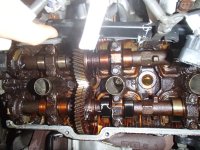
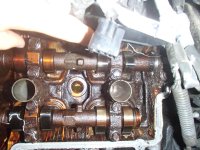
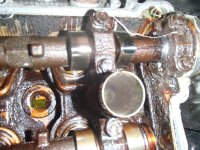
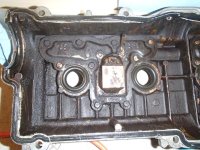
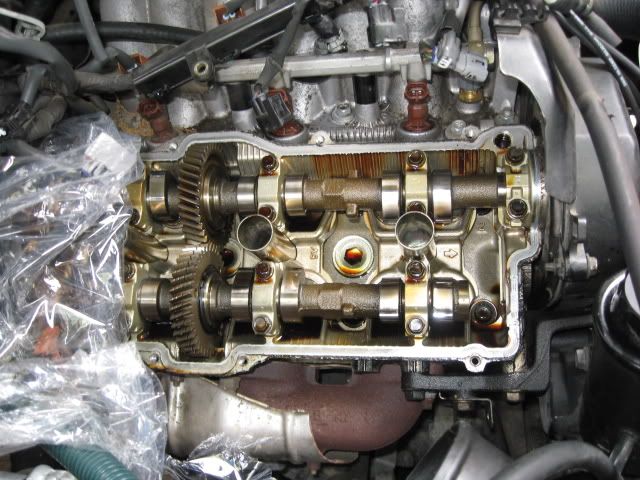
-taken off the passenger side valve cover and taken pics
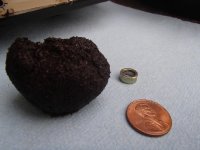
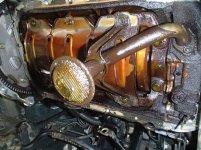
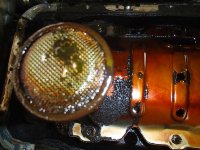
-dropped the oil pan and taken pics. (**In the oil pan I found a little bit of fine metal shavings and a small metal ring--maybe a valve spring seat or a valve lifter.**)
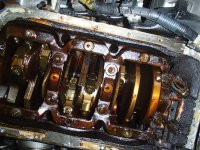
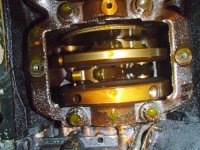
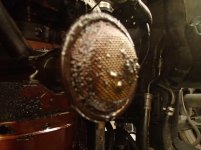
-dropped the pickup (oil strainer) and the baffle plate and taken pics of the crankshaft
-changed the oil, put SeaFoam in the oil, put SeaFoam in the gas, and ran SeaFoam through the intake
-Removed the oil sending unit and installed a mechanical analog oil pressure gage
-I have run a number of extended tests including driving it on the highway with the oil pressure gage
-Last, I have replaced the sending unit and drove it without getting the low oil pressure light.
The Haynes Repair manual states oil pressure ranges for only two rpm values: idle and 3000 rpm. At idle the oil pressure should be "at least 4.3 psi." At 3000 rpm, the oil pressure should be between 36 and 75 psi. While I was out driving with the mechanical oil pressure gage, I noticed that when the engine is hot and has been running, the pressure will drop to around 2psi at idle and will be around 36-38 psi for the second to two that I force the engine to up to 3000 rpm. When I drive at 60mph and 1800 rpm, the engine will maintain 21-22psi for 30 minutes.
I would like to know...
1. Is 22psi at 1800 rpm OK? What should the pressure range be for 1800 rpm?
2. How do I determine the root cause of the low oil pressure? Is there a way to tell if it is the bearings and not the pump?
3. Is the oil pressure in any way affected by any electrical component or is it simply a function of the crank's rpm, the amount and the viscosity of the oil, the play between the bearings, and the cleanliness of the oil passages?
Date Mileage Shop Task
4/23/2013 112984 Firestone Battery Replacement
3/20/2014 121658 Firestone Replace Alternator & Replace Battery
8/7/2014 125732 Firestone Replace Alternator
10/9/2014 127950 Firestone Replace Alternator
1/12/2015 129894 Firestone Replace Starter, Change Oil, Add Leak Detection Dye to oil
1/21/2015 130151 Firestone Replace Battery & Replace Alternator
1/23/2015 130151 **Low Oil Pressure Light-->Timing Thrown
Then, while driving my 4Runner to an electrical specialist in Houston immediately after picking it up from Firestone after the last battery and alternator replacement on 1/21, my low oil pressure light came on. I should have stopped then, but I was trying to make it to the electrical shop before they closed. I didn't pull over until the timing belt was thrown, the engine made some serious noise, and the check engine light came on. (I got towed the rest of the way).
The electrical specialist first had to reset the timing which meant replacing the timing belt, the timing pulley, and a malfunctioning timing pulley tensioner. (The Cams were way off when the tow truck dropped it off). Then, they replaced the oil sending unit which caused the low oil pressure dashboard light to go away. With the engine back up and running quiet, they found nothing wrong with the electrical system except some corrosion in the junction box next to the battery. They cleaned the corrosion and noticed that the "voltage to the battery increased to 14.4 volts."
Like deja vu, I was only a couple of miles down the road when the brand new sending unit was giving the low oil pressure light again.
Since, I have done following:
-taken off the passenger side valve cover and taken pics
-dropped the oil pan and taken pics. (**In the oil pan I found a little bit of fine metal shavings and a small metal ring--maybe a valve spring seat or a valve lifter.**)
-dropped the pickup (oil strainer) and the baffle plate and taken pics of the crankshaft
-changed the oil, put SeaFoam in the oil, put SeaFoam in the gas, and ran SeaFoam through the intake
-Removed the oil sending unit and installed a mechanical analog oil pressure gage
-I have run a number of extended tests including driving it on the highway with the oil pressure gage
-Last, I have replaced the sending unit and drove it without getting the low oil pressure light.
The Haynes Repair manual states oil pressure ranges for only two rpm values: idle and 3000 rpm. At idle the oil pressure should be "at least 4.3 psi." At 3000 rpm, the oil pressure should be between 36 and 75 psi. While I was out driving with the mechanical oil pressure gage, I noticed that when the engine is hot and has been running, the pressure will drop to around 2psi at idle and will be around 36-38 psi for the second to two that I force the engine to up to 3000 rpm. When I drive at 60mph and 1800 rpm, the engine will maintain 21-22psi for 30 minutes.
I would like to know...
1. Is 22psi at 1800 rpm OK? What should the pressure range be for 1800 rpm?
2. How do I determine the root cause of the low oil pressure? Is there a way to tell if it is the bearings and not the pump?
3. Is the oil pressure in any way affected by any electrical component or is it simply a function of the crank's rpm, the amount and the viscosity of the oil, the play between the bearings, and the cleanliness of the oil passages?