most accurate method to adjust torsion bars???

kc15842

Member
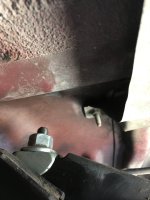
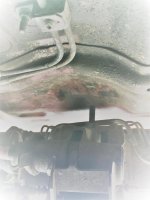
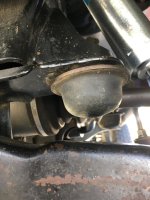
OK, I have been adjusting the torsion bars from completely no load ( on each) on the bars and the lower A arms are basically flat or level with ground. Torquing the adjuster bolts to obtain near exact gaps ( driver & passenger sides) between the front bump stop and the A arm. I do end up with different thread engagement at the adjuster. Is this acceptable? Which is more important the load at the A Arm or maintaining like thread engagement at the adjuster?? Why such a difference to obtain the same gap at the A Arms?

New A Arm bushings, torsion bar adjuster hardware basically the front end components are in really good condition. I had the torsion bars out last year, could they be installed on the wrong sides. Is that possible? Thanks for your advice....
 

Attachments

  • front bump stop & Lower A Arm.jpg
    front bump stop & Lower A Arm.jpg
    129.8 KB · Views: 8,011
  • Driver side torsion bar adjuster.jpg
    Driver side torsion bar adjuster.jpg
    123.2 KB · Views: 5,096
  • passenger side torsion bar adjuster.jpg
    passenger side torsion bar adjuster.jpg
    125.9 KB · Views: 4,427
Register to hide this ad
You adjust them for a specific chassis ground clearance, measured from the ground to the center of the lower suspension arm front mounting bolt.
That value would be 11" with stock P225/75R15 tires at 26 psi. Per the FSM
 
I have a write up on this.

http://www.toyota-4runner.org/class...en-ifs-torsion-bars-factory-specs-via-sm.html

Long story short: Level surface. 13.5" is stock from top of a 15" wheel to fender lip, regardless of tire size. After adjustment jack rear axle off ground by the dead center of the diff, give it a little wobble. 3 points of contact will self level (if you are on a level surface) and take the rear springs out of the equation. You will have to do this a few times, as with every adjustment you need to roll the truck forward and backwards to allow the control arms to relax outward or pull inward (as vehicle rolls) to get true measurement.

This is the one and only fail proof way of doing this.

Once you have both sides at the same measurement, say, 13.5" then you will put the truck back on all fours, do a final roll forward and rear, and them compare the wheel to fender lip measurments again. If the front looks way off visually then there is a body issue, and then you can compare fender lip to ground measurements with fender lip to wheel and make adjustments to get the best of both worlds. Usually not needed though.
 
Last edited:

Members online

Forum statistics

Threads
278,312
Messages
3,554,089
Members
248,016
Latest member
Advally Service

Trending content

Back
Top