My 4th gen paint correction project

xxaarraa

New member
I was originally looking to get my truck painted.

Background: It's a 2008, Silver 4Runner with 103k miles and bodywork is in good shape rust and dents wise (no repairs to metal needed). But after much wheeling/offroading, towing bikes, overlanding and general "use as intended" in rough Boston winters, the pin stripes and scratches on the paint were starting to get to me.

20150425_094421.jpg


20150425_094326.jpg


20150425_094306.jpg


20150425_094247.jpg


20150425_094240.jpg


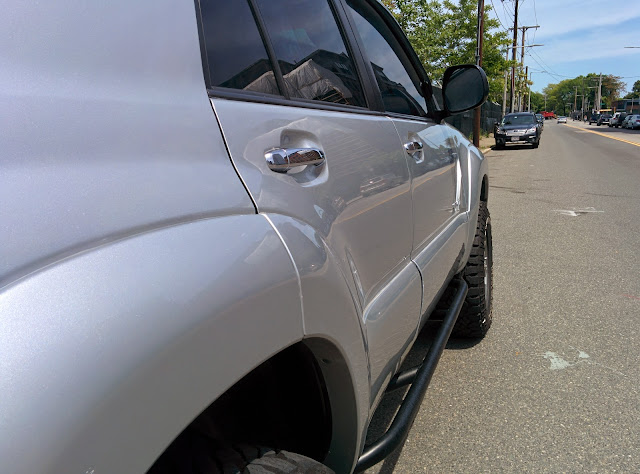
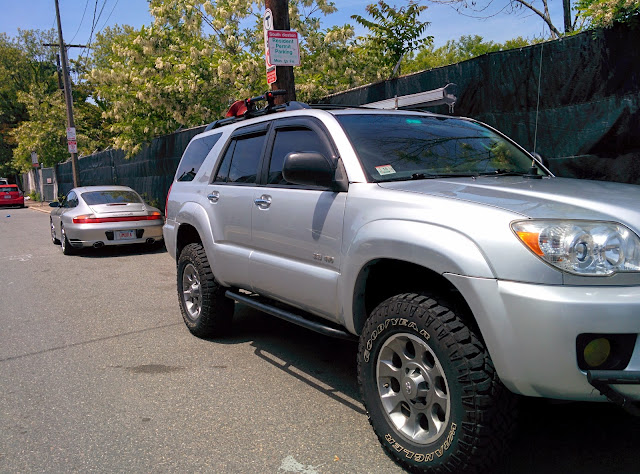
Here are pics of the car the last time I did a 3 stage last June - claybar, polish and wax. This shows the general condition - it only looks good for 3 days and scratches reappear.
IMG_20140601_132503.jpg

IMG_20140601_132512.jpg


BTW, this is usually what causes the heartburn every fall / winter:
DSCN2102.jpg

IMG_20140719_101246.jpg

Screen%2520Shot%25202014-11-30%2520at%252012.13.10%2520PM.png

IMG_2120.JPG
 
Register to hide this ad
Then a friend of mine suggested wet sanding first.

I bought a 4 stage kit that came with sand paper (3000 grit maybe?), sanding sponge, spot cleaner, scratch remover, glaze and sealant. I am sure I could have pieced it all together instead of paying for a "kit" but I wanted it all in one place to start with.

I am doing this door panel by door panel, and it's taking me about 2 hours per door. I have never done any wet sanding before, so I didn't have the courage to break out the orbital buffer. Doing this all by hand. Here are the steps I am following:

Clean
Claybar
Use the "spot cleaner" supplied in the kit
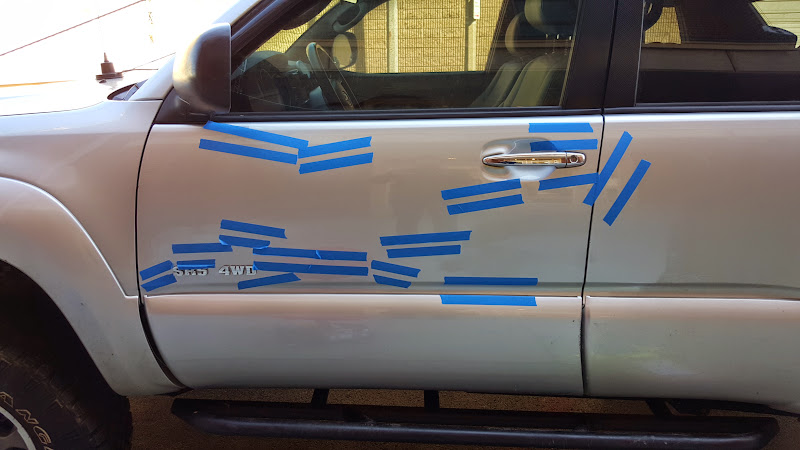
Mark off all the scratches with painter's tape
Wet sand with the supplied solution
Polish
Seal

Incidentally, the plastic rocker panels and fender flares seem to respond better to this method than the metal doors. I assume the factory paint on the rocker panels has a flex agent in it that makes it more responsive to scratch removal?


20150425_083305.jpg


20150425_095218.jpg


20150425_104611.jpg


20150426_160621.jpg
 
I finished one side and the results are great. I should say were great, I hit a major snag.

On one side, I was using the sanding block that came with the kit. It must be something like 2000+ grit. I went through both the strips they sent, so I picked up 1000 grit because someone suggested it above and started doing the other side.

Turns out 1000 grit is very coarse. The door panel will not take any polish.

20150504_173546.jpg


20150504_173540.jpg


So I bought 2000 grit, sanded over the areas where i used 1000 grit and redid the polish and glaze.

Results are better, but I still saw a lot of 'ghosting'

20150504_213149.jpg


I then did 2000, 3000, 4000 and 5000. And it's back on track!. Door looks great.

Done with this door and only sticking to 2000+ grit from now for the remaining doors.

Overall results so far (few more panels to complete):

20150509_171158.jpg


20150425_113552.jpg
 
Careful doing that, You'll sand right through all your clear coat over time. You may need to have a couple layers of clear put on. I'm no car paint expert though! Check with any good body shop, they should be able to tell you how far you can go, or a little research online too.
 
Careful doing that, You'll sand right through all your clear coat over time. You may need to have a couple layers of clear put on. I'm no car paint expert though! Check with any good body shop, they should be able to tell you how far you can go, or a little research online too.

hes fine sanding lightly. Its when you do it often or push deep you can really cause some damage.

OP, if your scratches came back after 3 or so days you used a product with a ton of filler. Much like ScratchX, itll just fill your scratches then when it wears off youll be back at square one.
 
OP, What do you mean "Mark off all the scratches with painter's tape"? You placed painter tape over the scratches?
 
OP, What do you mean "Mark off all the scratches with painter's tape"? You placed painter tape over the scratches?

No, mark the location of the scratches with painter's tape - above and below the scratches, to prevent sanding anywhere it's not necessary. But some of my door panels were so scratched that I just wet sanded almost the whole door.

To the earlier post, yeah, I am doing it lightly and taking my time. Results are great so far, and this has saved me the cost of a new paint job and saved the factory paint. So I am happy overall.
 
STOP

If the scratches are deep enough that you can catch a finger nail on them wet sanding may have been needed. However I have found that a quality compound and then a polish may get the job done. Always try the least aggressive method first. Are you using a dual action polisher and various foam pads? I have found Autogeekonline Auto Detailing Forum to be a valuable resource for knowledge and product. I would recommend you stop sanding until you educate yourself on paint correction. You can not undo what you have done already.For what it is worth the glaze in your "kit" is a scratch filler not a scratch remover. Use a dual action polisher not an orbital nor by hand. A general list of steps follows:
  1. wash
  2. clay
  3. compound
  4. polish
  5. Sealant/ wax

The compound and polish steps are when you eliminate scratches. How aggressive you are depends on the condition of the paint, the product you use, and your method. Or you can skip my writing and go to Autogeekonline Auto Detailing Forum for advice from some of the best in the detailing world.:thumb3:
 
Last edited:
I agree with PAPA on his recommendations and using Autogeek. I have been a customer for years and always get great detailing products and great tips from Mr. Phillips.
 
I agree, I think a good compound like Maguire's Ultimate Compound, along with a good polish and wax, would've taken care of the scratches without the need for wet sanding. Might want to go that route in the future as it's less abrasive than sanding.
 
STOP

If the scratches are deep enough that you can catch a finger nail on them wet sanding may have been needed. However I have found that a quality compound and then a polish may get the job done. Always try the least aggressive method first. Are you using a dual action polisher and various foam pads? I have found Autogeekonline Auto Detailing Forum to be a valuable resource for knowledge and product. I would recommend you stop sanding until you educate yourself on paint correction. You can not undo what you have done already.For what it is worth the glaze in your "kit" is a scratch filler not a scratch remover. Use a dual action polisher not an orbital nor by hand. A general list of steps follows:
  1. wash
  2. clay
  3. compound
  4. polish
  5. Sealant/ wax

The compound and polish steps are when you eliminate scratches. How aggressive you are depends on the condition of the paint, the product you use, and your method. Or you can skip my writing and go to Autogeekonline Auto Detailing Forum for advice from some of the best in the detailing world.:thumb3:

Always love when people post long replies without reading a word of what you say in the original post. Especially entertaining when they post their long reply with an "i'm an expert" tone.

While I appreciate you taking the time to put together what you think is a helpful post, I have tried all that. Twice. Including at a professional detailer.

The "compound" you speak of (I have it already) is really the liquid equivalent of a 6000 grit sand paper and typically only works on a brand new/newer car. On a 7 year old car that has accumulated scratches over its life in the north east, that method is a waste of time. I have tried it twice, including at a professional detailer. Yeah, I have a dual action polisher, yeah, I have foam pads.

I'm pretty happy with my results. Paint correction is a subjective decision - impossible to sit on a forum and tell someone if wet sanding is appropriate or a lighter method is what they need. In case someone else needed to go the wet sanding route, I posted my experiences to help them.

I don't remember asking anywhere in my OP for approval or validation.
 
Last edited:
I agree, I think a good compound like Maguire's Ultimate Compound, along with a good polish and wax, would've taken care of the scratches without the need for wet sanding. Might want to go that route in the future as it's less abrasive than sanding.

I have tried that twice. Waste of time really.
 
Keep calm, everything is cool man. I think people are tryimg to warn you about what could happen. Some people arent as aware as you seem to be. What you did is completely fine and also its inline with what pros do. But keep in mind that buffing a car also takes of clear coat, very very minimal though. So with the added wet sanding and buffing in the same spots overtime you could end up with having to paint a few panels. Factory clear coat is super thin. Ive painted and wet sanded and buffed cars for a living for 15yrs now.
 

Members online

No members online now.

Forum statistics

Threads
278,309
Messages
3,554,070
Members
248,016
Latest member
Advally Service

Trending content

Back
Top