a little 'googling' never hurts.
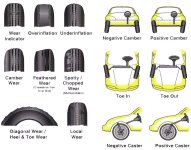
But in a nut shell...
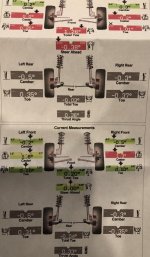
The camber and toe are usually tried to be set as 0 as possible. Sometimes, this can't always be the case for scenarios like a lifted/lowered suspension, aftermarket suspension components, etc.. Your numbers though aren't alarming.
The caster however, wont hurt anything being off the 0 mark. In fact, for lifted and larger tire applications it's common to see positive caster. This is because positive caster pushes the tire forward (towards the front of the vehicle), and in most cases there is typically more room for positive caster than 0 or negative (firewall, fender, etc). For example, my caster is set to about 2.5-2.75 on both sides. This gets my larger 35" tire away from the firewall and pinch-weld to allow me to not rub them when turning. Keep in mind that too much caster will push the tire into the front portion of the fender and also run greater risk of rubbing the frame towards the inner front. There's a sweet spot for everyone.