Thai
Elite Member
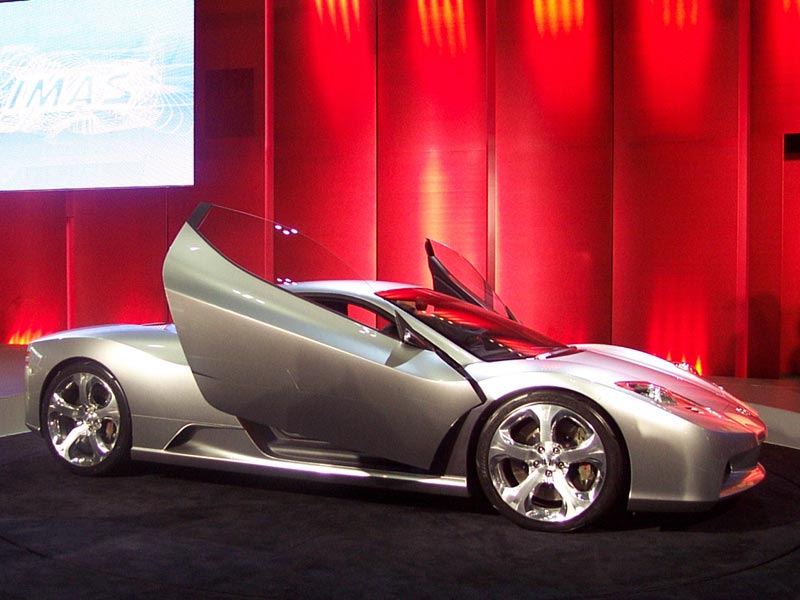
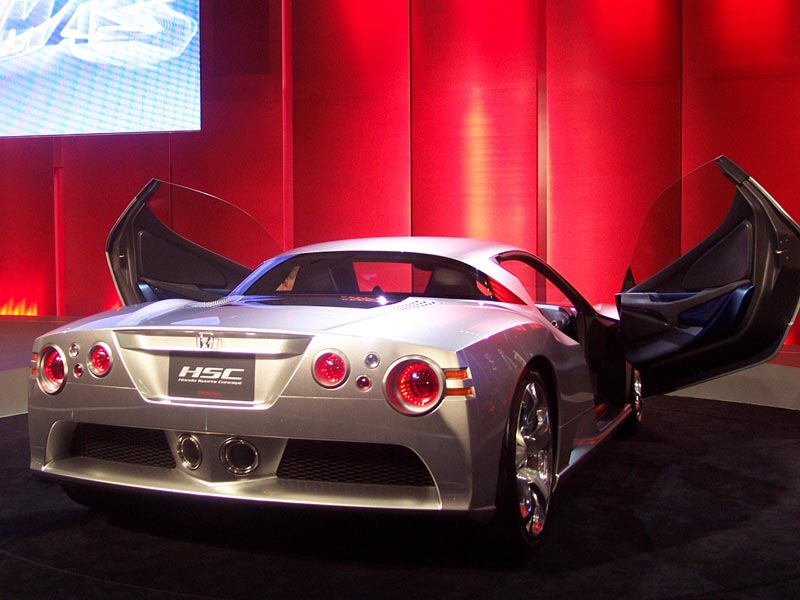
Honda's second-generation NSX is due out late in the 2005MY, equating to a 14 year lifecycle for the car. While the early plans called for a 4.0L VTEC V8, which was to be shared with the next generation RL, Honda's efficiency philosophy precluded the V8 from getting off the ground. The Honda DualNote concept car best exemplifies the powertrain philosophy for the next NSX. The next NSX will be powered by a 320+HP 3.5L DOHC VTEC V6 coupled to Honda's third generation Integrated Motor Assist (IMA) hybrid system. The flywheel-mounted starter/alternator/motor will provide additional power and torque (about 30 to 40 HP). It is unclear whether the engine will be mounted longitudinally or transversely, however the DualNote's engine was mounted longitudinally, so this is likely with the next NSX. Longitudinal mounting would also enhance dynamic performance by locating the bulk of the mass closer to the polar moment and potentially lower within the chassis. Front-mounted twin electric motors will generate about 60+ horsepower, making the next NSX an all-wheel-drive model. Overall, horsepower should total nearly 400. 0-60 times are targeted near 4.0 seconds.
The new car is also expected to feature more emotive and exotic styling to better challenge Ferrari and Porsche. In order to meet more stringent crash requirements and to yield fractionally better passenger space, dimensionally, the next NSX will be slightly longer (177 inches), riding on a slightly longer wheelbase (101 inches). Technological advances should limit weight increases, despite the increase in size. A key objective is to keep weight well under 3,000 pounds. While the aluminum body was to be abandoned in favor of steel, the next NSX is expected to retain an alloy structure, as Honda has reportedly been able to substantially reduce the production cost of aluminum. In addition, lightweight composites (mainly carbon fiber) are expected for the hood, fenders, roof, and likely the doors. Carbon fiber is also likely for some structural components as well. Honda's recent NSX-R exemplifies the significant weight reductions via carbon fiber hood, rear spoiler, and engine cover.
The retail price of the next NSX is likely to increase beyond $90,000. Considering the technological advances with the car and its performance potential, it would be a relative bargain.


Wow...that's a fine looking car!:thumb: :jaw drop:
The new car is also expected to feature more emotive and exotic styling to better challenge Ferrari and Porsche. In order to meet more stringent crash requirements and to yield fractionally better passenger space, dimensionally, the next NSX will be slightly longer (177 inches), riding on a slightly longer wheelbase (101 inches). Technological advances should limit weight increases, despite the increase in size. A key objective is to keep weight well under 3,000 pounds. While the aluminum body was to be abandoned in favor of steel, the next NSX is expected to retain an alloy structure, as Honda has reportedly been able to substantially reduce the production cost of aluminum. In addition, lightweight composites (mainly carbon fiber) are expected for the hood, fenders, roof, and likely the doors. Carbon fiber is also likely for some structural components as well. Honda's recent NSX-R exemplifies the significant weight reductions via carbon fiber hood, rear spoiler, and engine cover.
The retail price of the next NSX is likely to increase beyond $90,000. Considering the technological advances with the car and its performance potential, it would be a relative bargain.
Wow...that's a fine looking car!:thumb: :jaw drop: