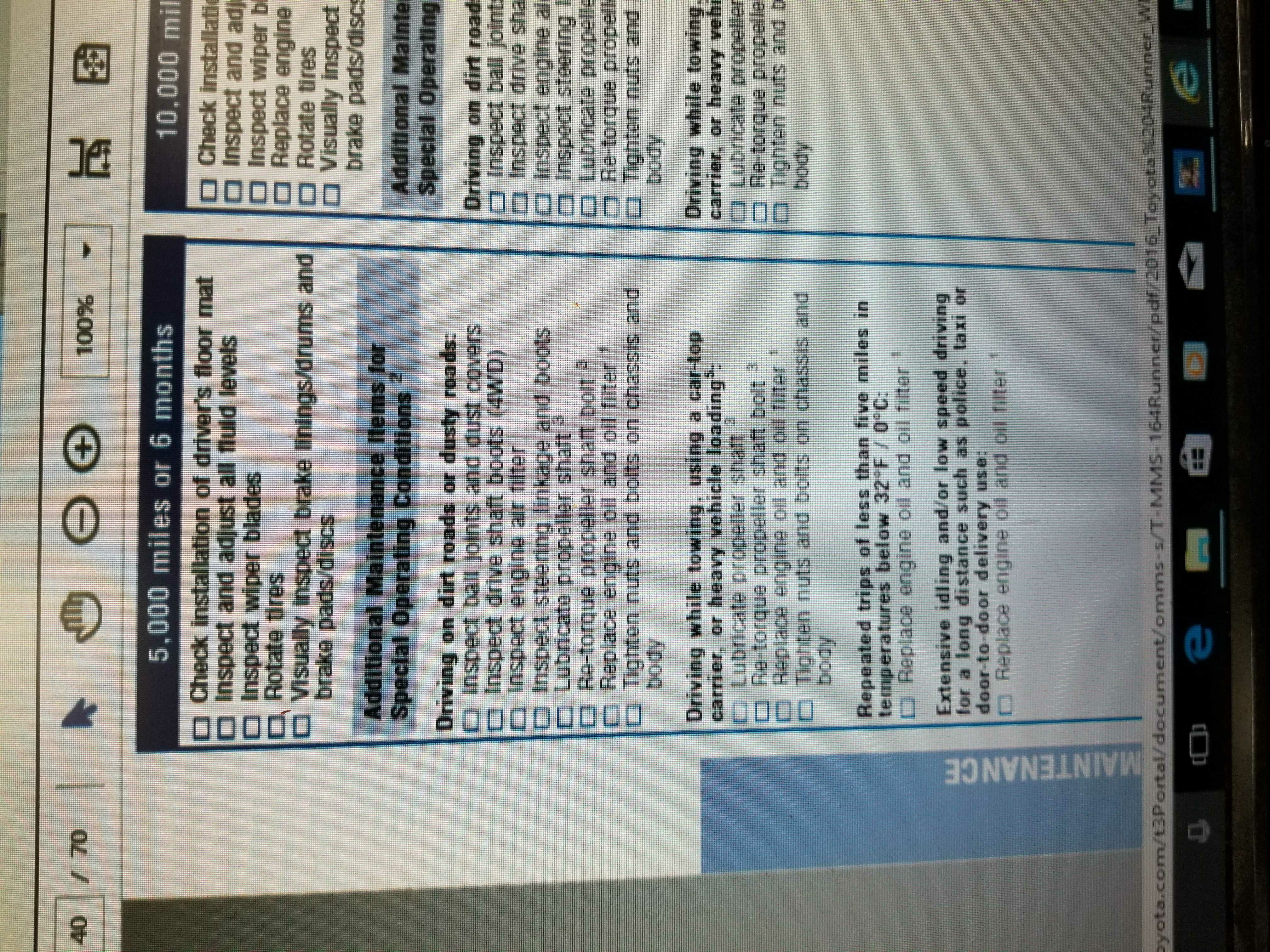
Oh dude that's totally valid and I seriously mean that. Lots of things get overlooked just like that. Again, not taking anything away from the 10K'ers, just sharing my opinion. A lot of folks don't actually know or quite understand what's going on under the hood or inside of an engine. I'm a semi-conspiracy theorists and I think planned obsolescence is a big part of the engineering.
Look at the wording of the Trans fluid, known as World Standard ran in our vehicles. They claim it to be "lifetime fluid" and there is no better word to describe EXACTLY the length of time it will last: the exact life of the transmission. They actually don't ever call for service if I'm not mistaken but I flush WS ATF every 50K. It's a low risk, low cost peace of mind.
And yeah LOTS of people only buy these cars since they retain resale value, indicating they have no plans to keep it long-long term. For them, do the longer interval. Why waste money on something you don't intend to keep. But for someone like me who will own this car until I'm dead, $60 every 6 months for peace of mind is a no brainer. I've seen first hand the destruction of these machines due to overlooking basic maintenance. I have ready access to all the oil and filters I want for cheap so why not.
It's kind of like, well the doctor said I only need to come in once a year for blood work so that's all I'm gonna do. Even tho my insurance will cover blood work twice a year... I'd be going twice a year in that instance as well.
Let me help you out some on the "conspiracy" of planned obsolescence, as again, I design things for a living that are a lot bigger and more expensive than a 4Runner. For example, one of our pumps that you can lift yourself and place in the back of your 4Runner costs more than the 4Runner lol. Anyway, ready for the truth?
Engineers and management of companies that produce products never design for obsolescence. Never. They also do not design for a predetermined life before failure. Never.
What they DO is design a product, based on cost and expected life the customer demands. It truly is that simple.
1. In the case of our Toyotas, the engineering group is told how much the vehicle is going to cost. That is based on lots of surveys and focus groups and competition pricing as to what the customer is willing to spend.
2. Next, the engineering group is told what the customer expects as far as expected life. Again, this is based on customer demands and past history.
So, the engineering group now knows how long this vehicle should last and how much the customer is willing to pay, based on people exactly like you and me, the customers. From there, all the gearing, braking, engine and maintenance is predicated on what the customer expects. There is no fat guy sitting in the corner smoking a cigar stating "I want you dumbass engineers to design it to fail at 100K miles so they will buy another vehicle!" No. The consumer has an expectation, the manufacturer does their best to meet that expectation. That's truly the way it works. All the bearing loads, gear wear, etc are based on a maintenance schedule that is published, and that will get you to their customer specified designed life. More frequent oil changes do not mean crap nowadays, because the filtration system has adequate dirt holding capacity and the oil is designed NOT to have its additive package break down in that time or duty cycle. The color of the oil means nothing nowadays. This is not 10W-40 from the 1970's. Your dad or granddad can't fix this engine under a cherry tree in the back yard with a couple of wrenches and some choke cleaner and a file.
Lastly, while I admire you math skills, engines are not rated in RPM's. They are rated in hours of use as far as maintenance is concerned. What will reduce the engine's life is extended use under high power demand (like pulling a 5K trailer daily) and really nothing, including more oil changes, is going to change that.
So run your engine at normal loads, change the oil and do maintenance on schedule and you will go hundreds of thousands of miles. Load that thing up racing it or pulling heavy trailers and your engine life will be reduced accordingly, no matter what you do. Hope this makes sense because it's the way it truly is.
Wanted to add I just did an oil change on a 16 SR5 at about 8,800 miles and the oil was still thin, but it was BLACK. Like black-black. Whereas the 5K oil in my personal one still had a twinge of golden-brown.
Of course this has zero chemical basis whatsoever, just first hand experience