Plastic Pollution

Register to hide this ad
I think most of it comes from ships dumping trash and non US countries dumping trash into the ocean.

Both are horrible and a major issue. But if you put trash in your can or recycling bin home, say in CO, it goes to a recycling plant or a landfill. It does not end up in the ocean.

So in summary, some other countries are horrible, so are many cruise liners. The US Navy also dumps at sea. It is 100% legal and a normal practice.
 
Last edited:
If you put trash in your can or recycling bin home, say in CO, it goes to a recycling plant or a landfill. It does not end up in the ocean.

So in summary, some other countries are horrible, so are many cruise liners. The US Navy also dumps at sea. It is 100% legal and a normal practice.

Recycling here wasn't really that common until maybe 10 years ago or so, and most folks my parents age still don't recycle at all. Our municipal landfill is pretty squared away, but we still have a pretty low population density, especially compared to the front range and other urban areas. Our town just banned plastic bags in grocery stores and made mandatory recycling at all condo complexes, but I think it really still comes down to reducing consumption and reusing items- Reduce, Reuse, Recycle, right?


So you're saying that all Navy ships just dump their garbage overboard and don't bring anything back? I knew that subs package and compact their waste and jettison to the bottom, but I figured the ships would bring everything back to port. That's pretty awful.
 
Ships cannot bring it all back to port. Every boat, ship in the world probably dumps in the ocean. The bags usually sink at first but after time the break apart and the trash floats up. It is completely legal.

What I was trying to get across is that this tragedy isn't caused by American families and all the crap they order. It is caused by dumping at sea and the poorer countries who dump straight into the ocean.
 
Ships cannot bring it all back to port. Every boat, ship in the world probably dumps in the ocean. The bags usually sink at first but after time the break apart and the trash floats up. It is completely legal.

What I was trying to get across is that this tragedy isn't caused by American families and all the crap they order. It is caused by dumping at sea and the poorer countries who dump straight into the ocean.

Its our throw away convenience based lifestyle, and the desire of people all around the world to live like us, that caused all this- not to mention that the US is still one of the largest contributors to pollution in the world, but I see your point.

What I was trying to say about my perspective on trash and recycling is- landfills aren't exactly high tech, first world luxuries. Doesn't the rest of the world know how to dig a pit in the ground, seal it, and dump in their trash? At a bare minimum? Even base mammals know not to crap where they eat. Are we collectively really that ignorant and disgusting? Unfortunately the answer seems to be yes.
 
You mention the rest of the world, but too many people in our country can't figure it out. I have a neighbor who puts shredded paper in their trash can and every Friday when the trash truck picks up their can half the paper goes in the truck and the other half flies all over the neighborhood like it's snowing paper. How much work would it be for them to put that shredded paper in a bag and tie it up before they put it in their can? They are either lazy or they just don't care. Probably both.
....Or have it recycled rather than throwing it out, lol.

I feel like the U.S. is still pretty behind when it comes to waste management. I notice very few public recycling bins for things like cans and bottles in various parts of the U.S. I'm not sure what home collection is like.

In my city, recyclables and compost are collected weekly with trash collection every 2 weeks. All bottles, cans, cartons, plastic bags, plastic containers, fruit containers etc can all be placed in one blue bag. All newspapers, paper, cardboard, any other non-wet paper items go in a separate blue bag. Trash items would be things like tinfoil, bottle caps, or anything non-recyclable. Even with food waste, we only have one bag of actual trash for every 2 weeks. We are a household of 3. It's actually very strict now. The city only allows 6 trash bags per 2 weeks (excludes recyclables) and they ALL must be clear bags except for 1 which can be black.

What's it like in your areas?
 
Last edited:
The trash in the oceans is not from your family, or the neighbors throw it away life style.

Trash from Utah is not ending up in the oceans. When you say "it is our throw away lifestyle" no it is not.

In the United States that trash goes to landfills and recycling plants, not the ocean.

BTW the US contributes to air pollution more than anyone else, not OCEAN pollution. I can see you have strong feelings about this. I care about the environment A LOT but it is important to put the blame where it belongs. Many other countries are doing a lot of damage to the oceans. Yes we can try to force them to be better but when you see someone walking out of the mall with a bunch of packaging, none of that is even remotely likely to end up in the ocean.
 
Last edited:
The US Navy also dumps at sea. It is 100% legal and a normal practice.

Things have changed. They've updated all the instructions. ZERO plastic goes overboard anymore (mistakes happen though, I'm sure). Paper gets incinerated. Food and scrap metal gets dunnaged.

So you're saying that all Navy ships just dump their garbage overboard and don't bring anything back? I knew that subs package and compact their waste and jettison to the bottom, but I figured the ships would bring everything back to port. That's pretty awful.


A vast majority of certain types of garbage goes overboard. A carrier has 5,000+ people. Where else are we going to put the trash? Plast though is melted down into pucks and stored until it can be offloaded. Roughly once a week if we resupply or until we pull into port.

Metal is chucked over. Food is thrown over. Paper is burned. Other hazardous materials are loaded into barrels and offloaded in the same manner as plastic.
 
The trash in the oceans is not from your family, or the neighbors throw it away life style.

Trash from Utah is not ending up in the oceans. When you say "it is our throw away lifestyle" no it is not.

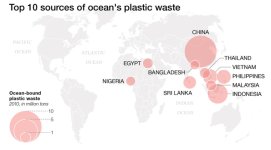
According to National Geographic, the US still makes the top 20 list of biggest ocean polluters primarily because of our dense coastal populations and the rate at which we consume products because of our wealth:
New Study Shows Plastic in Oceans Is on the Rise

Recycling sure makes us feel good, but most of our plastic goes to China for recycling, and guess who is the biggest ocean polluter? China.
Think your plastic is being recycled? Think again.


Everything is connected. To truly solve a problem like this, we have to start where the problem begins- in our own homes, and with the companies who produce the packaging for products we consume.
 
Last edited:
Those are good points.

I think we should recycle everything here, not send it to China.

The US is in 20th place. I wish it was more like 100th place but I'll take it.

:)
 

Attachments

  • 88605.ngsversion.1425756944699.adapt.470.3.jpg
    88605.ngsversion.1425756944699.adapt.470.3.jpg
    64.4 KB · Views: 106
Last edited:
[MENTION=91673]MtnT4R[/MENTION]

I think you might find interesting / like the documentary DamNation (2014). It is free on Amazon on Netflix. I thought it was an interesting look at a rarely talked about subject on America's rivers, streams, dams and how that affects the fresh fish population.
 
[MENTION=91673]MtnT4R[/MENTION]

I think you might find interesting / like the documentary DamNation (2014). It is free on Amazon on Netflix. I thought it was an interesting look at a rarely talked about subject on America's rivers, streams, dams and how that affects the fresh fish population.

DamNation is a really eye opening documentary, sure its a little politically slanted but I think it does an effective job of showing both sides to the issue. One thing it really does highlight is the general lack of knowledge about the true situation- most dams are outdated and inefficient, and the costs of tearing them down are far outweighed by the costs of maintaining a wasteful and harmful waterway management policy. Like you, the element that stuck with me the most is how the entire fish hatchery system is just one big band-aid to cover the fact that dams have killed most of the natural life in our rivers, and we have to produce fish clones by the millions to provide the illusion of a healthy river system. I think that might actually be the definition of insanity.

If you like to read I strongly recommend 'The Emerald Mile.'
http://www.amazon.com/Emerald-Mile-...8&qid=1441388815&sr=8-1&keywords=emerald+mile

While the book is technically about the record setting run through the Grand Canyon in a wooden dory, the vast majority of the text centers on the Colorado River and its history from the first Spanish explorers on through the present day. It takes a close look at how we have hugely impacted the entire Colorado River Basin through feats of engineering, and questions the costs and benefits of that system. Extremely well researched and put together.
 
Last edited:
Those are good points.

I think we should recycle everything here, not send it to China.

The US is in 20th place. I wish it was more like 100th place but I'll take it.

:)


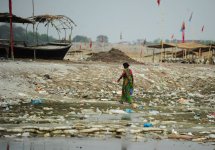
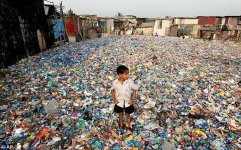
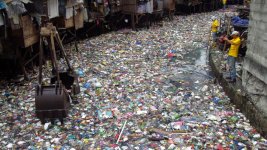
Agreed. If you travel the world you quickly realize that the majority of the pollution is coming from 3rd world countries and or industrialized countries without any controls... When you land back in the US you can almost smell the cleanliness. Its amazing how clean everything is here. The best is walking out into a crisp fall day raking the leaves after being in a 3rd world country. It cleans out your sinuses and helps rid the lingering stink. I would sometimes carry a small lime in my pocket to crush with my fingers and rub the lime skin oil under my nose to help mitigate the stench. Works pretty well. Here are some pictures of the pristine waterways in other countries. Our recycling cans are not the problem. 3rd world countries use just as much if not more plastics. Plastic helps preserve goods in harsh environments and its cheap.
 

Attachments

  • ShowImage.ashx.jpg
    ShowImage.ashx.jpg
    89.9 KB · Views: 109
  • article-2727285-209982F500000578-128_638x399.jpg
    article-2727285-209982F500000578-128_638x399.jpg
    101.2 KB · Views: 90
  • DSC02641.jpg
    DSC02641.jpg
    154.4 KB · Views: 101
God that's just terrifying Ben.
Houston was bad about recycling, in fact where I lived with my family (Cypress, specifically) they instituted curbside recycling pickup but at a cost. Very few people paid to get the blue bins. We sorted our recyclables and took it to a center to keep it out of the landfills. Nevertheless it bothered me that they all plastic went into the same bin (types 1-7) and all glass went into one bin (brown, green, clear). But we did what we could for where we lived. Here in South Florida its a little more evolved but we can only hope that everything gets sorted somewhere because it all goes in the same bin at the house.
 
That book is on Audible so I'll check it out. I do plenty of reading but between work emails, technical documents, PDFs, Specifications and articles online for the news, I don't have much energy left for actual books. So I end up listening to Audible whenever I workout or drive.
 
Last edited:

Members online

Forum statistics

Threads
278,304
Messages
3,554,041
Members
248,016
Latest member
Advally Service

Trending content

Back
Top