Radiator Won't Drain

biglar

New member
I installed a new radiator in my '02 T4R 3.4 4WD a few days ago and, of course, drained it to do the job. When it was ready to go, I put in a bit less than 2 gallons of distilled water to clear the system and check for leaks.

I didn't want to drive it long like that - I "think" the water pump needs the lubricants in the coolant, so yesterday I drove it till it was fully warmed up, then very carefully cracked the radiator cap, then removed it. Instead of using the little petcock on the bottom to drain it, I moved the spring clamp away, then used a long rod to push the lower radiator hose off the fitting.

The water, of course, gushed out and it was empty in a few seconds, but I'm wary of putting cold coolant into a hot engine, so walked away for 1/2 hour to let the engine cool off.

Connected everything back up and started to add 50/50 coolant and it was completely full at just a bit less than 1 gallon. Puzzled, I drove it, then ran the front up on a bank, then turned around and backed up onto the bank to try and get rid of any air pockets, then checked the coolant again. Still full.

Sooo....right now, it looks like I'm running 25% distilled water, 25% coolant, 50% tap water with a bit of old coolant mixed in. I'm not happy with that. How can such a thing be ?? How do I get the old coolant out ?? I don't like to waste the new coolant I put in, but do have plenty to re-do it properly - but I want to be sure it really is done properly. Help.
 
Register to hide this ad
I installed a new radiator in my '02 T4R 3.4 4WD a few days ago and, of course, drained it to do the job. When it was ready to go, I put in a bit less than 2 gallons of distilled water to clear the system and check for leaks.

I didn't want to drive it long like that - I "think" the water pump needs the lubricants in the coolant, so yesterday I drove it till it was fully warmed up, then very carefully cracked the radiator cap, then removed it. Instead of using the little petcock on the bottom to drain it, I moved the spring clamp away, then used a long rod to push the lower radiator hose off the fitting.

The water, of course, gushed out and it was empty in a few seconds, but I'm wary of putting cold coolant into a hot engine, so walked away for 1/2 hour to let the engine cool off.

Connected everything back up and started to add 50/50 coolant and it was completely full at just a bit less than 1 gallon. Puzzled, I drove it, then ran the front up on a bank, then turned around and backed up onto the bank to try and get rid of any air pockets, then checked the coolant again. Still full.

Sooo....right now, it looks like I'm running 25% distilled water, 25% coolant, 50% tap water with a bit of old coolant mixed in. I'm not happy with that. How can such a thing be ?? How do I get the old coolant out ?? I don't like to waste the new coolant I put in, but do have plenty to re-do it properly - but I want to be sure it really is done properly. Help.

Turning the heater on fullblast while filling will burp out more air and fill those air cavities with more antifreeze. When the engine is cold the coolant won't flow through the motor. once engine reaches operating temps the thermostat opens let's the coolant flow. So when you drove it was the motor at operating temp if not your engine is half empty.
 
I installed a new radiator in my '02 T4R 3.4 4WD a few days ago and, of course, drained it to do the job. When it was ready to go, I put in a bit less than 2 gallons of distilled water to clear the system and check for leaks.

I didn't want to drive it long like that - I "think" the water pump needs the lubricants in the coolant, so yesterday I drove it till it was fully warmed up, then very carefully cracked the radiator cap, then removed it. Instead of using the little petcock on the bottom to drain it, I moved the spring clamp away, then used a long rod to push the lower radiator hose off the fitting.

The water, of course, gushed out and it was empty in a few seconds, but I'm wary of putting cold coolant into a hot engine, so walked away for 1/2 hour to let the engine cool off.

Connected everything back up and started to add 50/50 coolant and it was completely full at just a bit less than 1 gallon. Puzzled, I drove it, then ran the front up on a bank, then turned around and backed up onto the bank to try and get rid of any air pockets, then checked the coolant again. Still full.

Sooo....right now, it looks like I'm running 25% distilled water, 25% coolant, 50% tap water with a bit of old coolant mixed in. I'm not happy with that. How can such a thing be ?? How do I get the old coolant out ?? I don't like to waste the new coolant I put in, but do have plenty to re-do it properly - but I want to be sure it really is done properly. Help.


Sounds about right 2 gallon for the entire system.. Your engine thermostat would close when the coolant is cold. The radiator i would say is close to a gallon. So if you want the entire system drained. Take off the radiator cap empty the rad first then pull the 3 bolts on your themostat cover and pop the thermostat out... BE SURE PUT THE THERMOSTAT JIGGLER back in the correct location if you remove the thermostat to drain the engine of coolent.

Keep in mind that the heater core would have a a cup or so in it as well so when you have it back together makes sure to run the heaters.

Yes its always best to run antifreeze and if you are in the colder climates you may want to make sure you get all that water out of there as you don't want it to freeze. :-)
 
Thing is, I did it the same both times. Bring the engine up to operating temp to get the thermostat open, then drain the coolant. I do have front and rear heaters on full blast - thought I mentioned that. I drove it all over town and out onto the highway today, running errands and it's still full. Temp gauge sits solidly on mid-point of gauge while driving.

As I said, I'd prefer not to waste the 1/2 gal of coolant in there now, but I do have enuf 50/50 to completely refill it and will sacrifice the coolant in there now to do it right. It would really burn me to drain and fill it again and have the same problem.
 
Thing is, I did it the same both times. Bring the engine up to operating temp to get the thermostat open, then drain the coolant. I do have front and rear heaters on full blast - thought I mentioned that. I drove it all over town and out onto the highway today, running errands and it's still full. Temp gauge sits solidly on mid-point of gauge while driving.

As I said, I'd prefer not to waste the 1/2 gal of coolant in there now, but I do have enuf 50/50 to completely refill it and will sacrifice the coolant in there now to do it right. It would really burn me to drain and fill it again and have the same problem.

Your drain procedure was right on so not sure why more didn't drain out.
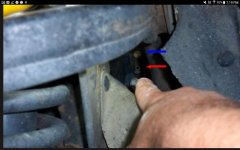
25% distilled and 50% is eztremely diluted coolant. If it gets below freezing water might freeze in the coolant channels and crack em. Also tap water has minerals etc and will cause corrosion. If you don't want to drain then add more concentrate to get close to the right consistancy There is a drain valve on the passenger side but only a small amount or so is drained through that.
 

Attachments

  • Screenshot_2020-10-07-19-19-59.jpg
    Screenshot_2020-10-07-19-19-59.jpg
    71.3 KB · Views: 518
To get the max out of the system you drain the rad, pull the thermostat, then undo the engine block drain. That’s about as good as it gets.

I’d be wary of draining the fluid from a hot engine. I see no value in this. Slightly warm is just as good.
 
I drained it hot to be sure the t'stat was open.

Is there any advantage to draining it with car pointing uphill or downhill ?? I do seriously want to get that tap water out of there and get freezing protection to where it belongs. Winter is coming and we do get freezing weather here.
 
I'm gonna be doing the radiator replacement soon-ish myself.

Is this exact procedure vitally important? Do I need to "bleed" the radiator, or just run the heater while filling?
 
I'm gonna be doing the radiator replacement soon-ish myself.

Is this exact procedure vitally important? Do I need to "bleed" the radiator, or just run the heater while filling?
Leave the radiator cap off for a little while the air should bleed out. Then shutdown engine and let engine cool put your cap back on and make sure your overflow is full at the proper level. Run till hot. Let completely cool down then verify your radiator is full.


Never ever open a radiator cap when the engine is warm or hot

Sent from my SM-J337V using Tapatalk
 
I drained it hot to be sure the t'stat was open.

Is there any advantage to draining it with car pointing uphill or downhill ?? I do seriously want to get that tap water out of there and get freezing protection to where it belongs. Winter is coming and we do get freezing weather here.

The thermostat will close as soon as it's exposed to much cooler air. You have to pull it to drain the block. It's a wax activated spring that'll shut pretty fast after the engine turns off.

The vehicle drains best on level ground. If it's tilted the coolant will pool up in the passageways and hoses and not drain.

Also, you'll have a larger coolant capacity if you have the rear heaters so be sure to open that valve as well when you go to drain it again.
 
Maybe this is too simple, but I forgot to remove my cap while draining last time. Half a gallon drained out and then nothing. Then I realized the cap was still on. Opened it and the rest vomited out.
 
The last time I changed my coolant, I let the little petcock on the radiator drain for a very long time...like over an hour. A little teeny stream of coolant continued to come out for that entire time.
When I then went to refill, it refilled with the same amount that it took when I had pulled the thermostat several years before---about a quart shy of full capacity. Maybe it's draining out--albeit slowly--through the jiggle valve?
 
For an update: A few days later, I returned from a 12 mile drive and this time, going by you guys' comments, I put a bucket under the petcock and very carefully opened it....to avoid getting burned. It's awkward.

As before, it drained 1 gallon very quickly, then, as mentioned above, it kept drizzling out a weak pee stream, so I walked away and left it dribble for a couple of hours. When I came back, the bucket was full - almost 2 gallons, so I went ahead and re-filled it with the correct amount of 50/50 coolant.

Job done, no leaks, car runs like a watch.....thank you all.
 
Sorry to bring this thread back from the dead, but my question seemed to jibe with many of the comments in this thread.

Draining the radiator right now on a stone cold engine. It has sat 12+ hours. I've watched all the videos, know the procedure by heart...

I have my container ready and opened the valve on the passenger side and barely anything came out. I'd call it a drizzle at best. I knew there were some risks in opening her all the way, but the suspense was killing me, so I decided to risk it, since I had cardboard underneath and a "tall boy" container to limit the mess. :D

When I opened her up all the way, to the point I actually removed it, there was an instant gush, which I captured without a mess, then a small stream. 40 minutes later, I am back to a drizzle with only five (5) quarts out, per the marks on the receiving container.

I see about that some people have left it up to an hour. Is this normal?

I do have the radiator cap totally off so air can move around as it needs to and the garage floor is pretty damn level. Not sure it's perfectly level, but it's close.

I know the videos everyone posts are edited for time/content, but man, seems like a quart every eight minutes with the valve totally out is pretty pokey. Am I just being an inpatient radiator drainor?

p.s. Looking inside the radiator cap area, the internals look brand spanking new. Shiny as heck. I know the radiator was replaced about 40K miles ago. Fluid looks orangey color and not so bad. Just draining to prepare for a cross country trip in a couple of weeks.
 
Just prepare to get dirty a little and undo the lower radiator hose once it's not fast enough by the drain plug. You'll drain more and it'll go faster
 
Just prepare to get dirty a little and undo the lower radiator hose once it's not fast enough by the drain plug. You'll drain more and it'll go faster

I am in the process of the first "rinse" with distilled water. Luckily I'm already dirty. :D

This time the draining is going a lot faster than the first. No idea why, but I'm not complaining. ChrisFix said start it up and give it some gas to have the water pump help vacate the fluids. Not sure I want to do that, but hey, it might make a good story. (and a fine mess...)

Still better than spending $192 at the dealer!
 
I am in the process of the first "rinse" with distilled water. Luckily I'm already dirty. :D

This time the draining is going a lot faster than the first. No idea why, but I'm not complaining. ChrisFix said start it up and give it some gas to have the water pump help vacate the fluids. Not sure I want to do that, but hey, it might make a good story. (and a fine mess...)

Still better than spending $192 at the dealer!

careful with ''rinsing'', as you won't ever get all the water out after the fact. So, calculating your coolant concentration is impossible because you don't know how much water dilluted with coolant is left in there. Just keep that in mind.

You could use Antifreeze Refractometer for Glycol, Antifreeze, Coolant and Battery Acid. Antifreeze Tester for Measuring Freezing Point of Automobile Antifreeze and Battery Fluid Condition. : Amazon.ca: Industrial & Scientific

Never used any of these as I just flush with premix and never have to worry about mixing thereafter.
 
careful with ''rinsing'', as you won't ever get all the water out after the fact. So, calculating your coolant concentration is impossible because you don't know how much water dilluted with coolant is left in there. Just keep that in mind.

Yeah, this made things exciting. :D

My owner's manual says the capacity for my 2002 (sans rear heater) is 8.5 quarts. I got 8 out during the drain (both the initial coolant drain and the "rinse") so I calculated .5 quart of some fluid left in there that was anywhere from .5 quart of 100% distilled water to some diluted version of distilled water @ .5 quart. I'm assuming it was more water than coolant at that point. I did some guesstimating in Excel and figured I was probably in a ratio range between 52:48 to 48:52, distilled water to Toyota Red.
 
Your numbers (8 qts out vs. 8.5 capacity) roughly jive with my experience. I got most of it out though only the drain petcock. The key is to let it drain for a full hour or more, until the little dribble really stops. I think having the jiggle valve at 6 o'clock may be the key to why so much comes out with just a passive drain job.
 
Sorry to bring this thread back from the dead, but my question seemed to jibe with many of the comments in this thread.

Draining the radiator right now on a stone cold engine. It has sat 12+ hours. I've watched all the videos, know the procedure by heart...

I have my container ready and opened the valve on the passenger side and barely anything came out. I'd call it a drizzle at best. I knew there were some risks in opening her all the way, but the suspense was killing me, so I decided to risk it, since I had cardboard underneath and a "tall boy" container to limit the mess. :D

When I opened her up all the way, to the point I actually removed it, there was an instant gush, which I captured without a mess, then a small stream. 40 minutes later, I am back to a drizzle with only five (5) quarts out, per the marks on the receiving container.

I see about that some people have left it up to an hour. Is this normal?

I do have the radiator cap totally off so air can move around as it needs to and the garage floor is pretty damn level. Not sure it's perfectly level, but it's close.

I know the videos everyone posts are edited for time/content, but man, seems like a quart every eight minutes with the valve totally out is pretty pokey. Am I just being an inpatient radiator drainor?

p.s. Looking inside the radiator cap area, the internals look brand spanking new. Shiny as heck. I know the radiator was replaced about 40K miles ago. Fluid looks orangey color and not so bad. Just draining to prepare for a cross country trip in a couple of weeks.

Once the radiator is drained, it can take a long time for the coolant to drain from the block. The only way out is a small jiggle valve on the thermostat that I normally would let drain overnight if I haven't torn down to the thermostat. If you are trying to flush the entire system, you'll need to remove the thermostat. Or find the mythical engine block drain bolts. Seriously, I've had engines on the stand and I still can't find those things after it's been caked in 25 years of road grime.

It is hard to get all the coolant out. It's not only in the engine block but also the heater core inside the vehicle and if you have the rear heater, another half quart or so in the lines and the rear heater that's under the passenger's side seat.
 
Last edited:

Members online

Forum statistics

Threads
278,308
Messages
3,554,059
Members
248,016
Latest member
Advally Service

Trending content

Back
Top