
Rear Pinion Nut Torque.

Toy2play

New member
So I started out with a leaky pinion seal on my 97 4runner rear axle. Perhaps I should have researched before diving into this job. I had my gears replaced last year and I told them to install a solid spacer. It appears the pinion seal was the issue. It looks in bad shape. No clogged breather, I've done the mod.

So I've replaced the pinion seal and now I need to re-install the new pinion nut. I've been reading that there is a certain amount of preload that needs to be on the pinion nut? I've heard this is the case because of the crushed spacer in rear axle. Since the shop installed the solid spacer, what do I need to torque the pinion nut to? Any special techniques to torquing it down properly and since I didnt make a note of where the nut was installed before taking it off, have I screwed myself in anyway? Any help would greatly be appreciated.
 
Register to hide this ad
So In response to my post above, did you install the spacers that you would be required to have since you don't h ave a solid "crush" sleeve and going to the "crush" sleeve?

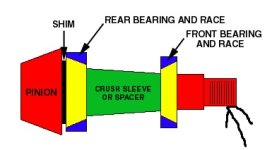
And just to clarify we are talking about this nut here, right??
gear_layout.jpg
 

Attachments

  • gear_layout.jpg
    gear_layout.jpg
    33.5 KB · Views: 13,577
So I started out with a leaky pinion seal on my 97 4runner rear axle. Perhaps I should have researched before diving into this job. I had my gears replaced last year and I told them to install a solid spacer. It appears the pinion seal was the issue. It looks in bad shape. No clogged breather, I've done the mod.

So I've replaced the pinion seal and now I need to re-install the new pinion nut. I've been reading that there is a certain amount of preload that needs to be on the pinion nut? I've heard this is the case because of the crushed spacer in rear axle. Since the shop installed the solid spacer, what do I need to torque the pinion nut to? Any special techniques to torquing it down properly and since I didnt make a note of where the nut was installed before taking it off, have I screwed myself in anyway? Any help would greatly be appreciated.


all have to/had to do is mark where the pinion nut was on before and re tighten it back to the same spot. I just did this, i had to replace my pinion seal to after doing my bearings. the aftermarket seal was shit. But all i did was use a punch to mark the pinion nut, took it of and tighten back to same spot
 
So In response to my post above, did you install the spacers that you would be required to have since you don't h ave a solid "crush" sleeve and going to the "crush" sleeve?

And just to clarify we are talking about this nut here, right??
View attachment 246620

Yes that is the nut I'm referring to. The one that holds the flange on. The shop installed a master rebuild kit when they changed out the gears last year. I told them to replace the crush sleeve with a solid spacer. Unfortunately I did not research before hand and I've already taken the nut off and replaced the leaky seal.
 
all have to/had to do is mark where the pinion nut was on before and re tighten it back to the same spot. I just did this, i had to replace my pinion seal to after doing my bearings. the aftermarket seal was shit. But all i did was use a punch to mark the pinion nut, took it of and tighten back to same spot

When they did install the nut last time, they punched the nut into part of the threads on the pinion. I'm wondering if i can use that nick in the thread to line up the nut?
 
When they did install the nut last time, they punched the nut into part of the threads on the pinion. I'm wondering if i can use that nick in the thread to line up the nut?

That's exactly how I did mine. And that's exactly how everyone does it. I don't see why you wouldn't be able to use it. The nut is torqued to same specs before the punch and after the punch. You could do another punch if you want. Use OEM seal. It's like $12. Put little silicone
 
That's exactly how I did mine. And that's exactly how everyone does it. I don't see why you wouldn't be able to use it. The nut is torqued to same specs before the punch and after the punch. You could do another punch if you want. Use OEM seal. It's like $12. Put little silicone

Alright, and yes I did use an OEM seal and used a little bit of silicone around the seal and diff wall. Did you use the same nut or did you buy a new one?
 
Along with the crush sleeve, the pinion nut sets the bearing preload. The crush sleeve is designed to collapse as you tighten the nut while checking preload, until the proper preload is reached. Then you stop, stake the nut, and you're done.

With a solid spacer, the rebuild shop should have either machined the spacer to just the right length, or added shims to get the bearing preload correct. In either case, once that is done, there isn't much effect on the preload vs. pinion nut torque, since the spacer will not compress. I would just tighten the nut good and tight (somewhere around 150-175 ft. lbs*), stake it, and call it good.

*When using a crush sleeve, the FSM calls for starting at 145 ft-lbs, and creeping up on the preload. Maximum torque is 253 ft-lbs. Thus the range I suggested.

If you have an inch-lb torque wrench, you can check the preload when you're done. The spec is 4.5-7 in-lbs when the pinion is moving in the backlash space and not turning the ring gear.
 
Along with the crush sleeve, the pinion nut sets the bearing preload. The crush sleeve is designed to collapse as you tighten the nut while checking preload, until the proper preload is reached. Then you stop, stake the nut, and you're done.

With a solid spacer, the rebuild shop should have either machined the spacer to just the right length, or added shims to get the bearing preload correct. In either case, once that is done, there isn't much effect on the preload vs. pinion nut torque, since the spacer will not compress. I would just tighten the nut good and tight (somewhere around 150-175 ft. lbs*), stake it, and call it good.

*When using a crush sleeve, the FSM calls for starting at 145 ft-lbs, and creeping up on the preload. Maximum torque is 253 ft-lbs. Thus the range I suggested.

If you have an inch-lb torque wrench, you can check the preload when you're done. The spec is 4.5-7 in-lbs when the pinion is moving in the backlash space and not turning the ring gear.

Awesome, thank you guys. I do have an in-lbs torch wrench. For a minute there I thought I royally messed up.
 
I didn't mis-read and see that you are using your old seal? You really should use a new seal for the rear, just my 2 cents. But [MENTION=134884]RonJR[/MENTION] has it right. Be patient and take your time.
 
I didn't mis-read and see that you are using your old seal? You really should use a new seal for the rear, just my 2 cents. But [MENTION=134884]RonJR[/MENTION] has it right. Be patient and take your time.

Oh no i didnt reuse my seal. I replaced with a brand new oem seal. I was referring to the nut. I read somewhere that you should replace the pinion nut. Problem is the dealer didnt have one in stock and i have to wait until friday. Not a big deal. I just didnt know if it was absolutely necessary to replace the nut. I could of misread the nut needeing to be replaced, thats why i asked you.
 
Last edited:
Oh no i didnt reuse my seal. I replaced with a brand new oem seal. I was referring to the nut. I read somewhere that you should replace the pinion nut. Problem is the dealer didnt have one in stock and i have to wait until friday. Not a big deal. I just didnt know if it was absolutely necessary to replace the nut. I could of misread the nut needeing to be replaced, thats why i asked you.

Hmm, i haven't heard that till it reaches to many notches on the top :)
 
The torque on the pinion nut is not nominal and to properly torque it down you need to keep the pinion yoke from turning. On a 10-bolt GM corporate the pinion nut calls for about 240 foot pounds. I am not sure what the Toyota factory torque setting is. This is totally contingent upon the design of the unit.

The preload and crush sleeve serve to set the engagement of the pinion gear into the ring gear, so if you change anything you really should pattern the gears and use a fresh crush sleeve to make sure you are getting optimal gear engagement, or you will wear out your gears quickly, and often loudly.

I'm sure there is a local rear end shop that can do this for you if you have any doubt.

EDIT: following link supplied by [MENTION=65505]Kotrin[/MENTION]
When a solid spacer is used, there is a specified fastener torque for the flange nut. According to a 1980 factory repair manual, this is 123 to 151 ft. lb.
 
Last edited:

Members online

Forum statistics

Threads
278,309
Messages
3,554,066
Members
248,016
Latest member
Advally Service

Trending content

Back
Top