UPDATE UPDATE UPDATE
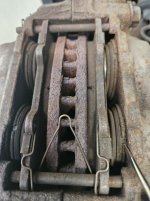
I went ahead and pulled the caliper and dis-assembled it. At first it didn't want to come apart but after compressing it and expanding it a few times it broke loose. There was a significant layer of corrosion on the piston at the seal/piston interface area which was quite obviously the culprit. The rest of the caliper was *BRAND NEW* as it's only a couple years old at this point. Glide pins were flawless.
IDK if the problem is crap mettalurgy, bad luck, or what.
In the interests of science I decided to try to fix it. I've never taken a caliper apart before and I did NOT read up on this subject so it's possible I have to redo the whole thing, but that's okay.
I basically retracted the piston with a clamp, then hit it with compressed air through the banjo bolt hole, and repeated that process a few times until it finally popped out. I found said corrosion on the piston and used 400 grit sandpaper and wd40 until the corrosion was completely gone and nothing caught my fingernail. Then to re-assemble, I stuck the seal into the hole, pressed the piston into the hole with my vice, and then once fully in I used a pick to pull the inner seal back out to where it belongs. Visually everything looked 100% and after buttoning it up and doing a test drive and checking with an IR thermometer, both axles are now showing proper temperatures on each corner.

Sounds like the brake fluid has failed. Completely purge the fluid with a quality fluid, not the valvoline crap at wally world. Replace the calipers with a different brand like napa reman units. The only way the calipers seize so quickly is water in the fluid. Slapping a new caliper on is only going to rust up again
From what I read that [MENTION=117138]Cezar[/MENTION] wrote the rust wasn't on the inside of the caliper bore where the brake fluid is in contact with the piston but instead where the piston and boot seal to the caliper, so the rust would be from water intrusion into the boot and not water contamination of the brake fluid.
If I were you I would add a rubber compatible brake grease under the rubber boot, the problem is that water is getting past the boot and causing the piston to rust, the grease will fill the space and not allow water intrusion into the boot and therefore no water getting to the piston.
Did you use OEM Toyota caliper rebuild parts from a Toyota dealership or aftermarket / parts store junk? Same question for the calipers themselves. Trust me, there is a big difference in quality between OE / OEM and aftermarket parts.UPDATE UPDATE UPDATE
I went ahead and pulled the caliper and dis-assembled it. At first it didn't want to come apart but after compressing it and expanding it a few times it broke loose. There was a significant layer of corrosion on the piston at the seal/piston interface area which was quite obviously the culprit. The rest of the caliper was *BRAND NEW* as it's only a couple years old at this point. Glide pins were flawless.
IDK if the problem is crap mettalurgy, bad luck, or what.
In the interests of science I decided to try to fix it. I've never taken a caliper apart before and I did NOT read up on this subject so it's possible I have to redo the whole thing, but that's okay.
I basically retracted the piston with a clamp, then hit it with compressed air through the banjo bolt hole, and repeated that process a few times until it finally popped out. I found said corrosion on the piston and used 400 grit sandpaper and wd40 until the corrosion was completely gone and nothing caught my fingernail. Then to re-assemble, I stuck the seal into the hole, pressed the piston into the hole with my vice, and then once fully in I used a pick to pull the inner seal back out to where it belongs. Visually everything looked 100% and after buttoning it up and doing a test drive and checking with an IR thermometer, both axles are now showing proper temperatures on each corner.
Did you change the hoses? They can collapse inside and turn into one way valves.
I wrote a reply over here that I believe is the real fix for this issue. What really happens is that water gets in between the dust seal/boot and the piston and sits in there. The tension of the "C" clip that secures the dust boot to the caliper needs to be tighter than they are. Plus when assembling there can be no gap or wrinkle in the dust boot where it contacts the caliper body. Just a wild guess here, but if you got your brakes reasonably hot on a regular basis (cooking out the water) it might help, or as suggested before, take your calipers off and inspection them on a more regular basis.
https://www.toyota-4runner.org/4th-...-gen-caliper-upgrade.html?highlight=stainless