Securing a Winch Hook

Are you like putting your straps in the washing machine? Mine current one is only a year old and has never seen mud. Just limited trail use as a rock strap when my tree strap is too short. It's never been attached as a tow strap.

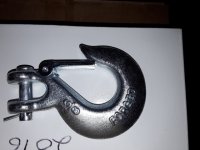
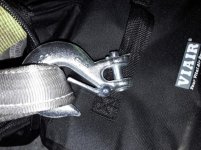
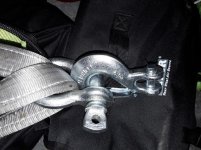
This is what a typical winch hook size is like. That's 3/4" bow shackle in there to boot. I kinda looks like maybe they accidentally put an ATV winch hook on there for you.
Mine has seen mud. I just wash it in a 5 gallon bucket when it gets dirty.

“Limited use” is a relative term. We can all tell who gets stuck more.

I kid, I kid. All in good fun.

In all seriousness, I believe my recovery strap is about twice as wide
 
Edit: Had to go back and look. It's 2" wide 20k lb recovery strap. What size is yours?

I think the difference is that my hook is a 1/2" and the one yours came with was a 3/8". There's a pretty big difference in size between the two.
 
Last edited:
Edit: Had to go back and look. It's 2" wide 20k lb recovery strap. What size is yours?

I think the difference is that my hook is a 1/2" and the one yours came with was a 3/8". There's a pretty big difference in size between the two.

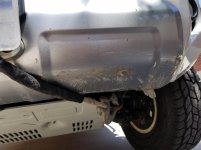
3” wide 30k lbs. It’s also a 3/8” hook. Bottom line was it wasn’t fitting, so I spent $70 on a thimble. Bonus was I didn’t have a winch line rubbing paint off of my bumper.
 
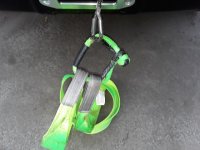
So you guys got me curious. I also have an Engo SR9 with the 3/8" hook which I never intended to use. It does seem a tad small. You could use a bow shackle but why add all that steel into the mix? I understand thimbles are all the rage but why not get rid of the projectiles all together and use a soft shackle?
 

Attachments

  • IMG_20180526_203338.jpg
    IMG_20180526_203338.jpg
    80.6 KB · Views: 657
  • IMG_20180526_203353.jpg
    IMG_20180526_203353.jpg
    71.1 KB · Views: 655
  • IMG_20180526_203410.jpg
    IMG_20180526_203410.jpg
    58.2 KB · Views: 670
  • IMG_20180526_203501.jpg
    IMG_20180526_203501.jpg
    94.3 KB · Views: 686
So you guys got me curious. I also have an Engo SR9 with the 3/8" hook which I never intended to use. It does seem a tad small. You could use a bow shackle but why add all that steel into the mix? I understand thimbles are all the rage but why not get rid of the projectiles all together and use a soft shackle?
How do you go about keeping tension on your winch line when not in use? The reason I ask is that if you have a number of wraps that weren’t wrapped and kept under tension, when you actually use the winch, the line can end up getting pulled between lower wraps on the drum.

Edit: I had a hidden winch mount on a stock bumper, so if there’s an alternative to a thimble solution, I didn’t come across one. I needed to keep tension on the line and not rub or distort my bumper.
 
How do you go about keeping tension on your winch line when not in use? The reason I ask is that if you have a number of wraps that weren’t wrapped and kept under tension, when you actually use the winch, the line can end up getting pulled between lower wraps on the drum.

Edit: I had a hidden winch mount on a stock bumper, so if there’s an alternative to a thimble solution, I didn’t come across one. I needed to keep tension on the line and not rub or distort my bumper.

This is the first I've heard of having to keep tension on the line at all times. I've watched how to videos and read articles on pretensioning the line, using it and maintaining it but none said tension had to be kept at all times. I did pretensioning the line by spooling it all out, hand feeding the first 5 wraps then attaching to a tree on an incline with the truck in neutral and reeling it in letting the weight of the truck tighten the line. I then hand fed the last few wraps. The line is evenly spaced and good and tight. I suppose over time if not used the line could loosen up but the winch should be used at intervals to keep it working just like using 4 wd regularly. I'll have to look into that.

Here's what I did. I did not completely remove the line, just pulled it out till I could see the end.

https://m.youtube.com/watch?v=8ipYpXJQmJA&index=2&list=LL9mgI5ztWJhsZCMFsszNGFw&t=0s
 
Last edited:
So I was curious... how are y'all leaving your winch hook...

Hook it to your factory tie down and put tension on it. Or snug it up to the fairlead. I use wire rope, not too worried about it getting cut. I use a flatlink and have a spare hook in the “trunk”.
 
Dyneema rope is pretty flexible, but it does have a limit where it's compromised by bending too tightly. 8:1 is the minimum bending radius for 100% strength. So a soft shackle through the eyelet of the winch rope significantly compromises the soft shackle and also is reasonably likely to cause the metal internal ferrule to collapse. It would probably work - but it's not a great solution. An Antal ring would help. Something like this:
ANTAL-RL3.0-LRG.jpg


You can learn a lot about fancy ropes from the sailing world - that's where most of it is used and most of the testing and information on it comes from. The reason is that it's far more important half way across an ocean in a storm that your rigging not break, and also weight is more important. So a lot more $ and testing is done to ensure strength while minimizing weight. Fortunately for use that provides a lot of useful information - mostly telling us that we're overthinking this. If you break dyneema rope - you can splice pretty easily in the field. I've never broken synthetic. I've broken wire rope a few times. It's a lot more of a PITA to deal with in the field. And more dangerous too.

As a side note the thimbles that use a pin to attach to a tube thimble on the rope seem really odd to me. Why add complexity and make it weaker? A proper thimble should have the rope go around the eyelet for a safety factor incase the aluminum fails. More parts = more problems. It should be a single block of aluminum. A better design looks like this:
images

Not like this:
images

I'm sure they're probably both adequate. But the multi component pin style ones just add more crap that you don't need for no reason.

The best solution strength wise is something like a tensionless hitch (like the drum side uses).

As far as hidden winches - I just run it around my bumper. But I don't much care about the bumper. It's already my second one. First one was replaced when it was hit by another car in the home depot parking lot. I already bought another new replacement bumper for when I'm ready to sell it that was an OEM takeoff and actually is a better match than the current Toyota oem replacement, so it's sitting in my garage ready to go. For ~ $100, I can't imagine a cheaper solution than just replacing the whole cover when I'm done.
 

Attachments

  • 20170817_180511 (1024x768).jpg
    20170817_180511 (1024x768).jpg
    111.8 KB · Views: 639
  • 20180526_150215 (1024x768).jpg
    20180526_150215 (1024x768).jpg
    76.1 KB · Views: 646
Last edited:
Chances are slim I’ll ever break a 3/8” wire rope, more than likely I’ll bend or tear the winch mount off first. I am not a wire rope purest (no expert by any means but I ran winchcats for the better part of a decade, with plenty of failures) they just require a lot less care than synthetic, far more abrasion resistant, and well cost next to nothing. I had replaced my old 1/4” wire rope once on my hilux after nearly 15 years and I had beat the living shat out of that, I did everything wrong with that rope, pinched it, drug it around corners with no snatchblock, drove over it, you name it, it lived on.

As far as splicing goes the worst you are going to do is half your length of rope. Just trim at the break and throw a three rope clips on the eyelet end or flip it and peg it to the drum switching ends for fresh rope.

Safety, I get it, the act of winching is inherently dangerous now matter what, simple things like rope dampening (btw even though the poster above was simply pulling a log off the trail no reason not to throw a coat/blanket/dampener over the line), minding where your standing, making sure your anchor isn’t a dead tree in soft soil, and on and on, we accept the risk. Rope failure can have a lot more consequence than simply a line breaking, ie rollover, rollback (over someone standing behind), pulling a tree over on yourself, gees the list goes on and on. There are so many things that can go wrong it’s impossible to list in anything but a book.

All of what you have posted it solid info.

This debate is eternal. All of this I am sure fits better in a thread of winch methods and procedure and not necessarily about where to attach static hook to the truck :madgrin:

 
Last edited:
I don't have anything against wire rope - other than a few bloody fingers. The primary benefit for me of synthetic was just the weight. On my trail rig I still run wire- and since it has 150' of cable - even if I cut it in half, I still have about as much as my 4runner. When it's ready I'll go to synthetic though. Mostly again for weight.
 
Dyneema rope is pretty flexible, but it does have a limit where it's compromised by bending too tightly. 8:1 is the minimum bending radius for 100% strength. So a soft shackle through the eyelet of the winch rope significantly compromises the soft shackle and also is reasonably likely to cause the metal internal ferrule to collapse.

As a side note the thimbles that use a pin to attach to a tube thimble on the rope seem really odd to me. Why add complexity and make it weaker? A proper thimble should have the rope go around the eyelet for a safety factor incase the aluminum fails. But the multi component pin style ones just add more crap that you don't need for no reason.

I've thought about the ferrule stresses with the soft shackle and will keep an eye on that but I would think the soft shackle would put less stress on it than a thimble pin?

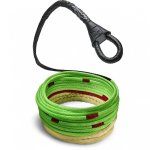
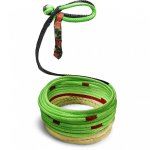
Anyway here are a couple of pricey alternatives. They do say they can repair them at the factory and for these prices they should.

https://www.bubbarope.com/winch-lines/80-foot-synthetic-winch-line

https://www.bubbarope.com/winch-lines/80-ft-pro-line-winch-line
 

Attachments

  • winch-line.jpg
    winch-line.jpg
    78.3 KB · Views: 354
  • gator-jaw-pro-line-winch-line_1.jpg
    gator-jaw-pro-line-winch-line_1.jpg
    72.5 KB · Views: 327
I've decided to go ahead and keep the steel cable coming with my Ramsey 9500, but I'm adding a Factor55 Flatlink. Flip up license plate over that. I'm adding the security bolt from Factor 55 as well. I may also rig something into flatlink that won't allow for easy access to remove the snap ring. Maybe a little solder and just pool it over the ring. I'll just use a torch to get it out later, should I need to remove it. Which I doubt I will do for many years. Hopefully. I figure sleeping with my truck and a gun isn't the best option. Worst case scenario.... I'll just run a padlock through the cable loop onto the recovery points on the front bumper and keep the factor 55 on the night stand.
 

Members online

Forum statistics

Threads
278,304
Messages
3,554,041
Members
248,016
Latest member
Advally Service

Trending content

Back
Top