

SCRunner12
New member
I'm creating this thread to consolidate a lot of the information that is floating around about the 3.4l superchargers. I will continually add to this thread as I find more info, but will start it off with [MENTION=44220]BigFishAllDay[/MENTION]'s amazing post that started in [MENTION=63060]rickashay[/MENTION]'s build thread. I have recently acquired a supercharger with no mounting hardware and will update the thread to include where I found some of the harder items on this list.
Please feel free to post up links/info you feel are important and I will add them the original post.
I borrowed these photo's from [MENTION=68348]brian_d[/MENTION]'s thread. They are a good example of pretty much all the parts you need and especially the harder to find ones.
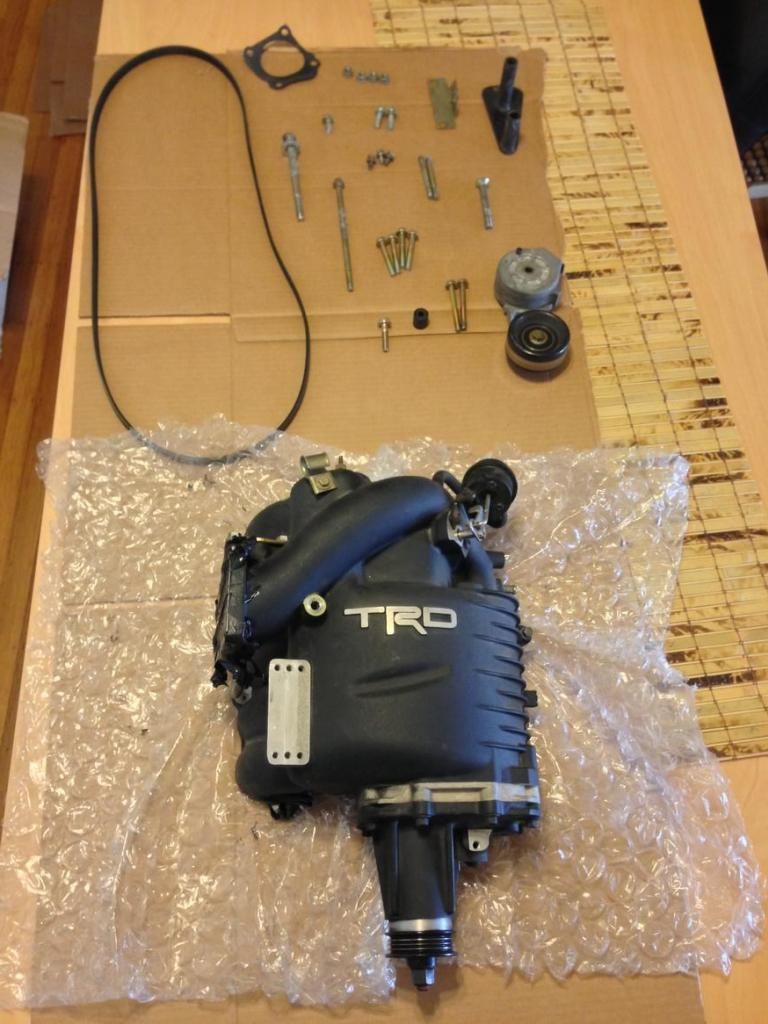
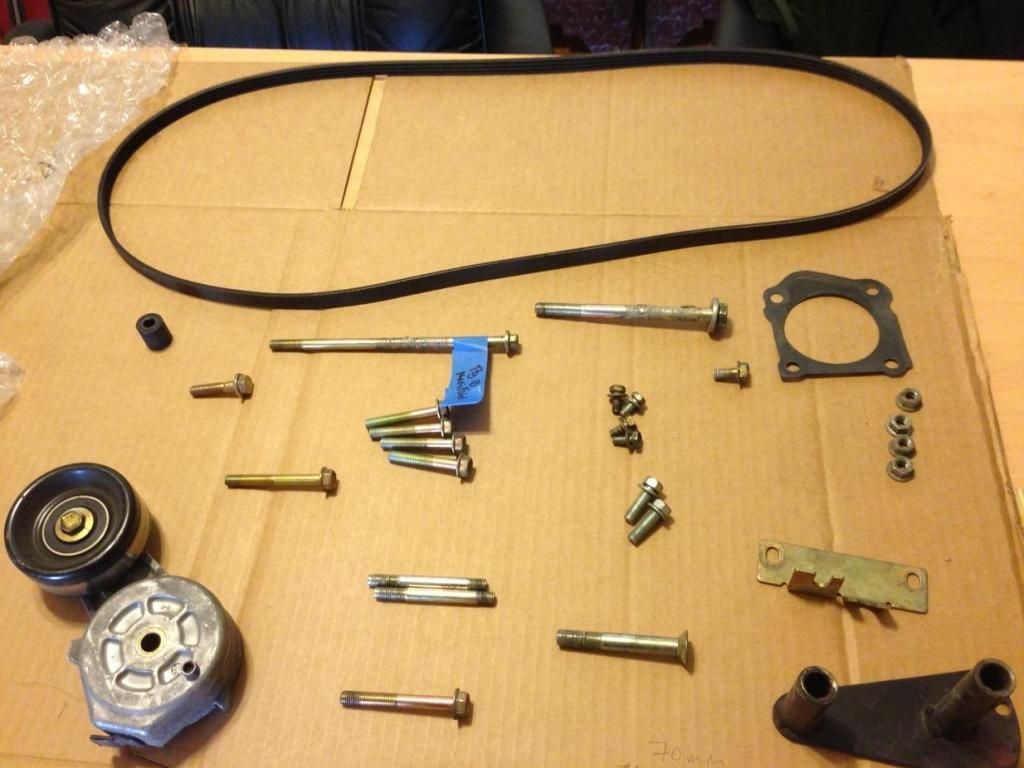
Thanks to [MENTION=57546]4-Ripcord[/MENTION] for his write up in the http://www.toyota-4runner.org/3rd-gen-t4rs/82033-3rd-gen-4runner-buyers-guide.html#post706266.
TRD Supercharger:
One highly sought after option for these trucks is the TRD Supercharger!
There are 2 different versions of the TRD supercharger for the 3.4L V6.
-It is important to note that this was a dealer option, meaning that you could not order a 4runner from the factory with the TRD supercharger in any option package. You just had to buy one after you got the 4runner and the dealer installed it.
Both the 1st and 2nd gen superchargers are M62 superchargers made by Magnuson and produce the exact same power increases. The only differences between them are appearances and ease of maintenance. The first page I would recommend you read is this one: TRD Supercharger Here, gadget (who is a pioneer of TRD superchargers and performance modifications) explains what superchargers are, how they work, and the differences between the 2 generations.
The 1st Generation TRD supercharger.

Courtesy of Gadget .
The 2nd (aka 4th) Generation TRD supercharger.

Courtesy of Gadget .
Basic specs:
Gains with only supercharger (no fuel mods)
Courtesy of Ultimate Yota.
---------
Known Issues:
There are a few documented issues with the superchargers. Most of which arise due to lack of supporting fuel mods.
An in-depth list can be found here: UltimateYota.com
Things such as high gear/low rpms pinging, high rpm lean out, automatic transmission wear.
These symptoms are cured with URD's 7th injector kit. It helps to supply extra fuel when needed when the stock system cannot keep up with how much air is being pumped in. The tuning computer and two-step cooler spark plugs included with the kit helps by ret@rding timing more than the stock computer is capable of doing. This kit also adds top end power becuase it helps to meet this needs.
Underdog Racing Development
If you do not feel a need for this extra injector and tuning computer, at least get two-step cooler spark plugs to help with proper timing.
Denso Iridium IK22 are the ones you want.
-------------------
Issues that are not covered there are as follows:
Belt slippage
There are two types of Tensioners that come with the TRD superchargers, they are interchangeable. with the old-style static tensioner you can experience belt slippage when you really step on the pedal.
-The Static tensioner is just a plate with a pulley on it, you manage the belt tension with the alternator tensioner bolt.
-The Dynamic tensioner is a spring loaded arm with a pulley on it that takes care of the belt tension itself.
The dynamic tensioner can by found for around $280, the part number is: PTR29-60032.
---
Supercharger wear
The bearings in the nose cone of the supercharger are only rated to last about 100k miles. This is one area where the 2nd gen supercharger really shows its advantages.
-The 1st gen unit must be taken off and either sent in to Magnuson to be rebuilt (usually $500+) or rebuilt at home if you have the right tools. DIY rebuilds can be done for around $200 with a lot of elbow grease.
Here is a detailed thread of a full rebuild of a first gen unit by Chris360hawks: http://www.toyota-4runner.org/3rd-g...-top-eaton-m62-complete-rebuild-write-up.html
Here is a thread where member Coinball rebuilt his 1st gen unit: http://www.toyota-4runner.org/3rd-gen-t4rs/119634-project-put-blower-my-hoopty-go.html
-The 2nd (4th) gen unit can be rebuilt in your garage while its still on the vehicle. To do so you need the TRD Nose cone kit (PN: PTR29-35042) it comes with a new nose cone with the bearing already pressed in and a bottle of new supercharger oil and some gasket sealant.
Here is a thread that really shows how that is done: 3.4 Supercharger Nose-Drive Replacement - CustomTacos.com Forum
-------
Broken Bypass valves
The bypass valves on the 2nd gen units are known to fail and/or break the rivets off. Also the rubber inside them can dryout and crack which leads to boost leakage.
Replacements are under $100.
Available through LCE performance: Supercharger Accessories - 5VZ TRD Bypass Valve
============================================================
Supercharger Performance upgrades
Smaller Pulley
URD sells an assortment of smaller sized pullies. It is recommended that you have sufficient fuel modifications to support the increased amount of air being pumped in by smaller pullies. Underdog Racing Development
-Stock is 2.37" and the truck runs at about 7 psi
-URD 2.2" increases max boost by 1.5-2 psi over stock. This is the most common pulley to add.
-URD 2.1" increases max boost by 3.5-4 psi over stock. Tuning is highly recommended with a pulley this small.
*Note that the supercharger is known to handle about 15 max, so be careful.
-----
Methanol Injection:
Some users choose to add methanol injection instead of or in addition to extra fuel injectors. Methanol injection changes the A/F ratio at high throttle to increase power.
Here is the main thread Methanol users go to start out:
Texas_Ace's Cheap DIY Meth/Water Injection kit Writeup! Get 10hp+ for under $150! - YotaTech Forums
Pros:
-inexpensive
-Fairly simple to install
Cons:
-Have to refill methanol tank occasionally
-In-Depth Tuning is pretty much required
-----
Cooler thermostat
The stock thermostat is rated at 180* F and keeps the engine around 193-195*. However, The stock thermostat is known to be unable to keep the engine in the optimum range of temperatures with a supercharger. With a supercharger, you will notice temps above 200* very often.
Stant 14077 is a 170* thermostat and will maintain a cool engine despite whatever high performance runs you are doing on the supercharger. With a supercharger, expect to see temps of 185-190*
The TRD thermostat is a 160* and many people recommend running this ONLY if you do a very accurate tune and are trying for maximum performance. Be cautious with this one. You will often see the engine running around 175-180*.
-------
Performance Headers
headers are the manifolds that handle the exhaust gasses from the engine. The stock headers are not known to be very efficient. Performance headers can increase power by approximately 10-15hp.
Brands of performance headers for these vehicles are:
-TRD
-Doug Thorley
-OBX
-----
High Flow Exhaust
Any high flow muffler is a good idea to match the increased volume of air going through the engine. It is also beneficial to add a high flow Catalytic converter, although doing this will trigger an O2 sensor code. So if you decide on a high flow CAT, also look into the URD rear O2 sim kit. It will prevent the code.
Underdog Racing Development
Please feel free to post up links/info you feel are important and I will add them the original post.
Alright Addison, open WIIIIIIIIDE, because I'm going to spoon feed you some info.
Earlier this week, I was considering buying a S/C I found on my local Craigslist, so I had to do all of this research to figure out whether or not it was worth my money/time. If you're curious, here's the ad for the S/C I was looking at:
1996-2004 Toyota Tacoma Supercharger
I drove an hour each way to check it out and found it was missing some hard to find parts, and needed a thorough re-build before I would even consider running it on of my own vehicles. I offered the guy $450 and he passed on the offer.
Before you consider moving forward, I would recommend that you start by reading the installation manual for the S/C, which is available for download here:
Tech Knowledgebase - Installation Manual for TRD 3.4L V6 Supercharger
Familiarize yourself with the process, and study the parts list. It will reveal everything that you need to install the S/C, and help you to ask the right questions as you try to figure out whether or not it's worth an 8 hour drive.
Now let's dig into that parts list a little bit. I've copied the ESSENTIAL items that you will need below:
Parts List:
1 Supercharger
1 Supercharger Belt
1 Gasket, 3.4 S/C (Between Factory Throttle Body and TRD Supercharger)
1 Template for cutting timing belt cover (Link to a copy of the template > https://docs.google.com/file/d/0ByJ...MxYy00OWQ2LTk4NTAtMTlkZmE2YzI3YWRk/edit?pli=1 )
Dynamic Tensioner
1 Assembly, Tensioner Plate and Pully (dynamic tensioner & mounting bracket)
1 Bolt, 10 x 1.25 x 70mm Flat Head (Used to attach the tensioner bracket)
1 Bolt, 10 x 1.25 x 135mm Hex Head (Used to attach the tensioner & bracket)
1 Washer, 10mm Flat bolt
1 Wire Loom Relocation Bracket
1 Dipstick Relocation Bracket
1 6 X 1.0 X 12mm Bolt, Flange Head (for dipstick relocation bracket)
1 6mm Flat Washer (for dipstick relocation bracket)
Hose, Connector and Hardware Kit
1 1/8” Vacuum Plug 2001 and newer Tacoma only w/Drive by wire throttle body
1 3/8” Vacuum Plug Intake Silencer Plug
1 Vacuum Hose – ½” X 34” long Connects Air Tube to Cam cover
1 Vacuum Hose - 3mm x 9" long Connects Vacuum Throttle Opener to Intake Manifold
1 Vacuum Hose - 3mm x 5" long Connects Vacuum Throttle Opener to Intake Manifold
2 Hose Clips, Black Plastic Retains Evaporative Canister Hose to Throttle Cable
1 Vacuum Adaptor Tee- 4WD only See Hose Routing Schematic Figure B
1 Valve, IAC Check, Installed near IAC Valve
1 Spacer, Manifold Support Bracket, Installed between manifold & factory support bracket, driver side
1 Bolt, 8 X 1.25 X 35mm Flange Head, Used to Secure factory support bracket thru spacer to S/C Manifold
1 Bolt, Hex, 8 x 1.25 x 170 w/10mm Wrench Flat, Installed through the top of supercharger to the Factory manifold
4 Socket Head Cap Screws, 8 x 1.25 x 65mm Attaches Throttle Body to TRD S/C Manifold
4 Washer, 8mm Flat 1 per Socket Head Cap Screw Used to attach Throttle Body to TRD S/C Manifold
1 Bracket, Accelerator and Transmission Cable Used on all applications except 4WD, Manual-Transmission Tacoma
1 Bracket, Accelerator Cable 4WD MT Tacoma Only Used on 4WD, Manual-Transmission Tacoma only
1 Bracket, Throttle Cable 2001 and newer 4Runner only w/Drive by Wire Throttle Body
2 Bolt, Hex, 6 x 1.0 x 12mm Used to attach Throttle Cable Brackets to S/C Manifold
2 Washer, Flat, 6mm Used with bolts to attach Throttle Cable Brackets to S/C Manifold
The items listed in RED will be difficult or impossible to find at your local hardware store. Especially the two tensioner bolts, the 8x1.25x170mm bolt, the manifold support bracket, and the 3 brackets listed near the bottom. There are 3 brackets included in the kit because different ones are used for different applications. The bracket used on a '98 will not be the same as the bracket used on an '01, so TRD includes all three. If you buy the S/C second hand it may not include the correct bracket for your application. These brackets are used to secure your throttle/trans kickdown cables to the S/C.
Now, you could fabricate the bracket that you need along with the spacer and the Dipstick/Wire Loom relocation brackets, with some time & experimentation... unless you have another vehicle that has those parts installed for reference, then it would go quickly.
In the event that you want to buy the necessary items new, you can find them for sale via the following links, at the following costs... plus shipping. At minimum you'll want a new belt, and order two so that you have one for a trail spare.
Dynamic Tensioner Kit $260, Part No. PTR29-60032 (this includes the tensioner, along with the bracket and the two bolts needed for install... this is the only route you can take to buy the two (70mm/135mm) bolts and the relocation brackets through Toyota)
TRD DYNAMIC TENSIONER 3.4 SC PTR29-60032
Then buy the tensioner separately for $50, Part No. PTR30-35041, and fab the relocation brackets
TRD Supercharger DYNAMIC TENSION W/ PULLEY PTR30-35041
Belt $11, Part No. PTR30-35040
TRD Supercharger Belt - V6 3.4L PTR30-35040
IAC Check Valve $6.50, Part No. PTR26-35042 No longer available through Toyota. Call Magnuson and they are $5.
TB to S/C Gasket $8, Part No. PTR29-60030 No longer available through Toyota. Call Magnuson and they are $5.
S/C Install Kit $166, Part No. PTR29-60020 (This includes the IAC check valve, the 170mm bolt, the spacer, vacuum caps & lines, and the three brackets... You'll still be missing the hose clips, 35mm bolt, cap screws & washers, and 6mm bolt and washer listed in the "Hose, Connector and Hardware Kit" sectin of the list) Also, note that under the picture of the kit on the RH side, there is a link labeled "Installation PDF"... this will download the S/C install manual.
Supercharger Service Parts 3.4L Install Kit PTR29-60020
If the nose cone is leaking oil, you'll want to replace it. It's much easier to replace the whole nose cone assembly than it is to try and press a new bearing/seal into the old nose cone.
Here's a writeup on that > 3.4 Supercharger Nose-Drive Replacement - CustomTacos.com Forum
Nose Cone Kit $228, Part No. PTR29-35042
3.4 4TH Gen Nose Cone Kit PTR29-35042
If you feel like saving some money and you want to rebuild the nose cone yourself, here is a thread that covers a COMPLETE rebuild of the 2nd gen Black TRD S/C:
3.4l TRD Supercharger rebuild - Tacoma World Forums
In the end, the biggest risk I see is the 16 hours of your time it would take to drive there and back to check it out. If you get there and it's not what you thought it was, that's alot of wasted time. I'd say that you need to ask quite a few more questions of the seller before you spend the time driving down there to check it out.
With 120K miles on it, there is a high probability that the nose cone will be leaking, and even if it's not you may want to replace it as preventative maintenance. I believe the recommended interval on those is about 100K. At the bare minimum, you'll need to change the oil on the nose cone.
Oil change kit, Part No. PTR29-35043 > TRD Oil Change Kit 3.4L V6 supercharger (black) PTR29-35043
Without actually hearing the S/C operate on a running engine, it will be very difficult to assess the condition of the bearings in the nose cone and at the rear of the S/C. You can give the pulley a spin and see if it feels smooth, but thats about it. If the rotors have a good seal on them, you should actually hear, and be able to feel with your bare hand, the S/C pump air out of the outlet ports.
Let me know if you have other questions.
PS > The real cost that you should be worried about is the rabbit hole of add-ons that you're going to want to buy once you get the S/C on your 4Runner. URD 7th, IPT VB, Headers, 2.2 Pulley, instrumentation, tuning equipment, etc, etc. That's the part that really adds up. It's like Pizza....
$8 for a large cheese pizza. $2 per topping. By the time you add Pepperoni, Sausage, Green Chile, Mushrooms, Olives, Anchovies, and Bell Peppers, you've got a $22 pizza.
I'm hungry now.
I borrowed these photo's from [MENTION=68348]brian_d[/MENTION]'s thread. They are a good example of pretty much all the parts you need and especially the harder to find ones.


Thanks to [MENTION=57546]4-Ripcord[/MENTION] for his write up in the http://www.toyota-4runner.org/3rd-gen-t4rs/82033-3rd-gen-4runner-buyers-guide.html#post706266.
TRD Supercharger:
One highly sought after option for these trucks is the TRD Supercharger!
There are 2 different versions of the TRD supercharger for the 3.4L V6.
-It is important to note that this was a dealer option, meaning that you could not order a 4runner from the factory with the TRD supercharger in any option package. You just had to buy one after you got the 4runner and the dealer installed it.
Both the 1st and 2nd gen superchargers are M62 superchargers made by Magnuson and produce the exact same power increases. The only differences between them are appearances and ease of maintenance. The first page I would recommend you read is this one: TRD Supercharger Here, gadget (who is a pioneer of TRD superchargers and performance modifications) explains what superchargers are, how they work, and the differences between the 2 generations.
The 1st Generation TRD supercharger.
Courtesy of Gadget .
The 2nd (aka 4th) Generation TRD supercharger.
Courtesy of Gadget .
Basic specs:
Gains with only supercharger (no fuel mods)
Courtesy of Ultimate Yota.
---------
Known Issues:
There are a few documented issues with the superchargers. Most of which arise due to lack of supporting fuel mods.
An in-depth list can be found here: UltimateYota.com
Things such as high gear/low rpms pinging, high rpm lean out, automatic transmission wear.
These symptoms are cured with URD's 7th injector kit. It helps to supply extra fuel when needed when the stock system cannot keep up with how much air is being pumped in. The tuning computer and two-step cooler spark plugs included with the kit helps by ret@rding timing more than the stock computer is capable of doing. This kit also adds top end power becuase it helps to meet this needs.
Underdog Racing Development
If you do not feel a need for this extra injector and tuning computer, at least get two-step cooler spark plugs to help with proper timing.
Denso Iridium IK22 are the ones you want.
-------------------
Issues that are not covered there are as follows:
Belt slippage
There are two types of Tensioners that come with the TRD superchargers, they are interchangeable. with the old-style static tensioner you can experience belt slippage when you really step on the pedal.
-The Static tensioner is just a plate with a pulley on it, you manage the belt tension with the alternator tensioner bolt.
-The Dynamic tensioner is a spring loaded arm with a pulley on it that takes care of the belt tension itself.
The dynamic tensioner can by found for around $280, the part number is: PTR29-60032.
---
Supercharger wear
The bearings in the nose cone of the supercharger are only rated to last about 100k miles. This is one area where the 2nd gen supercharger really shows its advantages.
-The 1st gen unit must be taken off and either sent in to Magnuson to be rebuilt (usually $500+) or rebuilt at home if you have the right tools. DIY rebuilds can be done for around $200 with a lot of elbow grease.
Here is a detailed thread of a full rebuild of a first gen unit by Chris360hawks: http://www.toyota-4runner.org/3rd-g...-top-eaton-m62-complete-rebuild-write-up.html
Here is a thread where member Coinball rebuilt his 1st gen unit: http://www.toyota-4runner.org/3rd-gen-t4rs/119634-project-put-blower-my-hoopty-go.html
-The 2nd (4th) gen unit can be rebuilt in your garage while its still on the vehicle. To do so you need the TRD Nose cone kit (PN: PTR29-35042) it comes with a new nose cone with the bearing already pressed in and a bottle of new supercharger oil and some gasket sealant.
Here is a thread that really shows how that is done: 3.4 Supercharger Nose-Drive Replacement - CustomTacos.com Forum
-------
Broken Bypass valves
The bypass valves on the 2nd gen units are known to fail and/or break the rivets off. Also the rubber inside them can dryout and crack which leads to boost leakage.
Replacements are under $100.
Available through LCE performance: Supercharger Accessories - 5VZ TRD Bypass Valve
============================================================
Supercharger Performance upgrades
Smaller Pulley
URD sells an assortment of smaller sized pullies. It is recommended that you have sufficient fuel modifications to support the increased amount of air being pumped in by smaller pullies. Underdog Racing Development
-Stock is 2.37" and the truck runs at about 7 psi
-URD 2.2" increases max boost by 1.5-2 psi over stock. This is the most common pulley to add.
-URD 2.1" increases max boost by 3.5-4 psi over stock. Tuning is highly recommended with a pulley this small.
*Note that the supercharger is known to handle about 15 max, so be careful.
-----
Methanol Injection:
Some users choose to add methanol injection instead of or in addition to extra fuel injectors. Methanol injection changes the A/F ratio at high throttle to increase power.
Here is the main thread Methanol users go to start out:
Texas_Ace's Cheap DIY Meth/Water Injection kit Writeup! Get 10hp+ for under $150! - YotaTech Forums
Pros:
-inexpensive
-Fairly simple to install
Cons:
-Have to refill methanol tank occasionally
-In-Depth Tuning is pretty much required
-----
Cooler thermostat
The stock thermostat is rated at 180* F and keeps the engine around 193-195*. However, The stock thermostat is known to be unable to keep the engine in the optimum range of temperatures with a supercharger. With a supercharger, you will notice temps above 200* very often.
Stant 14077 is a 170* thermostat and will maintain a cool engine despite whatever high performance runs you are doing on the supercharger. With a supercharger, expect to see temps of 185-190*
The TRD thermostat is a 160* and many people recommend running this ONLY if you do a very accurate tune and are trying for maximum performance. Be cautious with this one. You will often see the engine running around 175-180*.
-------
Performance Headers
headers are the manifolds that handle the exhaust gasses from the engine. The stock headers are not known to be very efficient. Performance headers can increase power by approximately 10-15hp.
Brands of performance headers for these vehicles are:
-TRD
-Doug Thorley
-OBX
-----
High Flow Exhaust
Any high flow muffler is a good idea to match the increased volume of air going through the engine. It is also beneficial to add a high flow Catalytic converter, although doing this will trigger an O2 sensor code. So if you decide on a high flow CAT, also look into the URD rear O2 sim kit. It will prevent the code.
Underdog Racing Development
Last edited:

 out:
out:
 I left the 4runner over at the parents house till the weekend...


