Injen Air Intake
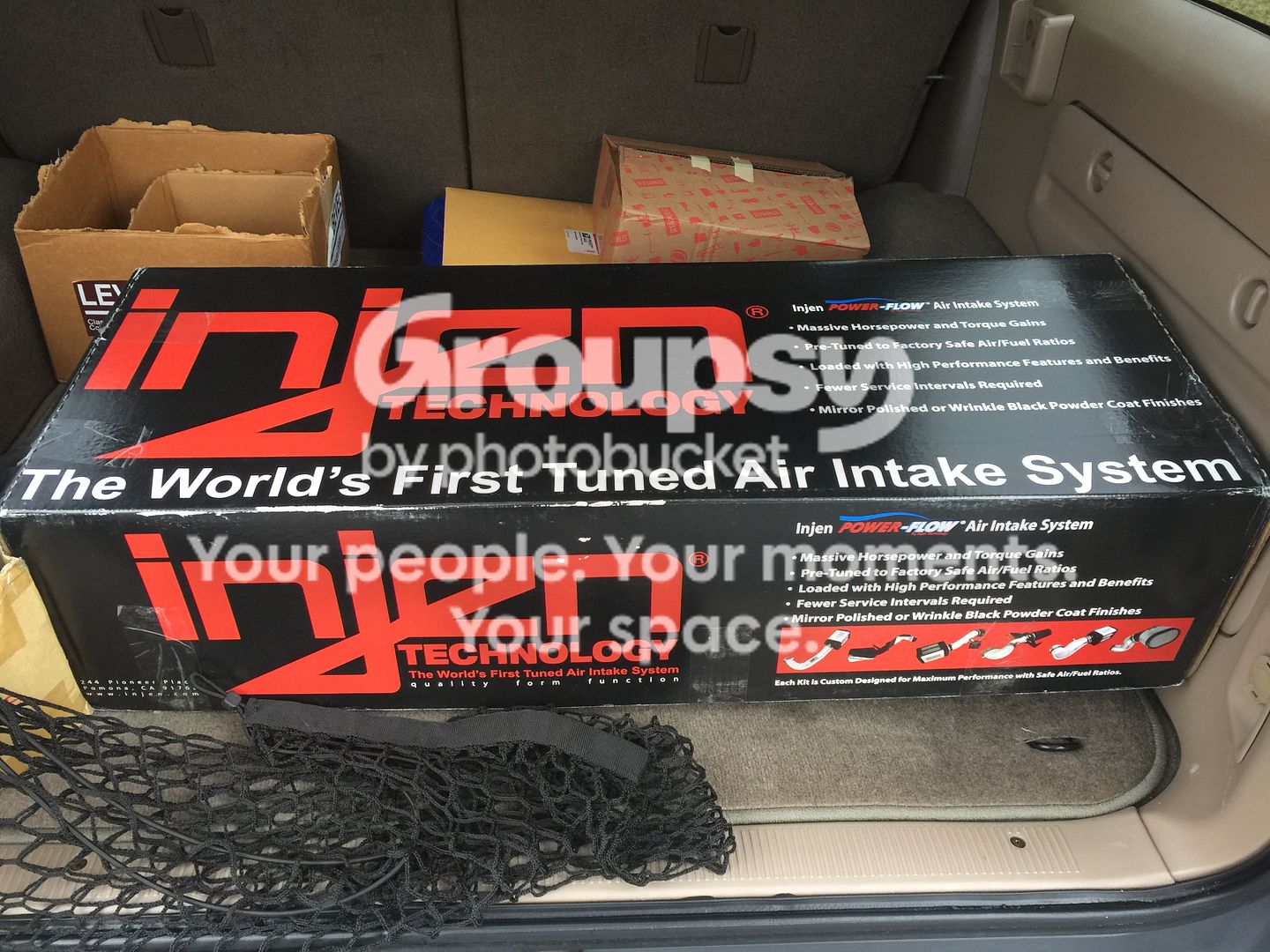
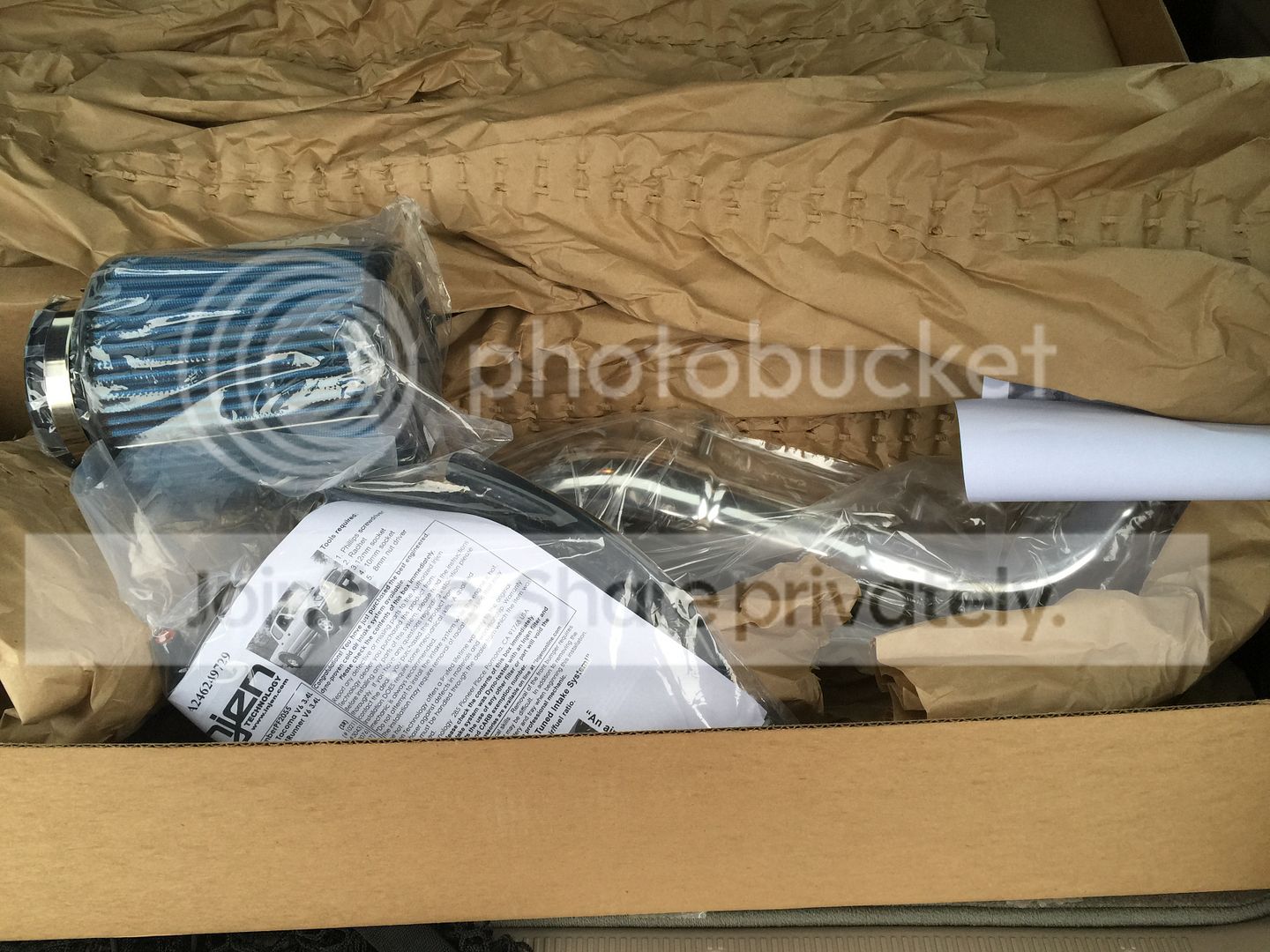
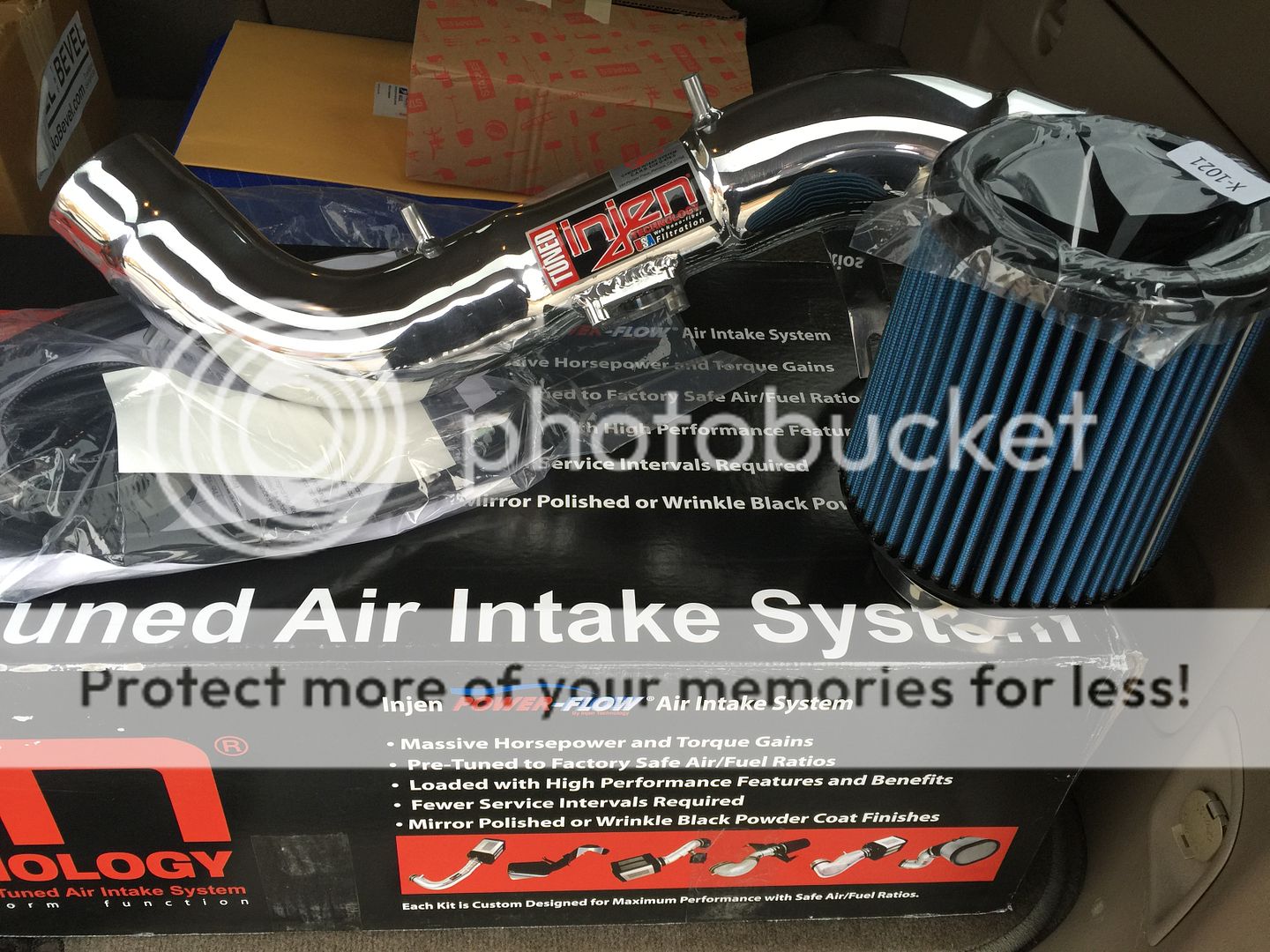
A while back I did a lot of research on air intakes and decided to purchase the Injen. I got a $100 CarID gift card for Christmas and when I called I also got a discount. After the gift card I ended up paying $125 of my own money to have this delivered. CarID also had a manufacturer offer for an extra Injen Nano Technology Dry filter, so that was added to the deal. The extra filter is probably a $50+ retail value.
Here is an Injen air intake installed on someone's 4Runner
I've done enough research on intakes to realize that a lot of 3rd Gen owners think that it is a complete waste of money. I'm familiar with the inexpensive and effective DIY mods, but I didn't want to go that route. When it is finished my air intake system will be completely sealed from the Safari Snorkel air scoop near my roof (either the Tacoma or the new 3rd Gen model under development from ARB
http://www.toyota-4runner.org/3rd-gen-t4rs/181800-safari-snorkel-releasing-snorkel-3rd-gen-4runners.html) to the engine intake. Several 3rd Gen owners have had good experiences with the Injen intake and have proven that it mildly improves performance and gas mileage.
http://www.toyota-4runner.org/engines-suspension-wheels-tires-audio-accessories/114273-truth-about-cai-cold-air-intake.html
http://www.toyota-4runner.org/3rd-gen-t4rs/117439-new-injen-intake-installed-***pics-vids.html
The Volant was a very close second since it included a sealed air box. My third choice would have probably been the Airaid since it uses the stock airbox and is a clean application. I had toyed with the idea of buying a Volant for the airbox and then trying to sell the rest of the kit. I decided against this for three reasons. There was probably a 50% or more chance that the Injen wouldn't fit properly into the Volant box and plastic pieces like this are difficult to modify. There was probably a good chance I wouldn't be able to sell the Volant kit without the airbox. The third reason is that I decided that I would get a custom airbox fabricated, but it actually wouldn't be an "airbox" - it would be more of an air tube. More on this below the polished aluminum vs black polyethylene plastic excerpt.
Volant Intake and Airbox
Somewhere on the internet I found some good info on metal vs plastic. I seemed like it was an informed opinion, so I copied it to a word document for later use.
For metal vs plastic, personally I would go metal, as I believe it would be better, such as the Injen. First is that is a polished surface and would reflect a lot more heat than a black surface. And next, although the metal will conduct heat faster, heat up quicker, it will also cool down quicker, whereas the plastic would retain heat (such as a stoplight) and stay hotter for a longer period of time than the metal tube which would cool down quicker.
Some technical info, correct me if I am wrong:
Polished Aluminum (Injen):
absorptivity= 0.09 (rate of radiant energy absorbed by a surface, at 1.0 it absorbs all of the radiant energy)
specific heat= 0.91 kJ/(kg K) (The specific heat is the amount of heat per unit mass required to raise the temperature by one degree Celsius.)
thermal conductivity =237 W/(mK)
Polyethylene Black Plastic (Volant)
absorptivity= 0.94
specific heat= 1.0 kJ/(kg*K)
thermal conductivity 0.24 W/(mK)
So from this I would conclude that the aluminum intake tube will only absorb about 10% of the radiated heat from the engine compartment, whereas the black plastic would absorb about 90% of the radiated heat to the surface. This does not account for conduction or convection, such as the hot air contacting the tube or conduction of heat from the throttle body into the tube. I would imagine radiant heat is the biggest source of significant heat where the aluminum tube will absorb significantly less. The aluminum will though, conduct heat thru the walls far better than the plastic such as from convection of the air around it. But with each of the walls of each tube being relatively thin and the heat doesn't have to be conducted very far.
If I am super motivated, I could probably do some reasonable calculations and take into account both radiant heat and convection of a "tube," and find the heat flux into the tube, but I am busy and dunno if I would have time lol. Plus I would need to know the relative thicknesses of each tube, I wouldn't want to assume one or something like that lol.
For specific heat, they are nearly the same, but the aluminum is lower, meaning it takes less energy to heat it up by one degree, so it will heat up faster if it absorbs the same amount, but it will also cool quicker. The plastic tube will take a bit longer to heat up, but will not cool as quickly.
In my honest opinion the polished aluminum tube is the way to go since it won't absorb nearly as much heat as the plastic (10% vs. 90%), although it will conduct that heat better than the plastic tube. What would be optimal imho is a polished aluminum tube with an internal insulation, this way it would reflect most radiant energy, and any that is convected or absorbed would not conduct well thru the internal insulated section, such as plastic.
My idea is to take my 4Runner to a local metal fabrication shop and have them make something for the Injen. I don't want it be be a box. It will be more of a metal tube that swells up around the filter to encompass it, separating the filter from the engine bay, and then connects it to the air hole in the passenger side engine bay wall/inside fender. I would remove the pastic elbow in the internal fender and eventually install the ARB Safari Snorkel to connect everything.
A few thoughts:
- I want it to look cool - it must have both form and function. I will probably have some type of metal welded (maybe aluminum) that will end up having a polished look to somewhat match the Ingen intake tube.
- It must seal even better than the Volant box. The Volant box doesn't seal so well around the tube.
View of poor Volant seal
- There will probably be a round metal ring (shaped similar to a Spydertrax wheel spacer) that bolts the air tube cover to the engine bay wall over the existing air hole with a similarly shaped rubber gasket inbetween.
- On the engine side of the filter the tube cover would taper down and seal around the Injen tube - the air tube would only cover an inch or two of the Injen tube closest to the filter.
- I want a flowing tube that swells up around the filter - not a box. Maybe it would have sort of an Airstream look to it as far as how the small metal pieces are welded together.
- There would be some type of industrial-grade glass cover (I'm not a big fan of lexan) on the top to view the filter (without opening it) and then also to access the filter to change it. I actually thought about a very small nickel-plated porthole window fitted with optional safety glass. The porthole opens so it provides both access and visibility. If I went this route I would take the porthole to the welder and have him fabricate the filter cover around it so that it wouldn't looked "tacked-on". Yes, I know this seems like a semi-retarded idea (never go full retard!), but I am just brainstorming, so don't worry. The smallest porthole I have found to buy is 9" in diameter. I think that 6" to 7" in diameter would be optimal - you only need it big enough to open, reach in, and change the filter.
http://www.robinsdocksideshop.com/Portholes_2.htm
Nickel porthole, but the glass would be the optional safety glass (not the mirror pictured). The porthole is 9" in diameter and the glass is 7.5" in diameter.
- Another idea would be to buy a small, round industrial piece of glass (maybe the kind that looks like it has chicken-wire in it) and have that incorporated into a larger metal cover that opens like a clamshell.



 opcorn: