transmission temps to the moon - what do I check?

xdustin

New member
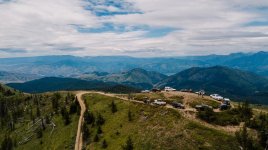
00 Limited, 160K miles. Radiator was replaced according to PO within the last 20K miles. Drain and filled a week ago before the overland rally here in Washington. A/T light came on once last week on a LONG climb into the hills and came on again yesterday on another long climb into the hills. I am using the torque app, but it's been hit or miss (transmission will stop reporting until I restart my tablet). But if it's reporting correctly, temps were above 230 when the light came on and I stopped until they dropped back down.

I have now read that I should be in 4-lo and OD off (if it helps as speeds below 20). Regardless, I do have a transmission cooler that I have yet to install, but will be getting that installed before any more long climbs into the woods. I still feel like that is higher than it should have been. I'm going to check the fan clutch and make sure that's doing it's thing correctly.

Anything else I should be checking to make sure this doesn't become a common thing for my rig? Could I have done anything during the drain and fill? Fluid that came out looked okay (was still red, but a little dark, lol) and I replaced it with the same amount within reason. Filled it via the dipstick. Though I plan to do another drain/fill after these last two A/T light adventures.

I know there are a ton of threads on installing coolers, temps with pulling trailers or at high speeds, but wasn't seeing much about wheeling, but also, not much about what else I can inspect while trying to get these temps back to a reasonable level.
 
Register to hide this ad
The A/T light is "supposed" to come on around 300° - not 230°

Did you lose power when your temps got that high? You probably boiled the trans fluid in the torque converter, which is why OD OFF is pretty much required for long uphills or when wheeling, and yes Lo Range if steep and 2nd or 1st gear helps reduce trans temps too.

Install your AUX cooler post rad cooler, plenty of threads on that, and consider an aux fan for that cooler if long, slow climbs are your thing since the engine cooling fan won't be running fast then

Also consider either a complete fluid replacement (drain and fill, pump and pour) or a series of drain and fills, especially after heating the fluid that much more than once.

In the interim the things I would check are trans fluid level, fluid condition (is it black and sludgy) and make sure there are no obstructions in the fluid pathways, kinked or blocked lines, etc. How old is your radiator, exactly?

Luck :cowboy:
 
Last edited:
I've been having issues with the tablet getting transmission temps consistently from the reader, the tablet is one of those $40 fires from amazon. No idea where the temps topped out, but I'm sure it was well above 230, especially if the light comes on at 300, yikes! I pulled over to the side of the trail/road right away and let it cool down until it was under 230. I only had about 1/2 mile to the summit at that point.

I would estimate the radiator to only be a few years old, but will try to verify.

I'll look into the fan as well. I don't plan to get crazy into wheeling, but overlanding is certainly part of the plan and I live in the PNW where mountains and fire roads exist.

So I guess my checklist at this point is:

1) check fluid levels/condition (will be doing a drain/fill this weekend)
2) check fan clutch/radiator age
3) check for kinked/obstructed hoses
4) install cooler after the radiator
5) Likely do a series of drain/fills. Currently using valvoline full synth.
 
Last edited:
New fluid pronto, check the fan clutch, install the cooler and consider an auxiliary puller fan in front of it for additional cooling.
 
00 Limited, 160K miles. Radiator was replaced according to PO within the last 20K miles....

How was the new radiator installed? Using the internal OEM radiator cooling at bottom of new radiator or was it by-passed? :cowboy:
 
How was the new radiator installed? Using the internal OEM radiator cooling at bottom of new radiator or was it by-passed? :cowboy:
he says he has an aux cooler that was not installed yet, so if he's not using the in-rad cooler then there is zero trans cooling :COUCH:

Sent from my Pixel XL using Tapatalk
 
How was the new radiator installed? Using the internal OEM radiator cooling at bottom of new radiator or was it by-passed? :cowboy:

That I'm not sure about (though I would assume it's done correctly, the PO was pretty anal about getting things fixed). I did just go check it out and it's a denso radiator and is in great shape, not faded and the cooling fins all look to be in order. I guess I'll find out more about the route of the existing lines when I dig into the cooler install this weekend.

I did check out the fan clutch and if I give it a spin, it doesn't spin too much. I saw a thread going over some ways to test it out, so I'll give those a go this evening to see where that stands.

Does adding an electric fan require removing the existing fan?
 
That I'm not sure about...

Does adding an electric fan require removing the existing fan?

Don't get ahead of yourself.

Find out if the two metal lines at the bottom of the radiator connect to anything or not first. Just look underneath, takes 15 seconds.

No, if you decide to put an E-fan in, don't remove the existing. Both the external cooler and optional fan are meant at Additions to factory cooling not replacements - they won't even have the capacity the factory OEM design does.

:cowboy:
 
Don't get ahead of yourself.

Find out if the two metal lines at the bottom of the radiator connect to anything or not first. Just look underneath, takes 15 seconds.

No, if you decide to put an E-fan in, don't remove the existing. Both the external cooler and optional fan are meant at Additions to factory cooling not replacements - they won't even have the capacity the factory OEM design does.

:cowboy:

For sure, electric fan is last on the list ;)

Ran back outside (at work) and everything appears unmolested. Two lines going into the bottom of the radiator, one on either side more or less.
 
I think he meant a fan for the external transmission cooler itself. So leave the stock mechanical fan alone, but look into installing a cooler WITH a fan, though they are a bit more work. I think the cooler alone should help a little, but relies on windspeed/ram air to cool it down properly so when crawling that won't help much. Engine e-fan replacements are not so good for people who find themselves crawling a lot since they are not always operating like the stock mechanical fan does. I would know, I have one.

By the way, one drain and fill only replaces 33% of your transmission fluid. The total capacity is near 12 quarts and the average drain and fill will take out 4 quarts. You'll never get 100% replacement with drain and fills, since once you do it a second time you'll be draining brand new fluid, but 2 drain and fills replaces 56% of the fluid, and 3 gets you up to 74% new fluid. That's why if you are trying to clean out a system completely, a passive flush by removing the send line on the transmission to the radiator is cheaper since you don't have to waste new fluid.
 
I think he meant a fan for the external transmission cooler itself. So leave the stock mechanical fan alone, but look into installing a cooler WITH a fan, though they are a bit more work. I think the cooler alone should help a little, but relies on windspeed/ram air to cool it down properly so when crawling that won't help much. Engine e-fan replacements are not so good for people who find themselves crawling a lot since they are not always operating like the stock mechanical fan does. I would know, I have one.

By the way, one drain and fill only replaces 33% of your transmission fluid. The total capacity is near 12 quarts and the average drain and fill will take out 4 quarts. You'll never get 100% replacement with drain and fills, since once you do it a second time you'll be draining brand new fluid, but 2 drain and fills replaces 56% of the fluid, and 3 gets you up to 74% new fluid. That's why if you are trying to clean out a system completely, a passive flush by removing the send line on the transmission to the radiator is cheaper since you don't have to waste new fluid.

Good insight!

I feel like I remember people who installed fans with a switch as well, not only for situation like crawling, but to also kill it in deep water situations. It kind of sounds like I'll have to cross that bridge eventually, but fingers are still crossed on the cooler and maybe a fan clutch solving most of the temp problems.

Also, I'm thinking I'll do the drain/fill a couple of times, make sure everything is operating as it should be (to get my by) and if all checks out, then go for a full flush once I'm in the clear. I have a pickup I can drive for the next week or two while I work through the checklist at least.
 
Good insight!

I feel like I remember people who installed fans with a switch as well, not only for situation like crawling, but to also kill it in deep water situations. It kind of sounds like I'll have to cross that bridge eventually, but fingers are still crossed on the cooler and maybe a fan clutch solving most of the temp problems.

Also, I'm thinking I'll do the drain/fill a couple of times, make sure everything is operating as it should be (to get my by) and if all checks out, then go for a full flush once I'm in the clear. I have a pickup I can drive for the next week or two while I work through the checklist at least.

The issue with water crossings is many older fans shatter when the blades hit the water, so being able to turn off an e-fan is handy, but replacing a clutched fan exclusively with an e-fan is a serious proposition. I've done it on the other truck in my sig, it's a bunch of work to do it right and the implications of it going wrong can be severe. The stock toyota cooling system is pretty damn good. If in doubt, check/test your clutch (replace if you want) and replace your fan blades and it will last another 20 years.

Regarding a few drain and fills, I highly recommend a drain, fill, pump and pour complete fluid replacement vs repeated drain and fills. Cooked trans fluid not only doesn't perform correctly, it overheats quickly and it doesn't shift well - diluting new fluid with old, burnt fluid over a period of time just puts your trans at risk for longer. Swap the fluid out and be done, but DON"T let a trans shop pressure flush your trans; drain, fill, pump and pour.

Here's a video that helped by our resident videographer [MENTION=120071]mtbtim[/MENTION]
https://www.youtube.com/watch?v=RumPXivBlk8
 
When exactly was the radiator replaced versus you buying it?

Sounds like there may have been an issue, and that's why the radiator was replace. One thing that comes to mind for me would be the possible strawberry milkshake. The the former owner replaced the busted radiator, and sold the vehicle before shit went south.
 
Last edited:
A/T light came on once last week on a LONG climb into the hills and came on again yesterday on another long climb into the hills........

I have now read that I should be in 4-lo and OD off (if it helps as speeds below 20).

I am going to assume that were in 2WD but even if you were in 4WD HI and you were driving steady for 10-15 minutes moderate incline at 10-20 mph with the transmission in drive (not 1st) with say an RPM of 1500-2000 the entire time creeping along.

If your driving situation was anything close to that what I described above and your trans temp came on it may be (at least IMO) completely normal and predictable. It has happened to me at least 3 times. Always the same type of situation, long slow uphill climbs in 2WD. I've 255K on original transmission and no slipping (knock on wood). I have since added a trans cooler and now I drive around in 4LO with the RPMs above 2500 and if I need to be in 2WD in those conditions I would still keep it in 1st gear so the RPMs are a bit higher. Doing those steps should drop your transmission temps a lot.

Do a drain and fill, maybe 2. Your truck will most likely be totally fine.

Edit: when I say normal I mean that there may not be anything broken or blocked. It is never a good thing to let you trans heat up.

:surfer:
 
Last edited:
Sorry OP, I did mean an external fan to place in front of the ATF cooler. But if you do the first three things I mentioned, there probably won't be a need for one.

With adding the cooler you can do a complete drain and flush of the system. Check out Tim and Sean's videos for such.
 
Sorry OP, I did mean an external fan to place in front of the ATF cooler. But if you do the first three things I mentioned, there probably won't be a need for one.

With adding the cooler you can do a complete drain and flush of the system. Check out Tim and Sean's videos for such.

His video was bookmarked awhile back, such a great resource we have! Super lucky to have them in our side, lol

I am going to assume that were in 2WD but even if you were in 4WD HI and you were driving steady for 10-15 minutes moderate incline at 10-20 mph with the transmission in drive (not 1st) with say an RPM of 1500-2000 the entire time creeping along.

If your driving situation was anything close to that what I described above and your trans temp came on it may be (at least IMO) completely normal and predictable. It has happened to me at least 3 times. Always the same type of situation, long slow uphill climbs in 2LO. I've 255K on original transmission and no slipping (knock on wood). I have since added a trans cooler and now I drive around in 4LO with the RPMs above 2500 and if I need to be in 2WD in those conditions I would still keep it in 1st gear so the RPMs are a bit higher. Doing those steps should drop your transmission temps a lot.

Do a drain and fill, maybe 2. Your truck will most likely be totally fine.

:surfer:

That's EXACTLY the driving I was doing. I thought the first time was a one-off and then to have it happen again, I did some digging and realized I should have been in in 4wd, etc. So yeah, in the future, will be doing all that. Still adding the cooler and going through my steps.
 
For a reference point, this past weekend I lead a couple of trail rides to the same place (Sugarloaf Lookout in the Cascades). Moderate steepness on forest service roads, no loose shale or anything other than minor rutting. Mid-70s temps. I have a '96 3.4l AT 4WD, with an in series external cooler pre-radiator, temp gauge on output line of trans.

Did the AM run in 4wd High, hit temps as high as 250.

Did the afternoon run in 4wd Low, temps never got over 212. 4.10 gears on 31" (265/75/16 Toyo MT) tires.
 
For a reference point, this past weekend I lead a couple of trail rides to the same place (Sugarloaf Lookout in the Cascades). Moderate steepness on forest service roads, no loose shale or anything other than minor rutting. Mid-70s temps. I have a '96 3.4l AT 4WD, with an in series external cooler pre-radiator, temp gauge on output line of trans.

Did the AM run in 4wd High, hit temps as high as 250.

Did the afternoon run in 4wd Low, temps never got over 212. 4.10 gears on 31" (265/75/16 Toyo MT) tires.

That makes me feel a little better, hahaha. What a gorgeous weekend.

Throwing in a shot from the top of chumstick. My buddy and I were in the silver 4runner and maroon jeep.
 

Attachments

  • nwol-0246 (1).jpg
    nwol-0246 (1).jpg
    139.2 KB · Views: 151
OP, it's my educated guess there's absolutely nothing wrong with your trans cooling system. The problem stems from you using 4Hi for a long extended climb. I monitor my trans temp via a Bluetooth reader sending info to my Torque Pro app on my Android phone. I recently took my rig wheeling with [MENTION=148218]JZiggy[/MENTION] (aka Jordan) in the hills above the California Coast near Big Sur. The climbs were steep and sustained. At first, I had my rig in 2Hi because the terrain was mellow and didn't think I needed 4Lo. I was watching my trans temp rise, and when it got to around 230, I pulled over to let my trans cool down. We started off again and the temps spiked again. Jordan asked me if I was in 4Hi or 4Lo. I said 4Hi and he suggested I try 4Lo. Man, what a difference. After switching to 4Lo, my trans temps never got above 170.

This was an important lesson to learn about 4wheeling with an automatic transmission. I never knew the difference in the trans temp would be so dramatic between 4Hi and 4Lo. My previous 4wheeling experience had been with a manual transmission. There's probably a lot of people who've overheated their automatic transmission while 4wheeling but they didn't necessarily know it because the "idiot" light didn't light up on the dash. I think these dash lights were affectionately named "Idiot Lights" because the light is telling you, "Hey Idiot, you've got a problem. Stop!" Like others have mentioned, the light comes on around 300 degrees and that basically means you should stop and not drive anymore because your fluid is cooked.

So, #1, it's important to monitor your trans temp. If you have a 96-98 and can't pull trans temp info via a scan gauge or Bluetooth reader, install an aftermarket gauge. If you have a 99-02, definitely invest in either a scan gauge tool or Bluetooth reader sending info to an app like Torque Pro. #2, use 4Lo when climbing sustained grades off-road. Your transmission will thank you.

For those interested in the installing an aftermarket trans temp gauge, here's a video you can use to help you with the install:

<iframe width="560" height="315" src="https://www.youtube.com/embed/fT_2szdKXRM" frameborder="0" allow="autoplay; encrypted-media" allowfullscreen></iframe>
 

Members online

Forum statistics

Threads
278,316
Messages
3,554,113
Members
248,016
Latest member
Advally Service

Trending content

Back
Top