
Warped rotors, again

ToolmanJohn

New member
Dealer turned them at 12,XXX miles. Brake pedal pulsation when coming to a stop. Oh, well, they worked fine again for a while.

Last week went for an oil change (25K) , brake pedal pulsation (again), and a broken cladding clip (found it while waxing, the cladding was clicking). After changing the oil, they told me they would have to replace the rotors this time around. I guess there wasn't enough material to turn down again. They also said they would replace the entire cladding (right rear passenger door) instead of replacing a small orange body panel clip (???). Ok, so it's under warranty, I say sure go for it.

Four days later the parts are in (rotors and cladding). They replaced the front rotors, did a thrust angle alignment ($60) per their recommendation, then proceeded to break and destroy the entire cladding getting it off. Apparently, it is RIVETED in three places to the door. Gee, wish they had know that. So anyway, they took it off and did NOT have all the parts needed to replace it. So my truck has been partially naked for a few days waiting for MORE parts that they broke.

I swear, as soon as it's out of warranty I will NEVER take it back there for service again, I will find another service department somewhere else where they are competent.
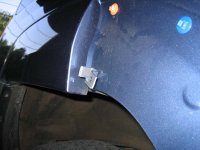
 

Attachments

  • img_0006.jpg
    img_0006.jpg
    66.1 KB · Views: 1,229
Register to hide this ad
Man that sucks. Do you drive around town a lot in stop in go traffic? I'm just wondering why so many people are having rotor troubles.

I saw that the cladding was riveted in the repair manual and was thinking it would be a pain to replace. Hope it gets fixed soon.
 
Mixed driving

My driving is almost equally split between highwayand secondary roads. The thing that bugs me is that I drive sane and normal. Full stops at the signs, moderate acceleration and such. Why do the rotors warp?

I have to take the truck in tomorrow for the cladding repair. I will try and corner the service manager for a straight answer on the rotors (not likely to get a good one though).
 
Very odd that you are having these brake issues. I'm at almost 19k and I do a lot of driving in traffic. My dialy commute takes me on I95 through some heavey congestion (Springfield "Mixing Bowl" in Virginia) and no warping.

Good luck figuring it out and sucks that you had body damage too, especially worsened by the dealership. :confused:
 
Rotors warp for many reasons... Among them are two very common reasons.

Washing your vehicle and having water splash the rotors while they are extrememly hot. Example, you drive 15 minutes to the Do It Yourself carwash and the high jets get cool the rotors down.

Overtightening the lugs. Each lug is (I believe this is universal) or should be torqued evenly to 80lbs.
 
PROZAC said:
Overtightening the lugs. Each lug is (I believe this is universal) or should be torqued evenly to 80lbs.

I believe lug nut torque is vehicle specific. 80lbs may be a good starting place if you do not know the actual required value. I have seen the torque required by some 1 ton trucks and it can be as high as 135ft lbs. (this example was a 97 Dodge 1 ton Diesel). Granted our trucks are no where near a 1 ton but different vehicles require different values.

Pg 394 of my 2004 owners manual list the following

"Wheel nut torque, N m (kgf m, ft lbf):
110 (11.5, 83)"

83 Ft lbs is what I set my torque wrench for. You can get a 1/2" torque wrench from Sears for $69.99 or you can catch them on a Craftsman club sale weekend and get it for $54.99. Torque range is 30 - 150 ft lbs. Cheap insurance as far as I am concerned. Just my opinion. :)
 
Last edited:
PROZAC said:
Rotors warp for many reasons... Among them are two very common reasons.

Washing your vehicle and having water splash the rotors while they are extrememly hot. Example, you drive 15 minutes to the Do It Yourself carwash and the high jets get cool the rotors down.

Overtightening the lugs. Each lug is (I believe this is universal) or should be torqued evenly to 80lbs.

Dealers use torque sticks so they can't over tighten your wheels. What happen is that they cut the rotors too thin and then they warped. I never turn rotors just replace the pads when they are worn. Glad I have a SE with the thick rotors. These SUV's weigh 4500+ lbs brake wear is normal, had to replace pads on my 95 LC every 20K miles, like clock work.
 
Pitbull said:
What happen is that they cut the rotors too thin and then they warped. I never turn rotors just replace the pads when they are worn.

I agree!! Everytime I have ever had the rotors turned on any vehicle they just warped twice as quick the second time. If they are warped I just replace the rotors and pads.:iagree:
 
Last edited:
sharp4runr said:
The SE rotors are larger in diamter, its never been discussed if the thickness is different.

Wouldn't it make sense that if the volume is bigger that it would absorb more energy and last longer under the same driving conditions?
 
There was a recent thread on the ih8mud LC 100 forum where people's rotors warped due to the dealer/tirei shop over-torquing the lug nuts.
 
a4passata6 said:
I wonder how many people with warped rotors regularly use their emergency brake?

Meaning what exactly? My driveway is on an incline, so I place my ebrake on every time I park it there. It is much better for the drive train that way, if one places the trans in neutral first and then apply the ebrake. I have never heard of rear rotors warping BTW.
 
greasefingers said:
Meaning what exactly? My driveway is on an incline, so I place my ebrake on every time I park it there. It is much better for the drive train that way, if one places the trans in neutral first and then apply the ebrake. I have never heard of rear rotors warping BTW.

Take this for what you will...But I remember reading StopTech
 
Yes

Jim_Chow said:
Aren't the e-brakes on most Toyota SUV's w/ rear discs a disc-drum combo, like on the LC80/100?

The 4runner uses a rear disc/drum combo , I think all 4 wheel disc vehicles are this way.

There is no emergency brake on the 4runner, it is a PARKING BRAKE, to reduce strain on the transmission and driveline when parjking on hills/inclines.

I can't see how setting the parking brake (which is an internal drum in the rear disc rotor) would somehow bake the brake pads and cause a residue to form? When the parking brake is released, it is supposed to clear the drum, if it's adjusted properly. The disc pads don't move when the parking brake is used, only the internal drum brake. The only time the rear disc brake pads move is when you press the brake pedal. They are hydraulic. The parking brake system is cable activated, not hydraulic.

I think it's likely that Toyota let slip by some bad rotors when they were building. It happens to every car company, many of which subcontract the parts from outside suppliers. The suppliers are supposed to gaurantee the quality, but maybe they still get some badly forged rotors slip by.
 
I have done so many brake jobs, that I lost count. I have not observed any foreign material built up on the rotors before. I am not saying that this does not happen, but I have seen the opposite. My jeep rotors flake-off. Small irregular sections, about the size of a quarter & larger, go missing or burn off and the area is tarnished. This is a case of poor material selection. The brakes do not hang-up or drag in this case. Tarnishing is usually a case of hanging brakes. The piston/cylinder rusts from the fluid absorbing moisture and the piston does not return and keeps the pads in contact with the rotor. The jeeps use to use a composite rotor instead of a solid rotor. The cheap composites were very prone to flaking. The missing material had the same characteristics of a warped rotor. You would feel it go thump thump thump, as you applied the brakes.

I highly doubt that the rear brakes get hot enough to cause any problems if the parking brake is applied after bringing the vehicle to a stop. Especially pulling into ones driveway. The rear brakes really do not play much of a role in stopping a vehicle. They mostly keep the vehicle moving in a straight line, under heavy braking. I am guessing that the front brakes are responsible for somewhere between 75 to 90 % of the stopping work, so heat should not be an issue on the rear. This is my first vehicle without rear drums, so I do have some learning with these discs.
 
The major cause of warped rotors is improper tightening of the lug nuts. First, you should hand-tighten the lug nuts with a torque wrench. Second, each lug nut must be tightened to the exact torque specification that appears in the owner's manual
 
2000 miles after my brake job, my brakes are pulsating again. I had them previously cut and I installed the new pads. There is more than enough material on the rotors to be cut 3 more times before the rotor thickness is out of specification, according to my FSM. My dad has a dial indicator, so I guess I
 
The advantage of using the dealer is that they use torque sticks that will not over tighten your wheels, they are dumbass proof. If you go to an independant shop they have to look up the right torque rating and then use a torque wrench or the correct torque stick. So you have to hope that they do their job right. based on how people screw everything up, I like to use the dealer.
 

Members online

Forum statistics

Threads
278,309
Messages
3,554,067
Members
248,016
Latest member
Advally Service

Trending content

Back
Top