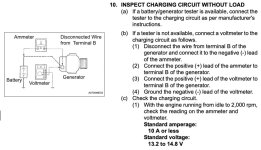
In the first reply in this topic, I suggested the alternator could be going bad, you either didn't read my reply or you decided not to check the alternator and or I couldn't possibly be correct. :noidea:
I don't disagree alternator could be going bad. My understanding of electronics is limited. My go to cliche is enough to be dangerous and not enough to be useful. As I stated in a few of my replies, I'm open to the idea that my assumptions have been wrong the whole time.
Initially I was trying to diagnose why I was seeing a difference in voltage on my OBDII scanner and my multi-meter. Now that I have identified my OBII as being bad and am getting consistent readings both inside and out, I've moved on to the next step of my diagnosis. Might not be the most efficient method, but I'm working with what I have with the time available to me.
Other assumption I've had, and again could be wrong, is that mid 13+v (while less than ideal) should be sufficient to not have a persistent battery light. Or at least have an intermittent light or go off every now and then when I get a spike higher in the 13s.
I thought by testing the voltage with a multimeter at the cables was "testing" the alternator. If there is a better way or alternative way to test it I am open to the idea.
In my past experience when an alternator goes, it usually goes pretty quickly, again could be wrong. Mine has been this way for 6months now, keeps battery charged fine, car starts without issue (even in current string of below freezing temps). All the cables and grounds I can see look good, so I was trying to see if there was another wire or fuse somewhere I wasn't aware of that I should check.
I wasn't trying to dismiss your idea, just needed a little more than the alternator is going bad. Again, not saying it isn't, just trying to diagnose before replacing.
Appreciate the help.