

DeepSea
New member
I know this topic will cause some angst but I'm curious to know why Toyota did not opt to have KDSS in the TRD PRO because it is specially designed as a premium off-road feature. Check out this writeup and video by Australia 4x4 where they compare KDSS equipped/unequipped Land Cruiser Prados:
https://www.4x4australia.com.au/reviews/road-tests/1606/toyota-prado-kdss-test
Here are some excerpts:
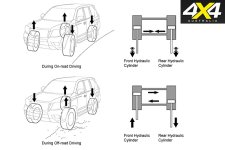
With KDSS, one end of each sway bar is connected to the chassis via an hydraulic cylinder, rather than being directly attached to the chassis. These two cylinders, one at the front and one at the rear, are then connected via hydraulic lines that allow an exchange of hydraulic fluid between the two.
When the vehicle is cornering on-road and tries to lean over, the pressure from the front and rear cylinders is cancelled out, which doesn’t allow an exchange of fluid between the two. With the ends of the sway bars locked solid, the sway bars then have to twist – as they do in a conventional suspension – to suppress body roll.
In an off-road situation, where rough ground will have the wheels on one side of the vehicle travelling in opposite directions, fluid can flow between the two cylinders. This relaxes the sway bars for greater wheel travel. On the Prado’s rear axle, KDSS increases wheel travel from 465mm to 565mm (more than 20 per cent).
The other benefit of being able to relax the sway bar for off-road use is that a stiffer sway bar can be employed in the first place on the VX, which leads to flatter on-road handing.
SO, HOW well does it work? Surprisingly well, in fact. And while we have always been aware of the difference KDSS makes, it was illuminating to drive these two back to back.
Jumping from the GXL to the VX on-road, you could instantly feel the flatter handing, the shaper turn-in and the better body control. The VX is also noticeable smoother when entering corners and when transitioning from leaning over to an upright stance. The KDSS-equipped VX is a noticeably crisper and sportier on-road drive than the non-KDSS GXL. Some of the benefit here comes from the VX’s 18s, but the critical difference, namely the reduced sidewall height, is only in the order of eight per cent, so it’s not a significant amount.
Off-road, especially in broken and rough ground, the VX feels suppler and is certainly more capable with all the extra travel. In mud and sand, where travel isn’t so much the issue, the benefit lessens.
https://www.4x4australia.com.au/reviews/road-tests/1606/toyota-prado-kdss-test
Here are some excerpts:
With KDSS, one end of each sway bar is connected to the chassis via an hydraulic cylinder, rather than being directly attached to the chassis. These two cylinders, one at the front and one at the rear, are then connected via hydraulic lines that allow an exchange of hydraulic fluid between the two.
When the vehicle is cornering on-road and tries to lean over, the pressure from the front and rear cylinders is cancelled out, which doesn’t allow an exchange of fluid between the two. With the ends of the sway bars locked solid, the sway bars then have to twist – as they do in a conventional suspension – to suppress body roll.
In an off-road situation, where rough ground will have the wheels on one side of the vehicle travelling in opposite directions, fluid can flow between the two cylinders. This relaxes the sway bars for greater wheel travel. On the Prado’s rear axle, KDSS increases wheel travel from 465mm to 565mm (more than 20 per cent).
The other benefit of being able to relax the sway bar for off-road use is that a stiffer sway bar can be employed in the first place on the VX, which leads to flatter on-road handing.
SO, HOW well does it work? Surprisingly well, in fact. And while we have always been aware of the difference KDSS makes, it was illuminating to drive these two back to back.
Jumping from the GXL to the VX on-road, you could instantly feel the flatter handing, the shaper turn-in and the better body control. The VX is also noticeable smoother when entering corners and when transitioning from leaning over to an upright stance. The KDSS-equipped VX is a noticeably crisper and sportier on-road drive than the non-KDSS GXL. Some of the benefit here comes from the VX’s 18s, but the critical difference, namely the reduced sidewall height, is only in the order of eight per cent, so it’s not a significant amount.
Off-road, especially in broken and rough ground, the VX feels suppler and is certainly more capable with all the extra travel. In mud and sand, where travel isn’t so much the issue, the benefit lessens.
Attachments
Last edited:


