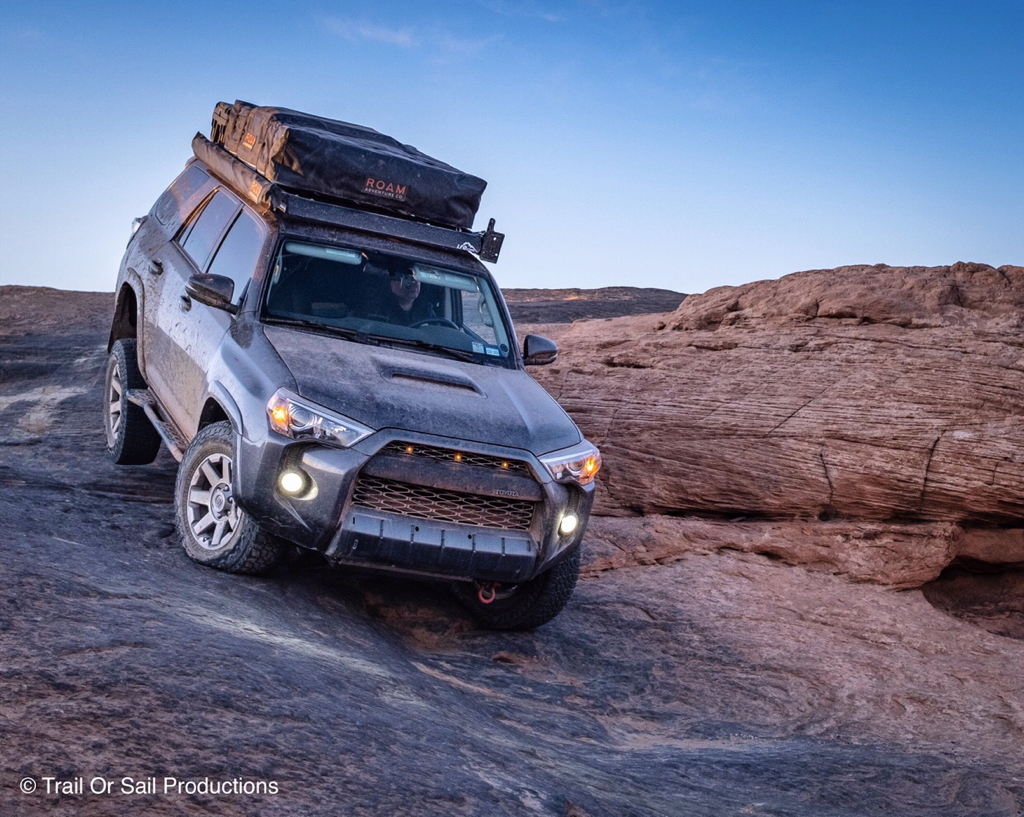
New Falken AT tire (A/T3W)

In general, for those who are willing to talk seriously, the problem is that there is no independent source of good information, especially about offroading. Discount TIre's new rankings are about pavement only.

Four Wheeler tests all tires and likes all tires. You can read between the lines, i.e. what is NOT praised about a tire and also just how much praise they heap on a tire, but that's not enough especially since their tire tests are random. And, yes, they love the Wildpeaks in LTE which is the load rating they normally test.

There is absolutely no way to independently look at the strength of tires as a consumer other than plies. You can use weight as a positive--a proxy for strength-- but industry sources say that this is not true. Yes, I talk to Discount Tire corporate and have emailed Falken, Nitto, and BFG. Bits of non-marketing wording are hard to come by (have had best luck with DT, tire manufacturers are predictably sticking to their scripts).

So, it is easy to say that a 3-ply sidewall tire is stronger offroad than a 2-ply sidewall, BFG told me as much when I asked about their LTC vs LTD though they stuck to the general principle and of course would not say in an email "our LTC is weaker than our LTD KO2." The ST Maxx info is out on the forums and it has thicker/denser plies.

Beyond that, is anyone's guess.

I have come across no ways at all to distinguish between the sidewall strength of LT-C tires or P/SL tires.

So one is left with shoulder protectors, which are easy to see. The General ATX and the KO2 both have shoulder protectors that leave no gaps whereas the WIldpeaks do have gaps and I wonder if that is what helped me lose one, which was aired down on that occasion--and P metric tires should not be.
 
So one is left with shoulder protectors, which are easy to see. The General ATX and the KO2 both have shoulder protectors that leave no gaps whereas the WIldpeaks do have gaps and I wonder if that is what helped me lose one, which was aired down on that occasion--and P metric tires should not be.


I am confused... P Metrics should not be aired down?

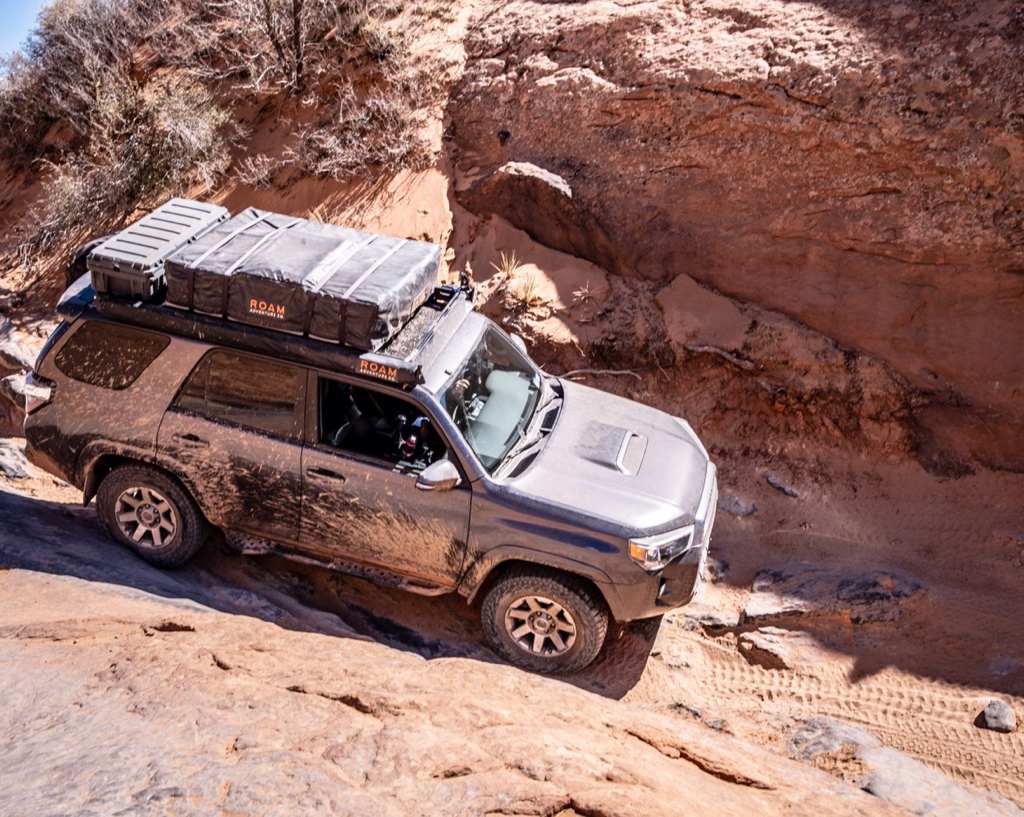
I only ask because I do this regularly. In the pictures below are my 265/70R17 P Metric Wildpeaks aired down to 17psi in Moab at the beginning of this month. At this point they had ~38,000 miles on them...

I ask because I have never heard that before, and I am curious as to why... and if it is going to bite me later on.

f78fc55da540b7b6c06b38d77c040967.jpg


b115990f48dd5a263390d44e09f734cd.jpg


240f4d198a90724388384c425546f198.jpg


Cheers!
 
I am confused... P Metrics should not be aired down?

I only ask because I do this regularly. In the pictures below are my 265/70R17 P Metric Wildpeaks aired down to 17psi in Moab at the beginning of this month. At this point they had ~38,000 miles on them...

I ask because I have never heard that before, and I am curious as to why... and if it is going to bite me later on.

f78fc55da540b7b6c06b38d77c040967.jpg


b115990f48dd5a263390d44e09f734cd.jpg


240f4d198a90724388384c425546f198.jpg


Cheers!

Not that they should not be aired down but you have a much greater risk of blowing a bead airing down P-metric tires. The sidewalls are much softer so when you air down they will bulge out much more than an LT rated tire thus leading to greater chance of blowing a bead. I wouldn't air down any to less than 25 psi with a P-metric. Don't worry about any long term effects or consequences, I just wouldn't air down too far in the future on a P-metric.
 
I am confused... P Metrics should not be aired down?

I only ask because I do this regularly. In the pictures below are my 265/70R17 P Metric Wildpeaks aired down to 17psi in Moab at the beginning of this month. At this point they had ~38,000 miles on them...

I ask because I have never heard that before, and I am curious as to why... and if it is going to bite me later on.

There is a YouTube video out there that demonstrates the difference by driving over an object at different tire pressures and seeing how many times you can run over it until it fails. I'll see if I can find it. I think that the results were that the P metric tires were more likely to pop (not talking about losing a bead) when aired down compared to not being aired down. But if they are fine aired down to 17 psi and you haven't had any problems, I don't see a problem. Just make sure you have a spare. :-)

Found it. According to this test, aired down you are less likely to puncture it. Not sure if there are any tests for losing a bead and at what PSI you would be at risk. Sounds like 17 PSI if you have not lost a bead actually will help you avoid punctures off road.

Cooper Puncture Test
 
Last edited:
There is a YouTube video out there that demonstrates the difference by driving over an object at different tire pressures and seeing how many times you can run over it until it fails. I'll see if I can find it. I think that the results were that the P metric tires were more likely to pop (not talking about losing a bead) when aired down compared to not being aired down. But if they are fine aired down to 17 psi and you haven't had any problems, I don't see a problem. Just make sure you have a spare. :-)

Found it. According to this test, aired down you are less likely to puncture it. Not sure if there are any tests for losing a bead and at what PSI you would be at risk. Sounds like 17 PSI if you have not lost a bead actually will help you avoid punctures off road.

Cooper Puncture Test

Thanks for sharing that! Yeah, we always have a spare, and it looks like we will have 2 in the future since we got some rims donated to us. We've run all kinds of terrain in the P-Metric A/T3Ws without issues around 17-20 psi. So, I think we will stick with around 20 psi.

Not that they should not be aired down but you have a much greater risk of blowing a bead airing down P-metric tires. The sidewalls are much softer so when you air down they will bulge out much more than an LT rated tire thus leading to greater chance of blowing a bead. I wouldn't air down any to less than 25 psi with a P-metric. Don't worry about any long term effects or consequences, I just wouldn't air down too far in the future on a P-metric.

Having run much lower than that on a regular basis, I'm not too worried about it - mostly the long term effects which don't seem to be a problem. This does make me wonder though... I have tried E-Loads Duratracs and a few others. My wife really didn't care for the stiff and harsh ride. I didn't care for the additional rotational weight (MPGs took a huge hit)... I wonder if the LTs do a good job of splitting the difference.
:shrug:

I have 4 weeks before we head out on our next trip. I have UCAs and an alignment to do before I get my next set of tires within that 4 weeks. I was hoping to stay with the 265 P-Metrics for cost and fuel economy... but I wonder if the LTs would be helpful.
:fish2:
 
Having run much lower than that on a regular basis, I'm not too worried about it - mostly the long term effects which don't seem to be a problem. This does make me wonder though... I have tried E-Loads Duratracs and a few others. My wife really didn't care for the stiff and harsh ride. I didn't care for the additional rotational weight (MPGs took a huge hit)... I wonder if the LTs do a good job of splitting the difference.
:shrug:

I have 4 weeks before we head out on our next trip. I have UCAs and an alignment to do before I get my next set of tires within that 4 weeks. I was hoping to stay with the 265 P-Metrics for cost and fuel economy... but I wonder if the LTs would be helpful.
:fish2:

To clarify, E-rated tires are LT. LT means "light truck" and then you have different ratings in regards to how many plies it has. C is 6-ply, D is 8-ply, E is 10-ply. So I guess splitting the difference between P(assenger)-rated and LT-E rated would either mean a C or D. TBH C-rated is probably the sweet spot for a 4Runner.
 
Last edited:
The question is........is the spare tire the same size as your regular tires? If your spare is not the same size, then you don't have a spare.
 
Last edited:
What I know is that constructive discussions with you are impossible.

Your obsession with brand names and with Discount TIre best/better/good ratings coupled with your refusal to accept their more sophisticate data that debunks your claims is amusing. I cited you Discount Tire's email response about that data but you only cherry pick bits of information that suit you.

You have your beliefs and they are what they are. Keep citing an obscure outlet that looked into half a dozen tires.

And yes, I popped a sidewall on a P-metric tire.

Carry on :)

Interesting...this "sophisticated" data that you claim DT has.......yet cannot reproduce it for everyone else to see. First, you told me that it was on DT website...no where to be found...and now it is an "email" from DT. :D

That's constructive?

Obscure outlet?? Huh? You mean actual testing by actual off-roaders? Guilty.

And, yes, you popped a Falken A/T3W sidewall.
 
C is 6-ply, D is 8-ply, E is 10-ply.

That is old school, currently it simply means the higher the letter the more weight it can hold (and weight is determined by the strength of the sidewall). For instance, the C-load KO2 is 2 ply and the E load is 3 ply. But each ply on the C-load is thicker than each ply on the E-load, but combined the E-load is thicker. And each manufacturer is different. I believe the Falken's are 2 ply in the E load but are much thicker per ply.
 
Damn good info here. Thanks fellas.

After much debate I’m returning my Ridge Grapplers for Wildpeaks. They were always good to me and while I’m glad I tried the Nittos, I just can’t love them because of their subpar snow/ice performance. Plus, I measured them and seated they are only 32” tall and my contact patch is only 9”. I thought they looked small!

Can anyone with E load really weigh in on how harsh the ride is? I’m leaning strongly that way for the extra tread depth (although I wish Falken would just release the C load for everyone in 285/70-17 like tomorrow). I know P-Series will likely see me through just fine but still...I want the peace of mind off road and trailering.


Sent from my iPhone using Tapatalk
 
Ok, then, let me address first the individual questions and then I will explain how to get to the Discount Tire ratings.

I am confused... P Metrics should not be aired down?

Cheers!

I know, right! Actually, your older posts were important to me in February 2018 when I was choosing between P265 70 17 Wildpeaks and LTC 265 70 17 Ridge Grapplers. Thank you! Seeing someone all over Moab on P-metric helped. My earlier miles on SL tires had been in milder UT/AZ/CO terrain, like White Rim, Chicken Corners, Cinnamon Pass, and Ophir Pass, those and similar we did on Geolander ATS on my Outback. I did not know if SL could handle the harsher terrain that the 4Runner opened up.

Here is the thing. There is ZERO testing of P metric offroad that I have seen. But I since I have done a lot, I no longer care either. You and I are literally some of the very few folks who 1/actually offroad on P metric and 2/post about it on forums.

I am at about 4,800 off pavement miles on P-metric tires, of which 1,826 on the Wildpeaks (yeah I log all unpaved mileage). Speaking of the Wildpeaks we have done

at 30-34 psi:

--544 miles in UT, including most of the Maze district and Moab trails like Tower Arch, Fins and Things, Deadman Point, Hurrah Pass-Chicken Corners, Rainbow Rocks/Terrace.

--605 miles in Montana, mostly mild stuff, two rocky trails but the rocks were not sharp at all.

--677 in Arizona, including everything from Double Crater volcano (we actually claimed it and drove on the rim), most Sedona trails (had done the balance previously), north of Phoenix trails, west of Phoenix trails, and west-central AZ.

I only aired down for Double Crater and then once later.

I got one puncture at 33 psi in the desert, when moving at a good pace (well, stock suspension so not great pace), that was on Red Raven where lots of small sharp rocks are embedded in the surface of the fun, mild trail.

Because of that, when I did our next trail in that area on a different day trip, I decided to air down to prevent the classic case of "balloon" puncture. I moved about twice as fast as the Jeeps. Six miles later I tore a sidewall on the rear driver side tire bead to shoulder. No idea why exactly. I was in the lower 20s psi so not really low and the terrain was mild with a ton of small sharp rocks mostly pushed to the side. I may have scraped one of the bigger rocks on the side, I don't know. We were not crawling so I was not paying too much attention to wheel placement.

Bottom line is, there is always a higher chance of puncture when using a P metric tire. If at street pressure, the danger is puncture through the tread. If aired down, the sidewalls are exposed. This is the predicament of the SL.

So why do I do it?

It is all about personal use and location. I am no fan of airing down and up, which is required with LTs for comfort. I much rather stop at nice places on trail. Most people I know either use MTs or LT-Es ATs. But they either have dedicated trail rigs or do a lot less highway than I do.

So at 140/tire and free replacements it works for me for now.

When will I walk?

If I burst a sidewall at 30-33, where I have been fine for so long on different tires and vehicles, I will have no choice but to get tougher tires. Until then, I am happy with the Wildpeak value. My offroad tires don't last long so value matters.

What will I get if needed?

I have my eyes on the brand new Firestone MT2 in 255 75 17. It is only 47lb, it is LTC, and yet has a three ply sidewall. It is MT but the newest one around alongside KM3, so I would expect highway manners to be acceptable. But yeah not great for those trips from Arizona to Montana.

Not that they should not be aired down but you have a much greater risk of blowing a bead airing down P-metric tires. .

Yes and that's why I don't air down, actually. They flex great at 33 so traction is not an issue and are comfortable enough as well.

Found it. According to this test, aired down you are less likely to puncture it. Not sure if there are any tests for losing a bead and at what PSI you would be at risk. Sounds like 17 PSI if you have not lost a bead actually will help you avoid punctures off road.

Cooper Puncture Test

Yes, that is a good one, thanks. That's for tread punctures though, not sidewall punctures.

That's the trick with a P-metric. You either take the puncture chance or the sidewall chance. I prefer the former! Plus, I don't want to air down/up.

Damn good info here. Thanks fellas.

After much debate I’m returning my Ridge Grapplers for Wildpeaks.
lk

Man! But yeah, I can see how rain and snow are super important to you.

I think comfort is so subjective that you will get all sorts of answers. How about LTC in 275 70 17? They are all heavy in those sizes anyway.

Now, as to Discount Tire ratings, here is how to get there:

Go to Discount Tire Direct | Tires and Wheels for Sale Online

1/ Enter your vehicle, don't search by size.
2/ Select your vehicle when it shows on a picture (I have two cars entered so have to choose each time), then select wheel size
3/ You will see many tire size options that go with 17. Choose 265 70 17 for a big selection
4/ You will see the tires arranged by popularity so KO2 first and Wildpeak next. Click on the tire.

You will now see independent testing for the tire. NOT all tires have it, just the more popular ones. I provided the data in a dedicated thread that was quickly spammed.

DT tire ratings (handling, noise, comfort)

You will see that the Wildpeak beats the competition handily.

The caveat is that this is for new tires, obviously. The first 2/32nds of the Wildpeak in SL go in no time, so I wonder if the outer layers have a softer, high-performance compound and the layers underneath a longer-lasting, not as great compound. This would explain a lot but it is just an uninformed guess based on use and obsessive monitoring but no knowledge of compounds.

I have two older tires in the front and two new in the rear so I have seen no decline in offroad performance but it is possible that the two new rear tires are the reason.

Both my puncture and the burst sidewall happened at tires with less than 9/32nds remaining.

Honestly, I am about done with this topic LOL.
 
Last edited:
Two sidewall punctures. That’s two too many IMHO. Joy killing on the trail. Thank goodness it happened on separate trips....what if same trip and one spare?!

YMMV. Good luck.
 
Two sidewall punctures. That’s two too many IMHO. Joy killing on the trail. Thank goodness it happened on separate trips....what if same trip and one spare?!

YMMV. Good luck.

A bit more info would be good here - you didn't specify which version of the tire you're running...
 
Actually, your older posts were important to me in February 2018 when I was choosing between P265 70 17 Wildpeaks and LTC 265 70 17 Ridge Grapplers. Thank you! Seeing someone all over Moab on P-metric helped. My earlier miles on SL tires had been in milder UT/AZ/CO terrain, like White Rim, Chicken Corners, Cinnamon Pass, and Ophir Pass, those and similar we did on Geolander ATS on my Outback. I did not know if SL could handle the harsher terrain that the 4Runner opened up.

Glad we could help! Although, most of that time was spent around Hidden Falls Adventure Park (West of Austin, TX), Big Bend Ranch State Park (where the motto is "bring 2 spares"), and Eastern Slope Colorado (where we are originally from). During that time we had zero punctures or bead loss / blow outs. We didn't make it to Moab until this year, but the Wildpeaks did fantastic aired down to 17 psi.

We really have enjoyed these tires over our previous favorites: Firestone Destination A/Ts because of the Severe Winter Weather rating and the rock ejectors. The Destination A/Ts would carry rocks and pebbles until they could take out small woodland creatures while you were going down the highway.

So why do I do it?

It is all about personal use and location. I am no fan of airing down and up, which is required with LTs for comfort. I much rather stop at nice places on trail. Most people I know either use MTs or LT-Es ATs. But they either have dedicated trail rigs or do a lot less highway than I do.

So at 140/tire and free replacements it works for me for now.

This. SO MUCH THIS... We drive way too much highway and in-town driving to go to a 58lb E Load tire that costs almost double what the Wildpeaks cost.

The Discount Tire price and free replacements is key here.

What will I get if needed?

I have my eyes on the brand new Firestone MT2 in 255 75 17. It is only 47lb, it is LTC, and yet has a three ply sidewall. It is MT but the newest one around alongside KM3, so I would expect highway manners to be acceptable. But yeah not great for those trips from Arizona to Montana.

So... this is the only tire that has me pondering an M/T... mostly because the reviews of them are crazy and I'm not gonna lie - Firestone's Marketing department has hit the nail on the head with throwing a set on a 4Runner and blasting pics and videos of it all over the place. So... while it is on my short list of "Tires I want to try", I have a brand new Wildpeak spare that is ready to go into rotation with 3 new Wildpeaks to get me through the next 1.5 years or 40,000 miles that I normally drive in that time.

In any case, these are all great tires. For me and for now, the Wildpeak P-Metrics fit the bill.
:yo:
 
FWIW, I punctured a sidewall on P metric 265/70/17 at3w when going 30-40mph on a rocky trail. Then a week later I got a nail in one of the remaining 4 and I decided to upgrade because I sensed bad juju and just wanted to go to 33s.

I upped to LT285/70/17E MT01s after that because sidewall strength was important to me when I offroad. Having to change a flat is not fun work on the side of a mountain. After that incident, I want to carry full size on my bumper, then put a 255 on the iron spare and leave it under the truck just to be on the safe side. Two is one, one is none. 255 on spare to save a little weight and to make sure all tires are ~33".

Sidewall strength, and load rating all depends on how you use the vehicle. Do you have a lot of highway miles? How hard to do drive offroad? Is the strength of a tire offroad more important than the comfort onroad?

Then you have to factor in weight and price. A lower weight tire will cost more initially, but will likely save a bit on gas milage throughout its life. Vice versa with heavy/low cost.

As for different makers of tires, I think it really is subjective. I have friends that love their KO2s, others that had to switch for some reason. I have other friends love falkens at/mt, others that love their nittos. IMO, if it works, it works. If you want to change, do it. I have read users here buy BFG, use them for 10k or less, sell them for 2/3-1/2 of their purchase price, and move onto the next brand, rinse and repeat until they find one they prefer. Different strokes for different folks.
 
That is what I am looking at getting this month so I can get C load tires. Unfortunately going up that size and to an LT over a P metric is +$66 and +11lbs per tire.

If you go from 265 to 275 in a P-metric you will add weight anyway because obviously the tire is bigger. What I did was purchase 24.5 lb SCS Ray 10 wheels which are 4.5 lbs less than stock wheels to make up some of the difference. You can even go lighter with SCS F5's.
 

Members online

Forum statistics

Threads
278,314
Messages
3,554,095
Members
248,016
Latest member
Advally Service

Trending content

Back
Top