0w-30

captainnemojr

New member
It is very hard to find 0w-20 in the stores with the exception of Valvoline. I prefer to use Mobil 1, but they only have a 0w-30. Anyone know of any reason to not use 0w-30?

Also, the maintenance intervals have been changed to 10k miles, but should I go ahead and change it sooner since it is the first oil change? I don't do any crazy off-roading or driving and I'm at 2,600 miles.
 
Register to hide this ad
Also, the maintenance intervals have been changed to 10k miles,

Can you provide any official verification about the change? I've been hearing about it for months, but still haven't seen anything from Toyota yet. When I mentioned it at my dealer, they looked at me like they didn't know what I was talking about and I can't find anything "official" to back it up. Any help would be appreciated.
 
What is the recommended oil? I know that Honda now asks for 5W20 and I was told by the dealer when I bought a 2004 Honda that if I put it a heavier oil, i.e. 5W30 and I have an engine related problem, the first thing Honda does is test the oil to see if it is the proper oil and they won't warranty the work if the oil is not the proper viscosity.

So, if Toyota now asks for 5W20 and you put in 0W30, that is not the same thing. My 2 4Runners (a 3rd gen and a 4th gen) recommend 5W30. I go with 5W30 or 0W30, but I never go with anything heavier than recommended.

The reason some people change the oil early when you get a new car is they think the new engine has small machine shavings and metal parts and it would be good to remove them. Some people think this is not needed, for me I do tend to change the oil early the first time, usually 1,500 to 2,000 miles and then I go with synthetic oil. Some compaines have break in oil and recommned you leave the oil in the engine for the normal time. Honda does this on some of their vehicles.
 
Last edited:
Can you provide any official verification about the change? I've been hearing about it for months, but still haven't seen anything from Toyota yet. When I mentioned it at my dealer, they looked at me like they didn't know what I was talking about and I can't find anything "official" to back it up. Any help would be appreciated.

If you create a login on the "Toyota Owner's" page on Toyota Cars, Trucks, SUVs & Accessories, you can download a PDF of the maintenance manual. The manual mentions oil change intervals at 10,000 (unless your vehicle is doing towing or other heavy hauling/use). Still need to rotate the tires at 5,000 though.
 
Funny how in Canada, service interval is still 8000km (5000 miles). I would assume its because of the harsher winters etc...
 
Is 0W-30 same as SAE 30? :confused:

No SAE 30 is just straight 30 wieght oil. Lawn mowers do better with straight 30 weight oil. 0W30 is more likely to be synthethic oil, I don't think regualr oil can get down to 0. This oil would be good in cold climates where it would flow easily at start up and it would thicken as the engine gets warmer.
 
If you create a login on the "Toyota Owner's" page on Toyota Cars, Trucks, SUVs & Accessories, you can download a PDF of the maintenance manual. The manual mentions oil change intervals at 10,000 (unless your vehicle is doing towing or other heavy hauling/use). Still need to rotate the tires at 5,000 though.


Um, what am I doing wrong? When logging on and reading the Scheduled Maintenance Guide, every 5k miles it says oil change. I'm doing the 1st oil change at 5k regardless, just for peace of mind.
 
The only damage that can be done by changing your oil too frequently is to your bank balance. 3k, 5k, 10k... do whatever keeps your warranty intact, but there is no problem with changing it more frequently if you want to spend the money.

I would recommend sticking with the recommended weight however, as bad things will happen to a cold engine if the viscosity is too thick. For those that don't know what the numbers mean:
Oil weight, or viscosity, refers to how thick or thin the oil is. The temperature requirements set for oil by the Society of Automotive Engineers (SAE) is 0 degrees F (low) and 210 degrees F (high).

Oils meeting the SAE's low temperature requirements have a "W" after the viscosity rating (example: 10W), and oils that meet the high ratings have no letter (example SAE 30). An oil is rated for viscosity by heating it to a specified temperature, and then allowing it to flow out of a specifically sized hole. Its viscosity rating is determined by the length of time it takes to flow out of the hole. If it flows quickly, it gets a low rating. If it flows slowly, it gets a high rating.

Our engines require SAE 0W-20 motor oil. That tells me that the oil passages are tiny, the clearances are tight, and the piston rings are incredibly well made. Dumping heavier oil in there isn't going to provide better lubrication, it will actually starve the engine of needed lubrication as the thicker oil won't flow as fast as needed to do it's job. Bad juju.

Personally, I'm changing mine every 5k. I'd rather be safe than sorry.
 
Can you provide any official verification about the change? I've been hearing about it for months, but still haven't seen anything from Toyota yet. When I mentioned it at my dealer, they looked at me like they didn't know what I was talking about and I can't find anything "official" to back it up. Any help would be appreciated.

I went in for my first change as well the other day at the dealer at 5k and they mentioned nothing about changing to every 10k as well. my deal included changes at 5k up to 80k miles if that makes a difference.
 
The new 4Runners require 0W-20, which is weird because my Lexus IS 350 needed 5w-30. So is Mobil 1 0W-30 ok to use? The viscosity is the same, but the only difference is 30 instead of 20. My guess is that it is ok. Thoughts?

To quote Wikipedia in regards to the oil...XW-XX makes it a multi grade oil. So 0W-20 can be sold as either 0W, 20, or 0W-20.

"Multi-grade

The temperature range the oil is exposed to in most vehicles can be wide, ranging from cold temperatures in the winter before the vehicle is started up to hot operating temperatures when the vehicle is fully warmed up in hot summer weather. A specific oil will have high viscosity when cold and a lower viscosity at the engine's operating temperature. The difference in viscosities for most single-grade oil is too large between the extremes of temperature. To bring the difference in viscosities closer together, special polymer additives called viscosity index improvers, or VIIs are added to the oil. These additives are used to make the oil a multi-grade motor oil, however it is possible to have a multi-grade oil without the use of VIIs. The idea is to cause the multi-grade oil to have the viscosity of the base grade when cold and the viscosity of the second grade when hot. This enables one type of oil to be generally used all year. In fact, when multi-grades were initially developed, they were frequently described as all-season oil. The viscosity of a multi-grade oil still varies logarithmically with temperature, but the slope representing the change is lessened. This slope representing the change with temperature depends on the nature and amount of the additives to the base oil.

The SAE designation for multi-grade oils includes two viscosity grades; for example, 10W-30 designates a common multi-grade oil. The two numbers used are individually defined by SAE J300 for single-grade oils. Therefore, an oil labeled as 10W-30 must pass the SAE J300 viscosity grade requirement for both 10W and 30, and all limitations placed on the viscosity grades (for example, a 10W-30 oil must fail the J300 requirements at 5W). Also, if an oil does not contain any VIIs, and can pass as a multi-grade, that oil can be labeled with either of the two SAE viscosity grades. For example, a very simple multi-grade oil that can be easily made with modern baseoils without any VII is a 20W-20. This oil can be labeled as 20W-20, 20W, or 20. Note, if any VIIs are used however, then that oil cannot be labeled as a single grade.

The real-world ability of an oil to crank or pump when cold is potentially diminished soon after it is put into service. The motor oil grade and viscosity to be used in a given vehicle is specified by the manufacturer of the vehicle (although some modern European cars now have no viscosity requirement), but can vary from country to country when climatic or fuel efficiency constraints come into play."

--Wikipedia, http://en.wikipedia.org/wiki/Motor_oil

 
Last edited:
The new 4Runners require 0W-20, which is weird because my Lexus IS 350 needed 5w-30. So is Mobil 1 0W-30 ok to use? The viscosity is the same, but the only difference is 30 instead of 20. My guess is that it is ok. Thoughts?

Did you miss this?

Our engines require SAE 0W-20 motor oil. That tells me that the oil passages are tiny, the clearances are tight, and the piston rings are incredibly well made. Dumping heavier oil in there isn't going to provide better lubrication, it will actually starve the engine of needed lubrication as the thicker oil won't flow as fast as needed to do it's job. Bad juju.
 
Funny how in Canada, service interval is still 8000km (5000 miles). I would assume its because of the harsher winters etc...

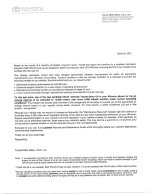
We received the official notice in the mail yesterday (the one scanned in right above). I would expect you in Canada to receive the same. I am in Alaska so if the change is universal then it should apply for you guys as well
 
It is very hard to find 0w-20 in the stores with the exception of Valvoline. I prefer to use Mobil 1, but they only have a 0w-30. Anyone know of any reason to not use 0w-30?

Also, the maintenance intervals have been changed to 10k miles, but should I go ahead and change it sooner since it is the first oil change? I don't do any crazy off-roading or driving and I'm at 2,600 miles.

Problem Solved, its a great oil too.

Mobil 1 AFE 0W-20
 
Last edited:
For do-it-yourselfers: Where are you buying your oil? Advance Auto Parts carries 5W-30 and 5W-40 that my current vehicles require, but I don't remember seeing 0W-20 there. I'd figure most shops would have it now because Toyota transitioned over to 0W-20 w/ the 2009 Corolla/Matrix. I believe the V6 Rav takes 0W-20 as well (maybe 5W-20).

I think Toyota's OEM oil is Mobil, btw.
 
For do-it-yourselfers: Where are you buying your oil? Advance Auto Parts carries 5W-30 and 5W-40 that my current vehicles require, but I don't remember seeing 0W-20 there. I'd figure most shops would have it now because Toyota transitioned over to 0W-20 w/ the 2009 Corolla/Matrix. I believe the V6 Rav takes 0W-20 as well (maybe 5W-20).

I think Toyota's OEM oil is Mobil, btw.

Check WalMart & PepBoys.
 
For do-it-yourselfers: Where are you buying your oil? Advance Auto Parts carries 5W-30 and 5W-40 that my current vehicles require, but I don't remember seeing 0W-20 there. I'd figure most shops would have it now because Toyota transitioned over to 0W-20 w/ the 2009 Corolla/Matrix. I believe the V6 Rav takes 0W-20 as well (maybe 5W-20).

I think Toyota's OEM oil is Mobil, btw.

Wal-Mart should have the 0W-20 green cap.
 

Members online

Forum statistics

Threads
278,304
Messages
3,554,041
Members
248,016
Latest member
Advally Service

Trending content

Back
Top