Respect the hell out of you, but the way you talk it's as if any jeep owner is lucky their vehicle doesn't burst into flames at any moment.
Like me, you're a technical guy. Details nerd, if you will. Let's hear it. What are the details, specs, or specific assembly issues you see as problems in the current JGC? Genuinely interested. :cowboy:
You have to bear with me on this one as it goes outside the realm of pure engineering into the real world of business. This is my OPINION on the way the automotive world operates. I only want to write this one time so everyone please pay attention. I am going to try not to quote any numbers and speak mainly about concepts. I will use generalities and try to explain it as such. This is the view from 30,000 feet.
Imagine you own a vehicle manufacturing company and you want to make money, which is the driver for each and every one of them. How do you do it? Well, there are several different ways. The simplest way is to look at how much you spend and sell it for more than that. Simple right? Not so fast. What if, because of previous negotiations and costs, there was no possible way you could sell a vehicle for more than you had in it. How could you turn a profit per vehicle then?
Well, you could do what the typical US manufacturers did and still do: Sell the vehicle for less than it cost to manufacture and make it up somewhere else. Where you ask? The only place you can: Parts and service. (Note: you can Google any of these concepts I am discussing. It's all out there, from places like Forbes and Bloomberg. You just have to dig a little and it's not in a neat and tidy package)
I don't have the report anymore but in the 2005-2006 range companies like Ford, Chrysler and GM were losing money on every new vehicle. They had to make it back some way so they did by selling many more parts, which typically have a much larger margin than complete vehicles. These guys have been using that business model for many decades. Build a vehicle and lose money and make it up on repairs.
Wait. Stop for a minute. How could they do that and more important, why do that? Why not just build a vehicle that did not break and sell it for more money? Well, the answer is complex. If they were only competing against themselves that would be no problem. Unfortunately, they were competing against some smart Japanese guys too who had already figured that out. Japanese manufacturers were and still are (not to the same extent though) selling a vehicle that costs less to manufacture than it's selling price. If I remember correctly, Toyota was making around $2,600.00 per car in pre tax profit compared to around $500.00 for Ford and Chrysler was losing about $400.00 per car. I think this was around 2008 or so. Anyway, this had been going on for decades. The big three was running like our federal government using deficit spending. Why? Simple. The labor costs. The big three were backed into a corner by the unions. For example (and this is current year) such things as amount of time for employee breaks in the plant cost the Japanese about $113.00 per car whereas the big three costs $250.00 per car. Vacations, retirement and salaries keep adding up to eventually you can't keep up.
So where does that leave them then? C'mon, their engineers are smart guys why don't they design components that don't break or wear out as often? That sounds like conspiracy theory talk but it's just business. Let's face it: With today's technology you could build a vehicle to go 250K miles with no problems. It's proven already by the makers of our 4Runners. Why don't the other guys do it as well? In my simple opinion they could. As a matter of fact they are in the process of making those changes but they can't change completely overnight and still remain competitive. Why? UAW contracts are still high. They are getting better but still high. Manufacturing methods are improving too but they are for the Japanese also. I don't mean to leave the European manufacturers out but they are basically the same as our big three. Sell it for below or break even costs and make the profit on parts.
I read the data and it looks better for the big three. All you really have to do is take the reported profits and divide it by the number of vehicles sold to get the profit per vehicle. It's getting to the point where companies like Chrysler (Fiat) are making a little money on their new vehicles but they are still not in the same league as Toyota and Honda. It's basically just a difference in the business models, brought on by decades of poor management of the big three.
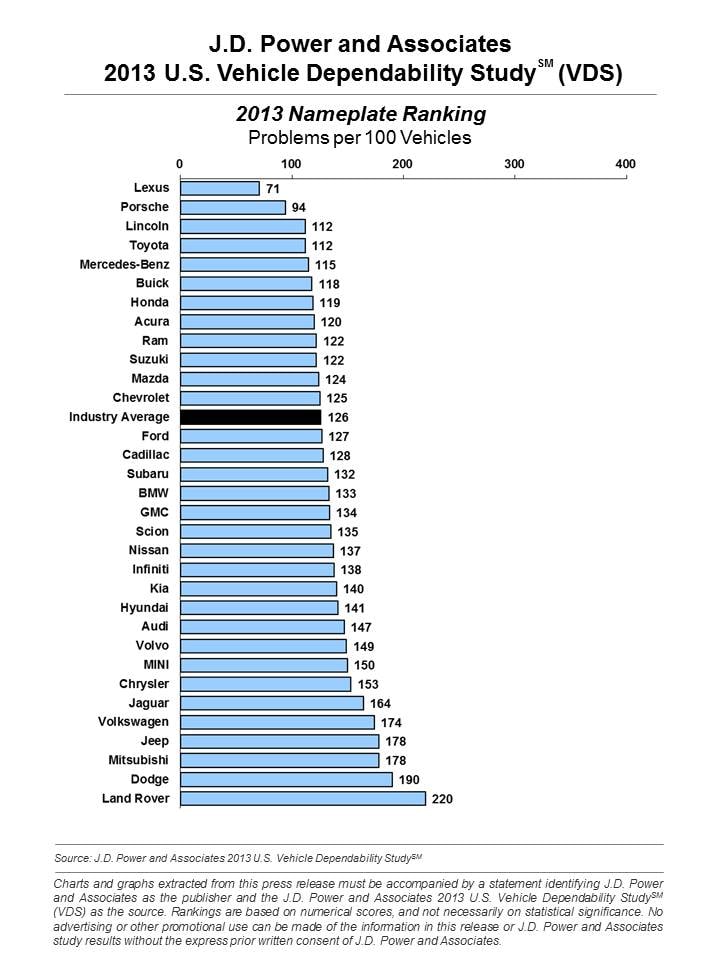
So there you have it. It's tough to find that information on the internet but if you go to reputable sites like Forbes or WSJ the information is there. You just have to piece it together. So, does someone want to ask me again why I don't want to buy a Jeep? It's simple. Why buy something that needs replacement parts well before their time when I can buy something that statistically won't need any parts for it's design life. Look at the repair histories for both vehicles. As I said before, Jeep and Fords are getting better but it will be a decade or more before they are competitive.