

Jetboy
New member
Not all snow is created equal. The density and temperature make HUGE differences in your ability to drive though it. Snow offers the least coefficient of friction near the melting point. The warmer it is, the less traction you'll get. And it can be as much as 10 times as much. In addition the photos or video of deep snow is typically very cold, and very light weight snow. Colder weather means larger snow flakes and less water content. The snow can be very light in very cold weather. I've driven through snow over the hood of my tacoma on 35" tires. Only because it was very very light snow. Typically Utah and Colorado have heavier snow than northern states due to warmer weather. In Montana you may have 3-4% moisture content snow "cold smoke". In Utah or Colorado it's considered "light" powder at 7-8%. In California it's more like 15% and usually referred to as "Sierra Cement." The difference just in the density of snow will make a huge difference in your ability to drive through it. Tires are the other big difference. The stock tires are pretty crappy on snow. Softer rubber with more siping makes a big difference.
For deep snow the maximum performance is low tire pressure, soft rubber, more siping, and all your tires locked together. You absolutely DO want your locker engaged, and you want the traction control as aggressive as possible - so in rock mode.
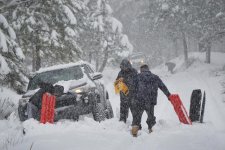
From the sounds of it driving out once you rammed into the snow was never going to happen. Sometimes you just get stuck and either shovel out the snow or get a pull.
For deep snow the maximum performance is low tire pressure, soft rubber, more siping, and all your tires locked together. You absolutely DO want your locker engaged, and you want the traction control as aggressive as possible - so in rock mode.
From the sounds of it driving out once you rammed into the snow was never going to happen. Sometimes you just get stuck and either shovel out the snow or get a pull.



 But when newbies see Tacomas being buried up to its frame in sand and retracting itself without much fuss.... I can see how imagination starts to take off.


