
You are using an out of date browser. It may not display this or other websites correctly.
You should upgrade or use an alternative browser.
You should upgrade or use an alternative browser.
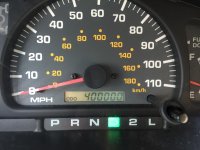
400,000 Mile Club
- Thread starter potomacduck
- Start date


StreetCreeper
New member
If I continue to do the right things I've been doing for the past 16 years the day I picked it up new, I plan on seeing 500,000. It's no longer a DD so the mileage will drastically decrease for me. It's finally being built up to go adventuring off road. My oldest son will get it in a few years and he'll keep it forever so it will see 1,000,000.
The number one thing anyone can do to increase the life of their engine is fluids! Change and change often.
- Use the best - don't cheat yourself.(synthetic or dino doesn't matter) I use mobil 1 5w-30 synthetic.
- Quality gasoline - High octane isn't necessary. Compression ratio is too low.
- I get my best gas mileage out of chevron with techron and use 87 or 89 most of the time with lucas treatment once in a while in the winter.
- Use Toyota Red coolant
- Plugs and wires regularly (NGK Or Denso) Single or double ground - whatever. I use double ground.
- Clean air filter
These 5z's are quality. You don't hear of anyone on here saying they need to do their rings cause it's starting to smoke or the valve guides. Never heard of anyone spinning a bearing or throwing a rod, unless they drove it hard. A few flywheels that crack and head gaskets that fail over time. Fuel injectors, knock sensors, ecu every now and then. Hard engine failures are few and far between.
If all goes well, my 4runner will still be on this side of the dirt when I'm on the other side.
I agree that proper maintence is probably the the number one factor to engine longevity. And like you explained already, it helps a lot that the 5zs are built like tanks.
When considering engine longevity, I can't help but make comparisons between engine life and human/animal lifespans. For example, mice just aren't built to live 100 years no matter how well you take care of them. 100 years is simply beyond what their internal design is capable of. Now compare that mouse with a tortoise that is 100 years old.
What I mean is, the 5vs engines are like the tortoises of the engine world. They are slow & overbuilt — but they don't quit. So if the owner does their part — the engine will probably do its part and keep running.
Animal lifespans very amongst species. I think engines are the same way. Some engines just won't ever make it to certain mileage under normal operating and maintence conditions (i.e., real world — not a lab).
As owners of 3rd gen 4Runners, we lucked out in that we have a robust engine and transmission along with very capable & comfortable truck. Oh and it's a damn fine looking truck as well.
No surprise how popular these trucks are...
AntleredRuin
New member
I think we all know about the basic maintenance for the engine/ tranny, but the rest of the vehicle can't be forgotten about, either.
You can get to 400k on the original engine/tranny, but your balljoints could have failed 2-4 times by then if you refuse to replace them, requiring AT LEAST a semi front-end rebuilt each time (provided you didn't hit anything or flip). If this is the case, in terms of total cost put into your T4R, you really haven't proven anything with the 400k marker.
So Toyota builds a B/A Engine and Tranny, capable of lasting much longer than any of its competitors, though obviously still requiring basic maintenance.
But it creates a VERY weak link that it's competitors DON'T have, that is potentially much more destructive and dangerous and costly than a bad engine or transmission. That is, the LBJ.
"So you got to 400k on the original Engine and Tranny? You did awesome maintenance! Go Toyota!"
"Yeah, but I neglected the REST of the truck and my LBJs failed 3 times, and I got a pink milkshake (I caught it in time and after several hundred dollars in flushes and new radiator, it seems to be working OK, and my brakes were so warped I rear-ended someone in front of me going 40...etc. Go Toyota."
The point is that ANY vehicle can get to 400k; it just depends on what you're willing to fix/replace to get it there. Spend $1000+ rebuilding the front end after an LBJ failure, on the engine, on the tranny, etc. It doesn't matter.
These trucks are built solidly, but have their weak points too. These weak points are JUST AS IMPORTANT as the engine and tranny.
OVERALL vehicle maintenance is the key to a long lasting vehicle without major repairs, not just engine maintenance.
You can get to 400k on the original engine/tranny, but your balljoints could have failed 2-4 times by then if you refuse to replace them, requiring AT LEAST a semi front-end rebuilt each time (provided you didn't hit anything or flip). If this is the case, in terms of total cost put into your T4R, you really haven't proven anything with the 400k marker.
So Toyota builds a B/A Engine and Tranny, capable of lasting much longer than any of its competitors, though obviously still requiring basic maintenance.
But it creates a VERY weak link that it's competitors DON'T have, that is potentially much more destructive and dangerous and costly than a bad engine or transmission. That is, the LBJ.
"So you got to 400k on the original Engine and Tranny? You did awesome maintenance! Go Toyota!"
"Yeah, but I neglected the REST of the truck and my LBJs failed 3 times, and I got a pink milkshake (I caught it in time and after several hundred dollars in flushes and new radiator, it seems to be working OK, and my brakes were so warped I rear-ended someone in front of me going 40...etc. Go Toyota."
The point is that ANY vehicle can get to 400k; it just depends on what you're willing to fix/replace to get it there. Spend $1000+ rebuilding the front end after an LBJ failure, on the engine, on the tranny, etc. It doesn't matter.
These trucks are built solidly, but have their weak points too. These weak points are JUST AS IMPORTANT as the engine and tranny.
OVERALL vehicle maintenance is the key to a long lasting vehicle without major repairs, not just engine maintenance.
Last edited:
StreetCreeper
New member
Well you also have to think about other maintenance issues that can become repairs that people think aren't worth fixing. Like say, if someone's LBJ goes, well there's $1000+ to fix everything that is necessary to get it roadworthy again.
If your tranny/engine goes, if you pull from a junkyard and install yourself it will actually be less than a failed LBJ.
For some reason people seem to think that drivetrain failures are the only 'catastrophic' (not worth fixing) failures. I say 'catastrophic' is when YOU think your vehicle is totaled (not the insurance company).
Being a junker, I've noticed that probably around 80-90% of all 3rd gens trucks I see in the junkyards — are there because of a collision that rendered the vehicle a total loss. Whereas I walk around the junk yards and see scores of newer vehicles with less miles — and no apparent body damage, which obviously means they died from mechanical failure.
When glancing over these other vehicles, I'm often envious when I see truck after truck after truck...with perfect interiors or really nice leather. Clearly those vehicles didn't outlast the seats.
There's a reason why 3rd gen leather seats are in high demand, the trucks last so long that the leather wears out first. While annoying for those of us with jacked-up leather seats — it's still a good sign.
potomacduck
New member
Wow! Congrats. Are you the OG owner? Maintenance wise have you been meticulous or just by the book?
Sent from my SM-N920V using Tapatalk
I bought the truck with 154,000 on it about ten years ago.
The truck has the original engine and transmission and neither have had major issues. The only major component on the vehicle I have replaced was the radiator (I had a pink milkshake experience).
I have replaced the timing belt and water pump and related pullies twice.
The key to the truck's longevity has been timely, routine maintenance.
I change the oil with a factory filter and 5-30 Mobil 1 (you guys will cringe, but do some research) every 10,000 miles.
There, I said it, my oil change interval is 10,000 miles. I also change the ATF in the pan - about 4 to 5 quarts.
I NEVER miss a 30,000 mile engine service. That includes new 2 prong spark plugs. New air filter, clean the throttle body, clean the MAF, clean the PCV valve, lube the zerk fittings on the U-joints and tend to little items that I see while I'm in there.
I ONLY use Toyota factory parts. I never neglect an engine code. When I get an engine code I replace whatever sensor is failing. Yes they are expensive. I'd rather spend $200 on new a light bar than a fuel/air sensor that nobody sees, but these engines are heavily reliant on their sensors.
StreetCreeper
New member
I think we all know about the basic maintenance for the engine/ tranny, but the rest of the vehicle can't be forgotten about, either.
You can get to 400k on the original engine/tranny, but your balljoints could have failed 2-4 times by then if you refuse to replace them, requiring a semi front-end rebuilt each time. In terms of total cost put into your T4R, you really haven't proven anything with the 400k marker.
So Toyota builds a B/A Engine and Tranny, capable of lasting much longer than any of its competitors, though obviously still requiring basic maintenance.
But it creates a VERY weak link that it's competitors DON'T have, that is potentially much more destructive and dangerous and costly than a bad engine or transmission. That is, the LBJ.
ANY vehicle can get to 400k; it just depends on what you're willing to fix/replace to get it there. Spend $1000+ rebuilding the front end, on the engine, on the tranny, etc. It doesn't matter.
OVERALL vehicle maintenance is the key, not just engine maintenance.
I agree somewhat, however, I think that most vehicles will simply never live long enough to see a LBJ failure or even a "pink milkshake". They all die of other things first.
With that said, I think it's easy to say that the LBJs or tranny coolers are somehow flawed on the 4runners. But in my opinion, I think they are fine designs that have a finite lifespan and should be considered a wear item that requires routine maintence in the same way oil or a timing belt does.
OEM replacement of those parts is best and if they were flawed in design, why hasn't any aftermarket company made a better one? They can't.
potomacduck
New member


Scramble
New member
Sometimes its the luck of the draw. My head gasket went at 143,000. I'm the original owner & followed the scheduled maintenance by the book. I opted for a rebuild instead of a used motor because I knew the block was well taken care of. A used motor would have been a crap shoot. Two years & 15,000 miles on the rebuild & still running strong. I think it would have failed by now if the rebuild wasn't done right.

kpinthebay
Member
I bought the truck with 154,000 on it about ten years ago.
The truck has the original engine and transmission and neither have had major issues. The only major component on the vehicle I have replaced was the radiator (I had a pink milkshake experience).
The key to the truck's longevity has been timely, routine maintenance.
I change the oil with a factory filter and 5-30 Mobil 1 (you guys will cringe, but do some research) every 10,000 miles.
There, I said it, my oil change interval is 10,000 miles. I also change the ATF in the pan - about 4 to 5 quarts.
First off, good job! And i 100% agree with you on the 10k intervals, esp on synthetic. I always laugh when i see 3rd gen 4runner CL ads that say "changed oil every 3,000 on synthetic oil and only 91 octane gas."
Or as an aside, a CL ad that lists "power windows, door locks, AC, CD player." On a new or late model car.
Sent from my SM-N920V using Tapatalk
AntleredRuin
New member
Being a junker, I've noticed that probably around 80-90% of all 3rd gens trucks I see in the junkyards — are there because of a collision that rendered the vehicle a total loss. Whereas I walk around the junk yards and see scores of newer vehicles with less miles — and no apparent body damage, which obviously means they died from mechanical failure.
I completely agree with you, but I think that we still aren't getting each other.
So maybe other brand engines/trannys can't last till 400k, sure. I agree. But those vehicles as a whole might NOT have the inherent weaknesses that our 4runner DO have.
So if no maintenance is done whatsoever, I don't particularly think that our 4runners would last all that much longer than other vehicles; they would die from other causes, probably non-mechanical, but still roughly around the same mileage.
Toyota makes better engines and trannys, sure, but has costly design flaws elsewhere.
OEM replacement of those parts is best and if they were flawed in design, why hasn't any aftermarket company made a better one? They can't.
For example, the Ford Explorer with the 4.0 V6 might only get to 200,000 before the engine is worn out and requires a replacement, but it does NOT experience the Pink Milkshake or the LBJ failure at roughly the same mileage that can actually cost MORE than a new engine. Give it a new(low-mileage used) engine, and it might go another 200,000 just fine. Competitors designed their vehicles differently and thus don't experience these failures. The 4th gen 4Runners changed these designs BECAUSE they were weaknesses.
It just seems so crazy to most people to replace an engine/tranny if they die. They think that it's time to buy a new car. But for some reason, fixing catastrophic failures elsewhere is not as scary to most people, even if the repair is MORE expensive than an engine/tranny rebuild or replacement.
If the other vehicles you see at your junk yard had had the engine/tranny replaced, they may have been just fine to go for another 200k, all without ever worrying about the 4runner's weaknesses, that could very well send THEM to the junkyard if not maintained.
however, I think that most vehicles will simply never live long enough to see a LBJ failure or even a "pink milkshake".
I understand what you're saying with the likelyhood of this happening, but if the OP has not changed his LBJs AT LEAST 1 time by now, he is a very lucky man that's he's not had them fail yet. They should have gone out on him well over 150k ago, and either landed with him a very large repair bill or sent his 4runner to the junkyard, like what you see. If that was the case, he would not be seeing 400k today.
The OP even mentioned lubing his zercs as part of his maintenance. If he didn't, there is the possibility that his u-joints could have catastrophically broken at high speeds, thus causing him to total his truck. The engine and transmission could have been in GREAT shape, but if he didn't maintain the rest of the vehicle, would not matter. That's the main point I'm trying to make.
Last edited:
potomacduck
New member
My vehicle has the original lower ball joints. Just sayin'
AntleredRuin
New member
Haha then you're a lucky guy. Not flaming at all, but those usually don't last near that long.My vehicle has the original lower ball joints. Just sayin'
Also StreetCreeper, I apologize if I'm coming off mean. I don't mean to insult/upset. I actually thoroughly enjoy reading your posts. They've been very informative and funny enough to make my coworkers wonder what I'm laughing at in my corner of the office.
StreetCreeper
New member
Haha then you're a lucky guy. Not flaming at all, but those usually don't last near that long.
Also StreetCreeper, I apologize if I'm coming off mean. I don't mean to insult/upset. I actually thoroughly enjoy reading your posts. They've been very informative and funny enough to make my coworkers wonder what I'm laughing at in my corner of the office.
No worries! They never came across that way at all. I enjoy good dialogue and differing view-points. I'm here to learn new things above all else!


HammerTime
New member
Agree with 10,000 mile oil change interval for Mobil 1 full synthetic. I have heard that Toyota tends to use rather small filters for the amount of fluid they filter, so I change the filter out every 5000. It's cheap, and certainly can't hurt.I bought the truck with 154,000 on it about ten years ago.
The truck has the original engine and transmission and neither have had major issues. The only major component on the vehicle I have replaced was the radiator (I had a pink milkshake experience).
I have replaced the timing belt and water pump and related pullies twice.
The key to the truck's longevity has been timely, routine maintenance.
I change the oil with a factory filter and 5-30 Mobil 1 (you guys will cringe, but do some research) every 10,000 miles.
There, I said it, my oil change interval is 10,000 miles. I also change the ATF in the pan - about 4 to 5 quarts.
I NEVER miss a 30,000 mile engine service. That includes new 2 prong spark plugs. New air filter, clean the throttle body, clean the MAF, clean the PCV valve, lube the zerk fittings on the U-joints and tend to little items that I see while I'm in there.
I ONLY use Toyota factory parts. I never neglect an engine code. When I get an engine code I replace whatever sensor is failing. Yes they are expensive. I'd rather spend $200 on new a light bar than a fuel/air sensor that nobody sees, but these engines are heavily reliant on their sensors.
Sent from my SM-G900R4 using Tapatalk
StreetCreeper
New member
My vehicle has the original lower ball joints. Just sayin'
The LBJs were original on my truck up to 345,000 miles, then the passenger failed completely on the PO as they were exiting a fuel station. Luckily the speed was very low and damage was minimal besides the obvious.
While there would most likely have been signs that could have been spotted by someone who knew what to look for, the PO did not and never suspected a thing until the wheel literally fell off.
I think the factory LBJs are quite good, but I doubt Toyota expected them to last until 350,000 miles.
If I were you, I would swap those LBJs out now with some new OEM ones and then rest easy for the next 200,000 miles.
Scramble
New member
The ball joint failures & pink milkshake happen on a such a small percentage of vehicles. We're all on this site because we're "car" guys & do the preventive maintenance. The average person never changes these things & thousands of 4Runners make it into the junk yards with over 300,000 miles without these items failing.
Last edited:

Rock_Rat
Senior Member
Completely agree with [MENTION=115590]StreetCreeper[/MENTION] on this. I didn't change out my LBJ's until 300K and it was only a preventive measure. I also didn't change out my radiator until 300K and it too was a preventive measure. I believe I could have gone further but I wasn't willing to take that risk.
Personally I think the pink milkshake and the LBJ failures are blown way out of proportion. Sure I know all the details and the notice from Toyota and I've seen all the google photos and read everything on here etc...etc...There are a handful of members on here who have experienced both failures but...
...of the 749,871 3rd generation Toyota's sold between 1996 and 2002, how many have had their LBJ's and radiators replaced? How many catastrophic failures have there been? Sure there's been enough to raise serious concern over the issue, but if you were to guess a 10% failure rate that would be 74,987 failures. My guess is it's far less than 5%. Unfortunately, none of us have the numbers to validate this. Furthermore, we'll never have all of the variables associated with either of these failures.
Any vehicle over 300K is a major milestone. To think that these vehicles will push 500K or more is an amazing accomplishment.
Personally I think the pink milkshake and the LBJ failures are blown way out of proportion. Sure I know all the details and the notice from Toyota and I've seen all the google photos and read everything on here etc...etc...There are a handful of members on here who have experienced both failures but...
...of the 749,871 3rd generation Toyota's sold between 1996 and 2002, how many have had their LBJ's and radiators replaced? How many catastrophic failures have there been? Sure there's been enough to raise serious concern over the issue, but if you were to guess a 10% failure rate that would be 74,987 failures. My guess is it's far less than 5%. Unfortunately, none of us have the numbers to validate this. Furthermore, we'll never have all of the variables associated with either of these failures.
Any vehicle over 300K is a major milestone. To think that these vehicles will push 500K or more is an amazing accomplishment.
potomacduck
New member
Rockrat, she will go 500,000 no problem. I live in Maryland, and I have no issue with driving this vehicle to visit my daughter in college in Ohio.
Scramble
New member
[MENTION=7105]Scramble[/MENTION] you beat me to it and said it in less words:iagree:!
LOL, Great minds think alike. You should move back to Orange County so I can have a crazy 4Runner nut neighbor like myself.:rockon:
You can tell my short posts are from when I'm at work & my long winded BS posts are from home. :biggrin1:
Similar threads
- Replies
- 11
- Views
- 5K


Forum statistics
Trending content
-

-

-
-
-
Thread 'Fixed: Dead Instrument Cluster in 2003 Toyota 4Runner (Corrosion Issue)'
- TheSpeakGeek
Replies: 9